Between 2024 and 2025, we developed Edible Cities, Mobile Rivers, an interdisciplinary research programme examining the interconnected relationships between food, water, ecology, and cultural landscapes, with a particular focus on rivers and grain systems—especially wheat and rice.
As part of this initiative, six researchers from diverse disciplinary backgrounds—including art history, architecture, anthropology, urban studies, and curatorial research—contributed original essays that investigate how food systems, waterways, and ecological knowledge shape both historical and contemporary landscapes.
The research spans multiple geographies and perspectives, exploring themes such as collective water governance through Bali’s Subak system; tidal infrastructures and coastal ecological knowledge in Goa; river histories and urban form in Isfahan; the cultural life of wheat in early modern Europe; glutinous rice, memory, and empire in Taiwan; and the River Thames as a living archive of urban ecology.
Together, these essays offer critical insights into the entangled relationships between environmental systems, cultural practices, and forms of ecological resilience across regions and histories.

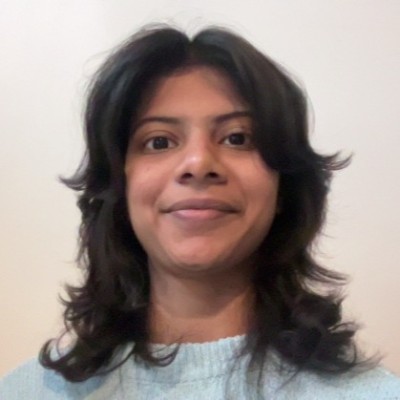
Angharad Davies
Courtesy of the Researcher
Angharad Davies is an architectural historian who holds undergraduate and postgraduate degrees from the University of Warwick and The Courtauld Institute of Art. Throughout her academic training, she has focused on environmental architecture and has more recently expanded her research to Iranian architecture and its relationship with the surroundings. As a freelance researcher, she collaborated with St Elvan’s Church Heritage to develop the exhibition Here Be Dragons (2025), showcasing a Meiping vase and an okimono dragon from the British Museum collection. She is currently working with the heritage site on a new project investigating a local twelfth-century parish church, exploring the possibility of reassessing its date of construction.
With experience in the art field ranging from museum and gallery work to auction houses, Angharad has worked in numerous art-based settings. Over the past seven years, she has been able to gain first-hand experience in archives and cataloguing teams. The opportunity to study architectural history alongside objects and art has enabled her to fully unravel the deeper connections between our inhabited spaces and surroundings.
Research Location: Zayandeh rud – Isfahan, Iran
Essay: Silhouette from Isfahan: River Histories and Urban Form
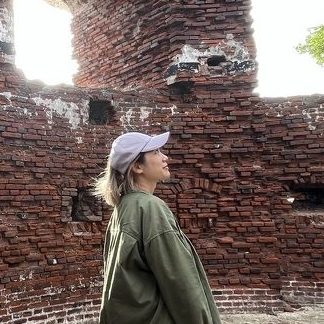
Nikita Infantcia Fernandes
Courtesy of the Researcher
Nikita Infantcia Fernandes is a multi-disciplinary artist, educator and record collector. Drawing on these cross-pollinatory practices, she is interested in the use of sonic engagement within museum and cultural spaces. Her passion for music and music history materialised into Fuzzy Frequencies- a vinyl listening project highlighting hidden gems on wax from across the globe. And most recently informed her MA thesis at SOAS titled Music, Migration and Memories: How Jazz influenced Goan musicians in Dar es Salaam.
She has previously worked with the Dr. Bhau Daji Lad Mumbai City Museum, Goethe Institut and The Inheritage Project amongst others.
Research Location: Goa, India
Essay: Tidal Infrastructures: Khazan Wetlands and Coastal Ecological Knowledge in Goa
Yipei Lee
Courtesy of the Researcher
Yipei Lee is an independent curator and researcher. With a background in design and art, over the past fifteen years, she has been actively engaged in the contemporary art ecosystem, frequently working between Southeast Asia and the Chinese region. Her interdisciplinary cultural practices aim to reveal social responsibility and humanistic values by integrating fieldwork, scientific data, and Indigenous knowledge — revitalizing the social potential of art.
Her essays and curatorial practices have presented across several regions, including Mainland China, Singapore, Indonesia, Taiwan, Switzerland, Germany, Spain and UK. Currently she investigates the paradigm of ecological curating, developing cognitive topological frameworks around climate resilience and island geopolitics, and integrating archipelagic networks of practice that reframe islands as critical nodes within planetary ecological systems.
Research Location: Bali, Indonesia
Essay: Flowing Commons: Subak and the Ecology of Collective Water Governance

Heather Noble
Photographer: Shabaan. Courtesy of the Researcher
Heather is an urban researcher specialising in the nexus of urban space and collective memory. Her cross-disciplinary practice spans academic research, participatory design, social and spatial justice, and artistic installations. She is a director of 65 SQM, a dynamic design collective blending art, architecture, human-centred design and material research. Heather leads urban interventions that explore the role of collaboration, emotional geographies and material experimentation in shaping public space. Her work focuses on themes such as wellbeing, civic pride, and belonging in the urban environment, using evidence-based approaches to generate public benefit. Bridging theory and practice, Heather is committed to creating more inclusive, resilient cities through art, research and practice that resonates across communities, disciplines, and institutions.
Research Location: London, UK
Essay: The River as Archive: Thames and the Ecologies of Urban Memory

Martina Leone
Image: Martina Leone, Study and scientific dissemination for the Rolli Days, Genova (October 2023): public speaking and heritage valorization. Courtesy of the Researcher.
Martina Leone is an Italian art historian, PhD candidate at the University of Teramo and academic assistant at the University of Genoa, where she collaborates in teaching the subjects Introduction to the History of Art (L-ART 02) and History of Collecting (L-ART 04).
For this city she is also a science communicator in the event of historical-cultural interest called “Rolli Days”. Specialized in Baroque painting, from Palermo to Rome to Venice, she deals with collecting and the protection of cultural heritage, art market and crime risk. She is the author of numerous scientific publications and is preparing a monograph on Francesco Ruschi (1600-1661), the focus of research of PhD, which will soon be concluded.
She trained at the University of Catania and then at the University of Roma Tre. The scholar later attended a course at the Sotheby’s Institute and is now a Research Assistant in Benson, AZ 85602 USA. She has participated in numerous research projects, curated conferences and advanced scientific training courses. She is the winner of the PhD Annual Meeting Research Award – Best Communication on September 19, 2024 at the University of Teramo. Author of contemporary Italian fiction novels, she self-taught herself in food and wine culture and its history.
Research Location: Sicily, Italy
Essay: Grain in Transit: The Cultural Life of Wheat in the Visual and Culinary Cultures of Early Modern Europe (Italy–Netherlands, 17th–18th Century)

Sharo Liang
Courtesy of Researcher
Sharo is a multidisciplinary artist and researcher from Taiwan whose work explores the sense of belonging, migration, and ways of living, particularly in the nuances of establishing a new identity within shifting geographical and cultural landscapes. Using ethnography study and visual art, she examines how personal memory and material life shape identity, influenced by her encounters with Invisible Trajectory in 2023-24 — the project of reviving the house collection of later modernist Chinese-Indonesian architect Herianto Sulindro in Zurich. Her background in anthropology, with a focus on the Chinese diaspora in Southeast Asia, informs her ethnographic approach to daily rituals and cultural practices. By blending research with performance, she creates participatory art and workshops that bridge academia and artistic expression, offering new perspectives on cultural adaptation and self-definition.
Research Location: Taiwan
Essay: Sticky Grain: Glutinous Rice, Memory, and the Material Politics of Empire in Taiwan
As the publication is still a work in progress, it will continue to expand with additional interviews, archival materials, and supplementary content. If you are interested in receiving a mock-up copy, please contact us at itsSUAVEART@gmail.com. We would be delighted to share the current draft and keep you updated as future editions and new materials become available.

