
Nikita Infantcia Fernandes is a multi-disciplinary artist, educator and record collector. Drawing on these cross-pollinatory practices, she is interested in the use of sonic engagement within museum and cultural spaces. Her passion for music and music history materialised into Fuzzy Frequencies- a vinyl listening project highlighting hidden gems on wax from across the globe. And most recently informed her MA thesis at SOAS titled Music, Migration and Memories: How Jazz influenced Goan musicians in Dar es Salaam.
She has previously worked with the Dr. Bhau Daji Lad Mumbai City Museum, Goethe Institut and The Inheritage Project amongst others.
Introduction
Goa is the smallest state in India, with the Arabian sea on its west coast and a network of major rivers, creeks and tributaries inland. In order to prevent flooding, while simultaneously providing food security to its residents, khazans were created over 3,500 years ago. Derived from the Konkani term kharsan which translates to saltiness, khazans are the reclaimed low-lying marshy areas that are found alongside rivers, creeks and estuaries in Goa (Rubinoff, 1999). These areas were reclaimed from brackish water flooding, through sluice gates and bunds that were built in order to control the tidal influence. The integrated khazan ecosystem comprises of agriculture, pisciculture and salt pans all of which are intricately inter-connected and deeply embeded in the lives of Goans (Sonak, 2014).
Structure and function of khazans
The mechanism of khazans comprises of an-inter related system of small inner dykes or embankments locally referred to as mero and outer dykes for protection colloquially called bundhs, sluice gates known as manos are located between an estuary and the inner reservoir to control the flow of water to the fields through regulating the tidal flow, poiems [Fig.1] a shallow pit that acts as a reservoir and canals to circulate water through the fields (Sonak, 2014; Jacob 2021). This cost-effective technology utilised locally found and sustainable materials to build these various structures essential to its functioning. For example, the inner dykes [Fig.2], are made using mud or muck (chikle) found in the riverbed along with mangrove litter, rice straws, areca palm or bamboo logs (Rubinoff, 1999), while the sluice gates are made of matti tree (Sonak, 2014).

[Fig.1] A Khazan Sluice Gate keeper’s hut seen with the fishing nets and Poiem (shallow pit) in the background in Goa. Photo Credit: ©Elsa Fernandes, President, Khazan Society of Goa [https://neenabhandari.com/can-preserving-goas-khazans-address-climate-threats/]

[Fig.2] A khazan dyke/sluice gate in Divar island, Tiswadi taluka of Goa. Photo Credit: ©Elsa Fernandes, President, Khazan Society of Goa [https://neenabhandari.com/can-preserving-goas-khazans-address-climate-threats/]
This indigenous knowledge of creating and maintaining these complex yet simple system was passed down orally from one generation to another (Sonak, 2014). Using this water management technology, relatively fertile land was used for paddy production during the monsoon season while other times, the land was used to cultivate vegetables. Ponds were used for pisciculture and salt pans were developed, providing the village with basic food sustenance (Rubinoff, 1999). Coconut trees that thrive in saline soil were nourished by the solar salt that was produced in the khazan salt pans (Sonak, 2014).
Khazans are intertwined with Goa’s social and cultural fabric as well. Over centuries, khazans have been managed by social structures such as gaunkari, later known as communidade and now the tenant’s association (Sonak, 2014). The gaunkari is an ancient system said to have been established by the Gauda community who formed gauns (villages) in Goa (Sonak, 2014). In the later years, with the migration of Brahmins[1] and Kshatriyas[2] to Goa, the village system had two hierarchies- one dictated by caste and the other by vangor (clans) (Sonak, 2016; Jacon 2021). The cultivable khazan land along with the ponds were jointly owned, and farming and fishing rights were auctioned by the village elders (Rubinoff, 1999). With the onset of Portuguese rule in Goa from 1510, the gaunkari system was rechristened as the communidade system. The Portuguese chose to impose taxes on the already existing gaunkari system, which they believed was the most practical thing to do. Following the annexation of Goa in 1961, the khazan land tenant associations controlled the auction of fishing rights. This process is now supervised by the Goa government through the Mamlatdar’s office for North or South Goa (Rubinoff, 1999).
Food Systems and Agrobiodiversity
The staple diet of Goans which includes fish curry and rice is deeply intertwined with the khazan ecosystem. Though the soil of the khazans are saline, salt-tolerant varieties of rice such as korgut and asgo [Fig. 3] grow in fields. Red millet or its local name nachane is also grown in khazan land as the soil provides the best yields for this specific millet (Sonak, 2014). The value of these rice varieties and grains are not only for their nutritional value but also their capacity to tolerate water salinity.
These indigenous rice varieties have adapted to the local soil and climatic conditions making their preservation important for food security in the future. Historically, their cultivation was primarily for local consumption. However, many of these traditional varieties are now in decline, while some have already been extinct.

[Fig.3] Paddy fields in khazans. Photo source: A Goa village that strives to protect the fast-vanishing ‘Khazans’. [https://www.teriin.org/article/goa-village-strives-protect-fast-vanishing-khazans]
Decline of Khazan Systems and Agricultural Transformation
There are a number of factors that have contributed to the decline of cultivating crops in the ecosystem of khazan land. Since the 18th century, there has been a steady migration of Goans outside of Goa for better opportunities and livelihood (Mascarenhas-Keyes, 1987) while occupational shift from agriculture to other sectors caused a decline in cultivation of local rice varieties in khazan land (DeSouza, 2017).
In the 1970s, the Green Revolution also reached Goa’s soil. The government encouraged the use of chemical fertilisers and hybrid varieties of seeds while ignoring indigenous of the land. The introduction of modern high-yielding, chemical fertilisers and hybridised varieties of rice such as jyoti, karjat and jaya caused a decline in the cultivation of native varieties of rice.
Miguel de Braganza, a former agricultural officer who was involved in setting up Goa’s first agricultural college- Don Bosco College of Agriculture mentions how most Goan homes would use a kodo also known as the bhataso kodo1 to store the rice from their harvest. This process of storing grains before monsoon, served as a seed bank for the native rice varieties (n.d.).
He observes: “Today, with the Purumentachem Fest (taken from Festa de Provimenta or Feast of Provisions) dying out and supermarkets and cold storages coming in, the whole tradition of storing things through the monsoon and using it later on has gone. So that is the issue with preserving the seed as more and more farmers became dependent on the government, the agriculture department, in bringing in seeds and giving it to them. And in the government, naturally, what is convenient is done best. So Jyoti and Jaya seeds were brought from Andhra Pradesh and given to the farmers. Instead of collecting seed from the local farmers, processing it, drying, storing, it was easy to buy it in the month of May and distribute it. So that’s how Jyoti and Jaya have taken over most of Goa” (de Braganza, personal communication, 29th May 2025).
These hybrid rice varieties provide a safety net of rice production for the state, who encourage its usage, causing a decline and extinction of certain indigenous rice varieties that grew in khazan land over time.
Khazan Awareness Initiatives in Goa
In recent years, a range of individual and collective initiatives have emerged to document, reinterpret, and revitalize khazan systems, drawing attention to their ecological significance and current conditions.
Heritage First Goa is a local initiative that celebrates Goa’s built, natural and cultural heritage through walks and workshops. One such walk is the “Khazans on a Full Moon” lead by Rhea Lopez, which sheds light on the khazans of Chorão Island. Conducting heritage walks learning about khazans has been a great tool for people to gain insight into the ecological significance of this ancient farming and fishing system and its importance to the local community.
Tallulah D’Silva [Fig. 4] – an architect with a deep reverence for the natural world, conducts khazan walks educating her audience on the significance of this crucial ecosystem. Through her own contribution towards creating awareness around khazans, she notes a generational shift in perception:
She states “people do know that solar salt is better to use, you know, the local fish is a better choice in terms of food, our local red rice is so nutritious in its values. And because of this awareness, we have more younger people also now taking up like… I know a lot of students have taken khazan as their core area of study, whether they are architecture students, whether they are planners (it) is part of their thesis, even environmental studies, you know, so that’s a positive.” (D’Silva, personal communication, 10th May 2025).
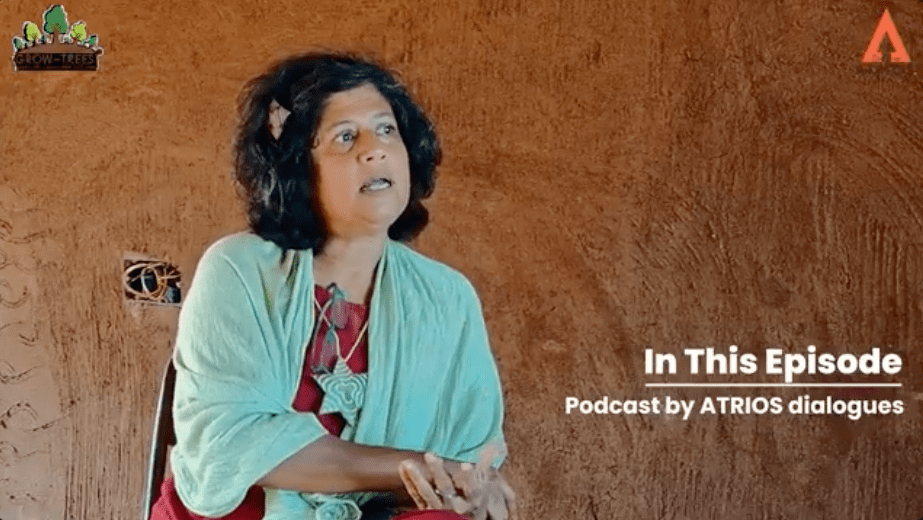
[Fig.4] The interview of Tallulah D’Silva. Source:
Building a Home in Harmony with Nature – The Sustainable Way Forward | Tallulah D’Silva [ https://youtu.be/A7-CwfLz038?si=DyDj-IqoBbqM2d7A]
This positive shift in awareness not only in terms of food security and consumption has but also in various other disciplines that are intertwined with khazans has garnered momentum. The Don Bosco School of Agriculture also includes practical learning, where students are sent into the fields – either to khazan lands or rice cultivating farms in Goa to live and learn from the local farmers (de Braganza, personal communication, 29th May 2025).
Fr. George Quadros [Fig. 5] who is known as the ‘Paddy Man of Goa’ undertook the challenge to mechanically transplant rice saplings onto 1 lakh square meters of land in Curtorim (Herald Team, 2024). The sheer determination and passion to preserve the khazans is commendable.
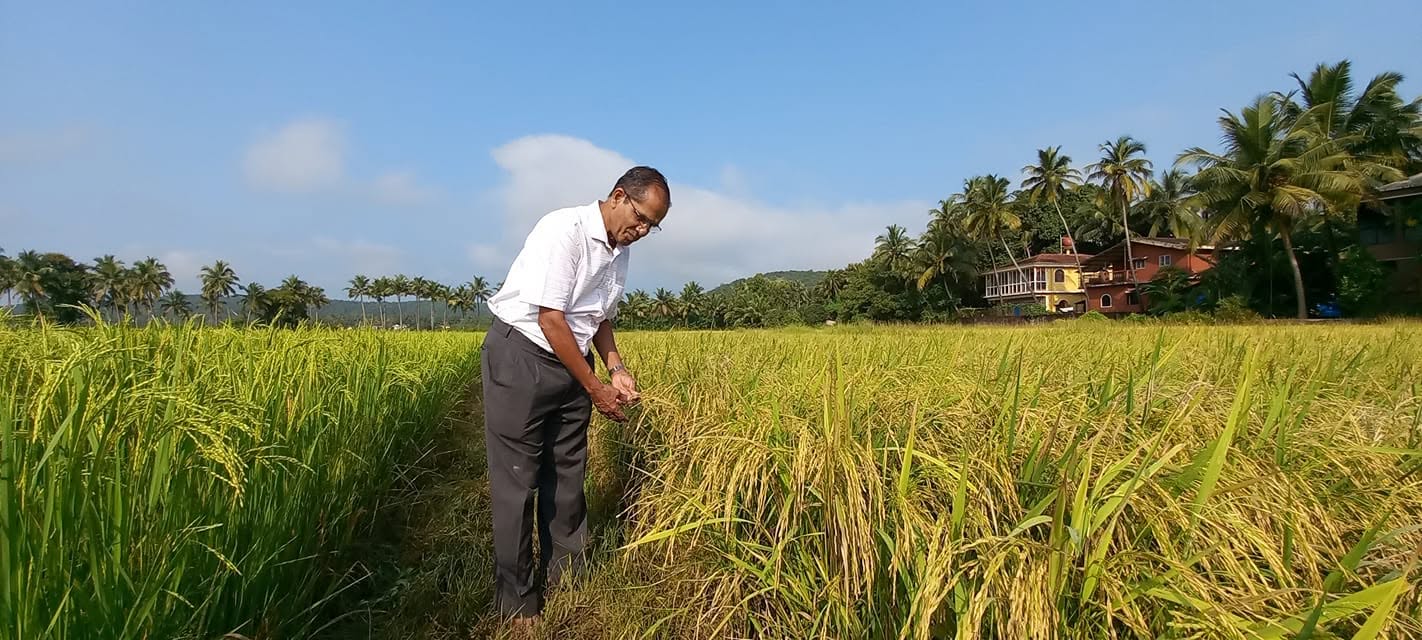
[Fig. 5] “The paddy man of Goa” Rev Fr George Quadros surveying his Basmati field. Source: Goencho Xetkar FB.
The Khazan Society of Goa, headed by Elsa Fernandes, an environmental architect, was set up in 2022. The society is comprised of experts and concerned citizens who have come together in order to strengthen and revive the khazans in Goa. The Goa Water Stories is another initiative that involves the local Goan community, especially the youth, to engage meaningfully with water, ecology and the indigenous communities through art, research and writing. One project under the Goa Water Stories titled Khazan Clay Chronicles by Melanie Costa Pereira involved exploring the various clay soils of the khazans and creating watercolour works using the Old Masters technique.
In recent news, the Goa state government intends to set up a Khazan Land Management Plan (KLMP) in order to conduct research. The khazan board will conduct salinity profiling and soil mapping across various khazans lands (Shetye, 2025). The proposal seems to offer hope for the revival of khazans in Goa which hopefully will lead to food security within the State.
Conclusion
Khazans are integral to Goan ecological and cultural life, embodying a long-standing symbiosis between human communities and tidal environments. These unique agro-aquaculture systems, developed over centuries, support biodiversity, prevent saline intrusion, and offer climate resilience.
Preserving this ancient knowledge and protecting these lands for the future generation is important. As modern development and environmental threats increase, protecting khazan lands ensures the continuation of a sustainable, community-led model that harmonizes nature and human activity. Their preservation is not just about safeguarding the past, but securing a resilient and environmentally just future for generations to come in Goa.
- A makeshift bamboo mat silos made to store rice. ↩︎
References:
- Deepal, S. (2021). “Goa’s Last Living Khazans”. GOYA. Article published online (https://www.goya.in/blog/goas-last-living-khazans)
- Jacob, G.J. (2019). The Khazans of Goa: A Socio-Cultural Perspective. Article published online. (https:// www.sahapedia.org/khazans-goa-socio-culturalperspective)
- Khan, A.W. (2025). Salinity Zoning, LiDAR Mapping and periodic reviews to drive khazan revival. Article published online. (https://epaper.navhindtimes.in/NewsDetail.aspx?storyid=25136&date=2025-06-06&pageid=1)
- Mascarenhas-Keyes, Stella.(1987). “Migration and the International Catholic Goan Community.” PhD Thesis, London University.
- Rubinoff, J.A. (2001). “Pink Gold: Transformation of Backwater Aquaculture on Goa’s Khazan Lands.” Economic and Political Weekly 36, no. 13. 1108–14. http://www.jstor.org/stable/4410457.
- Shetye, M. (2025). “Goa plans to set up board to revive khazan land, will override TCP Act.” Time of India. Article published online https://timesofindia.indiatimes.com/city/goa/state-plans-to-set-up-board-to-revive-khazan-land-will-override-tcp-act/articleshow/121658023.cms
- Sonak, S (2014). Khazan Ecosystems of Goa: Building on Indigenous Solutions to Cope with Global Environmental Change. Dordrecht: Springer.
- (n.d.) “One thing Goans simply cannot do without- ‘Pez’ or ‘Congee’, Goa Me. Article published online https://itsgoa.com/one-thing-goans-simply-cannot-do-without-pez-or-conjee
Interviews:

Miguel de Braganze|Interview in May 2025; Screenshot; Courtesy of SUAVEART

Tallulah D’Silva|Interview in May 2025; Screenshot; Courtesy of SUAVEART

