Yipei Lee is an independent curator and researcher. With a background in design and art, over the past fifteen years, she has been actively engaged in the contemporary art ecosystem, frequently working between Southeast Asia and the Chinese region. Her interdisciplinary cultural practices aim to reveal social responsibility and humanistic values by integrating fieldwork, scientific data, and Indigenous knowledge — revitalizing the social potential of art.
Her essays and curatorial practices have presented across several regions, including Mainland China, Singapore, Indonesia, Taiwan, Switzerland, Germany, Spain and UK. Currently she investigates the paradigm of ecological curating, developing cognitive topological frameworks around climate resilience and island geopolitics, and integrating archipelagic networks of practice that reframe islands as critical nodes within planetary ecological systems.
Introduction
Bali and Java were not always separated by the sea. During the Ice Age, both islands formed part of the Sunda Shelf (Sundaland), a vast continental landmass that enabled the movement of people, plants, animals, and cultural practices across what is now insular Southeast Asia. Although rising sea levels eventually submerged these land bridges and produced the straits that now divide the islands, long-standing networks1 of exchange persisted, shaping a deeply interconnected island world.
From the tenth and eleventh centuries onward, political, religious, and dynastic relations between Bali and East Java intensified. Over the following centuries, connections were sustained through marriage alliances, trade, ritual practices, and knowledge exchange. Between the fourteenth and sixteenth centuries, the decline of the Majapahit Kingdom2 in East Java coincided with the expansion of Islamic polities. Members of the Majapahit elite—nobles, priests, artists, and artisans—crossed the sea to Bali, seeking refuge and continuity for their cultural and religious traditions. In doing so, they brought with them courtly cultures, legal systems, ritual forms, artistic practices, and caste-based social structures, which gradually interwove with local Balinese traditions to form what is now understood as Balinese Hindu culture.
Historical Foundations
From the eleventh century onward, Hindu cultural influences from Java profoundly shaped Balinese society till nowadays. The rock-cut temple complex of Gunung Kawi stands as a key testimony to political alliances and trans-island cultural exchange, combining local Balinese forms with East Javanese candi-type commemorative architecture. This period also marks the emergence of early forms of water governance. Inscriptions such as Pandak Badung (1071 CE), which mentions Kasuwakan, and Klungkung (1072 CE), which explicitly refers to Subak Rawas, indicate that irrigation management systems were already highly developed. These records suggest that water was not only a material resource but also the basis of a social system integrating agriculture, ritual practice, and collective organization.
Before the widespread use of paper, lontar3 manuscripts [Fig. 1] served as the principal media for recording and transmitting knowledge in Bali. Inscribed on palm leaves in Old Javanese (Kawi), Old Balinese, and Sanskrit, they preserved knowledge ranging from ritual and law to agriculture, medicine, astronomy, and irrigation practices across each kingdom.(Sugi Lanus) More than archives, they function as a cultural infrastructure of memory across generations. One manuscript, Kawit Babad Hindu Wenten Ring Bali, states:
“Sang mikukuhang sawah kewastanin subak, sang mikukuhang toya kewastanin pekaseh, ika mawenang mangepah toya punika.” The passage can be broadly translated as: “Those who collectively cultivate and maintain the rice fields are known as members of the Subak. Those entrusted with managing and distributing water are called Pekaseh. Together, they are responsible for the allocation and governance of irrigation water.”
It describes how agricultural laborers were organized under Subak, and water managers under pekaseh, outlining an early articulation of collective irrigation governance. Subak thus emerges not as a technical system alone, but as a form of social coordination grounded in shared responsibility.

[Fig.1] lontar manuscripts. Kidung Bramara Sangupati (Romance of the Honey Bees). No Date. Southeast Asian Collection. Library of Congress Asian Division. Source: [https://guides.loc.gov/southeast-asian-collection/rare]
Modern Transformations
Bali’s terrain is defined by volcanic mountains, steep valleys, and dense river networks. To understand the emergence of Subak, it is essential to consider the environmental conditions of premodern Bali. The island’s landscape featured dense forests, undulating hills, steep river valleys, and highly varied topography, creating significant challenges for agricultural cultivation. Because water sources were often located at lower elevations, coordinated irrigation systems were required to channel water uphill to terraced fields.
For farmers, the challenge of directing water from these lower catchments to cultivated fields required considerable ingenuity and collective effort. Through canals, tunnels, dams, and terraced fields, Balinese farmers developed an adaptive hydraulic landscape. These interventions are not merely technical but represent accumulated Indigenous knowledge, refined through generations of environmental negotiation. Terracing, in particular, transformed steep slopes into layered rice terraces that not only enhanced agricultural productivity but also produced the cultural landscapes that have become emblematic of Bali today.[Fig.2]
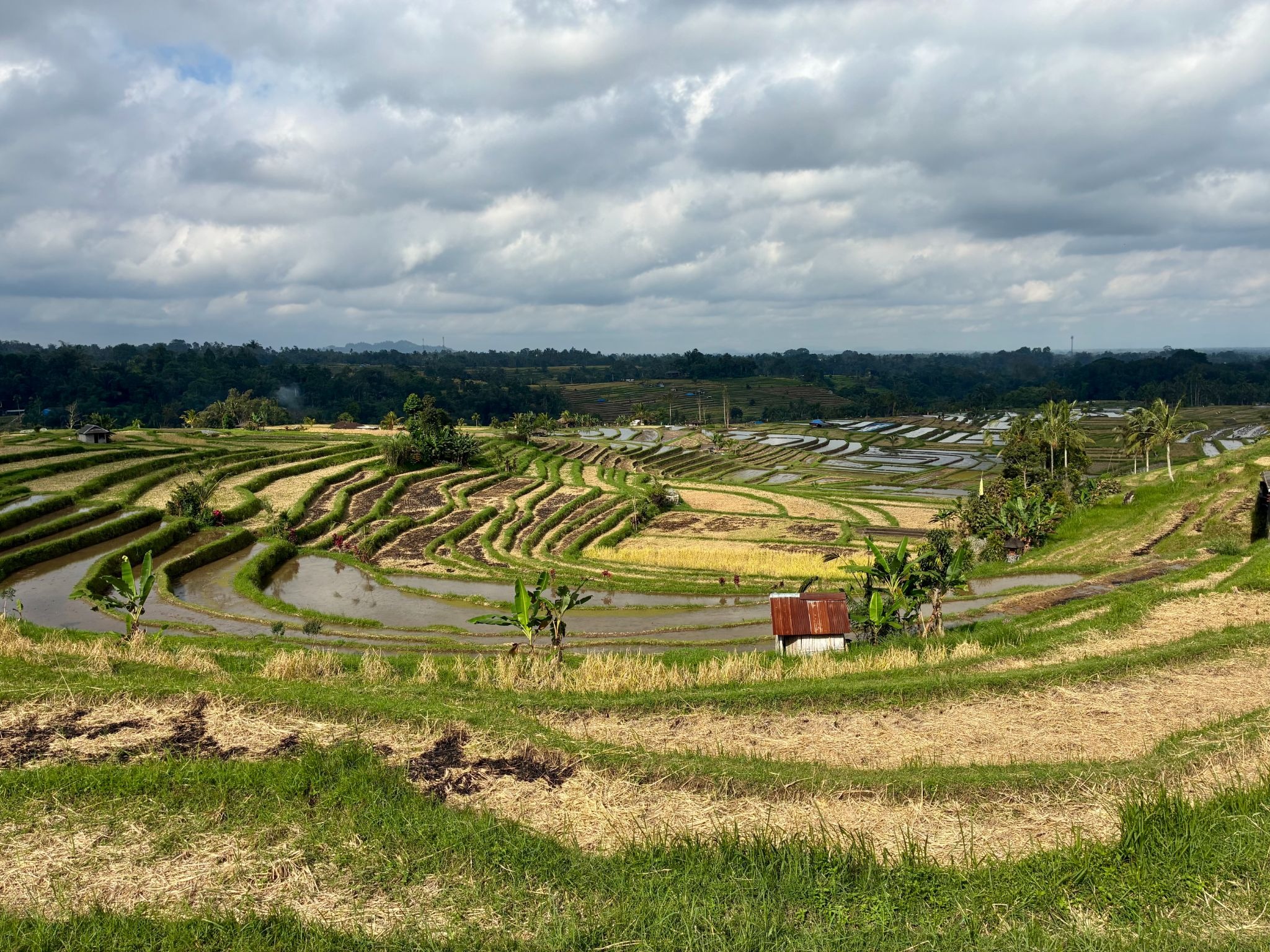
[Fig.2] Jatiluwih Rice Terraces, Bali. Terraced agricultural landscapes sustained by the Subak water management system.
2025. Photo: Yipei Lee
Crucially, knowledge of water allocation and land management was never individually owned. It was collectively produced, transmitted, and maintained through ritual, cooperation, and intergenerational practice. Over time, Subak in Bali specifically evolved into a complex institutional system that integrated agricultural production, water governance, religious beliefs, and local forms of social organization.
In 2012, UNESCO inscribed the Cultural Landscape of Bali Province: the Subak System as a Manifestation of the Tri Hita Karana Philosophy. As noted in its description, “Rice, the water that sustains it, and Subak, the cooperative social system that controls the water, have together shaped the landscape over the past thousand years and are an integral part of religious life.” UNESCO further defines Subak as: “the cooperative social system that controls the water.” The significance of this designation extends beyond heritage recognition. Through its inscription as a World Heritage site and through ongoing scholarly attention, Subak can be understood as a cooperative social system organized around water management, rice cultivation, and local cosmologies. [Fig. 3 and 4] For more than a millennium, Subak has shaped Bali’s agricultural and cultural landscapes while sustaining forms of local knowledge, collective memory, and community-based governance.[Fig. 5 and 6] Rooted in the flows of water and the rhythms of cultivation, it remains a living system through which ecological knowledge continues to circulate across generations.
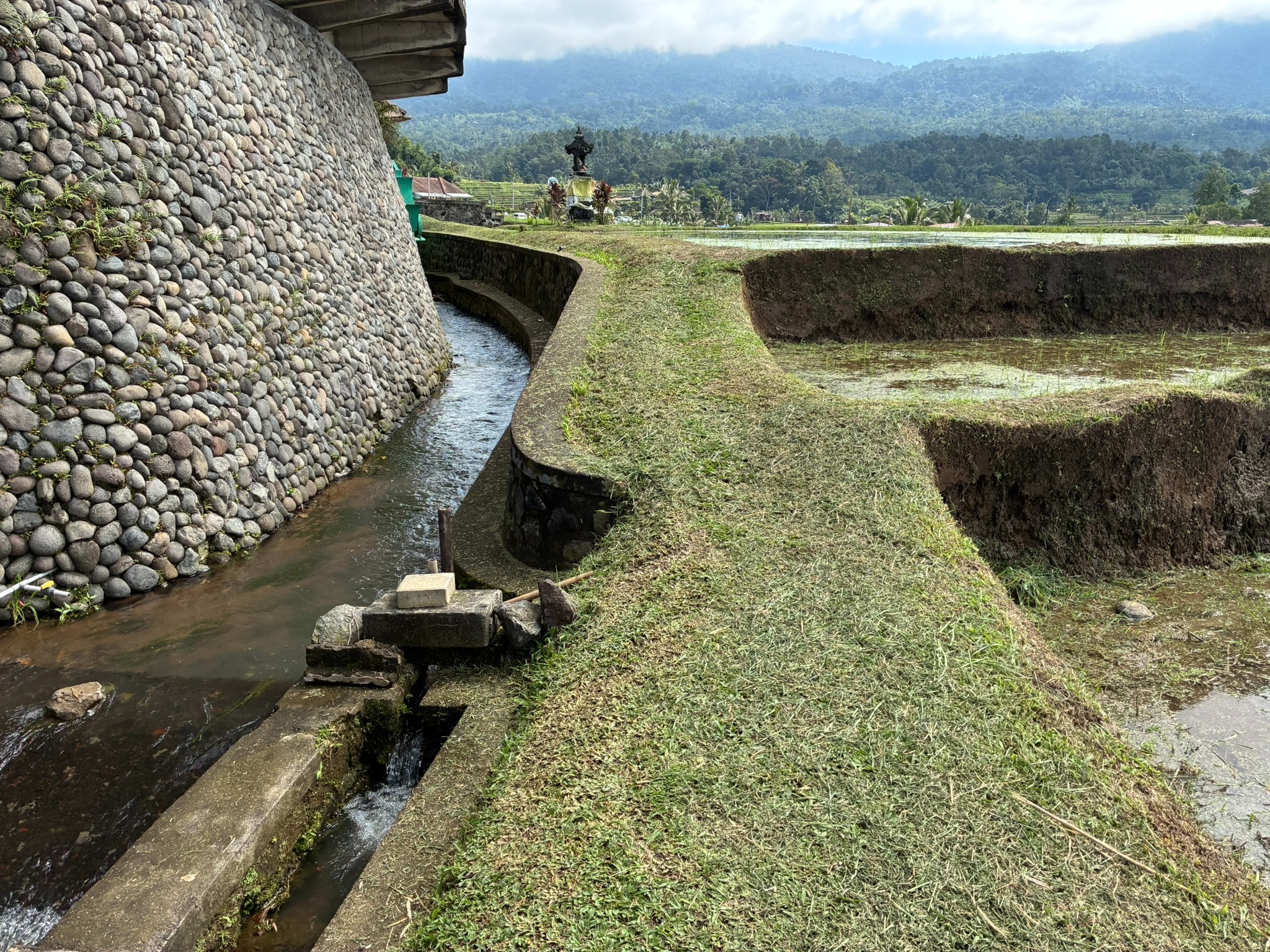
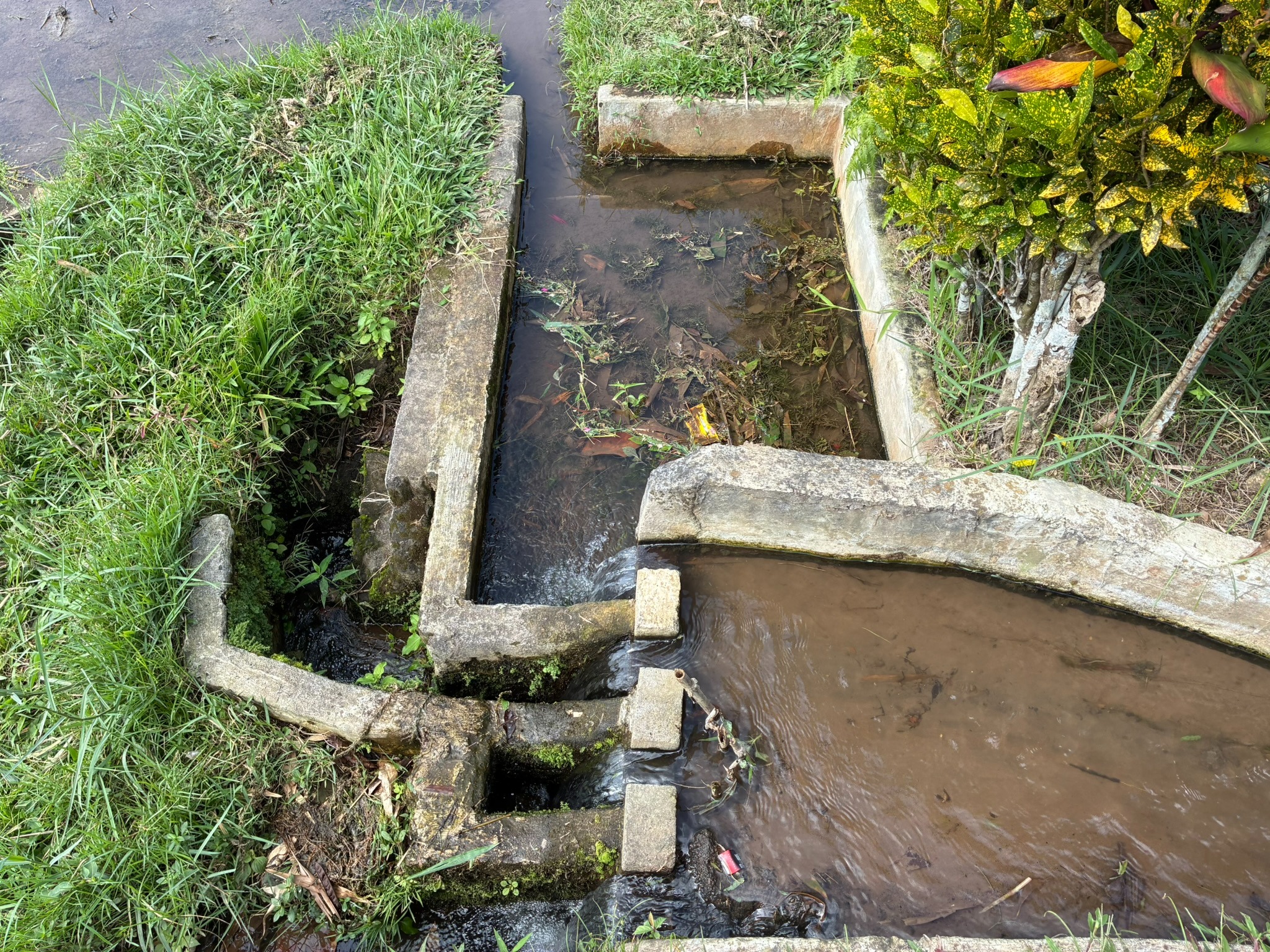
[Fig. 3 and 4] Water-allocation structures (temuku) in the Subak irrigation network.
Through a system of channels, gates, and shared distribution points,
water is collectively managed and redirected across agricultural landscapes,
embodying the principles of cooperation and ecological stewardship. 2025. Photos: Yipei Lee
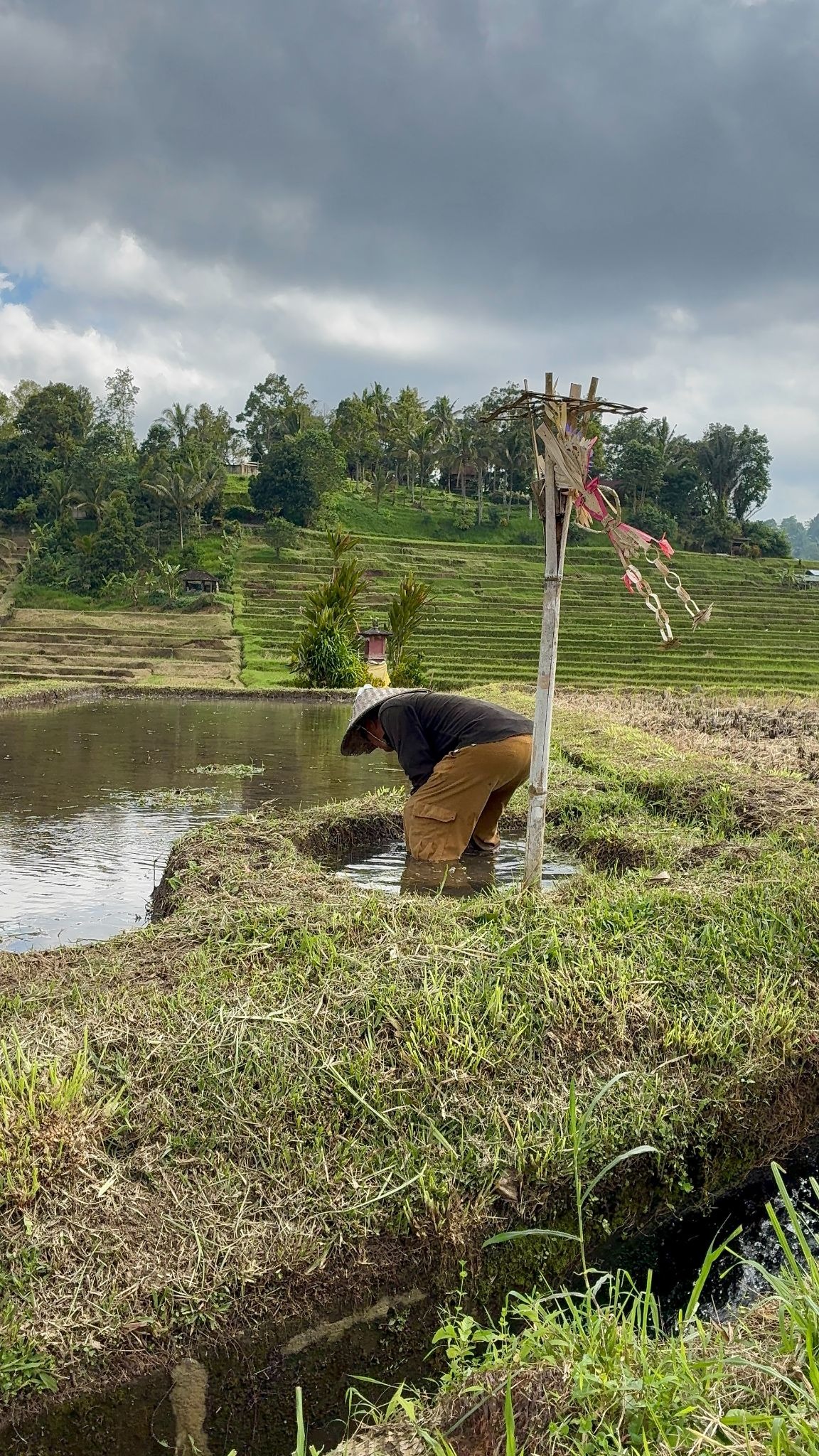

[Fig. 5 and 6] Maintaining the flow. A farmer removes straw and debris from a Subak irrigation channel, reflecting the everyday practices through which collective water governance is enacted. 2025. Photo: Yipei Lee
From the Flow of Water to the Flow of Power
In Bali, water is fundamental to life; it is not simply a resource but a relational medium linking land, agriculture, ritual practice, and social life. Water temples4 distributed across the island articulate this network, embedding governance within a cosmological order in which water and social organization are inseparable.
Within Balinese cosmology, water originates in the island’s volcanic highlands, lakes, and sacred watersheds. These waters are closely associated with Dewi Danu, the goddess of water and lakes, and are honored through an extensive network of water temples—including Pura Ulun Danu Batur and Pura Ulun Danu Beratan [Fig. 7] —that connect mountains, lakes, rivers, and rice fields across Bali. Through this interconnected temple system, water circulates across the island, sustaining agricultural production while maintaining spiritual and ecological order. As both a material necessity and a sacred force, water nourishes rice fields and human communities alike, reinforcing the relational balance between humans, nature, and the spiritual realm.This cosmological framework continues to shape Balinese ritual life today, as many ceremonies remain oriented along the sacred axis between mountain and sea.
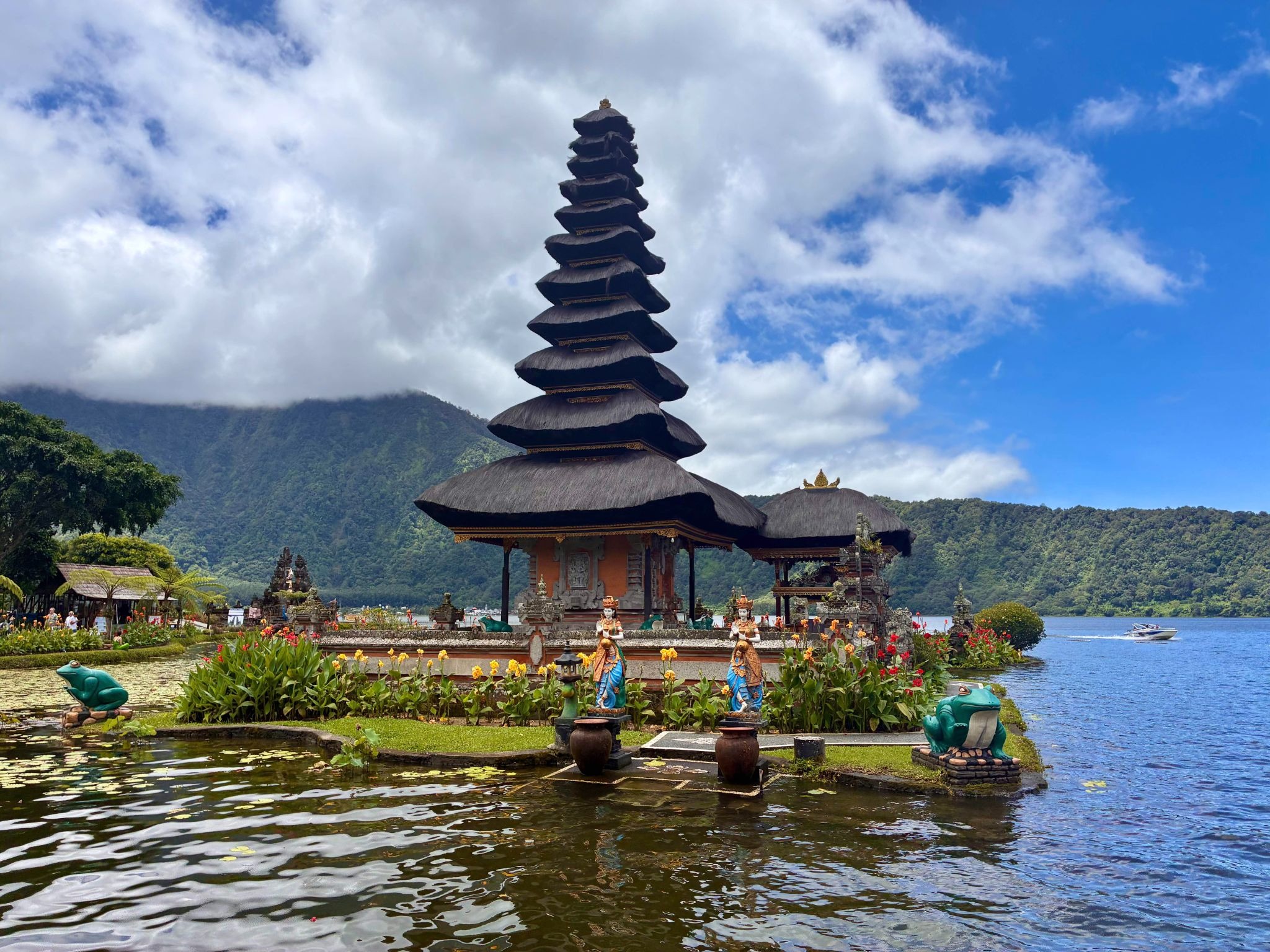
[Fig.7] Pura Ulun Danu Beratan, the spiritual source of Bali’s water temple network. 2026. Photo: Yipei Lee
If inscriptions and manuscripts provide a historical account of Subak, it is through direct engagement with Bali’s agricultural landscapes that its ongoing operation becomes perceptible. During my fieldwork, I was repeatedly drawn to a simple question: how does water move across this volcanic island?
Bali’s central mountain range is intersected by deep valleys, steep slopes, and numerous rivers. Without careful management, the island’s abundant rainfall would rapidly descend from the uplands into the sea [Fig. 8]. Yet it is precisely under these conditions that Balinese communities developed terraced rice fields and Subak irrigation systems that have sustained agriculture for centuries. The layered terraces not only provide the necessary conditions for rice cultivation but also slow surface runoff, allowing water to linger, infiltrate, and circulate through the soil before continuing downstream—transforming water into a regenerative force that sustains both land and community.

[Fig. 8] Map of Bali, 1938. Scale 1:250,000. Originally published in Dutch East Indies (Oost Java). Public domain image via Wikimedia Commons.
What appear at first as minor streams in fact form part of a far larger system. Emerging from forests, springs, and river valleys, water moves through channels, embankments, and terraced rice fields, where small shrines [Fig. 9 and 10] placed along the bunds quietly punctuate the landscape. Here, water is continuously redirected, shared, and redistributed among different Subak communities. Landscapes such as Jatiluwih5, Tegalalang, and Ekowisata Subak Sembung Peguyangan, as well as water temples in Bedulu, Kintamani, and Karangasem, bear witness to these hydrological ecologies. From uplands to lowlands, water traverses agricultural terrains before eventually returning to rivers and the sea. In doing so, it not only shapes Bali’s physical landscape but also connects ecological processes, situated knowledge, and social life.

[Fig. 9] Water held in terraces, flowing through collective care. Where water flows, ritual and governance follow.2025. Photo: Yipei Lee

[Fig.10] Irrigation Channel and Shrine within the Subak System, Bali. A small shrine situated beside an irrigation channel marks the intersection of hydraulic infrastructure and ritual practice. Within Subak, water management is inseparable from spiritual cosmology, local governance, and collective responsibility. 2025. Photo: Yipei Lee
Subak governance operates without centralized authority. Decisions emerge through ongoing negotiation among farmers, pekaseh, water temples, and local communities, structured by seasonal cycles, topography, and ritual calendars. Governance is achieved not through command, but through coordination that sustains ecological balance.
Lessons in Polycentric Governance
Subak offers an alternative model to hierarchical governance systems. Scholars of commons governance and polycentric governance6 have used it as a key reference for understanding distributed resource management. Drawing on his long-term research into Bali’s water temple [Fig. 11]7 networks and Subak institutions, anthropologist Stephen Lansing analyzed that the system was neither designed nor managed by a centralized authority. Rather, it emerged through a dynamic network of interactions among farmers, water temples, pekaseh (leader of farmers), banjar (village communities), and Subak organizations operating at different scales. Through continuous negotiation and adaptation in response to topography, water availability, agricultural cycles, and ritual obligations, these actors collectively coordinate the distribution of water across Bali’s agricultural landscape. Coordination arises through continuous adjustment to environmental and social conditions. Lansing conceptualizes Subak as a Complex Adaptive System (CAS)8, where order emerges from distributed interactions rather than centralized control. This aligns with John H. Holland’s formulation of CAS as networks of interacting agents whose aggregate behavior cannot be reduced to individual components.

[Fig. 11] The Oos and Petanu rivers in south-central Bali (not-to-scale-from-Lansing-1991:119)
When confronted with seasonal fluctuations, variations in water supply, pest outbreaks, or changes in land use, pekaseh elected by farming communities convene meetings and forums to coordinate irrigation schedules, water allocation, and agricultural activities. At the same time, community regulations known as awig-awig establish shared norms, rights, responsibilities, and obligations among members. In certain historical periods, these regulations were also recognised and supported by local rulers or village authorities. Yet the foundation of Subak has never rested upon top-down command. Its resilience lies instead in the capacity of local communities to negotiate, deliberate, and collectively manage shared resources.
Within this framework, Subak is not simply efficient irrigation but an emergent governance system shaped by adaptive cooperation. Subak therefore represents more than an agricultural technology or hydraulic infrastructure. It embodies a governance tradition grounded in Bali collective society to ensure water flows from upstream to downstream giving life across the landscape. Its enduring relevance offers an important lesson for contemporary societies confronting challenges such as climate change, resource allocation, and environmental governance. Stable social orders do not necessarily depend upon a single centre of authority. They may instead arise through the continuous interaction, adaptation, and mutual dependence of multiple centers of decision-making.
Conclusion: The Order of Flow
Subak demonstrates that long before modern state systems, Balinese society had already developed a governance model integrating ecology, ritual, and social organization. Its stability does not depend on centralization, but on distributed responsibility and continuous negotiation.
From a historical perspective, Subak emerged through the interweaving of rice cultivation, hydraulic engineering, local cosmologies, and communal cooperation. From the perspective of cultural landscape, it can be understood as a living network extending across the island. Water flows from volcanic highlands through valleys and plains, passing terraces, temples, and villages, linking people to land, people to nature, and people to one another. In an era of climate uncertainty and resource stress, Subak suggests that governance does not necessarily require central control. Instead, durable systems may emerge from sustained practices of cooperation, reciprocity, and interdependence.
The Flowing Commons therefore refers not only to water, but also to the circulation of knowledge, responsibility, and power across distributed human and ecological systems. Like water itself, governance in Subak is not fixed but continuously negotiated—moving through landscapes, communities, and time.
In this sense, Subak is not only Bali’s cultural inheritance, but also a living proposition for how societies might organize themselves through relation rather than control, and through flow rather than fixity. Rooted in local knowledge yet resonating far beyond the island itself, it offers a compelling example of how relationships between people, environment, and governance might be reimagined.
- The history is connected with Old Javanese Sanskrit in the Zoetmulder, P. J. (1974). Kalangwan: A Survey of Old Javanese Literature. The Hague: Martinus Nijhoff. ↩︎
- The article examines Majapahit’s relationships with neighboring kingdoms using primary historical sources, including: the Nagarakṛtāgama, inscriptions, Chinese chronicles, and archaeological evidence. In MAJAPAHIT AND THE CONTEMPORARY KINGDOMS: INTERACTIONS AND VIEWS by Agus Aris Munandar. Retrieved from: https://ejournal.brin.go.id/berkalaarkeologi/article/view/4211 ↩︎
- On Lontar Manuscripts. Lontar refers to a Southeast Asian palm-leaf manuscript tradition in which texts are inscribed on prepared leaves of the lontar palm to preserve literary, religious, historical, legal, and practical knowledge. Lontar manuscripts are not defined by a single language; depending on their origin, they may be written in Old Javanese (Kawi), Balinese, Javanese, Sanskrit, Sasak, and other regional languages. ↩︎
- Water is sacred before it is practical. In Bali: Sekala & Niskala: Essays on Religion, Ritual, and Art by Fred B. Eiseman Jr., there is no chapter specifically titled “Water Temples.” Instead, Eiseman explains the religious concepts that underpin Bali’s water temple system through several essays, especially “Holy Water” and discussions of temples, priests, and irrigation. ↩︎
- On Subak Scale. According to Salamanca et al. (2015), the largest subak is Jatiluwih, with 562 members, while the smallest is Wongaya Betan, with 90 members. ↩︎
- Bali’s Subak system has frequently been interpreted as a model of polycentric governance, whereby multiple autonomous yet interconnected institutions—including subaks, water temples, local communities, and governmental bodies—coordinate the allocation of water, agricultural calendars, and landscape stewardship without relying on a single centralized authority. This decentralized governance structure has contributed to the long-term resilience and sustainability of Bali’s irrigated rice landscapes. Referenced from Elinor Ostrom on polycentric governance and common-pool resources. ↩︎
- On Bali’s Water Temple System. Lansing’s video explains how Bali’s water temple system connects volcanic lakes, rivers, and hundreds of rural communities, forming a sustainable irrigation coordination network. ↩︎
- On Complex Adaptive Systems. Holland identifies three defining characteristics of complex adaptive systems:
1) They consist of networks of interacting agents.
2) Agents seek to maximize specific goals or interests.
3) Aggregate behavior can be described without complete knowledge of every individual actor. ↩︎
Bibliography:
- Zoetmulder, P. J. (1974). Kalangwan: A Survey of Old Javanese Literature. The Hague: Martinus Nijhoff. Retrieved from https://books.google.tt/books?id=ht77EAAAQBAJ&lpg=PR1&hl=zh-TW&pg=PR7#v=onepage&q&f=false
- Sugi Lanus. (2025). “Puja Saraswati Derives from the Tradition of Bharata Varsa (Ancient India).” Daily Notes of Sugi Lanus, September 5, 2025.
- Rahmawati, Salfia. (2025). “The Leaves of Knowledge: Reframing Palm-leaf Manuscripts as Epistemic Craft in Southeast Asia.” World Anthropology Union Congress 2025. Retrieved from https://www.waucongress2025.org/paper/?id=1728.
- UNESCO World Heritage Centre. “Cultural Landscape of Bali Province: The Subak System as a Manifestation of the Tri Hita Karana Philosophy.” Accessed August 22, 2025. Retrieved from https://whc.unesco.org/en/list/1194
- Lansing, J. Stephen. (2012). Bali’s Water Temples. PopTech. Retrieved from https://youtu.be/h9ozS8BKUFI?si=5WQiR1yYr8rzNHip.
- Salamanca, A. M., A. Nugroho, M. Osbeck, S. Bharwani, and N. Dwisasanti. (2015). Managing a Living Cultural Landscape: Bali’s Subaks and the UNESCO World Heritage Site. SEI Project Report 2015–05. Stockholm Environment Institute. Retrieved from https://www.sei.org/publications/managing-a-living-cultural-landscape-balis-subaks-and-the-unesco-world-heritage-site/
- Ostrom, Vincent, Charles M. Tiebout, and Robert Warren. (1961). “The Organization of Government in Metropolitan Areas: A Theoretical Inquiry.” American Political Science Review 55 (4): 831–842. Retrieved from https://doi.org/10.2307/1952530
- Holland, John H. (1992). Adaptation in Natural and Artificial Systems. Cambridge, MA: MIT Press.
Interviews:

Pekaseh Subak Mustra|Interview in July 2025; In person; Courtesy of SUAVEART

