Context
展覽概述
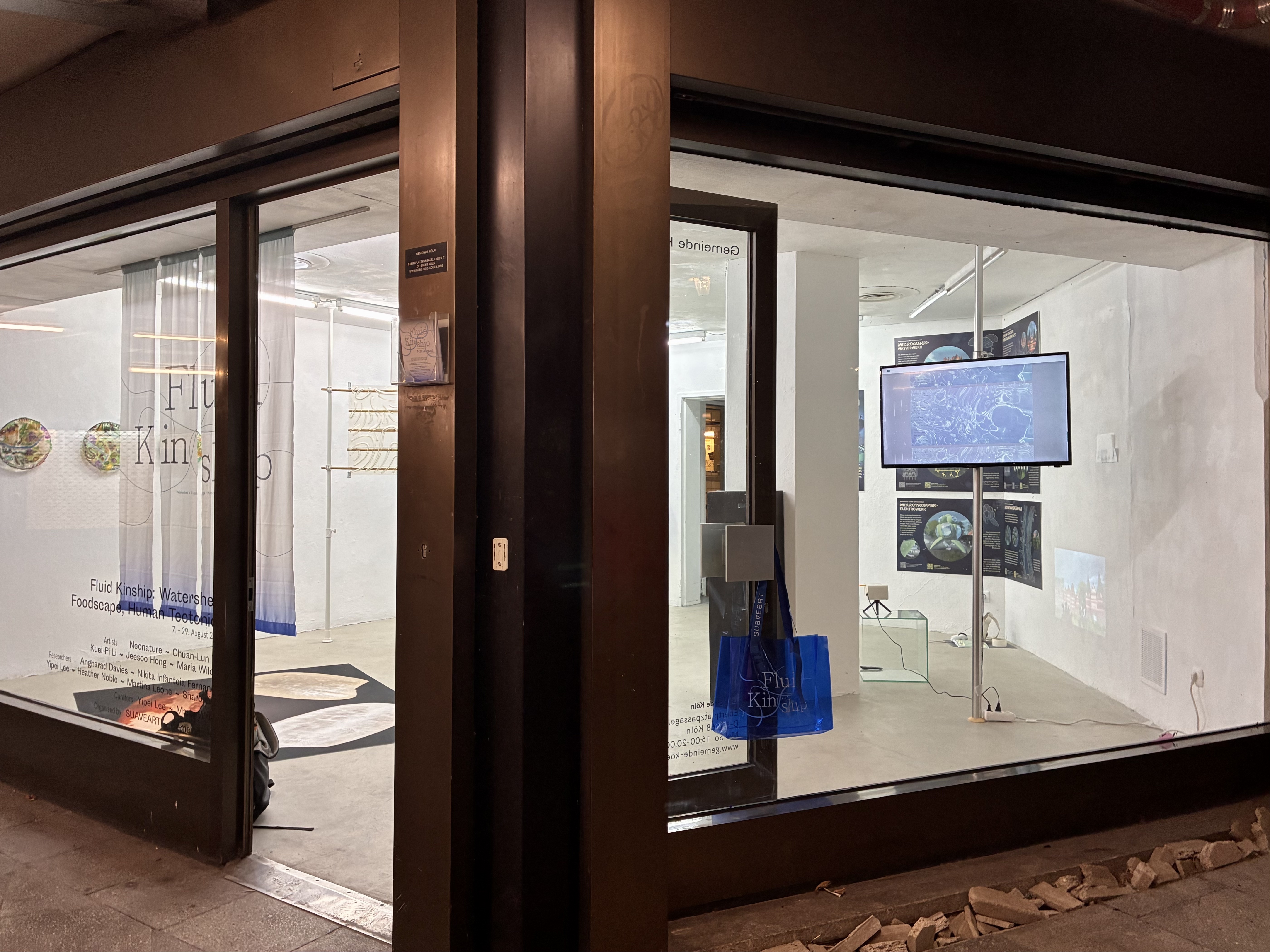
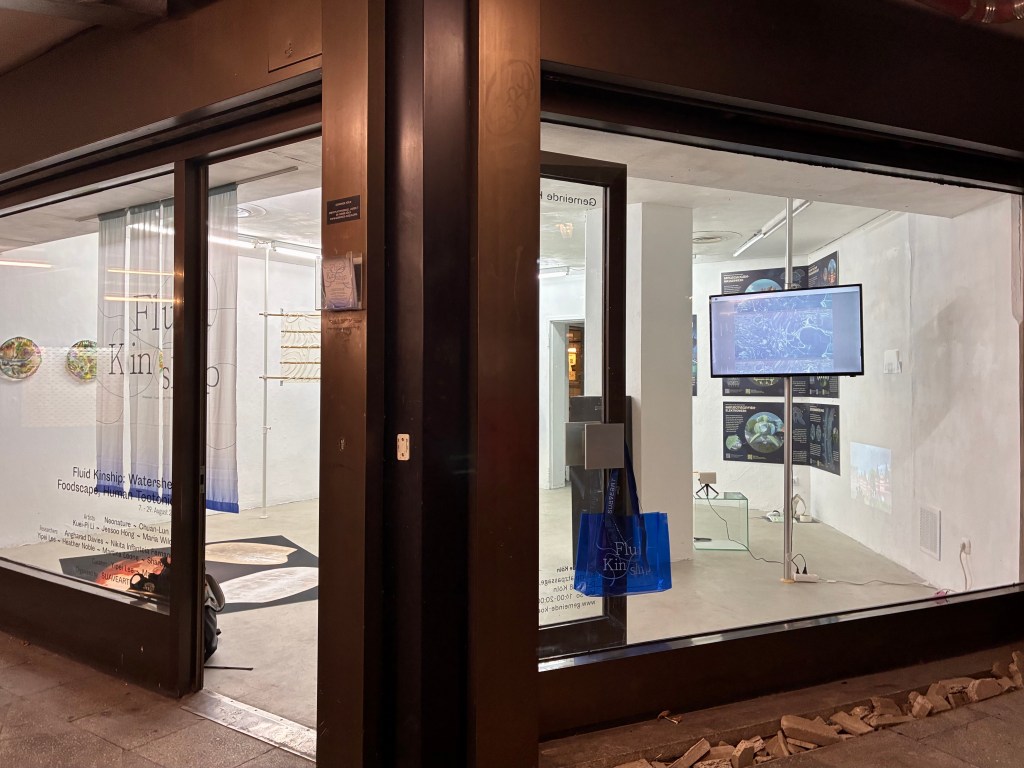
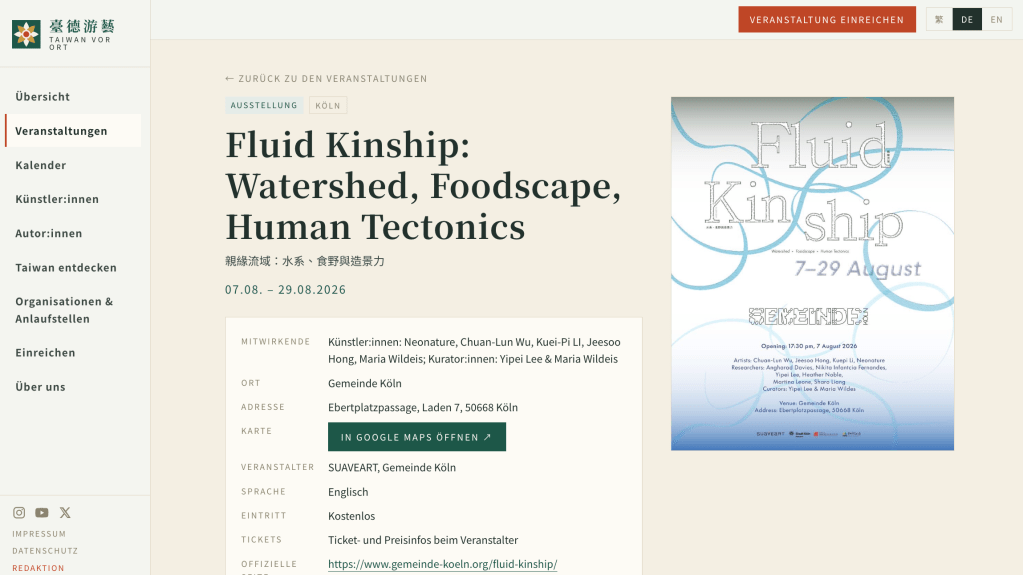
Fluid Kinship: Watershed, Foodscape, Human Tectonics developed out of Edible Cities, Mobile Rivers, a research initiative on rivers and grains that has gradually expanded into residencies, exhibitions, performances, and diverse forms of dialogue. The project approaches watershed as relational infrastructures, foodscape as ecological and cultural metabolisms, and human activity as a geological-scale force. Across these interconnected systems, kinship is understood not as a fixed category, but as a fluid and interdependent network between humans and more-than-human worlds.
The Rhine has long been one of Europe’s major waterways, shaping the formation of cities, trade routes, industries, and civilizations. Yet the river has never been a static backdrop to human history. Today, its changing water levels, currents, and river landscapes are making visible the environmental transformations brought about by climate change and human activity. This changing river becomes the point of departure for our dialogue in Cologne.
Over the past several years, moving between Western Germany and other parts of Europe, we have encountered the Rhine in increasingly contrasting conditions. The river has experienced severe flooding following extreme rainfall, affecting architecture, infrastructure, and everyday life across North Rhine-Westphalia (Nordrhein-Westfalen), with some areas requiring years to recover. In the summer of 2026, by contrast, persistent heat and drought caused water levels to fall sharply. By the end of July, the Rhine in Cologne had fallen to around 25 centimeters, approaching the historic low recorded in 2018; shortly after the beginning of August, some sections of the river reached new record-low levels.
For a river that has long sustained inland navigation, agriculture, industry, and urban life across Europe, water levels can no longer be understood simply as meteorological or hydrological data. They have become environmental signals that can be physically perceived and experienced. Flood and drought may appear to be opposing phenomena, yet together they reveal the same reality: the water systems we have long taken for granted are becoming increasingly unpredictable.
Across Asia, similar transformations appear in another form. Increasingly frequent and intense rainfall has left cities vulnerable to flooding and inundation. From Aceh in Indonesia to Taipei, Shanghai, and other coastal cities, the sudden arrival of large volumes of water exposes the fragility of existing drainage systems and patterns of urban development in the face of extreme weather. While some places are overwhelmed by too much water, others are confronting its disappearance. Flood and drought are therefore not isolated events, but different manifestations of a rapidly changing climate and hydrological system.
It is in this context that we return to the question of what a watershed means. When water is no longer understood simply as a resource to be extracted, allocated, and managed, but as a form of kinship, we begin to see how its movement connects territories and shapes the ways in which human societies survive and organize themselves. Water does not simply flow through rivers. It moves through fields, cities, infrastructures, bodies, food systems, and cultural practices. It is not a natural backdrop outside human society, but part of a relational world in which humans and more-than-human beings live and change together.
Edible Cities, Mobile Rivers brings together researchers from Taiwan, India, Italy, the United Kingdom, and beyond, tracing how water becomes embedded in local systems of production, social structures, and cultural memory through distinct histories, geographies, and cultural contexts. From Yipei Lee’s observations of the governance of rice terraces and irrigation systems in Bali; Nikita Fernandes’s research into tidal farming practices and indigenous rice varieties in Goa; Angharad Davies’s study of the river irrigation systems and architectural culture of Isfahan; and Sharo Liang’s investigation into the transformations of rice and agricultural resources in Taiwan’s Chianan Plain before and after colonial rule, to rituals shaped by seasonal and hydrological cycles, water emerges not simply as a medium that sustains life, but as an active force in the formation of agriculture, settlements, trade, labour, and cultural memory.
Within this framework, grains—particularly rice and wheat—are understood not simply as food, but as carriers of civilizational movement. They have continually evolved alongside climate, geography, technologies, human needs, and migration, being cultivated, exchanged, transformed, and reimagined across different territories.
As researcher Martina Leone’s study of medieval still-life painting and wheat-based food culture reveals, grains have never been merely objects on the table. They carry traces of trade, power, belief, labour, and social order. As wheat and food cultures travelled across the Mediterranean with human migration, their meanings were continually transformed in new territories. The emergence and evolution of couscous culture in Sicily, for example, reveal complex and ongoing relationships between food, land, migration, and cultural exchange. Water systems, territories, crops, and human labour are therefore deeply entangled, forming networks of relation that cross species, geography, and time.
Rather than focusing on a single species, territory, or civilization, the project is concerned with the forms of coexistence that continue to emerge across temporal and geographical boundaries: how water moves; how grains and food cultures develop; how knowledge is transmitted; how landscapes are transformed; and how humans might reconsider their own position within these processes. The changing water levels of the Rhine remind us that what we call “the environment” is never simply a backdrop outside human life. It is a relational world that we inhabit, depend upon, and transform together.
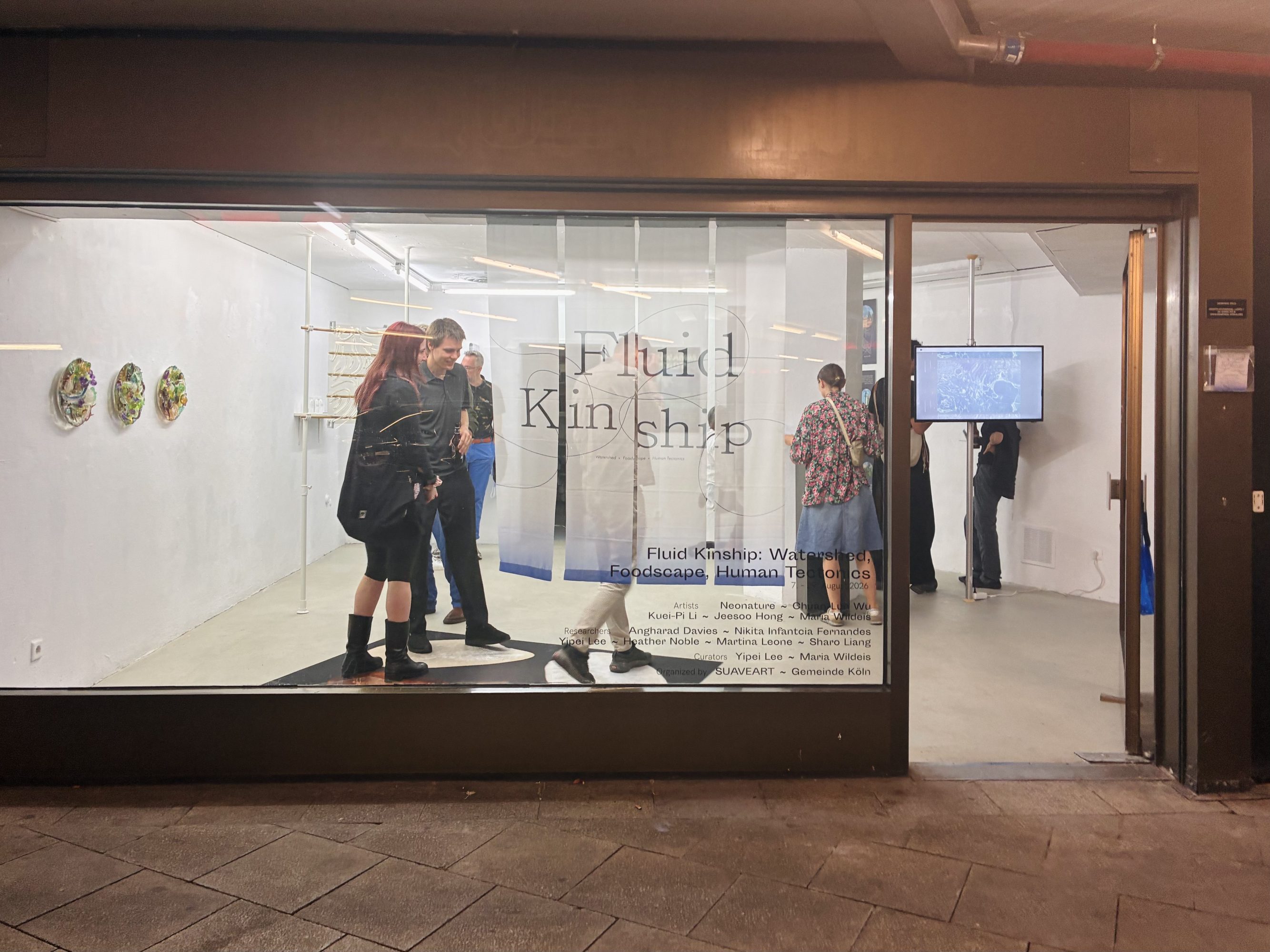
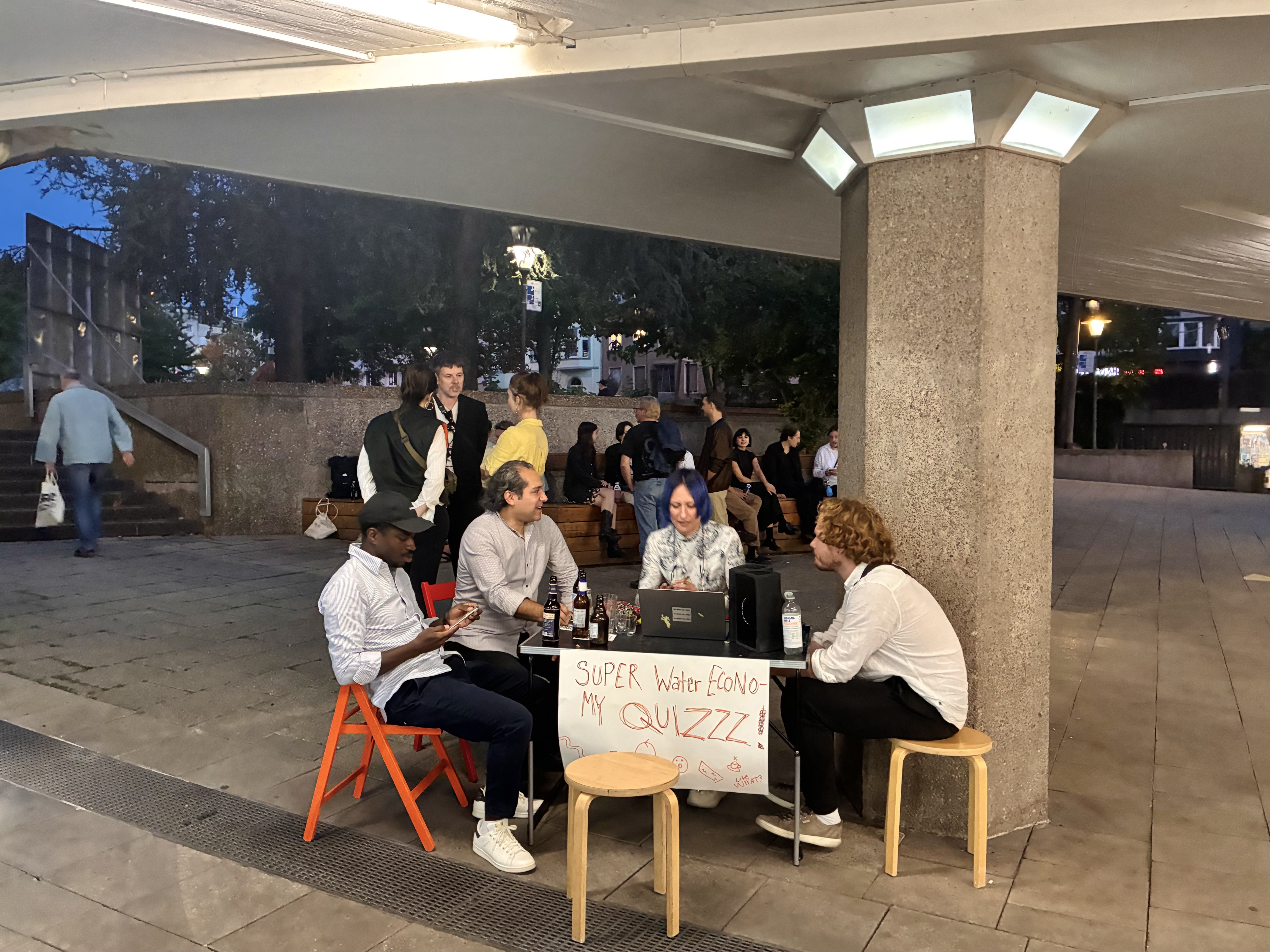
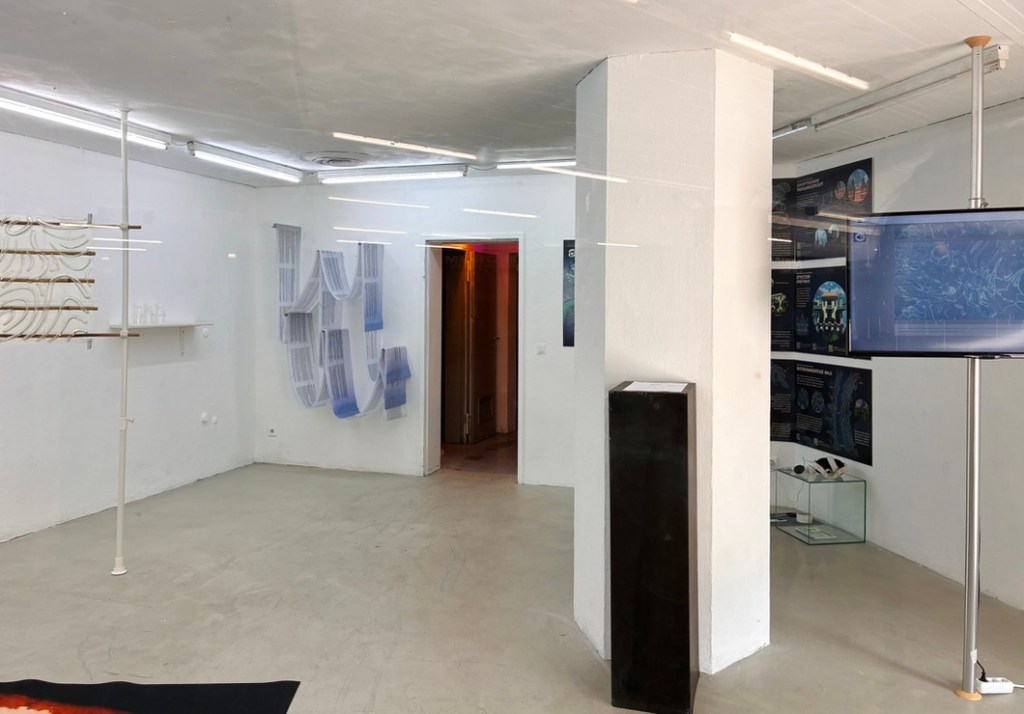
The exhibition brings together artists whose practices intersect contemporary art, environmental research, and speculative futures. New works by Taiwanese artists Chuan-Lun Wu and Kuei-Pi Li are presented alongside a site-specific workshop and performance developed for the project by Korean artist Jeesoo Hong. The Opening Event also features VR works by the German artist duo Neonature and a live sound performance by German artist Maria Wildeis, developed through a series of questions concerning water as a resource.
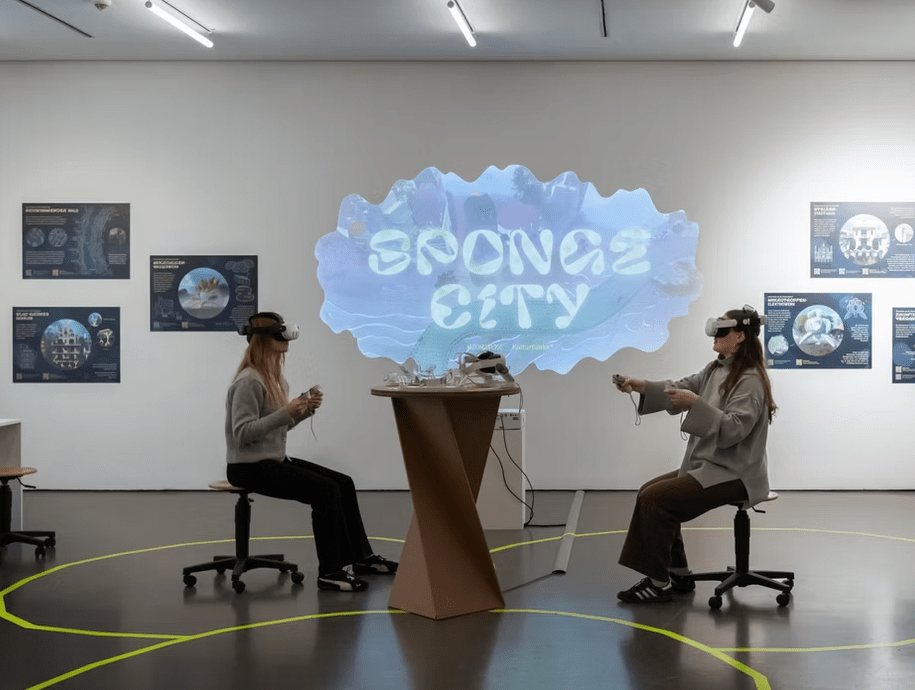
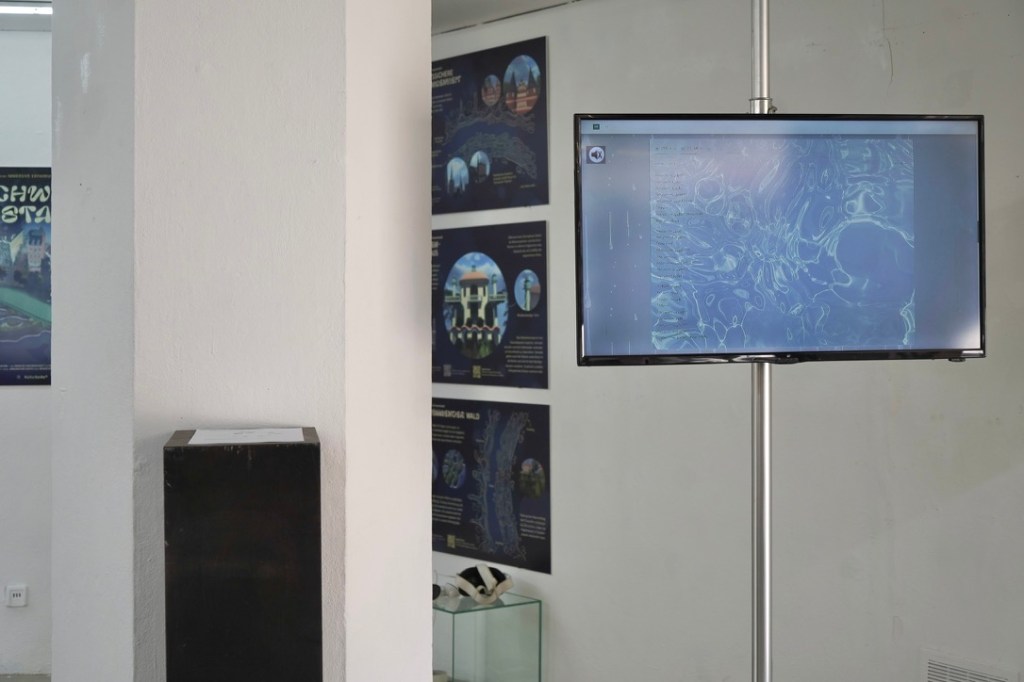
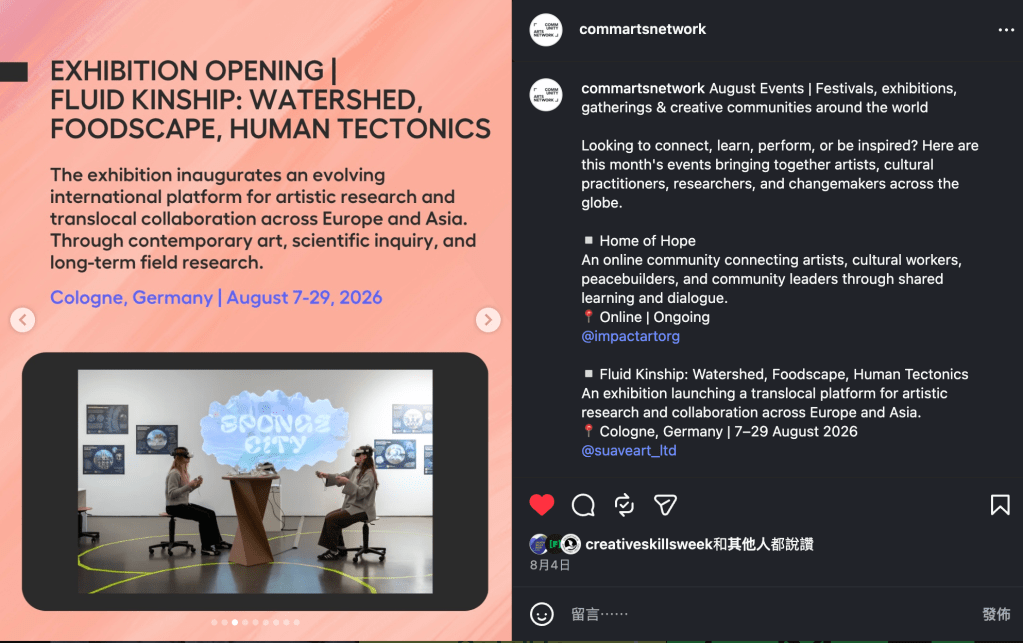
Highlights include Neonature’s Sponge City, a multimedia VR installation that imagines a near-future metropolis sustained through the repair of broken hydrological cycles, reconsidering the possibility of coexistence between urban life and water environments. Kuei-Pi Li’s Cloud is nothing, Thirst is everything transforms the vast yet largely invisible water consumption behind cloud computing, large language models, and other digital infrastructures into an embodied and perceptible experience.
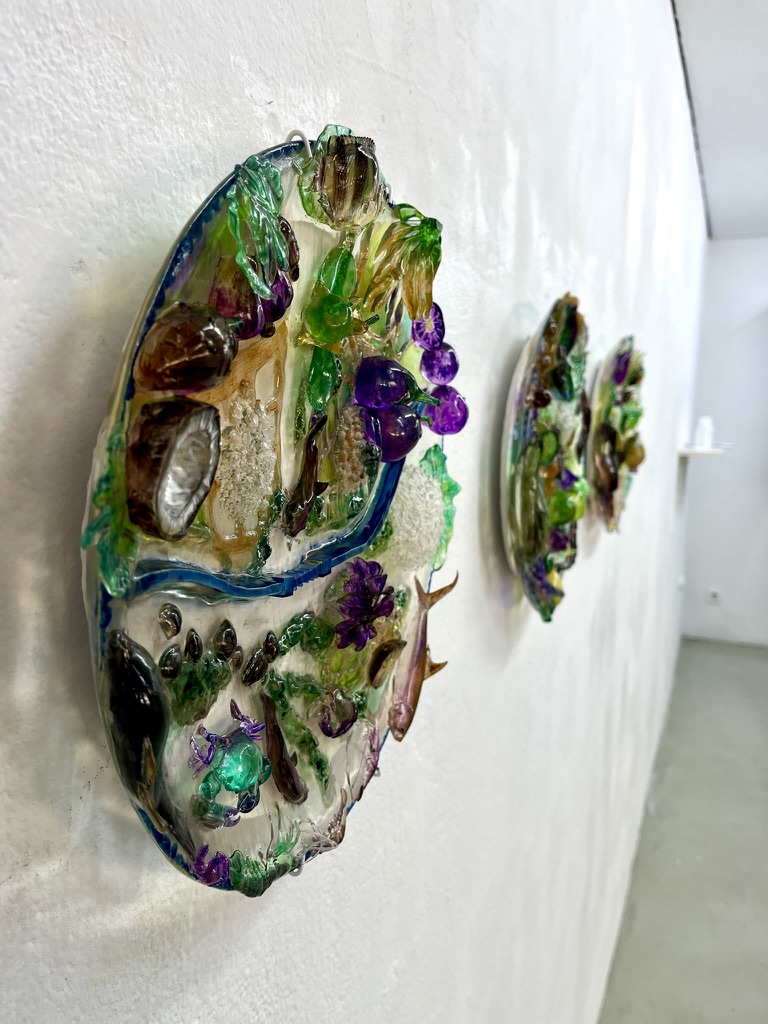
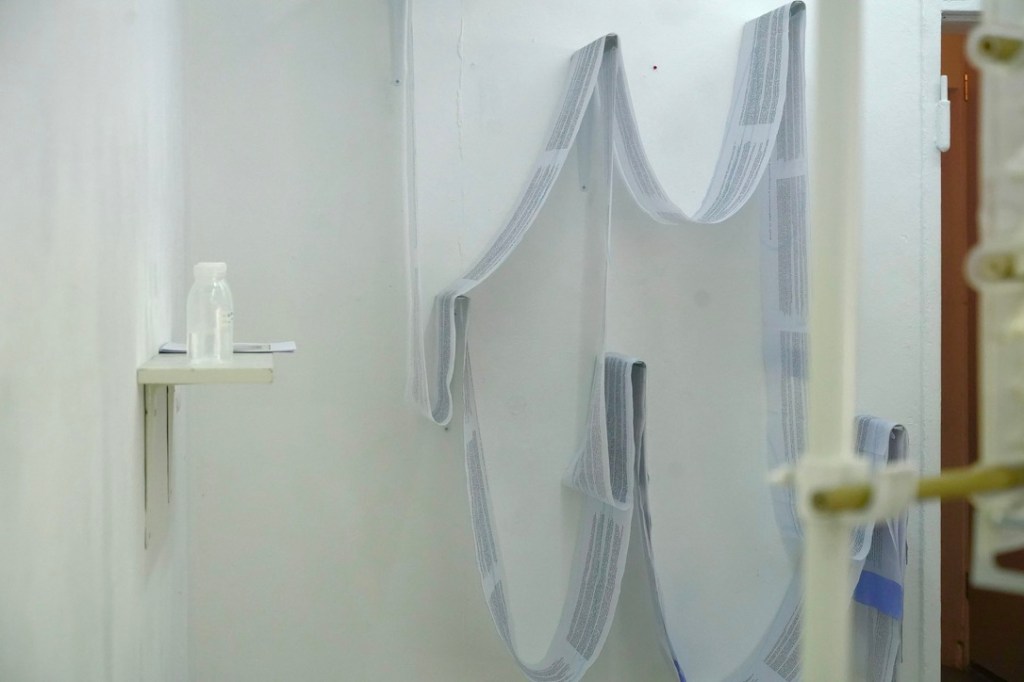
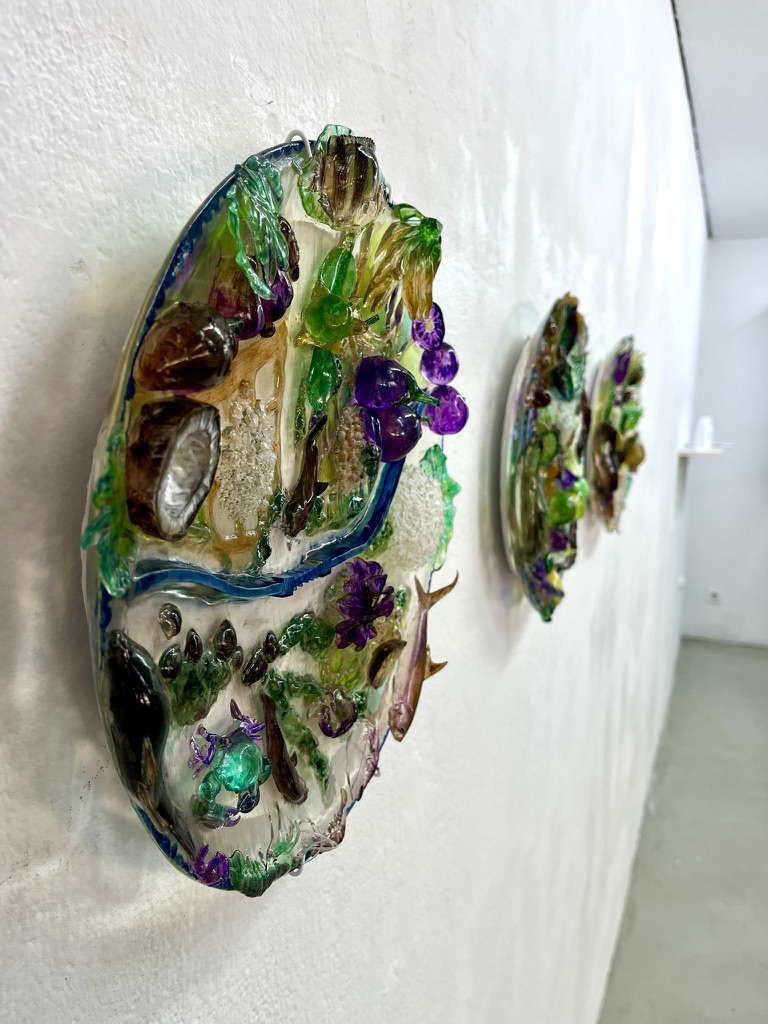
Chuan-Lun Wu’s Foodshed draws upon the Renaissance tradition of Palissy ware. Through a series of 3D-printed vessels, diverse Asian agricultural landscapes are condensed into a single container, questioning how nature becomes artificialized and datafied, and how water and food landscapes are increasingly rendered into objects that can be quantified, commodified, and governed as resources.
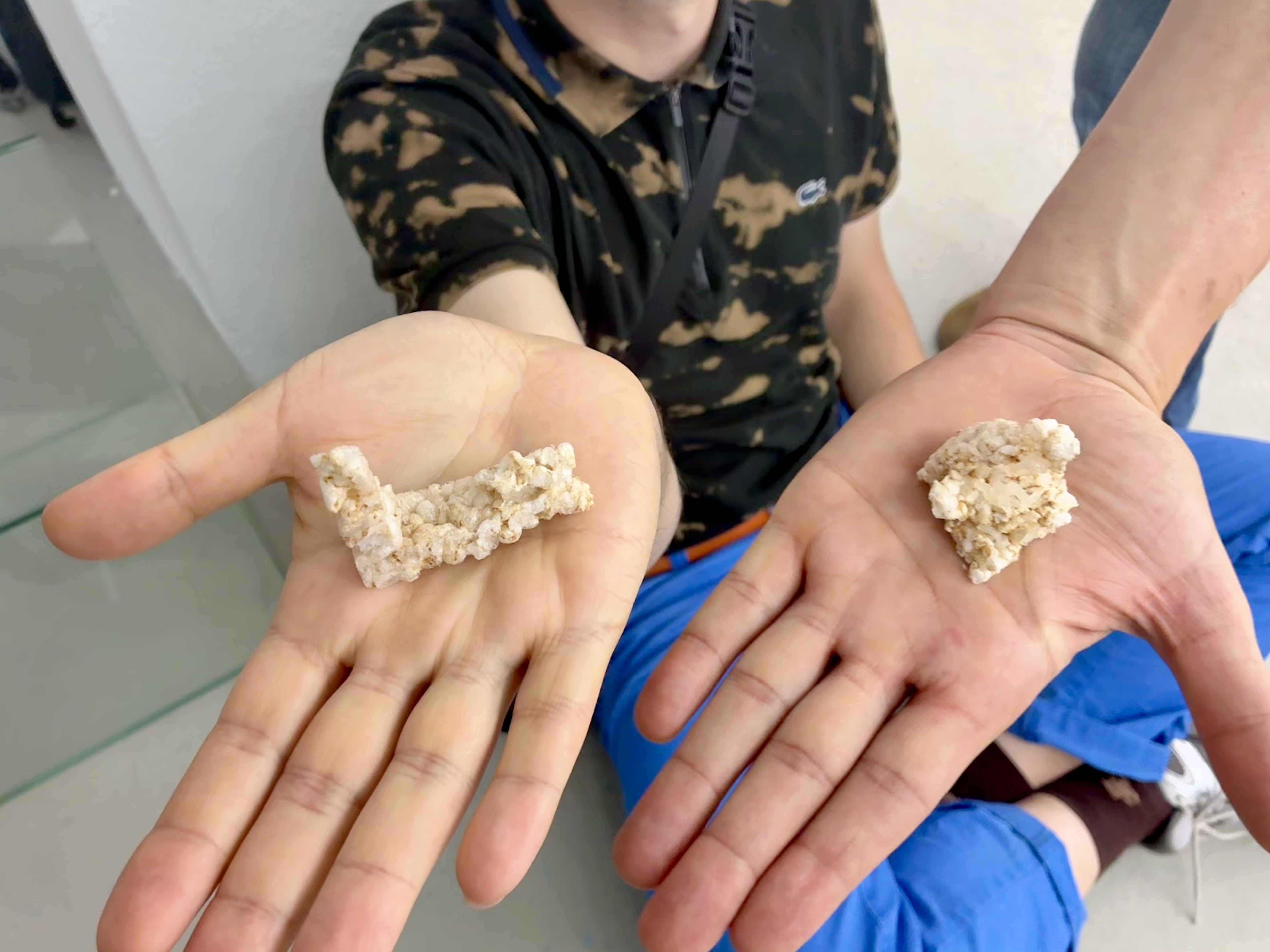
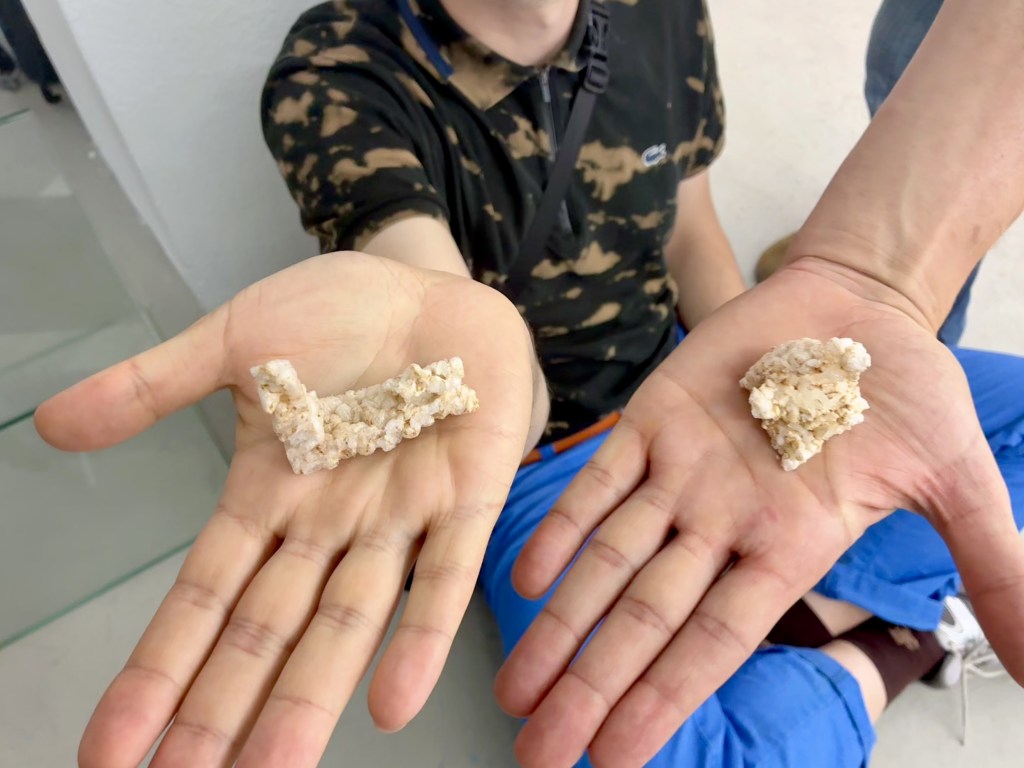
Jeesoo Hong’s Edible Sound Sculptures takes the form of a participatory performance, inviting audiences to attend to the textures, sounds, chewing, and vocal expressions of eating, transforming the act of consumption into a collective practice of sonic composition.
The works are not presented as isolated objects, but as nodes within a network where different systems of knowledge encounter, challenge, and reconnect with one another. Moving across water, food, technology, bodies, and cities, they intersect like a watershed itself: without a single point of origin or destination, and without a fixed form, but continually reshaped through movement, seepage, accumulation, and transformation.
系列展覽《親緣流域:水系、食野、造景力》源於《吃城飲河》的河流與穀物研究,逐步延伸為駐村、展演及多種形式的對話。萊茵河長期作為歐洲重要的水系,承載著城市、貿易與文明的形成;然而,它從來不是一條靜止不變的河流,也不只是人類文明的背景。如今,萊茵河正以水位、流速與河岸景觀的變化,回應著氣候與人類活動所造成的環境轉變,而這條正在變動的河流,也成為我們在科隆展開這場對話的起點。
近幾年往返西德之間,我們一次次看見萊茵河處於不同的狀態:曾經因極端降雨而面臨嚴重洪水,衝擊北萊茵-威斯特法倫(Nordrhein-Westfalen)的城市建築與日常生活,部分地區的修復歷時多年;而在2026年夏季,持續的高溫與乾旱又使河流水位急遽下降。7月底,科隆河段水位一度降至約25公分,逼近2018年的歷史低點;甫進入8月,部分河段更出現新的低水位紀錄。對一條長期支撐歐洲內陸航運、農業、工業與城市生活的河流而言,水位不再只是氣象或水文數據,而逐漸成為一種可以被身體感知的環境訊號。洪水與乾旱看似相反,卻共同揭示了同一件事:我們所熟悉的水系,正在變得越來越難以預測。
在亞洲,同樣的變化以另一種形式發生。一場場日益頻繁且劇烈的暴雨,使許多城市陷入積水與洪患之中。從印尼亞齊、臺北、上海到其他沿海城市,短時間內大量湧入的水暴露出既有排水系統與都市開發面對極端氣候時的脆弱性。也正是在這樣的時刻,我們重新思考「水系」(Watershed) 究竟意味著什麼。當水不再只是被利用與分配的資源,而被理解為一種親屬關係 (kin-ship),我們開始看見水的流動如何串連土地,並形塑人類文明的生存方式。
《吃城飲河》由來自台灣、印度、義大利與英國等地的研究者共同展開,從各自不同的歷史、地理與文化經驗出發,追索水如何滲入地方的生產方式、社會結構與文化記憶。從李依佩對峇里島梯田與灌溉系統治理的觀察、Nikita 對果阿潮汐農耕方法與原生稻種的研究、Angharad 對伊斯法罕河流灌溉系統及其建築文化的梳理、梁棨筑對嘉南平原稻米與物產資源於殖民前後變遷的探討,到順應時節而形成的祭儀,水不只是滋養生命的媒介,也深刻參與了農業、聚落、貿易、勞動與文化記憶的生成。
在這個脈絡中,穀物——尤其是稻米與小麥——也不僅是食物,更是文明流動的載體。它們隨著氣候、地理、技術、人類需求與遷徙而持續演化,在不同地域被培育、交換、改造與重新想像。正如研究員 Martina 對中古世紀靜物畫與小麥飲食文化的研究所揭示的,穀物從來不只是餐桌上的食物,而承載著貿易、權力、信仰、勞動與社會秩序的歷史痕跡;而當小麥與飲食文化隨著人口遷徙跨越地中海,其意義也在新的地域中持續轉化——例如義大利西西里島所面對的 couscous 移民文化,便呈現出飲食、土地與人口流動之間複雜而持續生成的關係。水系、土地、作物與人類勞動因此彼此纏繞,形成一層層跨越物種、地域與時間的關係網絡。
由此,我們所關注的並非單一物種、單一地域或單一文明,而是那些跨越時間與地理邊界持續生成的共生關係:水如何流動,穀物與飲食如何發展,知識如何被傳遞,土地如何被改變,而人類又如何在這些流動之中重新理解自身的位置。萊茵河的水位變化提醒我們,所謂「環境」從來不是人類之外的一個背景,而是與我們共同生活、共同變動的關係體。
展覽進一步匯聚多位創作實踐跨越當代藝術、環境研究與未來想像的藝術家,包括台灣藝術家吳權倫、李奎壁的最新創作,以及韓國藝術家洪知秀(Jeesoo Hong)為本計畫發展的場域限定工作坊與展演。開幕活動則帶來德國雙人藝術家組合 Neonature 的 VR 作品,以及德國藝術家 Maria Wildeis 回應「水資源」所提出的一連串提問,並以此發展的現場聲響演出。
其中,Neonature 的《海綿城市》以多媒體 VR 裝置描繪一座近未來城市如何透過修復破碎的水循環系統延續生存,重新想像人類與水文環境之間的共生關係;李奎壁的《雲並不重要,渴望才是一切》則以沉浸式體驗,將雲端運算、大型語言模型等數位基礎設施背後龐大而難以察覺的水資源消耗,轉化為公眾得以親身感知的經驗;吳權倫的《食域》受文藝復興時期帕利西陶器(Palissy ware)啟發,透過 3D 列印器皿將亞洲多樣的農業景觀濃縮於同一容器之中,反思自然如何被人工化與資料化,以及水與糧食景觀如何逐漸成為可被量化、資源化與並置治理的對象;洪知秀的《可食聲響雕塑》則以參與式展演邀請觀眾從食物的質地、咀嚼與發聲出發,共同將進食轉化為一場集體創作的聲音實踐。
在這裡,不同作品並非彼此孤立的個體,而是構成不同知識系統相遇、碰撞與重新連結的網絡。它們從水、食物、科技、身體與城市等不同切面出發,彼此交織,如同水系本身——沒有單一的起點與終點,也沒有固定不變的形態,而是在流動、滲透、累積與轉化之中,不斷生成新的關係。
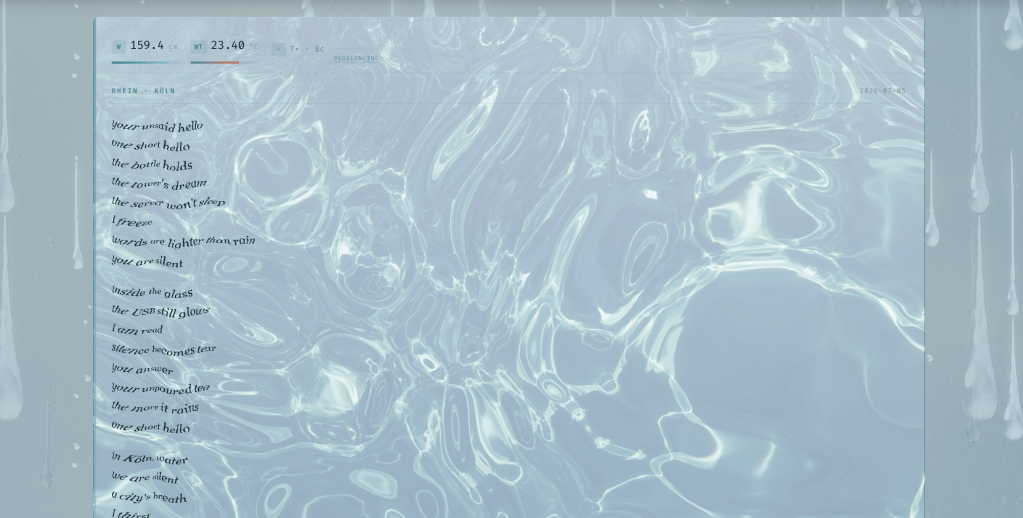
Click link for more interactive experience with artwork by Kuei-Pi LI

Curator:
Yipei Lee & Maria Wildeis
Artist:
Neonature • Chuan-Lun Wu • Kuei-Pi LI • Jeesoo Hong • Maria Wildeis
***
Activities:
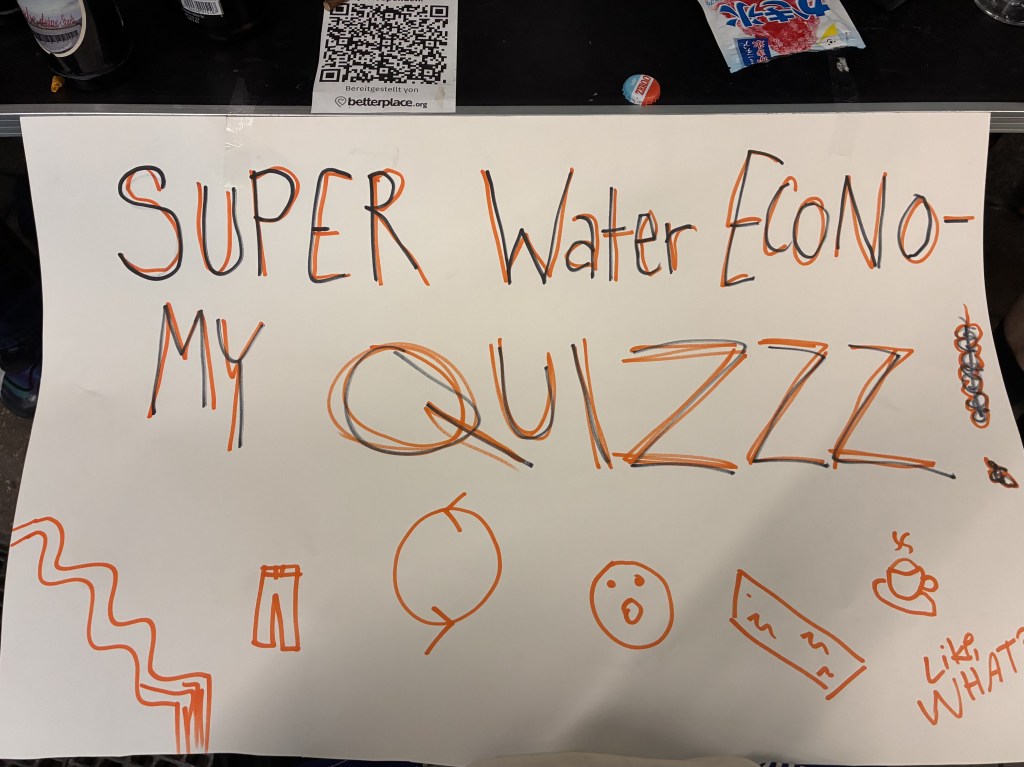
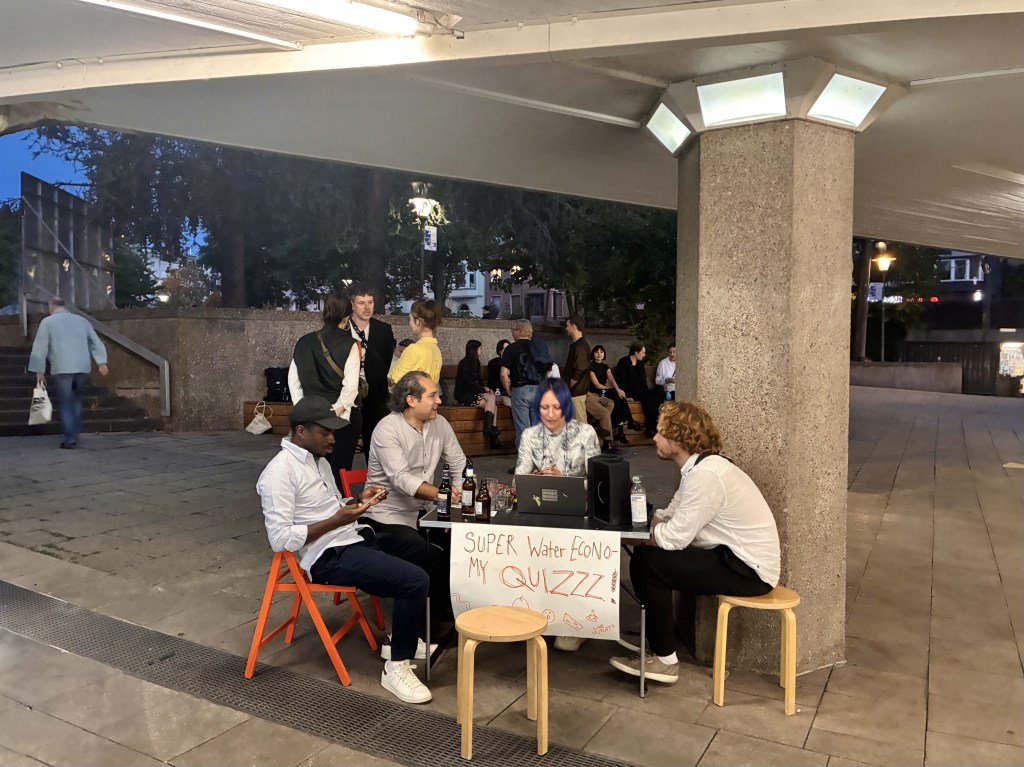
📻 Super Water Econo Quizz by Maria Wildeis
🚶🏼♀️➡️Performance by Jeesoo Hung
***
Photo Credit: SUAVEART and Dudu
Organized by SUAVEART and Gemeinde Cologne
Supported by Stadt Köln, NCAF, and the Department of Cultural Affairs, Taipei City Government, Initiative Freie Musik e.V. Köln (IFM Köln)
策展人:
李依佩 & Maria Wildeis
藝術家:
Neonature • 吳權倫 • 李奎壁• 洪知秀 Jeesoo Hong • Maria Wildeis
***
活動:
📻 Super Water Econo Quizz by Maria Wildeis
🚶🏼♀️➡️行為藝術 by Jeesoo Hung
***
攝影:細着藝術、Dudu
主辦單位:細着藝術、Gemeinde Cologne
支持單位:科隆市政府、國藝會、臺北市政府文化局、科隆自由音樂倡議協會
 細着藝術 SUAVEART