Jill Zheng 鄭文吉
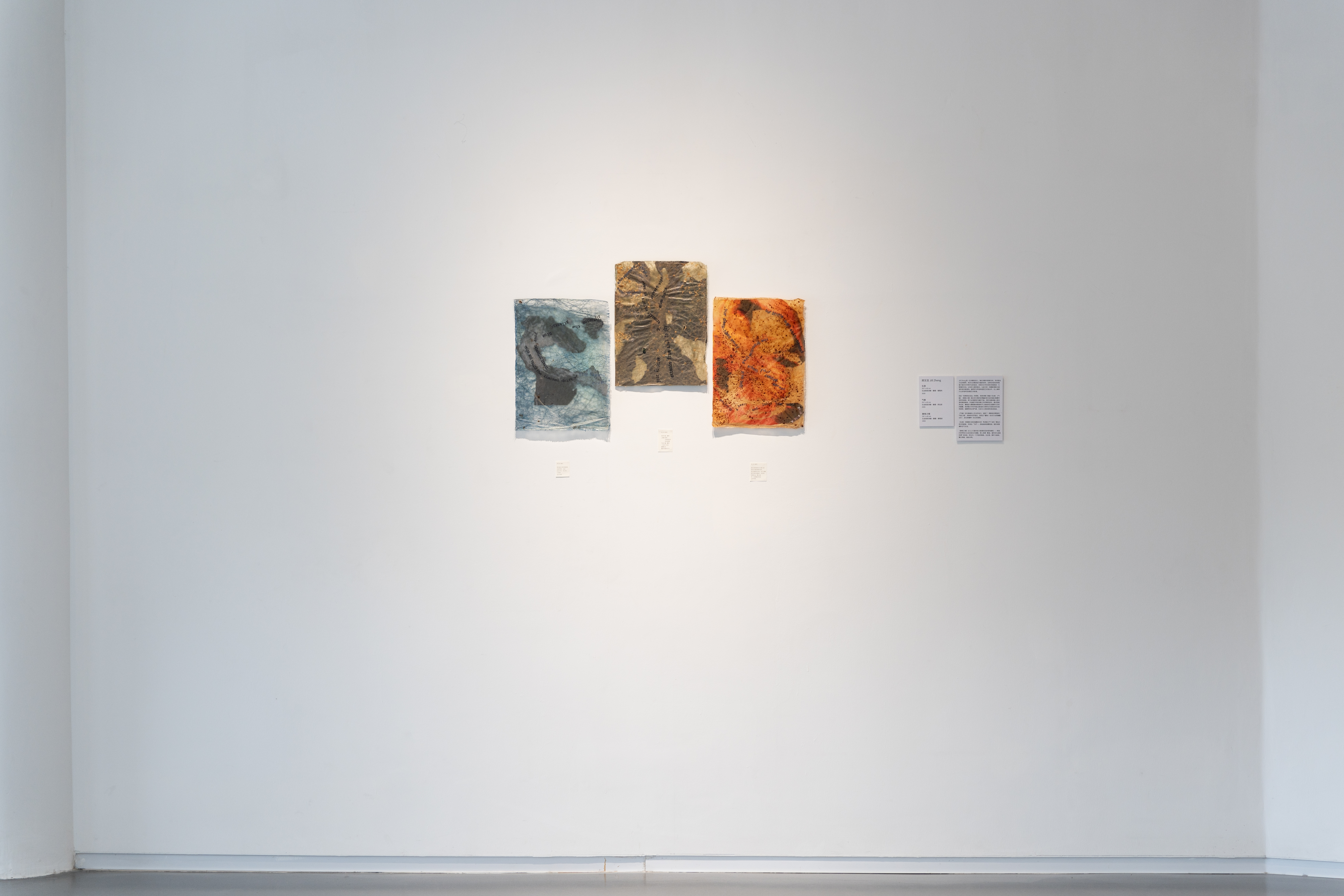
Triglyph of visual poetry—Qi-pulse, metabolic breath, and bronchial branching, 29.7 x 42 cm, vine mesh, grape pulp, 2026
生態視覺詩歌《化息》、《氣脈》、《肺絡之椏》, 藤蔓、葡萄皮與西瓜皮, 2026
Photographer: Huang Xinyuan
Courtesy of SUAVEART
About Artworks
Jill Zheng’s triglyph of visual poetry—Qi-pulse, metabolic breath, and bronchial branching—responds to the question of ‘If trees could talk’ by visually, textually and materially framing tree evapotranspiration as an active, breathing circulatory system that drives our global metabolism, as well as mirroring the deeply rooted anatomy of the human’s internal forest. Across the trilogy, this planetary entanglement is embodied in a shared material vocabulary: a shifting substrate of bio-plastics interwoven with vine mesh. Hand-cured from vegetal matter—including watermelon skin, grape skin, and grape pulp—these organic membranes shift the medium from a passive backdrop to a site of active ecological reading space, where the cellular architecture of the plant breathes through the poetic page; meanwhile, the interstitial texture of the vine mesh operates as a unifying structural grid, tracing the fluid pathways that connect arboreal conduits to global weather patterns and human physiology.
Through Qi-pulse, Zheng poeticises the upward kinetic drive of vegetation, tracing how a tree releases its ‘aromatic anchor’—the chemical language of the forest— ‘to seed / a ghostly remembrance of water-becoming’, a poetic act of cloud seeding. This vital exhalation expands into metabolic breath, where the collective volume of these xylem drafts ‘siphons the blue Atlantic’, generating the flying river —the massive, invisible aerial currents of water vapor transpired by forests that fuel planetary life cycles. Such planetary scale loops back to the intimate as bronchial branching mirrors our own breathing against the ecosystem, transforming our ‘brittle, skin-bound, and timed’ bodies into an open network where human lungs echo the ‘ramified, sprawling’ branches of the forest.
Jill Zheng 的視覺詩系列透過《化息》、《氣脈》、《肺絡之椏》三部曲回應「如果樹會說話」的想像。藝術家以其獨特的視覺詩歌紋理編織樹木如何透過蒸騰作用呼風喚雨,牽引全球新陳代謝的氣韵,同時勾勒深植於人類內部的肺部森林。
這三聯副透過賦予傳統詩歌以外的物性語言,將交織的藤蔓與生態塑膠成為凝聚行星維度的語法。生態塑膠由回收的西瓜皮、葡萄皮與葡萄果肉等廢料手工製成,將承載文字的頁面從被動的介質轉化為有機而呼吸的空間;藤蔓的間隙紋理,則化為結構的網絡,描摹貫穿樹木生態、全球氣候與人體身體的流動軌跡。
《氣脈》詩化植被向上生長的動力,追蹤了一棵樹如何釋放其 “氣味之錨”,森林的化學語言,進而去 “播種 / 一朵關於水的幽靈記憶”,顯化樹播種一朵雲的意象。
《化息》 用圖像與語言描摹樹木的 「木質部之氣」 如何 「吸吮大西洋的蔚藍,孕育出 「飛河」—— 那由森林蒸騰而成、隱形卻磅礴的空氣水流。
《肺絡之椏》則從以上行星的宏大敘事折回親密的微觀——將我們的呼吸與生態系統互為鏡像,把人類那 “脆弱、被時間與皮膚所縛” 的肉身,轉化為一個開放的網絡。在這裡,肺葉與森林,繁衍伸展,彼此共鳴。
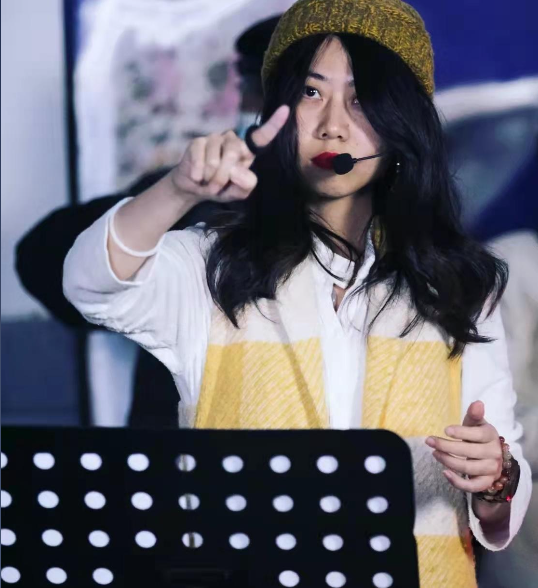
Jill Zheng is a multimodal poet, who works with language as a primary material, oftentimes marrying modes of graphic arrangements, sound, image, translingualism, somatic experience, etc. Her poetic practice takes its inspirational roots from the concreteness of Chinese characters, and seeks to embody cultural hybridity as to traverse linguistic boundaries, for a new game of re-imagination and reading re-orientation. She also collaborates with visual and sound artists on multimedia poetry and sound-art performances in Shanghai.
Jill Zheng 是一位多模態詩人。她在詩中探索空間,尋求語言文化的跨界,將多元雜糅具身為她的詩學。這種空間的詩學根植於她對漢字構字法的迷戀,體現為文字在空間裡的多維閱讀,與影像的互動,以及形與意的相合,以此引發一場重新想像、重新閱讀的語言新遊戲。她同時與聲音和視覺藝術家合作,在上海舉行多場聲音詩歌藝術表演。
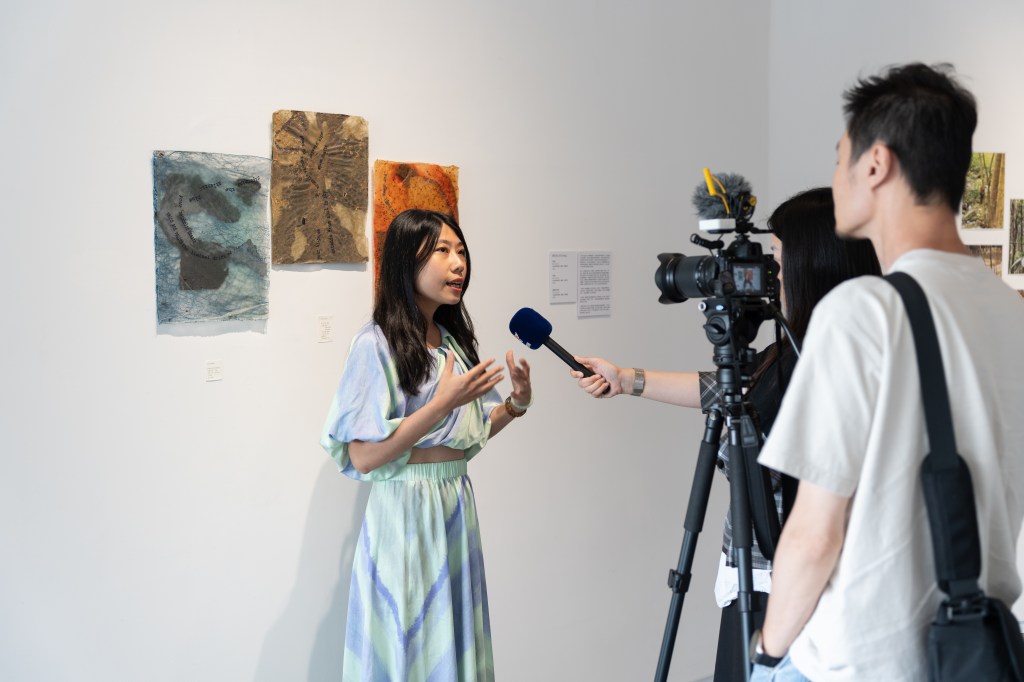
Exhibition|Rhizomatic Echoes 林音・根韵
6 June – 12 July, 2026

