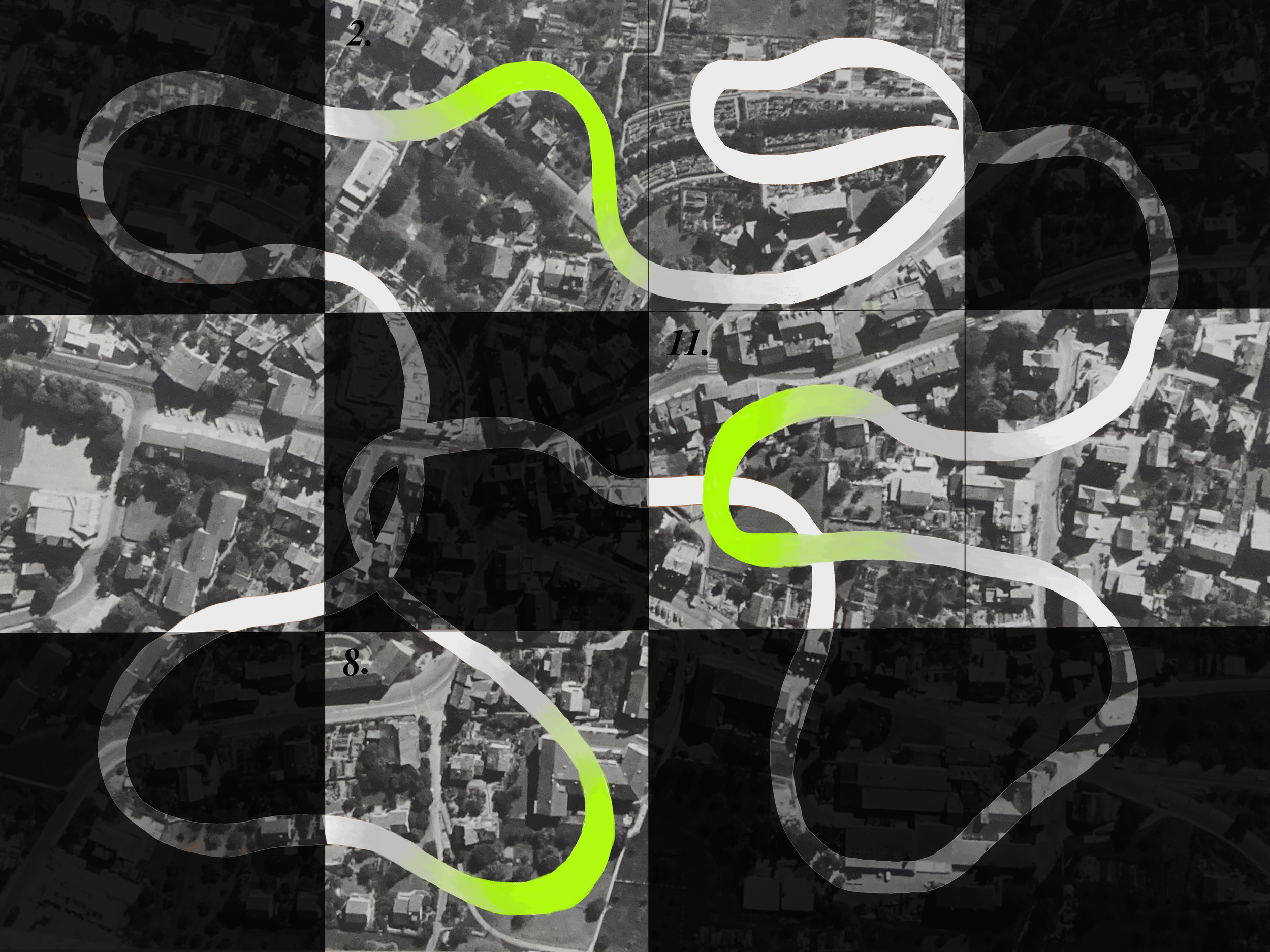
When we decided to move out from our so-called first “home”—where we first recognized an environment we felt safe to explore and built our initial relationship with family members—our mobility started the journey of searching, shaping, and refining our definition of “home” and who we are. During our journey of settlement and migration, we actively selected a suitable environment/ space/ location to build the ideal connections that we pursue. Through living in spaces, we create intricate relations with the cityscape and are involved in its ongoing transformation.
Wanderers’ Footprints is a virtual open space that constitute a series of different artistic exploration that discover the fragments of trajectories from Wanderers. The practice of bridging borders, weaving territories, and collaging memories from drifting between places, juxtaposes Wanderers’ narrative with the entanglement of displacement. This platform nurtures a space for collectively thinking about fluid identity, the question of home and belonging, and private and public space; encourages different creative expressions and methodologies to reflect the process of “wandering”, and “becoming” with the relation to space. Using body, field, materiality, personal stories, fiction, non-fiction, sound, and images to embody our living statement, transmitting the past and connecting the present and future.
In connection with The Invisible Trajectory: Drifting Sounds and Shadows Between Cities—a co-curated project with SUAVEART, exploring the intricate relationship between migrants and urban spaces, centered on the life journey of Herianto Sulindro, a Chinese-Indonesian architect who pursued studies in Germany during the 1950s amidst the Chinese massacre in Indonesia—Wanderer’s Footprints was initiated during the research phase. It serves as a continuation of storytelling, drawing from materials left in Herianto’s home on Schubertstrasse in Zurich and Indonesia. The project further expands its scope to focus on gathering voices and stories of migration through presentations and workshops.
Wanderers’ Footprints is a growing platform that is currently sub-settled in Sharo Liang’s personal website, welcoming artists, thinkers, writers to join the process of developing the concept further through different perspectives and practice.
Mobility has always participated in the ongoing process of self-identification. We are all wanderers, who somehow experience moving from place to place, through constructing, reconstructing, and leaving the home we built, the repeated action questions the practice of building ourselves.
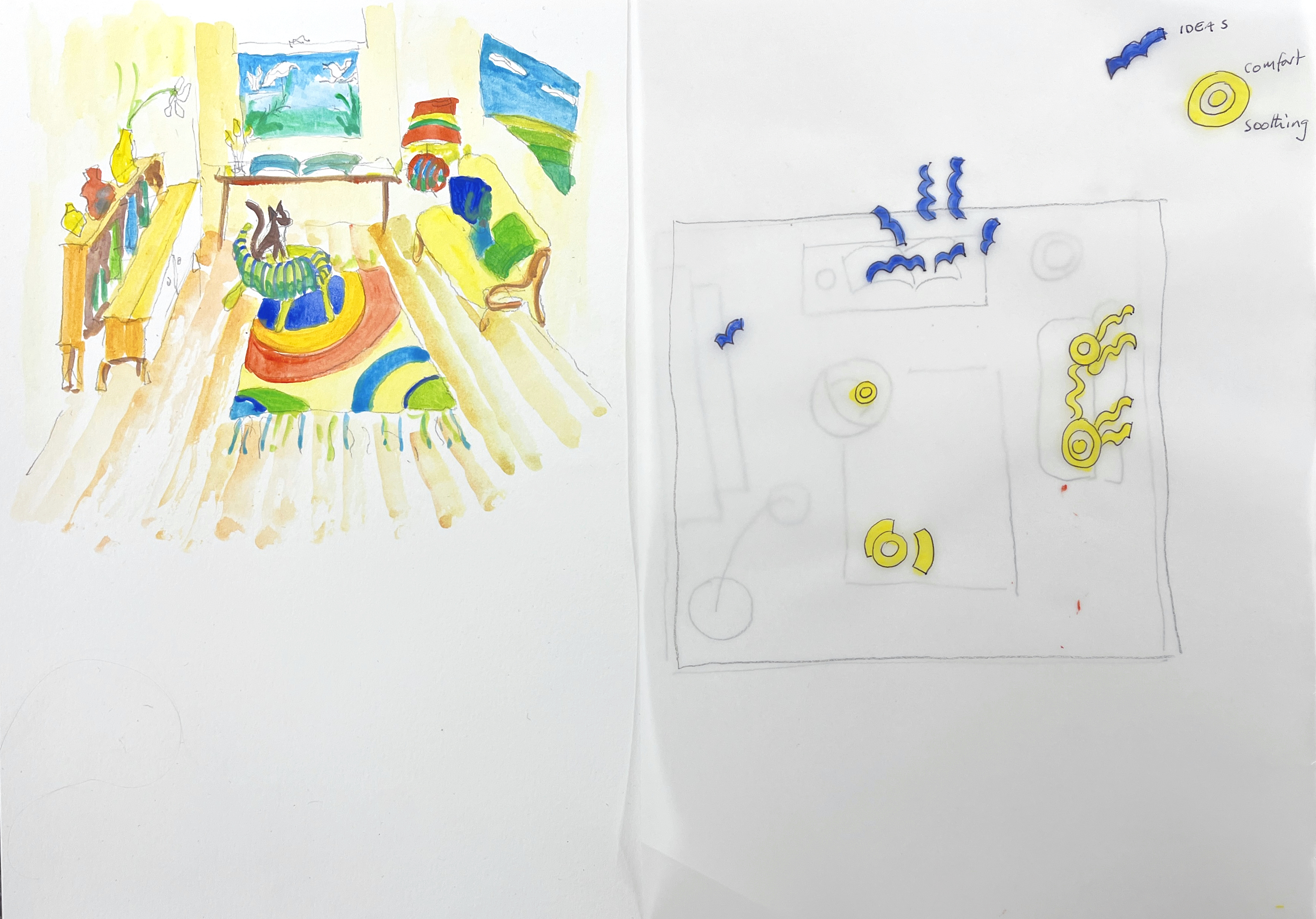
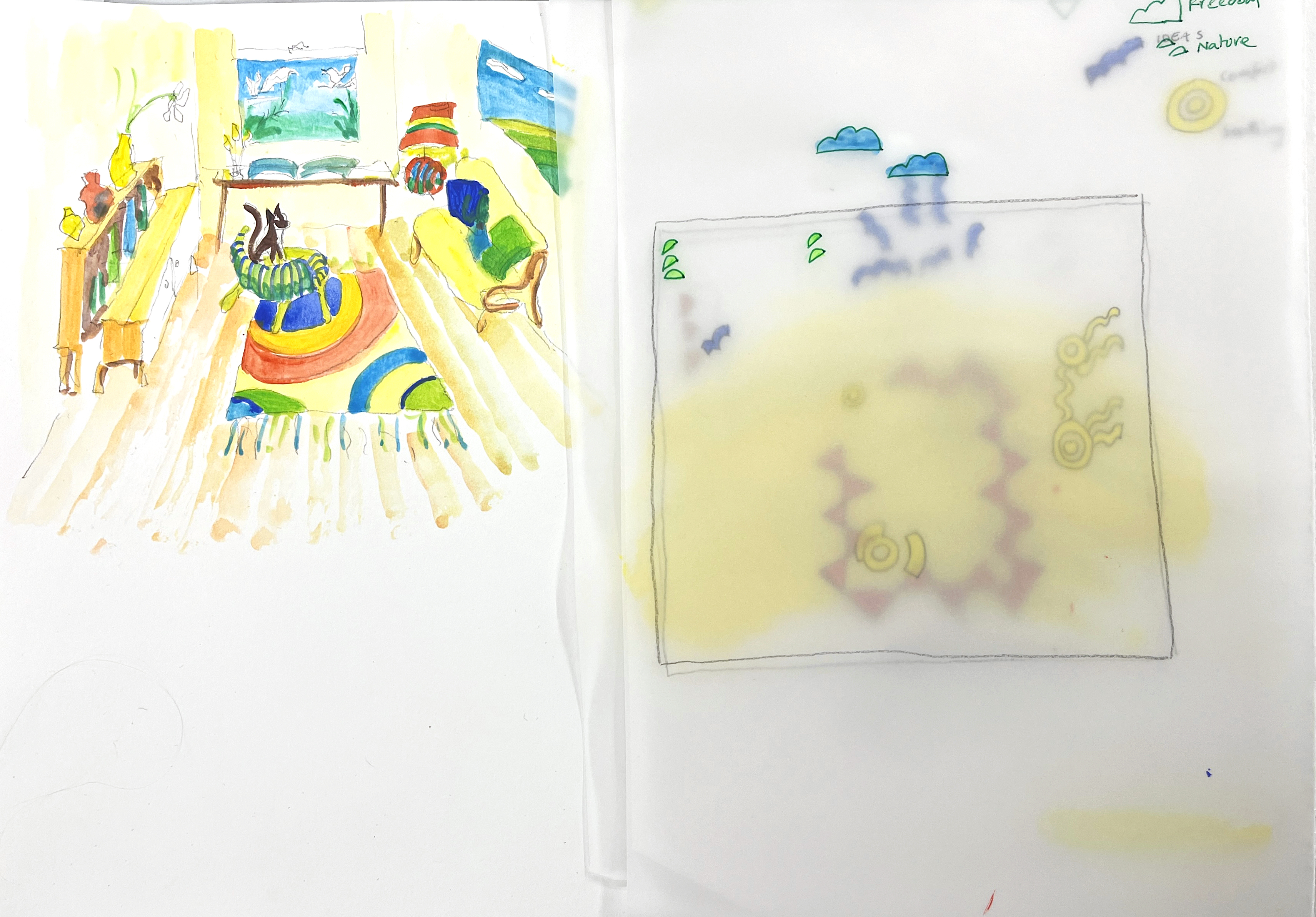
This workshop is a practice for self-reflecting on the essence of home and what it means to each individual. The process encourages the participant to look through their personal history of building a sense of home, measure the distance between their past and present selves, to identify the elements that shape their concept of home. By imagining and measuring the space with their bodies from their memories, drawing representations of their spaces, and creating pictograms and symbols, participants engage in storytelling through art and sharing. Together, we discover alternative ways to map and express personal narratives.
This workshop is coined with Sharo’s research essay Migratory Space in Working In Progress: Reimagine the Identity in Urban Spectrum. Focusing on Herianto Sulindro’s trajectory and the process of homemaking. Herianto is a Chinese-Indonesian architect based in Zürich who dedicated his whole life to urban planning and architecture between Switzerland and Indonesia from 1960 to the 1990s. I’m interested in the colliding cultural elements and personal touch of Herianto’s curation of his home in Zürich. Inspired by rich signs and graphic symbols in architectural blueprints, I attempted to apply my research and practice to weave dialogues discussing how individuals build and portray the abstract yet tangible meaning of home from different generations and life journeys.
✴︎ Workshop Structure
① Define Home
Take a paper and write down, what are the 3 most important elements that construct your definition and concept of home–a place you feel you belong to. It can be something very intangible and fluid.
When you finish, please share those 3 elements with everyone, and tell us your reason for selecting them.
② Outline the Space
From the keywords you give, please think of a space, it can exist in reality or it can be an imagined space, that you call home that you belong to.
Please take an A3 paper, and use a pencil to draft the floor plan of this space. You can decide how much detail you want to add. When you finish, pick one color to color the outline of this space.
Use your body and your everyday movement to measure the size of the space, if you want you can give some indication or description about this space that you call home.
③ Elements of Belonging
Please use design 3 symbols with 3 different colors to represent your elements of belongings, you can use geometric shapes, color different sections, or create your symbol/pictograph to indicate them in the space.
Use one tracing paper for each element, and please write the title of the component on the lower right corner of the tracing paper.
Lastly please put your name, project name, and today’s date in the lower right corner of the A3 paper. And all done!
④ Final Sharing
Please share your work with us, tell us about the space you choose, and the pattern of the elements of belonging that you designed!
By making this drawing, allows you to think deeper and keep searching for the meaning of home to you, so this should be an unfinished piece. Like a note of your own, this is a practice to keep track of the definition of home to you. Through this practice, no matter where you are, you can build your home and belonging confidently in your own way.
Migratory Space: A Practice of Speculating Home
Through space making, to self-morphing…
✴︎ A Glance at Participants’ Practice
# Alice’s Home
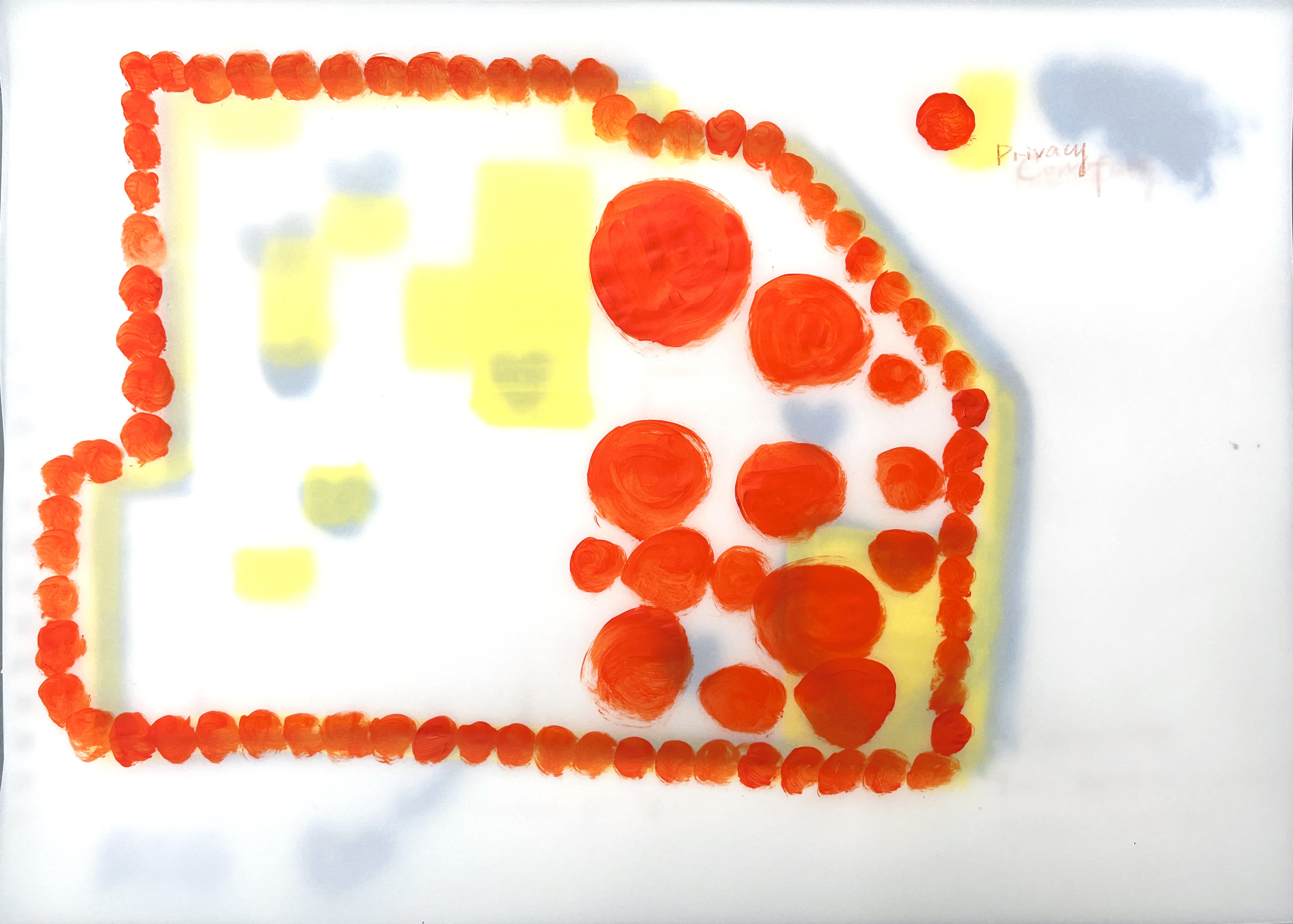
• Red – SAFE
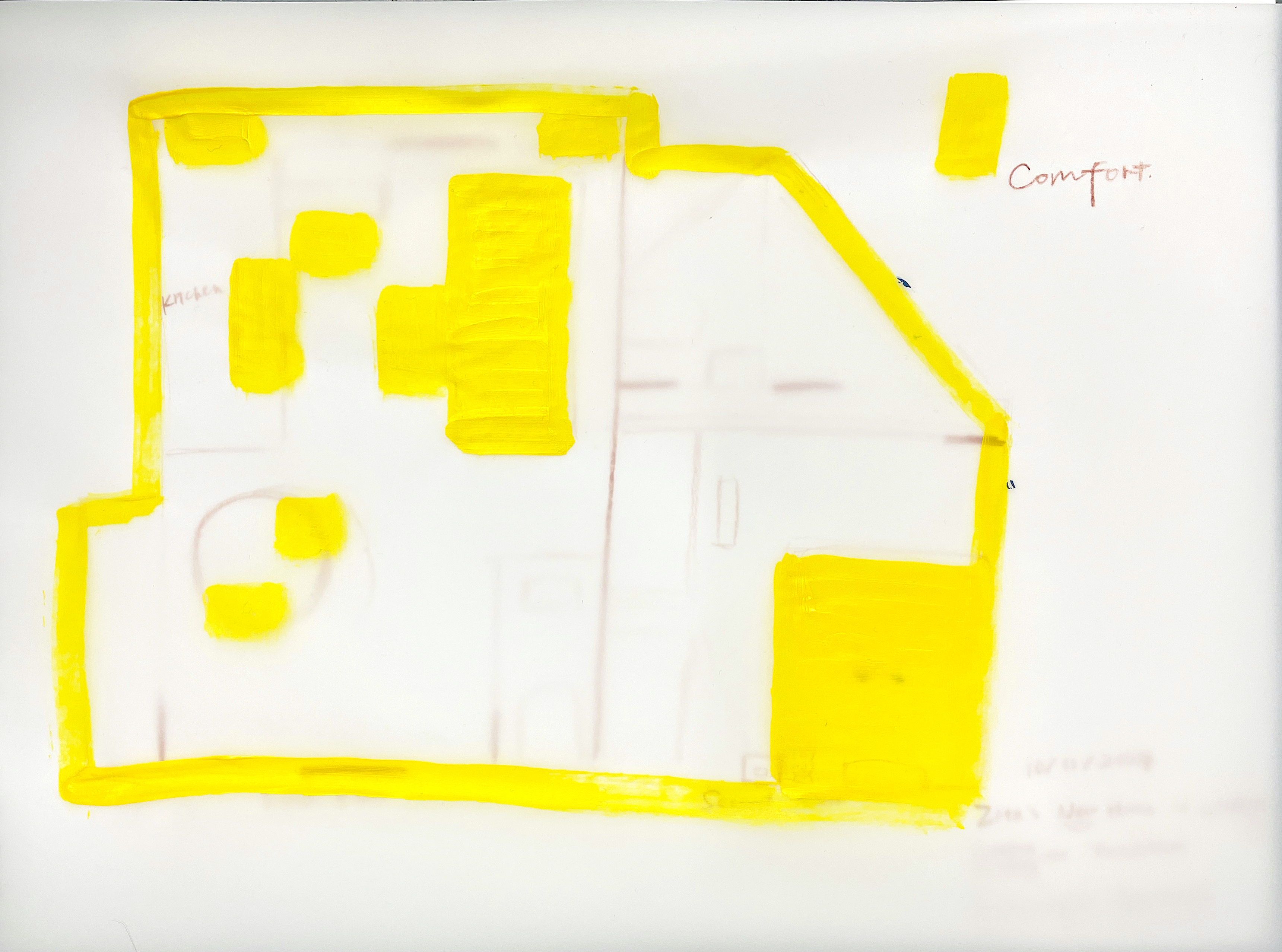
• Green – COMFORT
• Yellow – HAPPINESS
―――――――
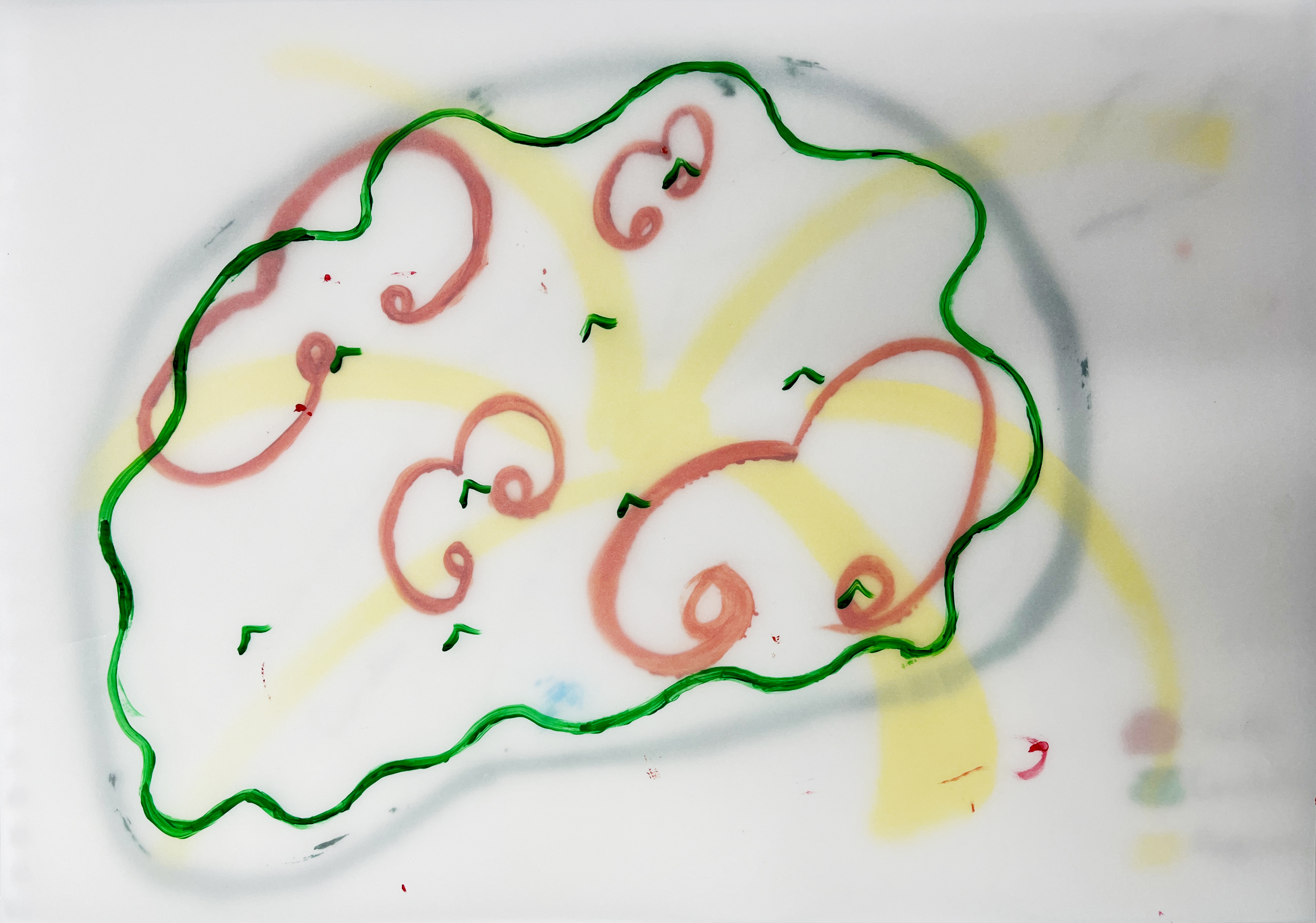
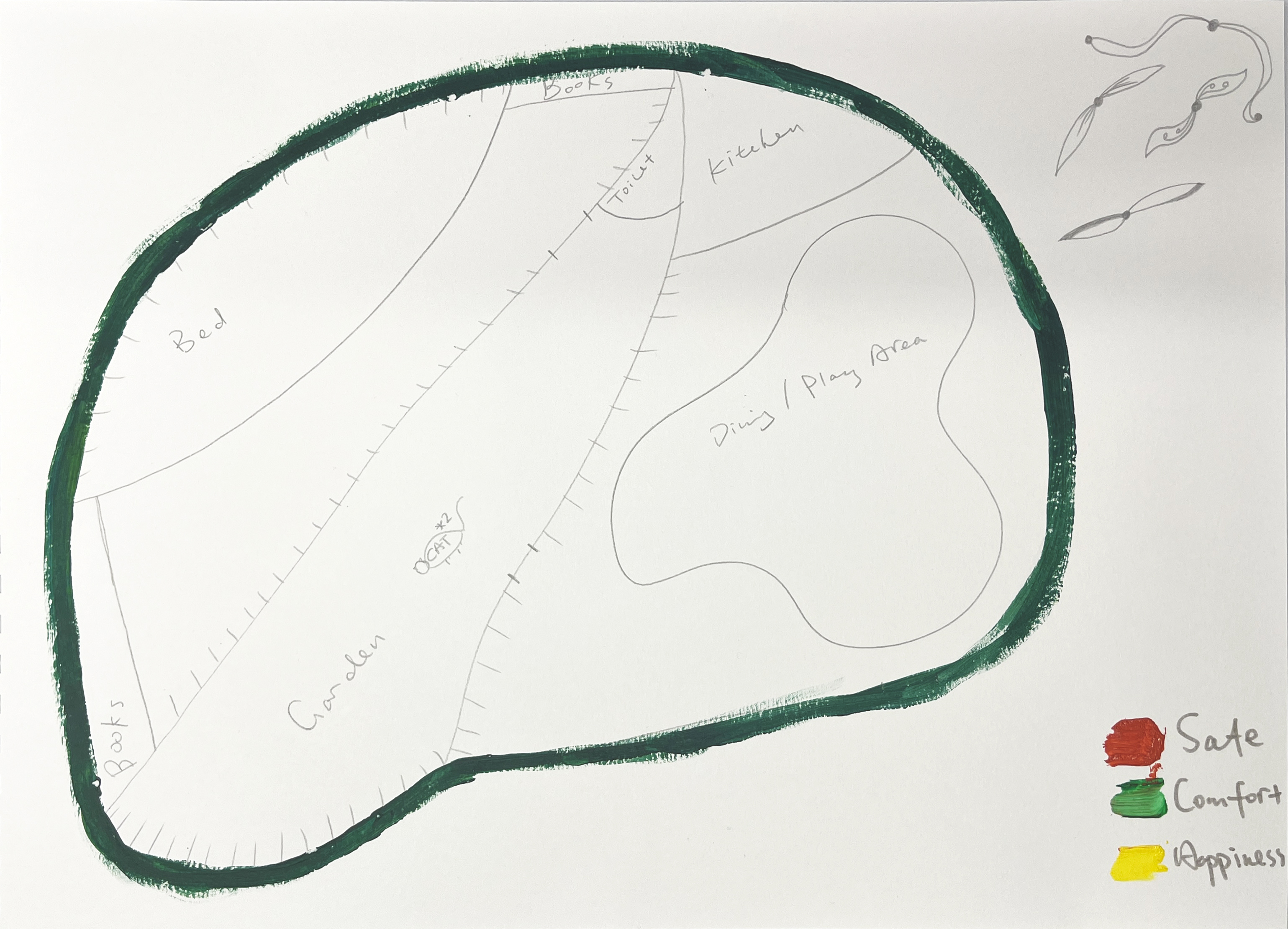
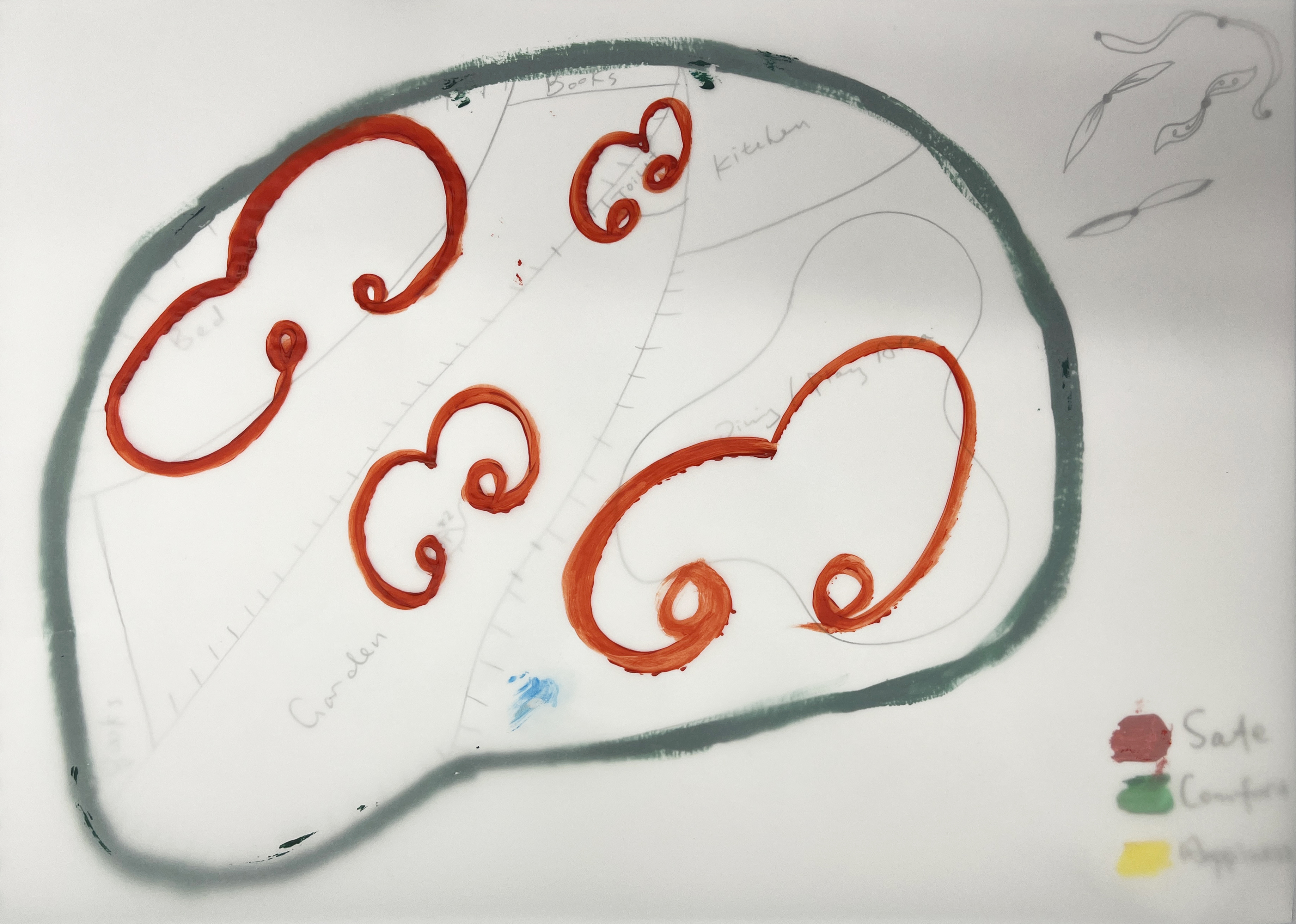
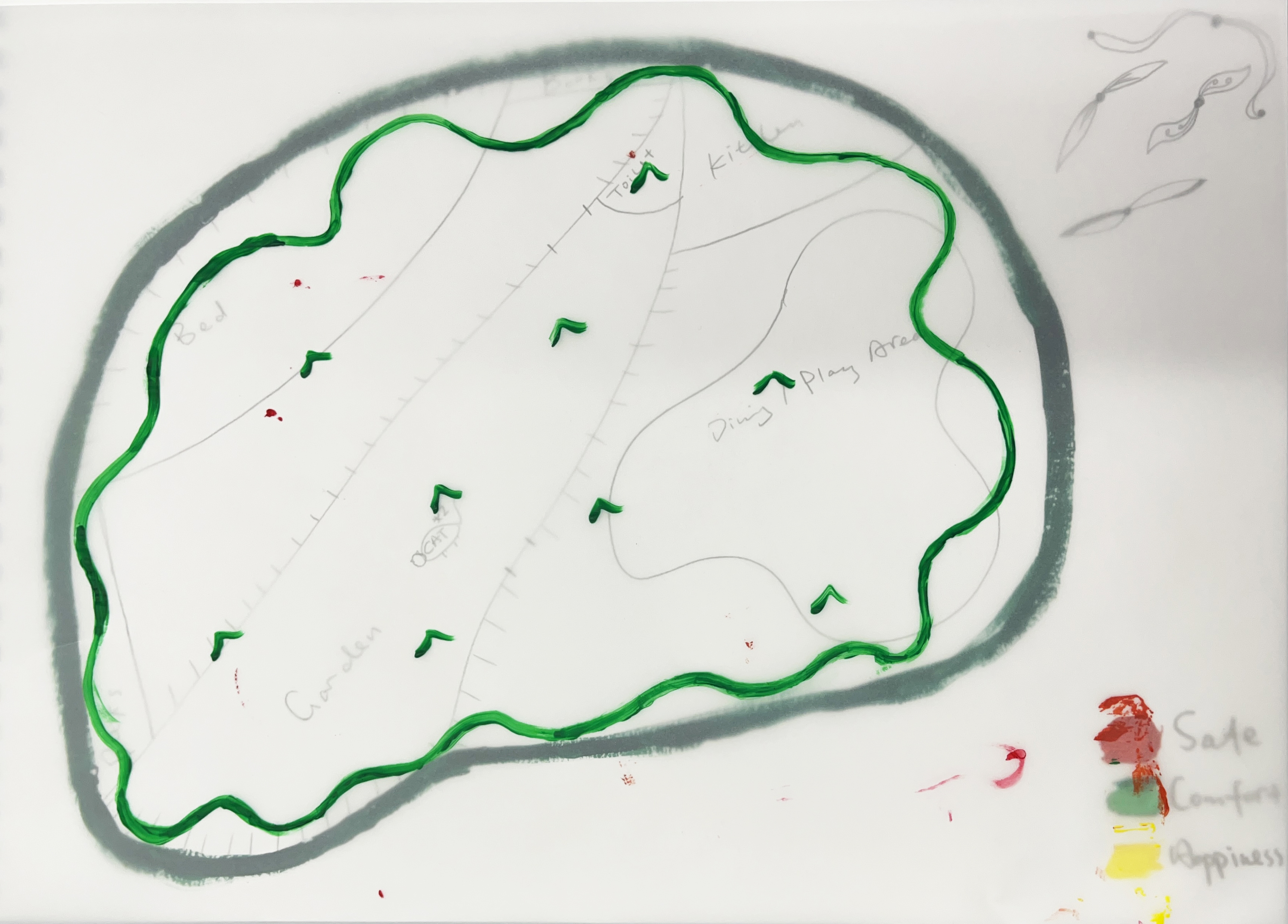
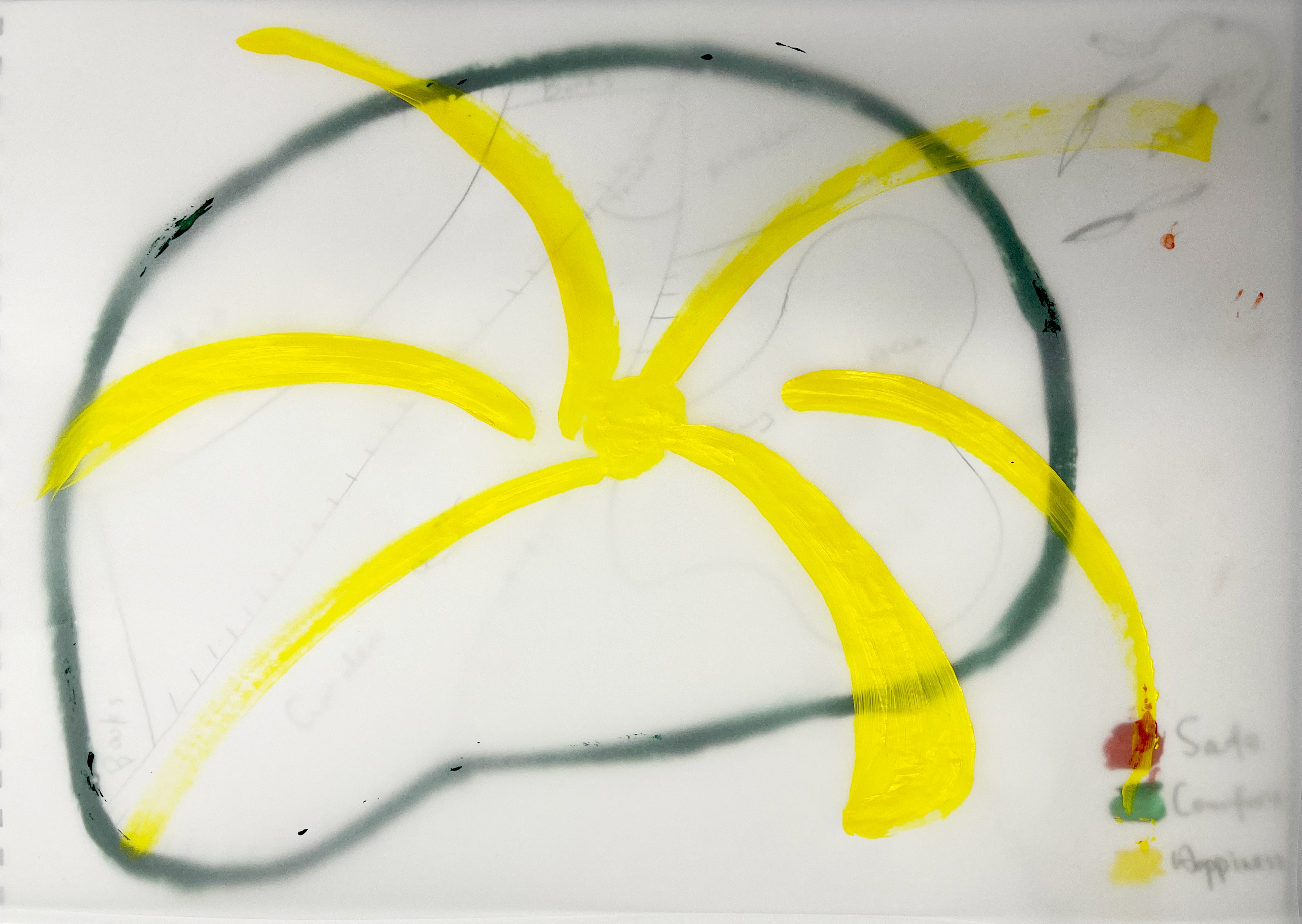
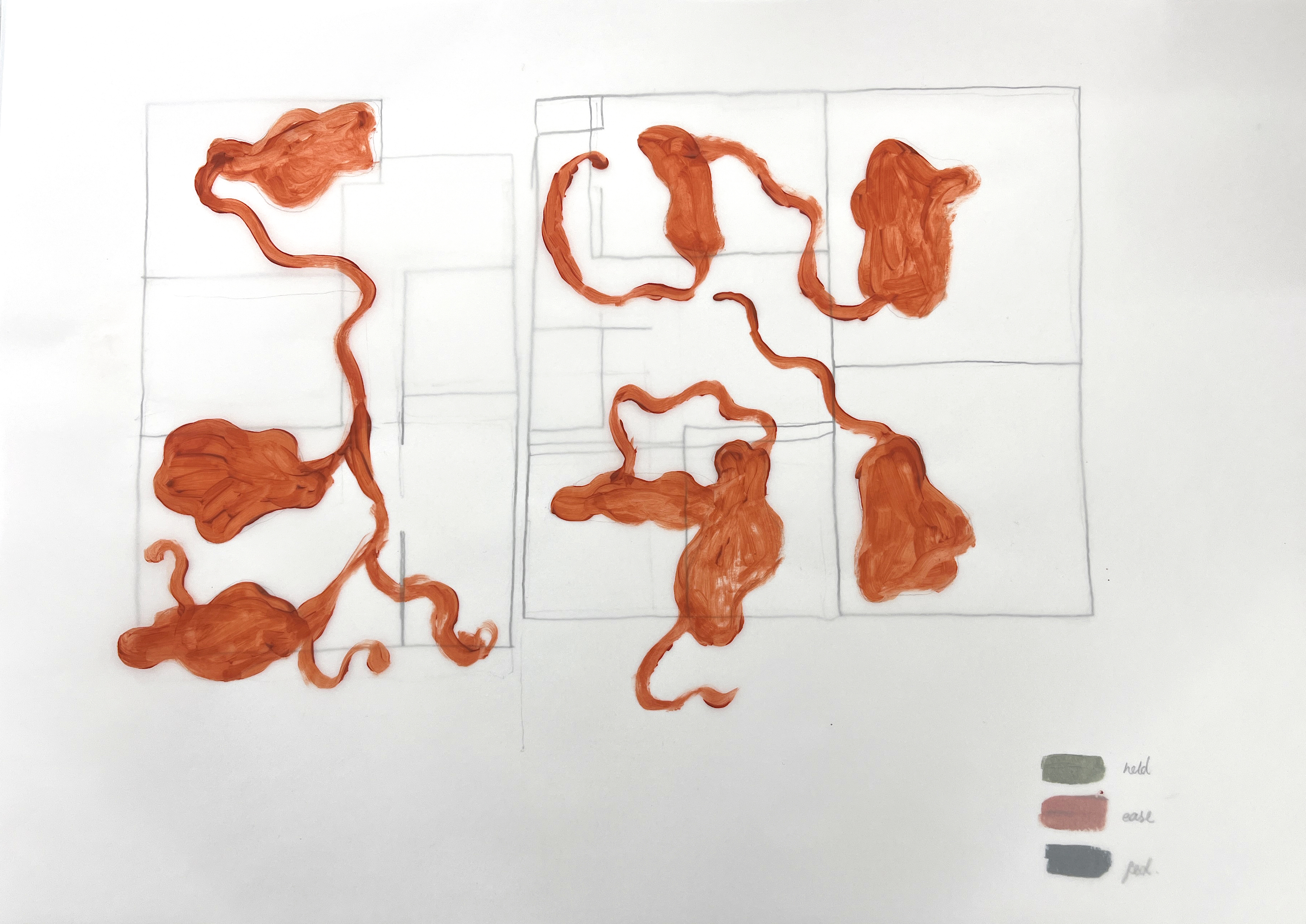
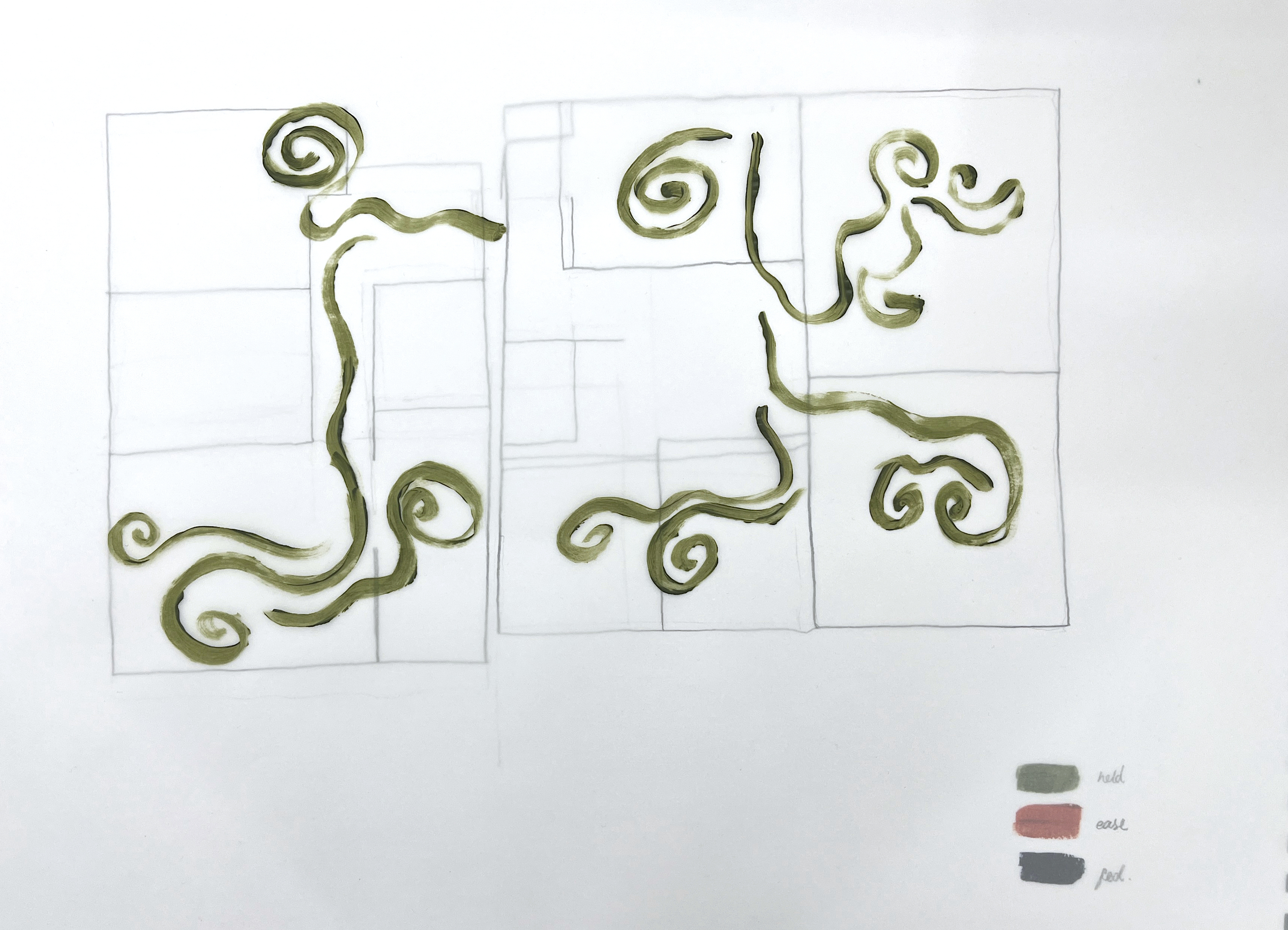
This is Alice’s imagined home. Started with an organic shape, instead of having any straight lines, they outlined a fluid space for their home. Laying out the organization of their ideal home without restriction, the garden is located in the center of the house, dividing the bedroom and dining area — the public and the private space, giving both spaces plenty of natural lighting, with their cat in the middle. The bed is in a moon-like shape, accompanied by two bookshelves on each side, for herself to work and relax at her own pace. The dining area also functions as a living room, an open and playful space for friends to cook and enjoy each other’s company.
For Alice, ‘safe,’ ‘comfort,’ and ‘happiness’ embodied the most important elements that constructed their definition and concept of home. They visualize the ancient Chinese lock and use red to symbolize ‘safe’ that spreads around different corners of the space. Yet, instead of representing it as an entirely safe space, they stress the deeper meaning behind its safeness of embracing and experimenting with the ‘unsafeness’ physically and mentally. Green is the color for ‘comfort,’ surrounding all the spaces and the atmosphere. Yellow is for ‘happiness,’ burst out in the center of the space, sharing the warmth and pleasure to nurture themself and their friends.
# India’s Home
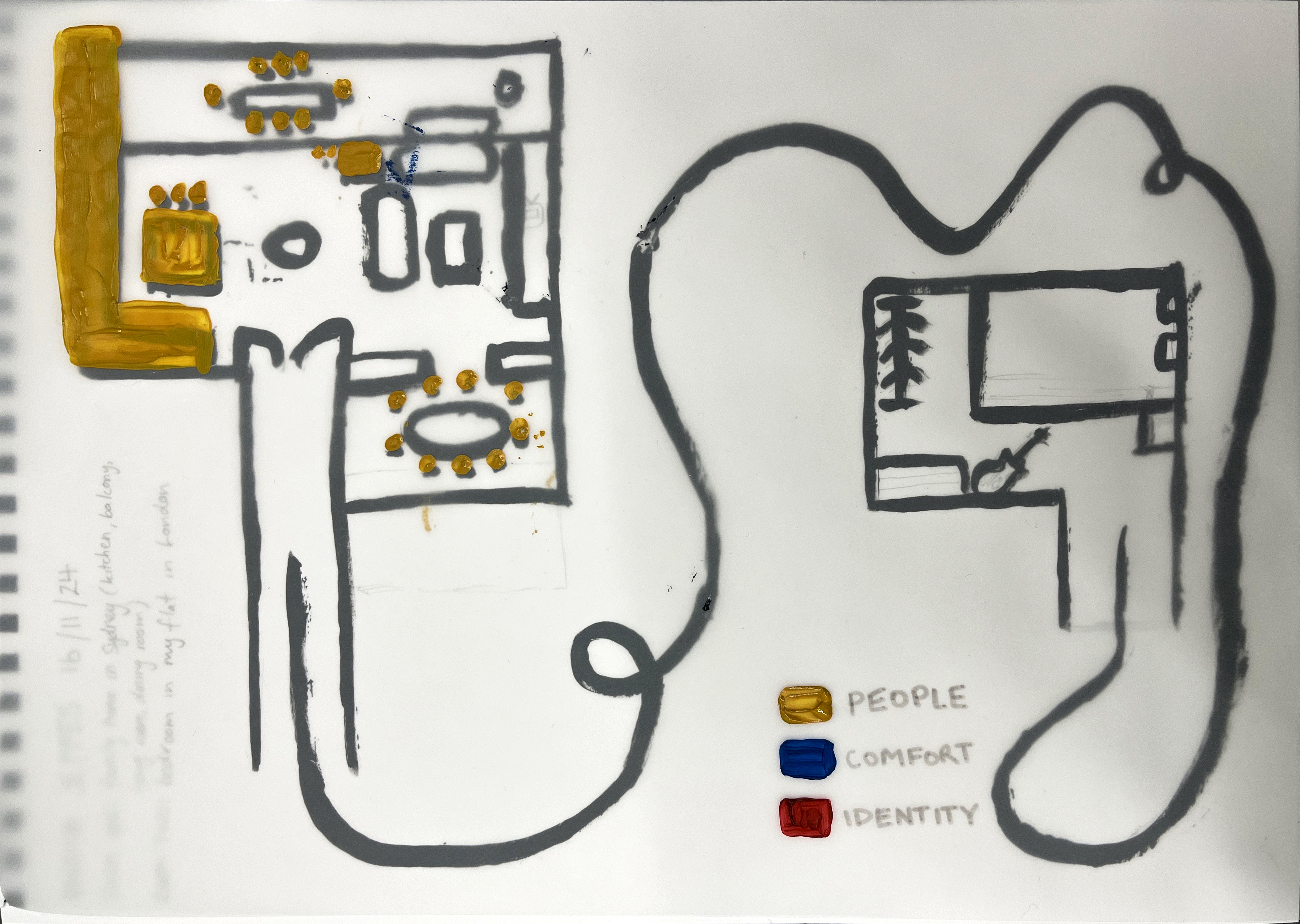
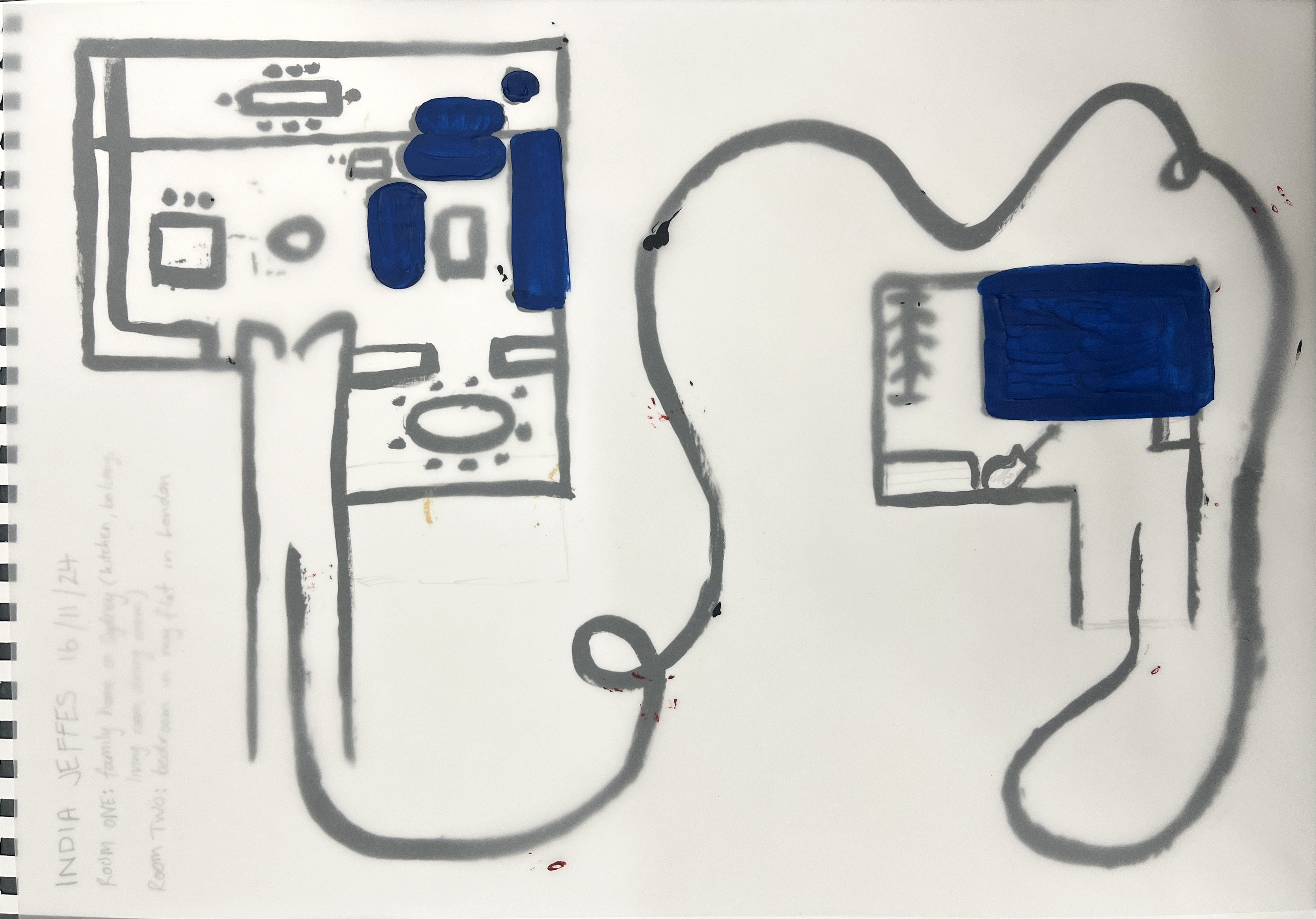
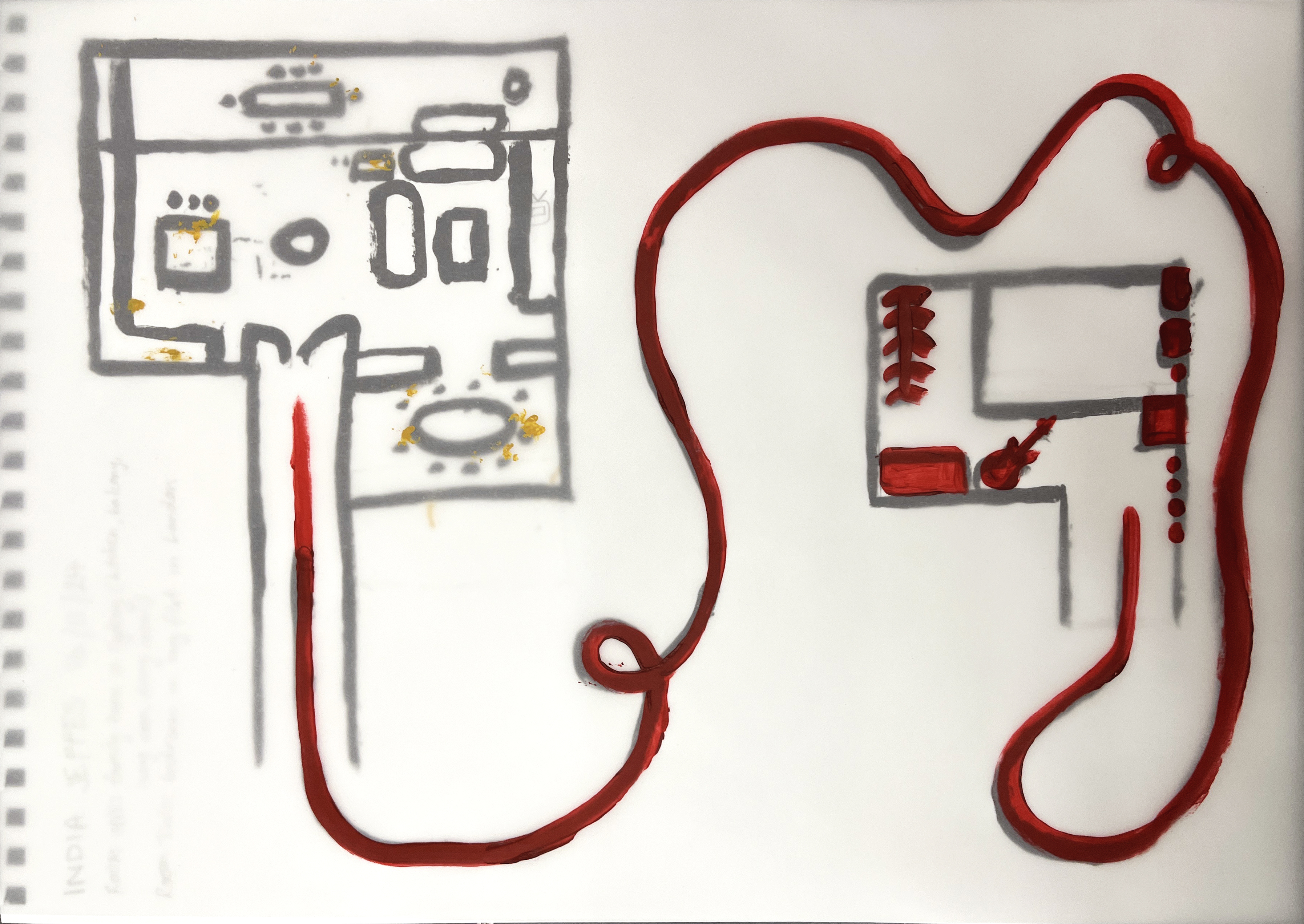
• Red – IDENTITY
• Yellow – PEOPLE
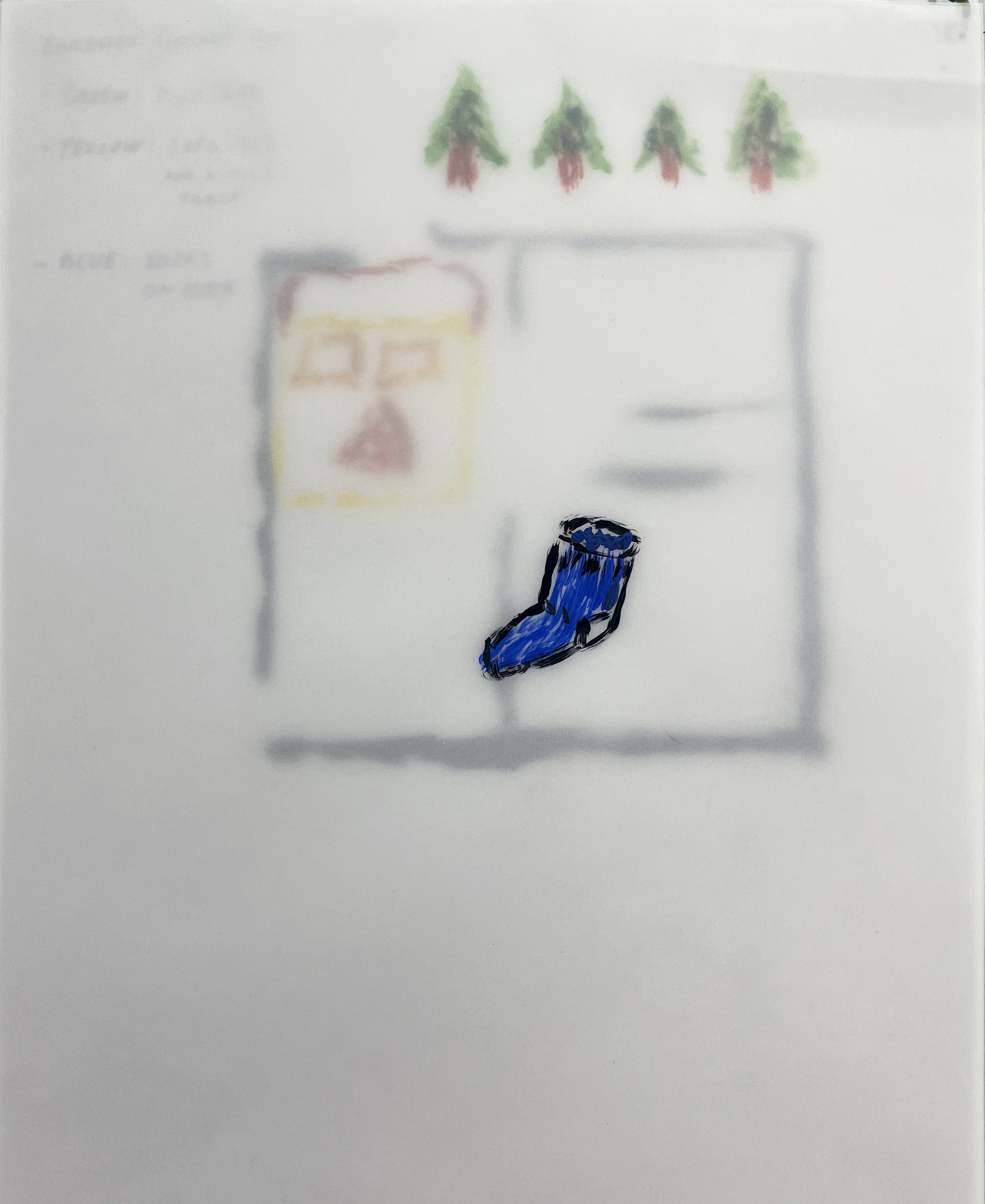
• Blue – COMFORT
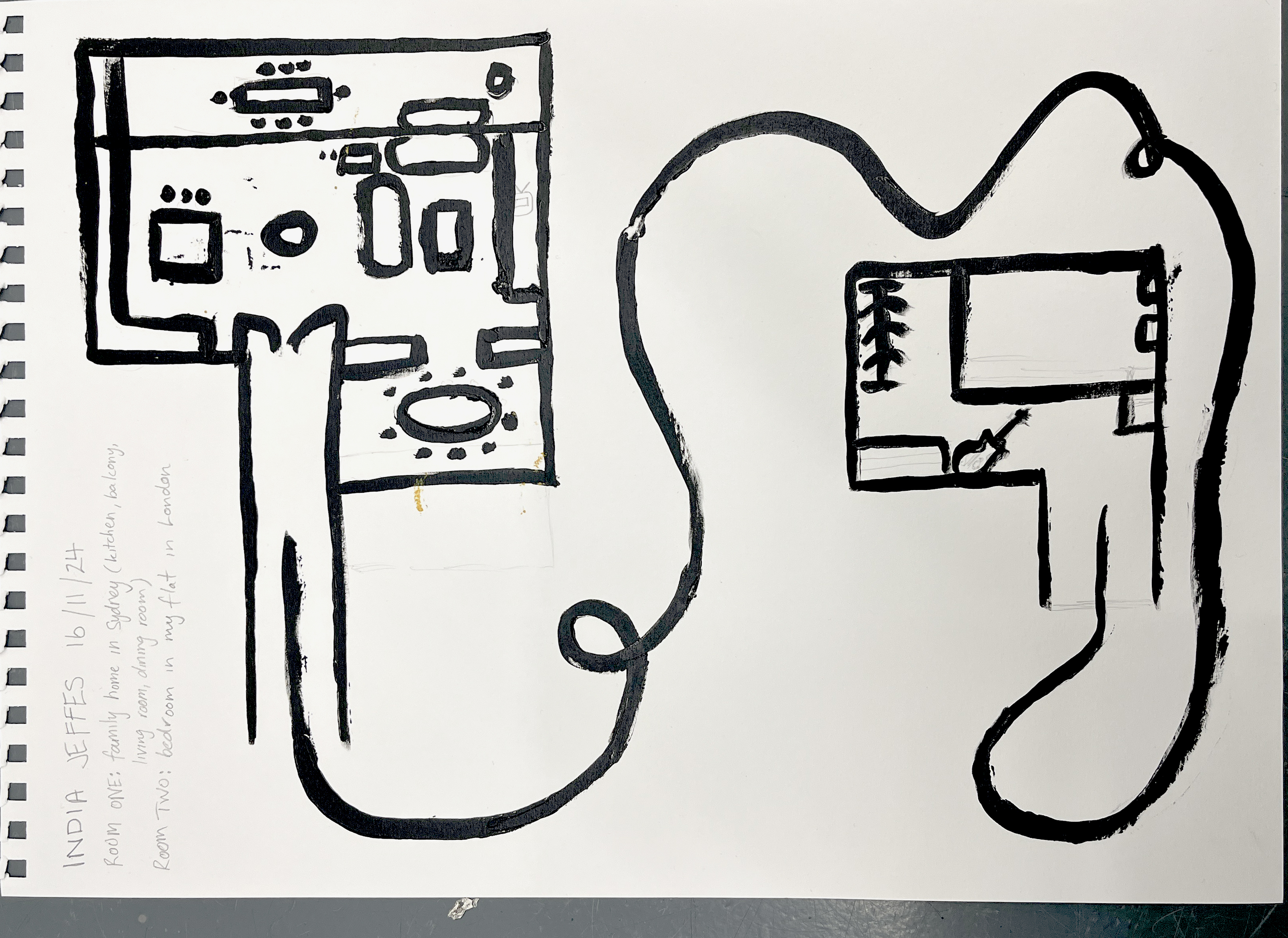
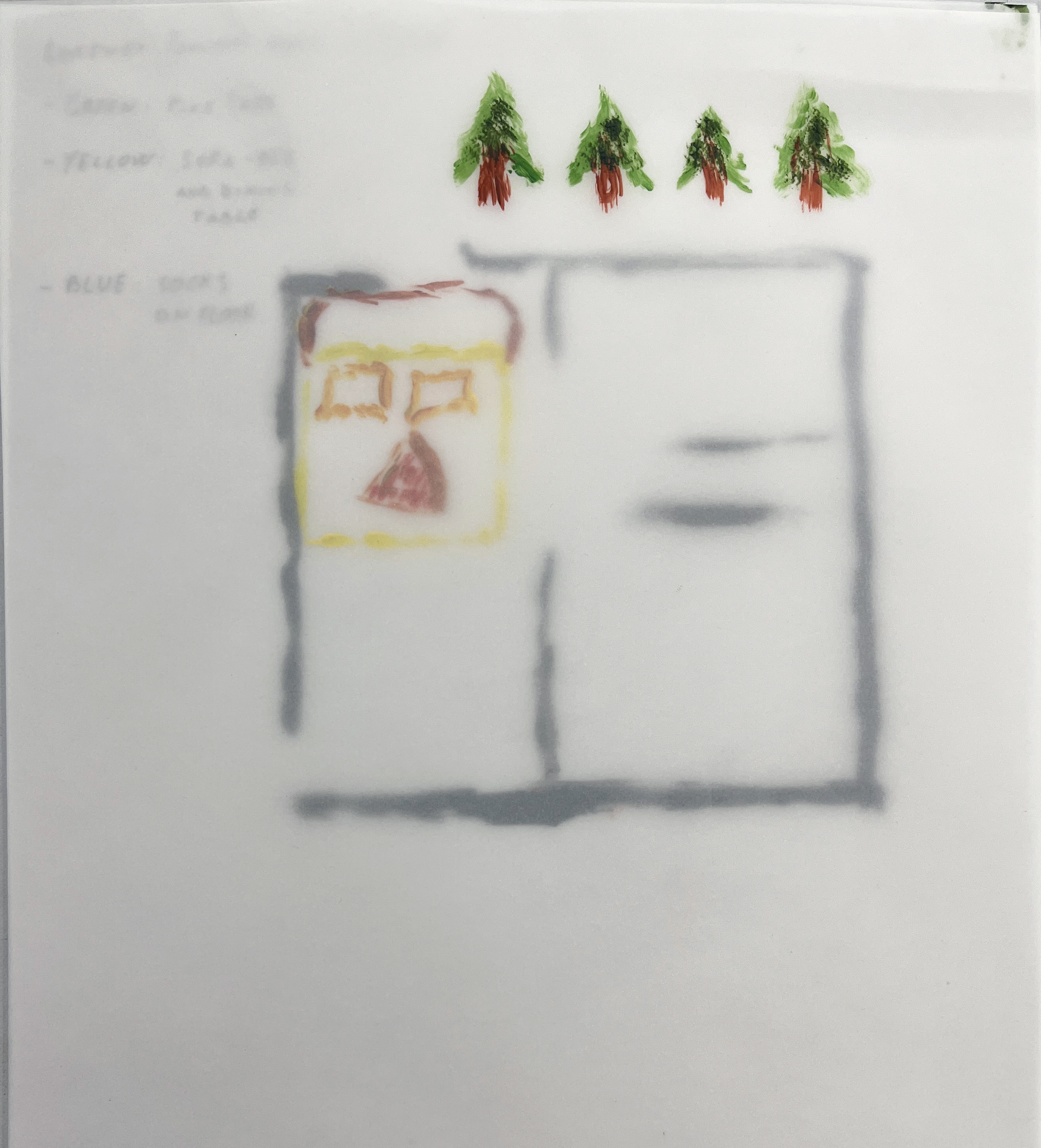
ROOM ONE: family home in Sydney (kitchen, balcony, living room, dining room)
ROOM TWO: bedroom in my flat in London
―――――――
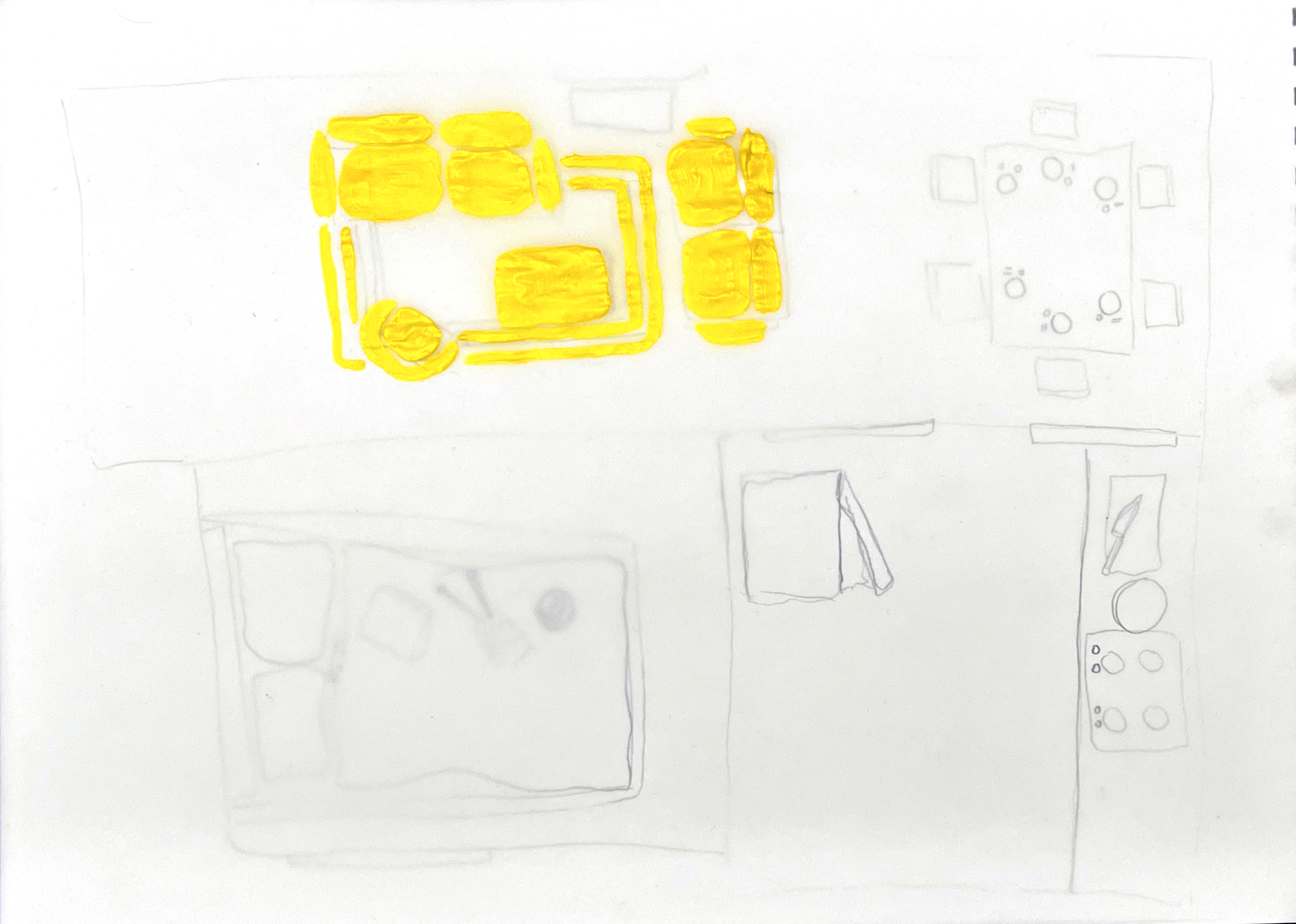
Home is a place that bridges two rooms where India lives. One is her dining/living room in Sydney, and one is her own room in London, where she just moved in for a few months.
India describes, her life has constantly been moving places. With a clear memory counting all the streets she lived in, and realized she never stayed at a place for more than a year and a half since she was young. As she signed a 2-year contract for her current flat with her friend, India expressed her excitement to settle in one place ‘a little longer!
For India, the elements of home weave the connection of two rooms, and with the dynamic of moving in between, she tailored relationship between them that forms her current ‘identity’, which is manifest in her room in London (guitar, clothes, and decorations on the wall). ‘People’ — families are positioned in the kitchen and dining table in Sydney. And ‘comfort’ can be found in both spaces (living room sofa in Sydney’s living room/bed in India’s room in London).
# Layla’s Home
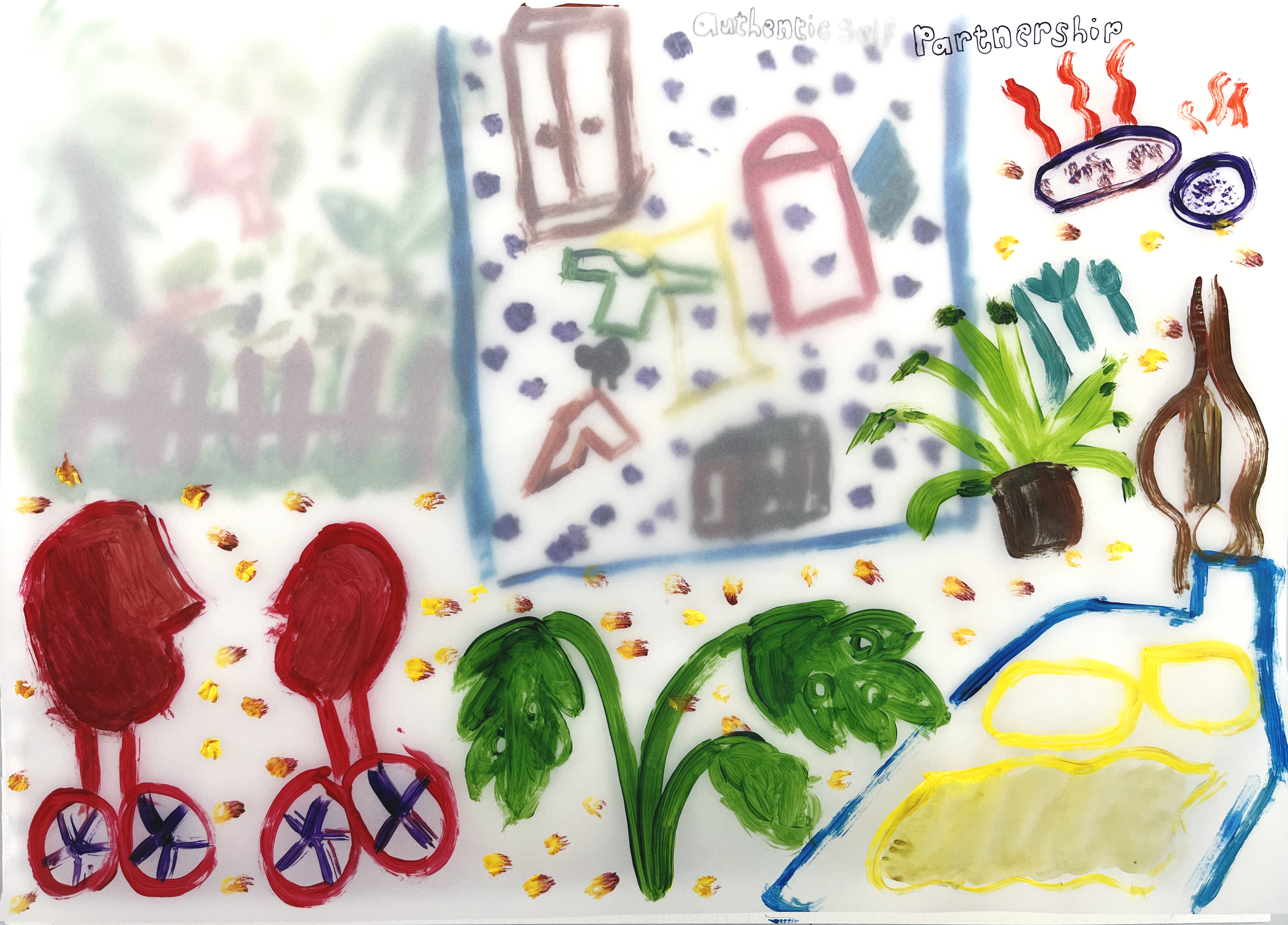
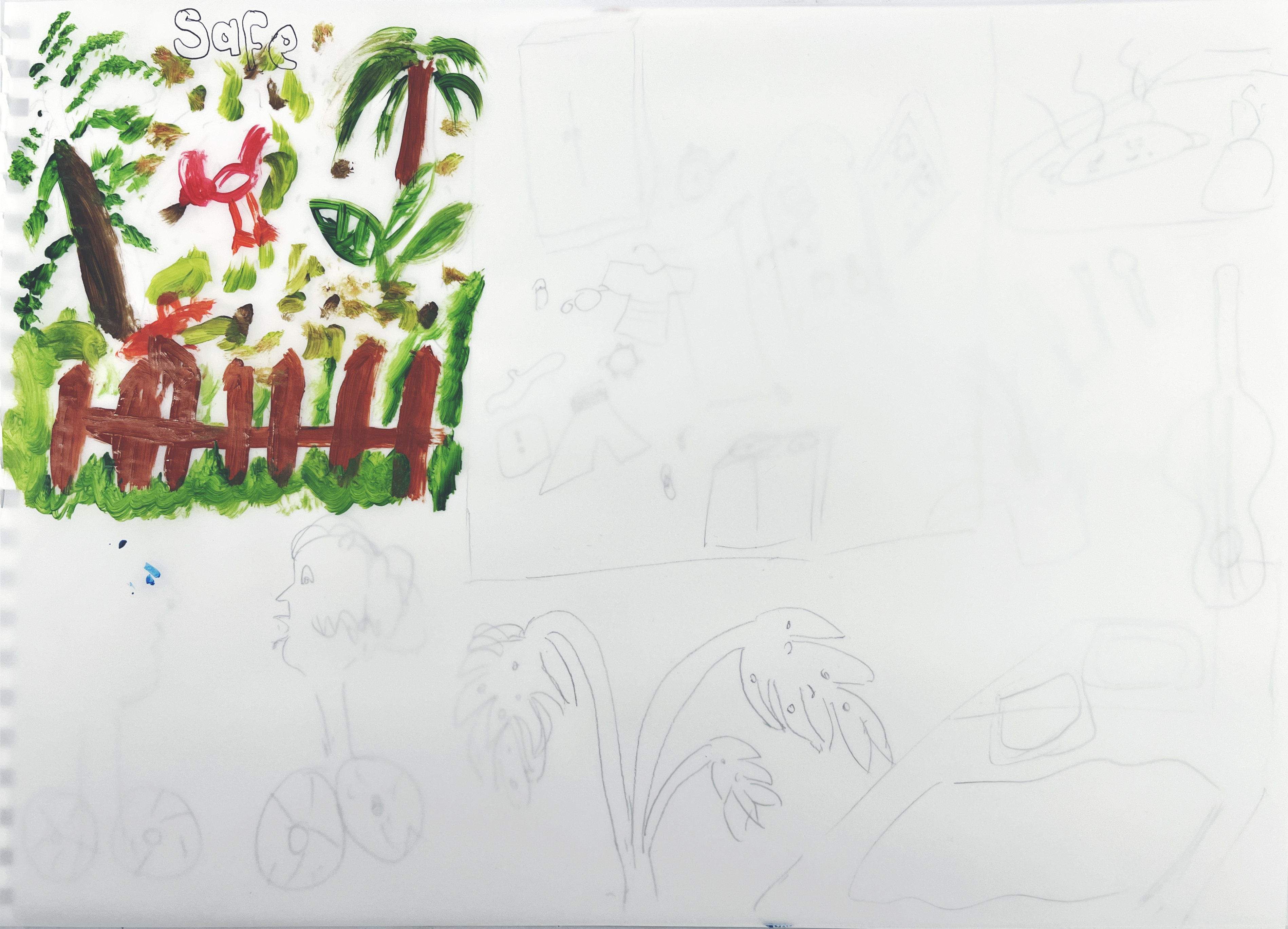
• SAFE
• AUTHENTIC SELF
• PARTNERSHIP
―――――――
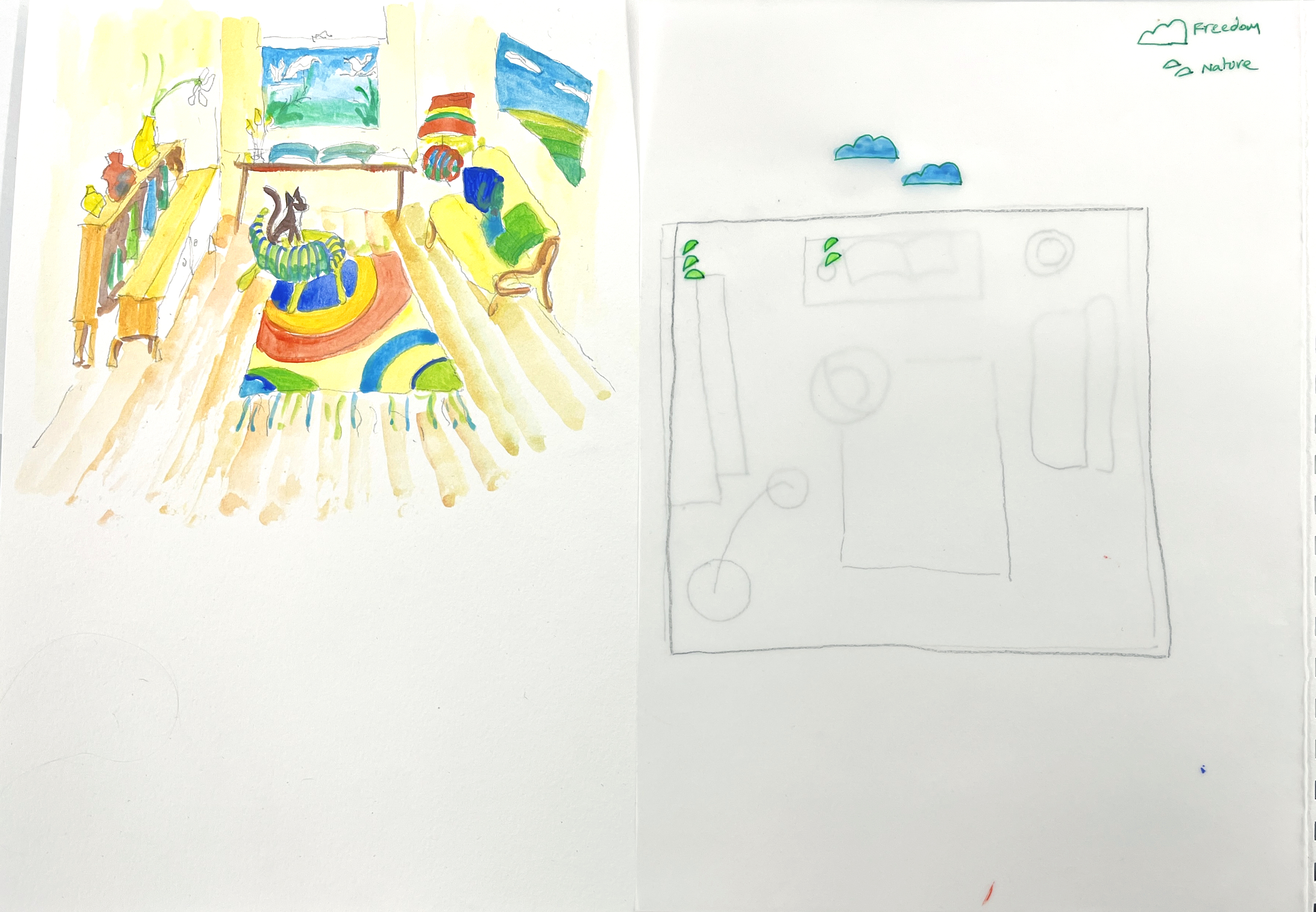
With a playful blend of colors, Layla brought together three everyday scenes from places deeply meaningful to her at different periods of her life, capturing the elements that shape her concept of home.
‘Safe’ is represented by her home garden in Bandung, Indonesia. There are many fruit trees, that she used to play around with her pet chicken in the greenery.
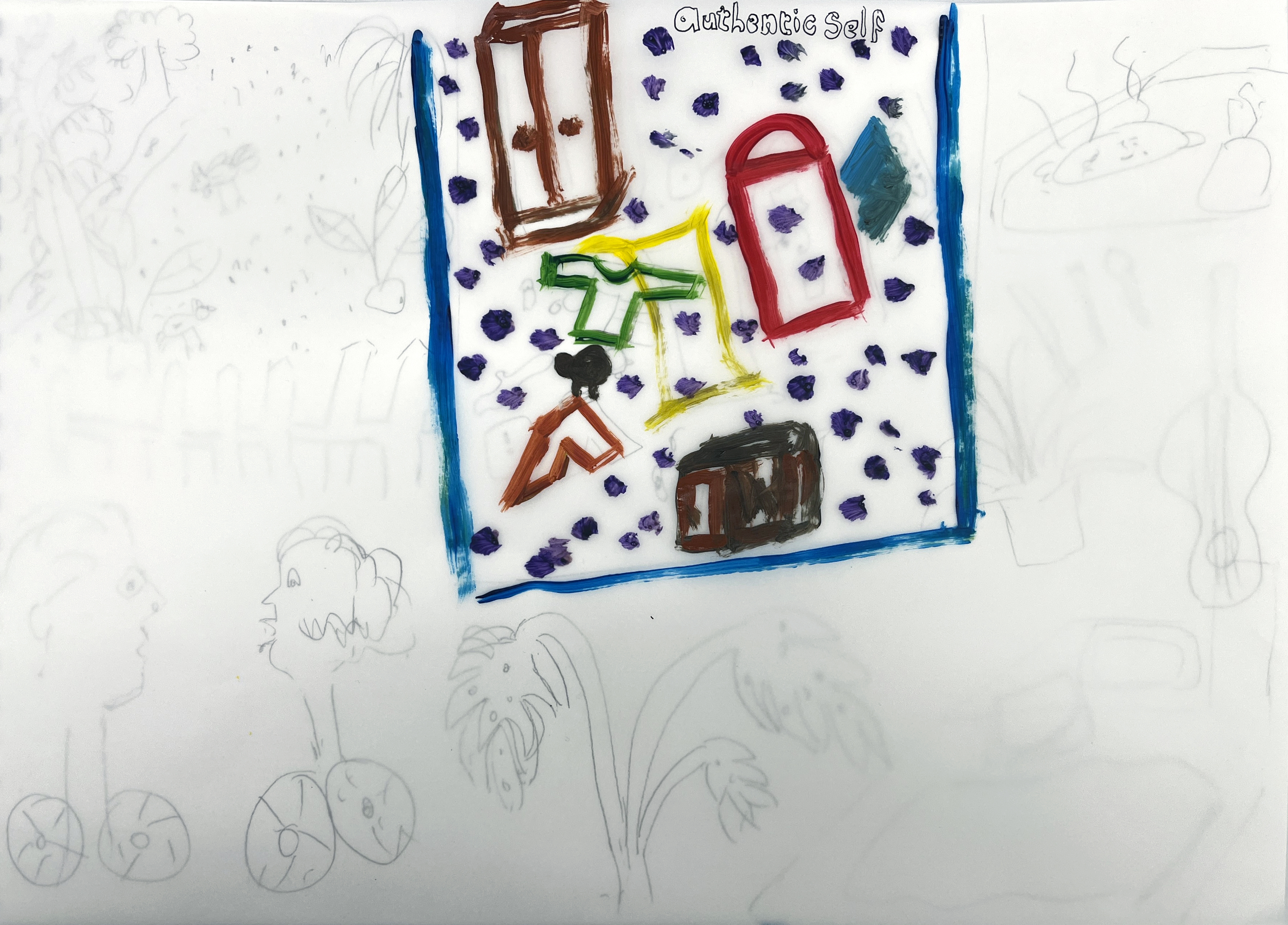
‘Authentic Self’ is an element she discovered during her university life in Yogyakarta when she experienced self-exploration in a new city. The drawing shows her school accommodation, containing basic facilities, with her clothes and personal belongings spread throughout the room.
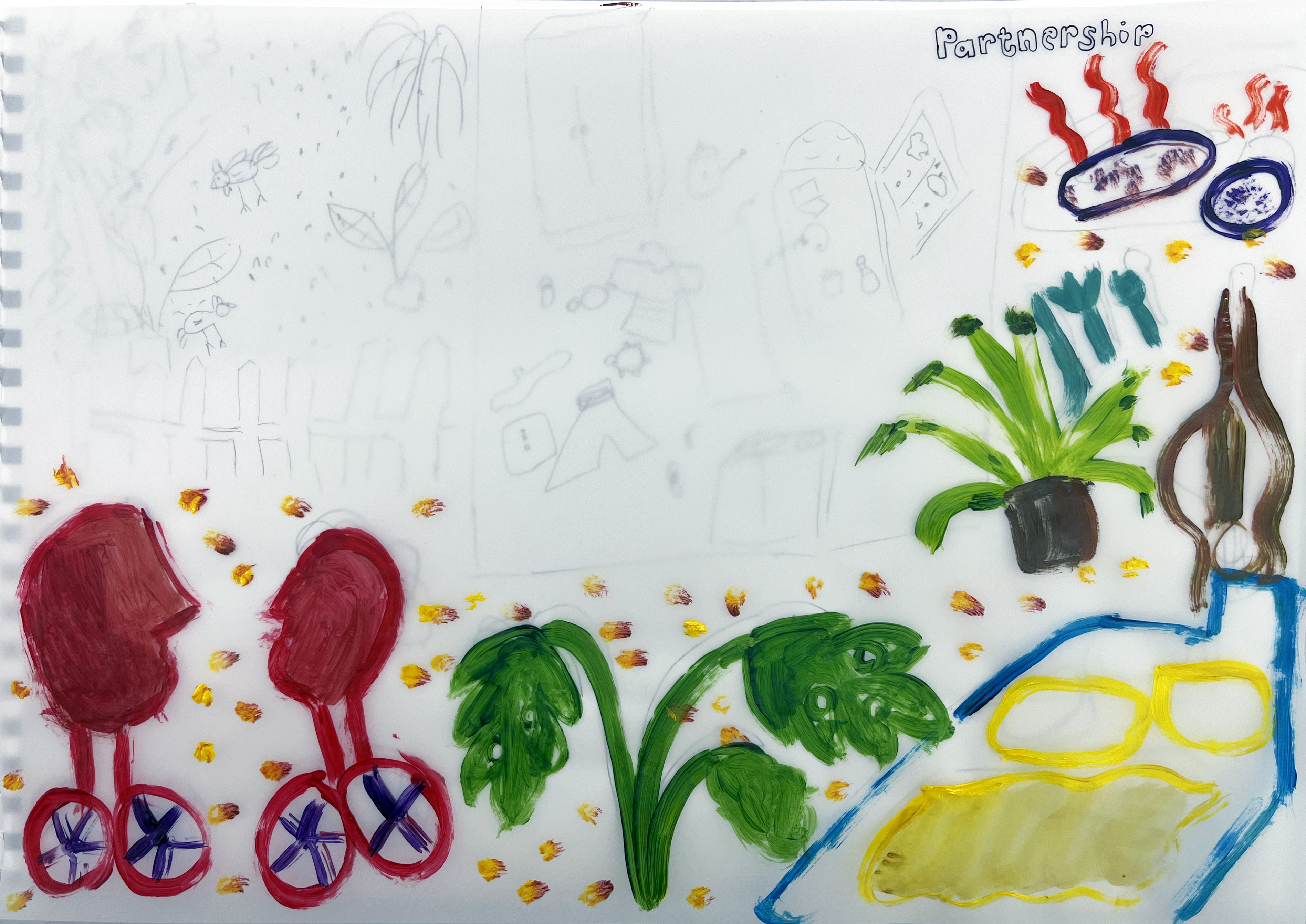
‘Partnership’ indicates not only her relationship with her partner but also friendship in her current life. Start from the top right corner, and present the importance of eating together. Her plants — the connection with nature which is also an integral part of her home, the guitar that carries her memories of the journey with her partner, her bed and ’dining table’ a place for hosting and socializing. Lastly, the two figures facing each other with two wheels underneath, manifest her mobility of living all around the world and nurture meaningful connection through conversation with her partner and friends.
# Overview of Other Participants’ Work
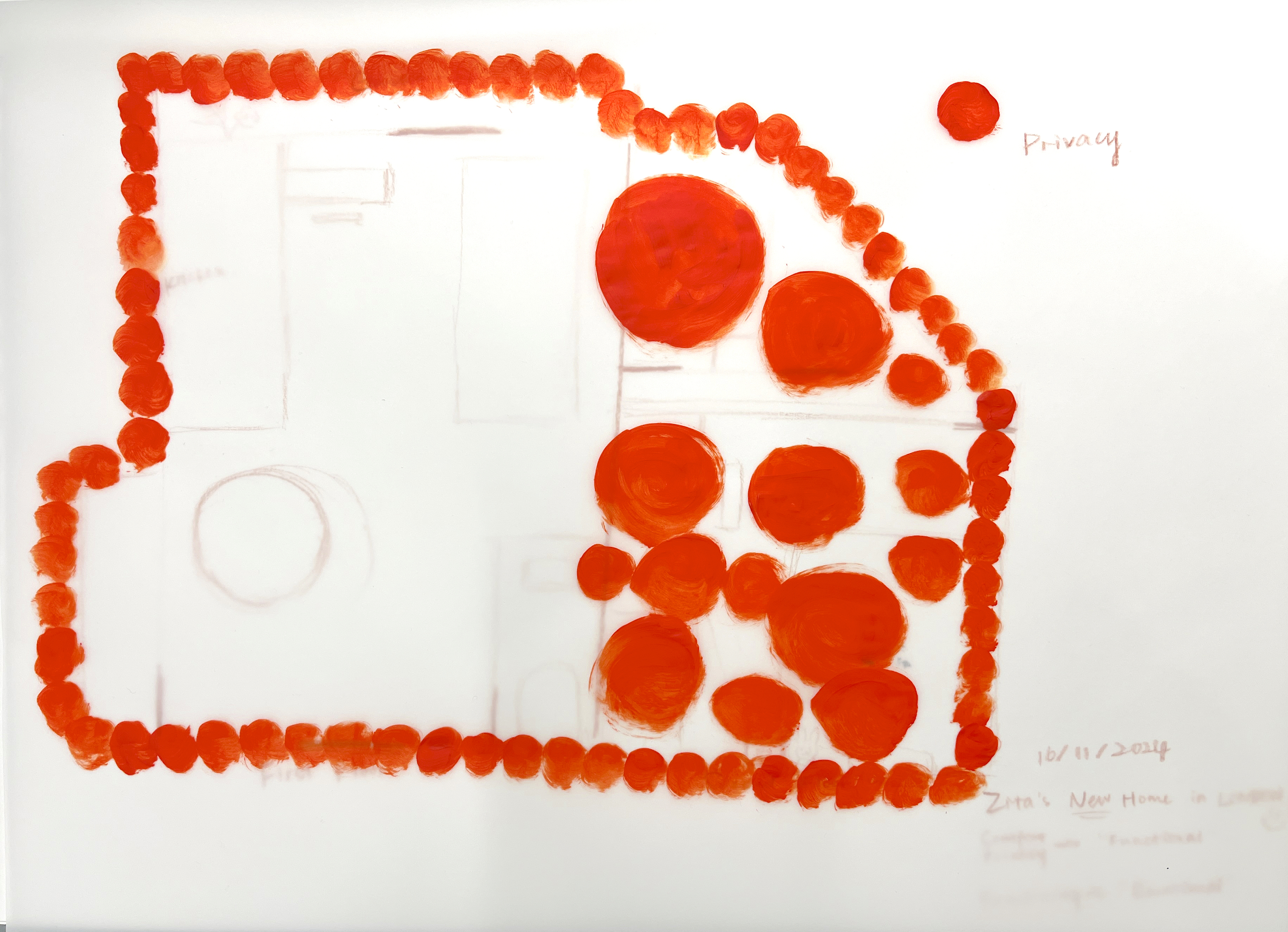
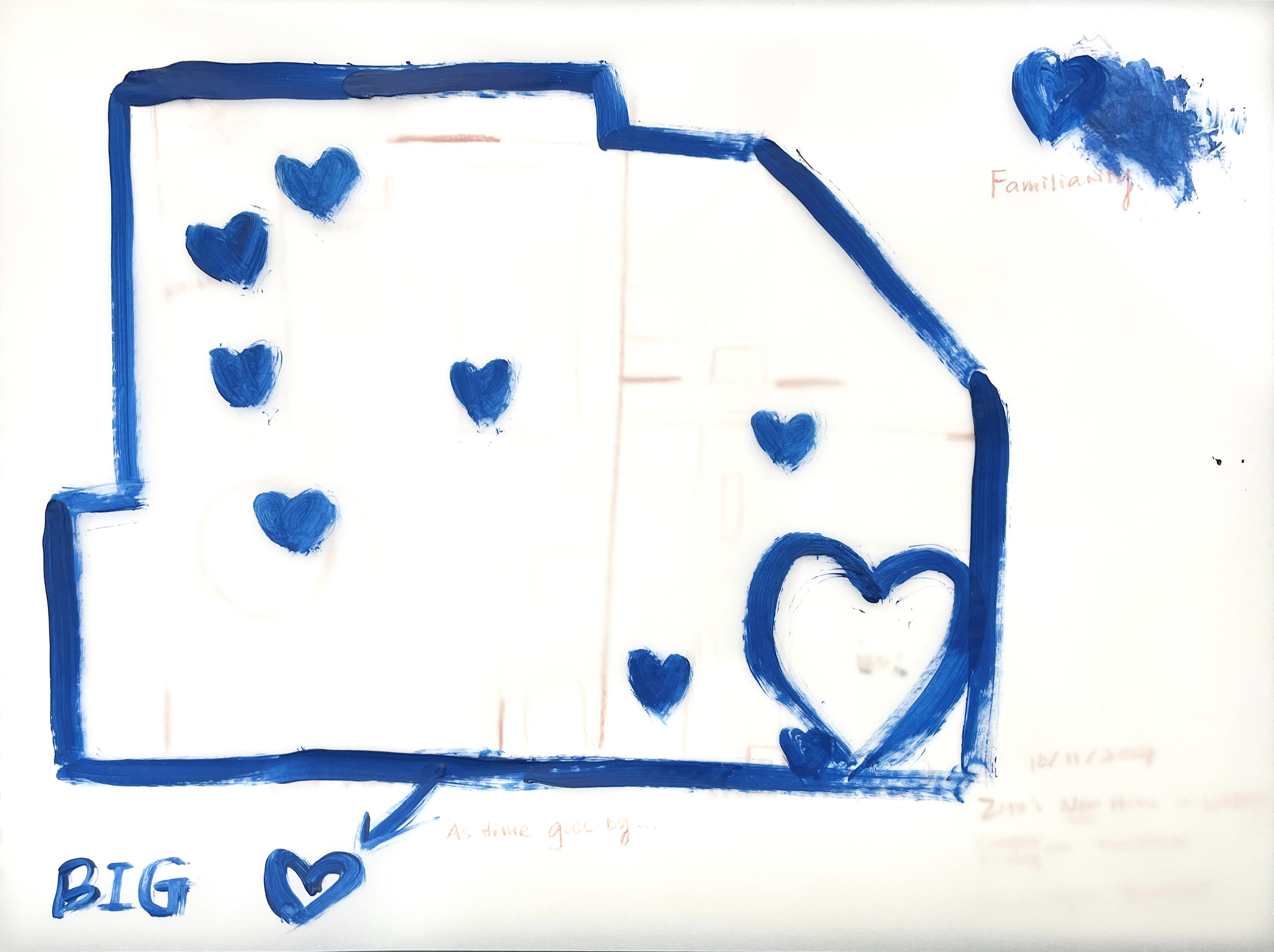
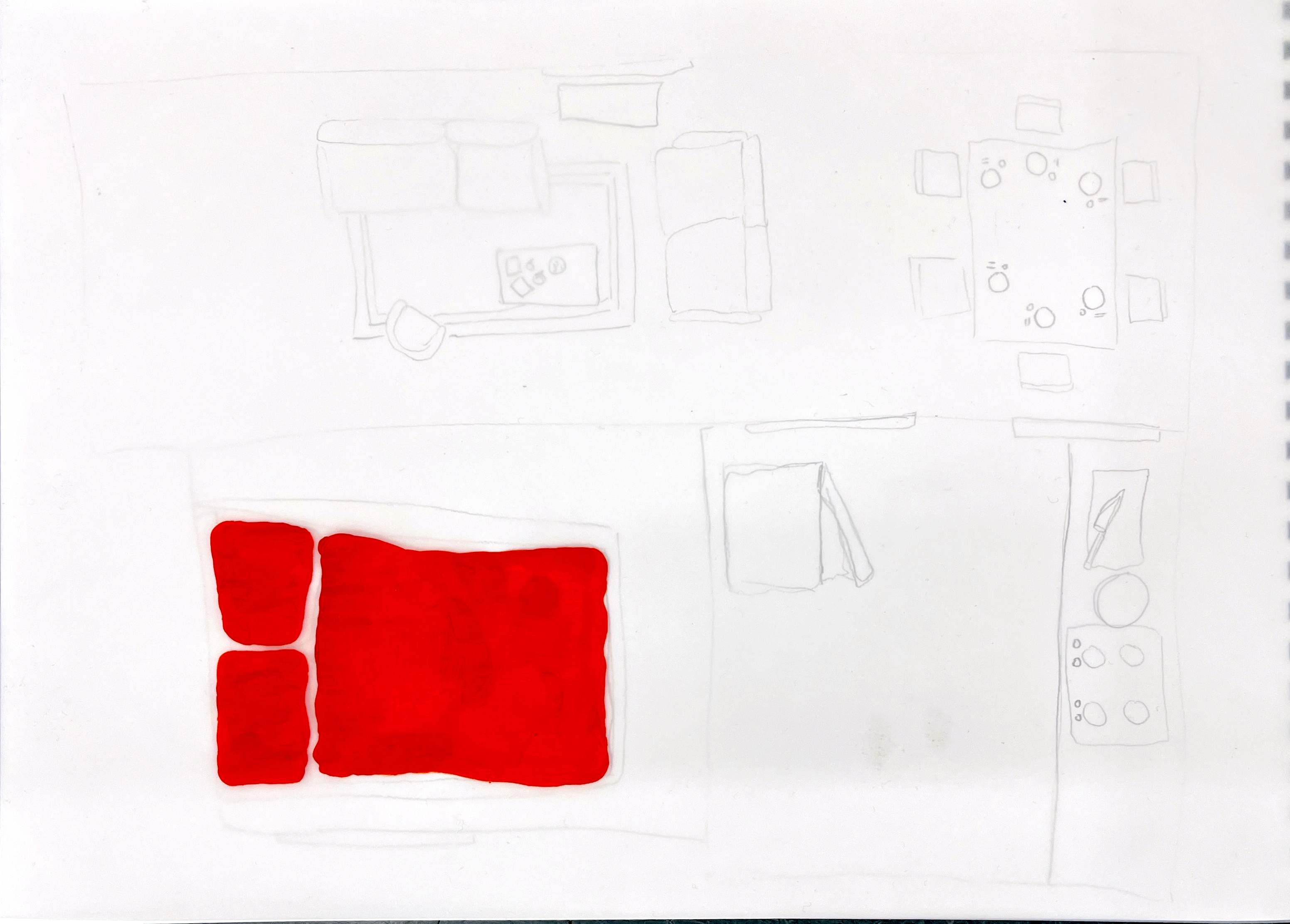
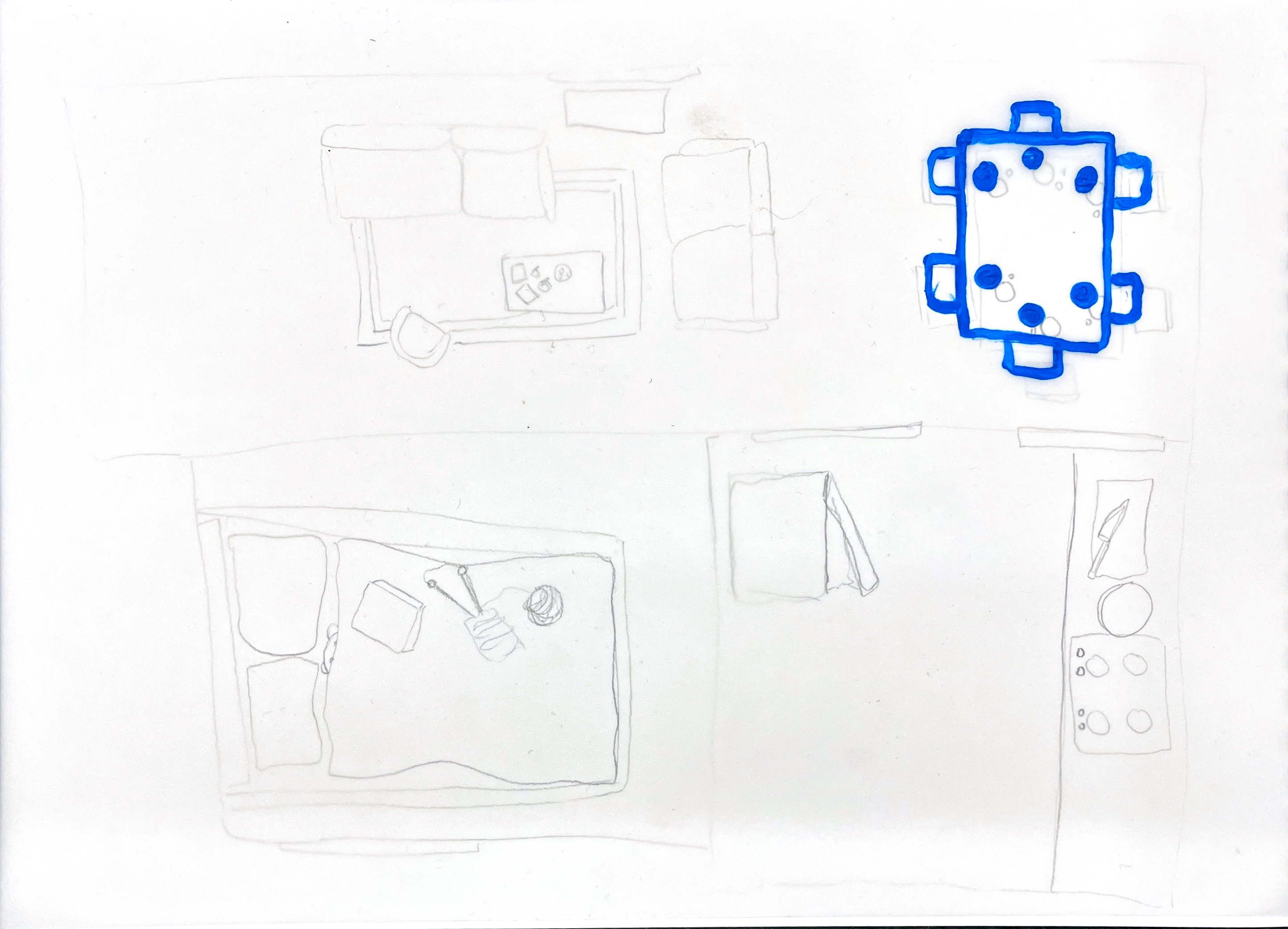

Artist | Sharo Liang
Poster Visual Design | Yipei Lee
Participant | Alice, Aliyah, Caroline, India, Laila, Lorenzo, Yixin
Support by | SUAVEART, Schubertstrasse, NCAF, Photobook Cafe
Special thanks | Alice Campos, Aliyah Ratcliffe, Caroline Ip, India Jeffes
Duration | 14.00 – 16.00, 16 November 2024
Location | Photobook Cafe, London, UK
 細着藝術 SUAVEART