Bird-window collisions are a common yet overlooked issue in urban environments. As cities expand and skyscrapers dominate the skyline, humans living at ground level demand green parks and eco-friendly architecture. However, we often neglect the rights of birds navigating the airspace above. The needs of both species should be considered together.
In the U.S., an estimated 365 million to 988 million birds die from window collisions annually. In October 2023, nearly a thousand migratory birds perished overnight after crashing into Chicago’s McCormick Place Convention Center, deceived by the glass reflections of an open sky. In South Korea, around 8 million wild birds meet the same fate each year. In Taiwan, the Raptor Research Group has recorded 700 cases of bird-window collisions since 2017.
At SUAVEART, art and ecological initiatives are increasingly addressing this issue to explore the more than human perspectives. Activities such as tree-climbing workshops, lectures, and interdisciplinary art projects encourage citizens to reflect on the challenges faced by other species, and encourage people to consider the struggles of non-human species in today’s urbanized world.
Lighthouse for Wagiwagi is a special project led by curator Yipei Lee, in collaboration with botanist Hsin-Chieh Hung—known as a “plant hunter”—and British artist Celyn Bricker. The series features UV-coated images of endangered plant species, which remain invisible to the human eye under normal conditions but can be perceived by certain birds, insects, and animals under ultraviolet light.
Beyond preventing bird collisions, the project examines how nature perceives the world differently. Just as rare plant species require specialized observation techniques, Lighthouse urges us to rethink our cities through a non-human lens, making visible what is often hidden in plain sight.
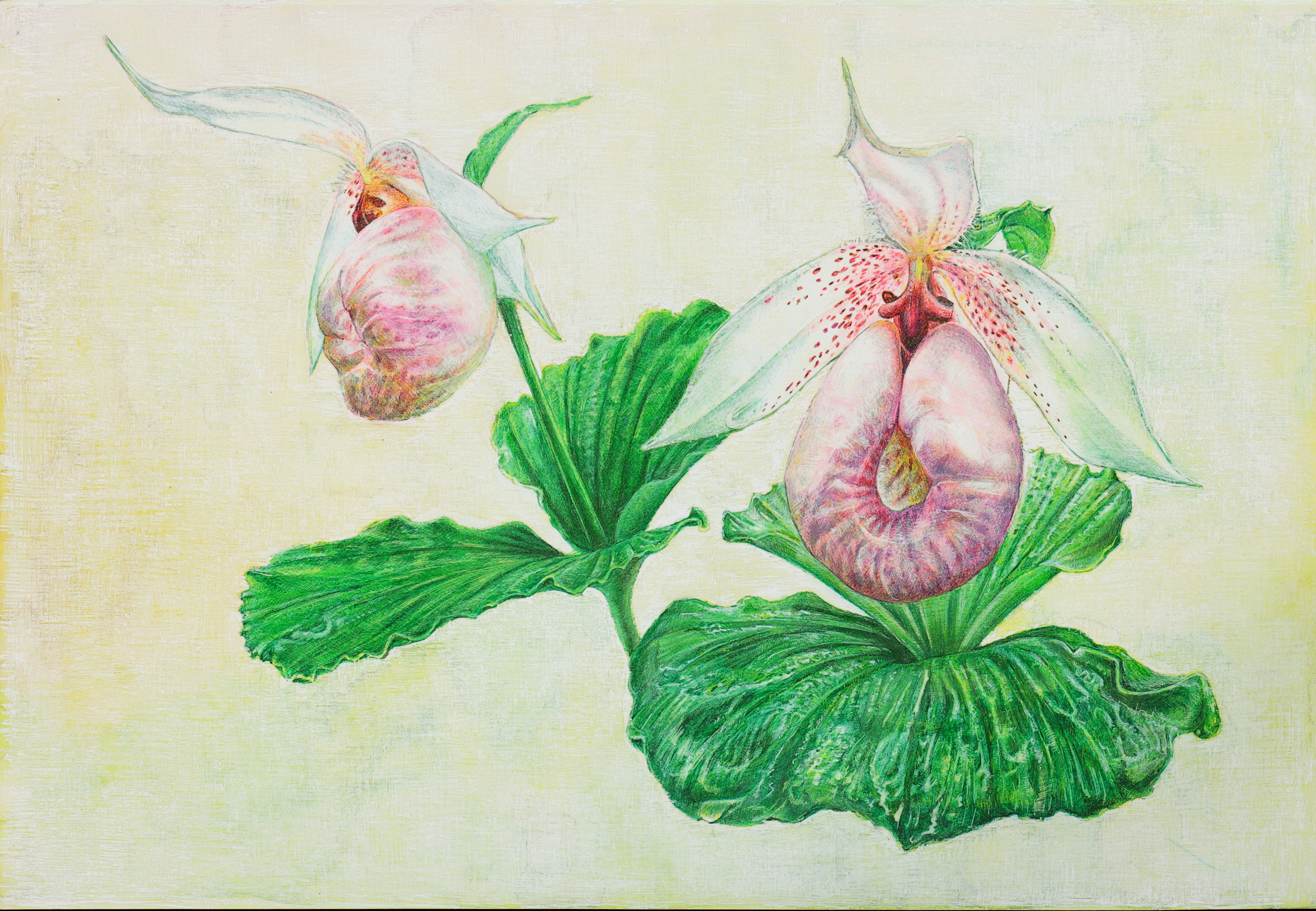
The Cypripedium formosanum, prized in Taiwan for its large and vividly beautiful blooms, faces intense pressure from overharvesting due to its high ornamental value. In addition, habitat loss and fragmentation are among the major threats this species confronts in Taiwan.
Illustration by Hsin-Chieh Hung
Cypripedium formosanum
Courtesy of Artist
UV installation by Celyn Bricker
Courtesy of Artist
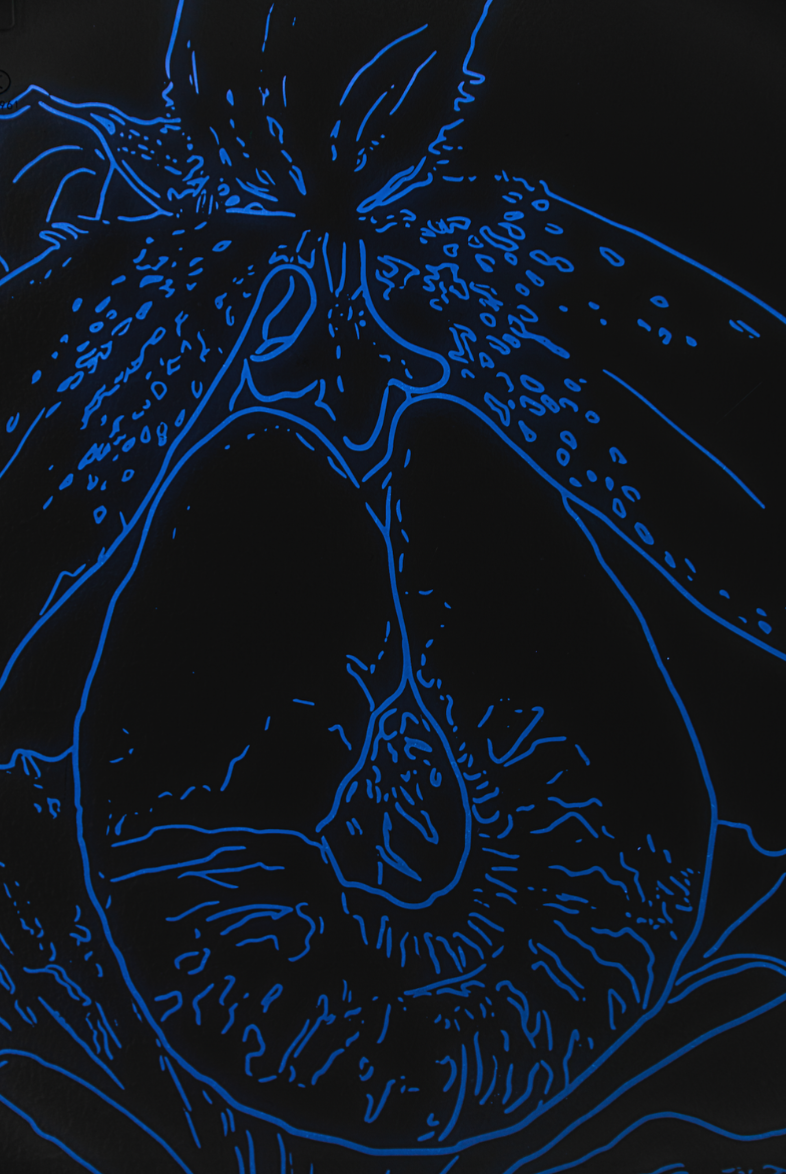
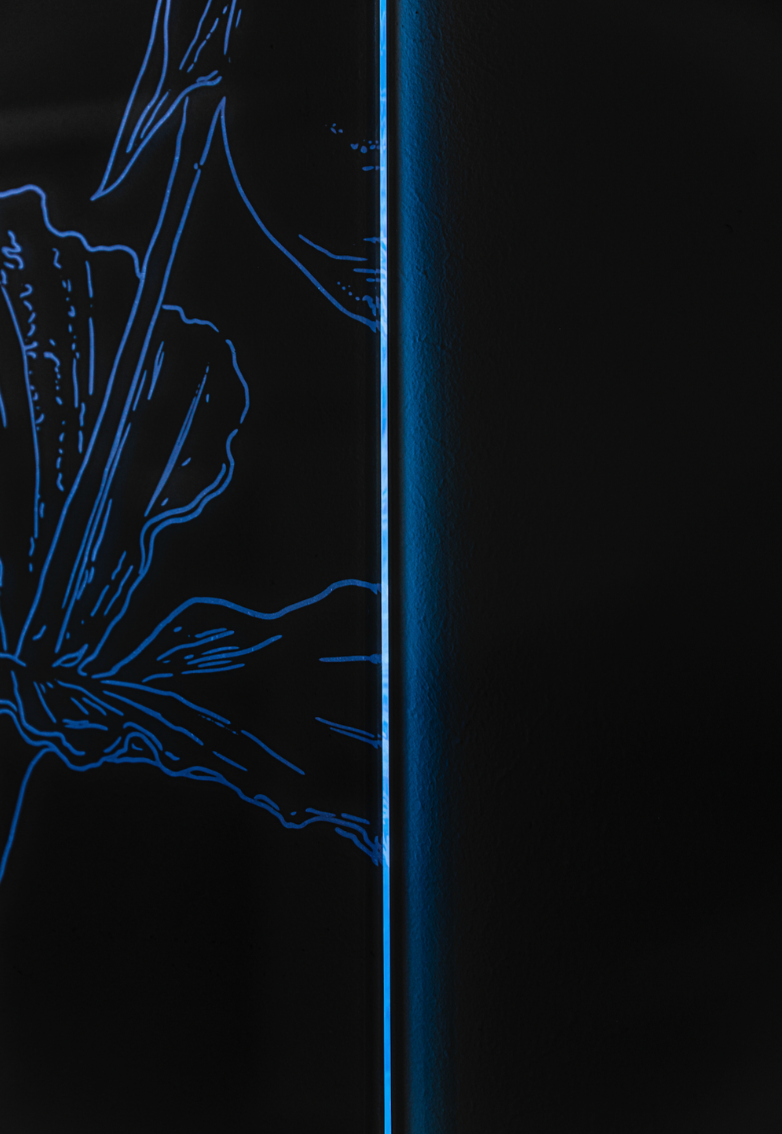
Lighthouse is a series of artworks that uses UV technology to reduce bird collisions with windows. As part of the architecture of the Terracotta Embassy at Jatiwangi, Celyn collaborated with Taiwanese scientist and botanist Hsin-Chieh Hung (plant hunter) to create a new version of ‘Lighthouse’.
Hsin’s research has led him to discover hundreds of new plants, as well as discovering the last remaining specimens of certain species of plants in Taiwan and Southeast Asia. Celyn used the hand drawings Hsin had made of these near-extinct specimens to create the design for this piece, integrating these rare plants into the architecture of the embassy.
Under normal conditions the image is invisible to the human eye and visible only to certain birds, animals, and insects; only under UV light is the design revealed. As well as having a practical function in reducing bird collisions with glass, this artwork series explores the idea of non-human vision, in addition to the relationship we have with ‘hidden’ or easily overlooked aspects of nature.
This series was exhibited at DOCUMENTA 15 in Kassel in 2022.
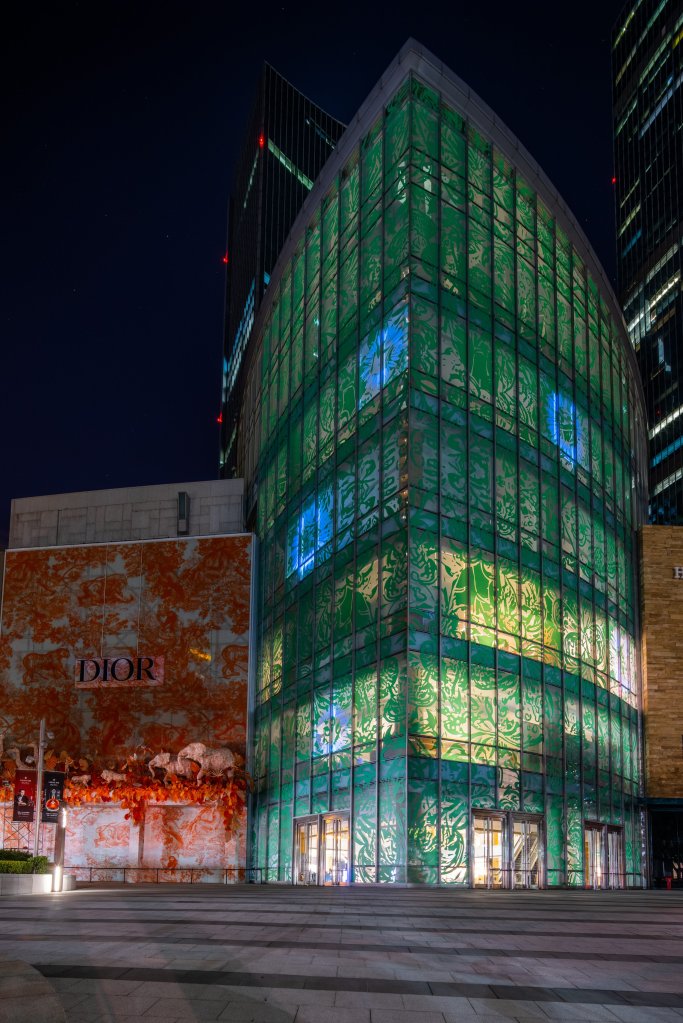
Art for all’ is a public art installation created by artist Celyn Bricker with the support of the curatorial team Continuous Regeneration (RGRT), and installed in Shanghai’s Plaza 66.
Shanghai Henglong Mall, 2022
Courtesy of Artist
 細着藝術 SUAVEART