3 – 6 Oct, 2024
Pabellón textil de la Fira de Montjuic, Barcelona
Context
展覽概述
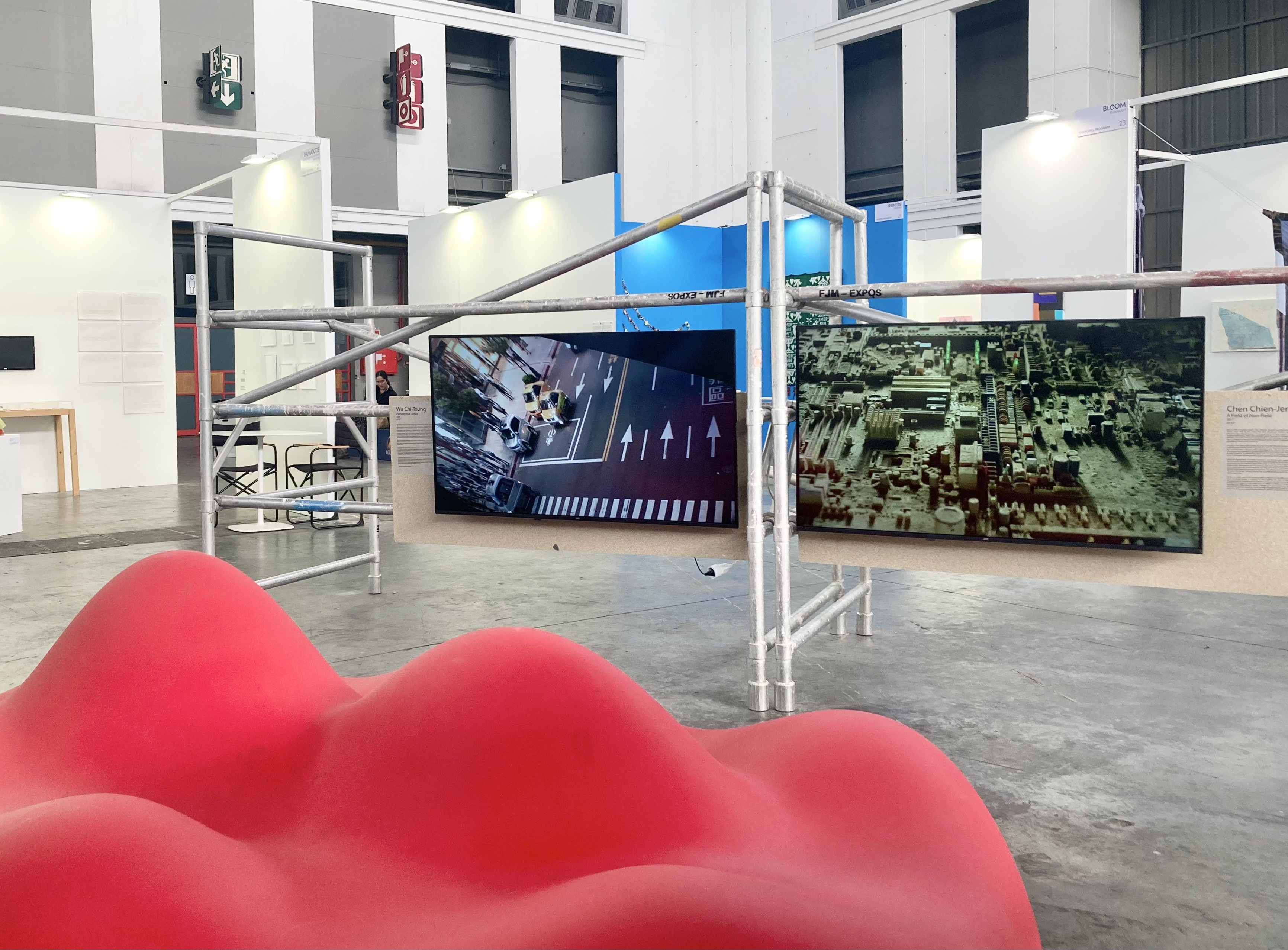
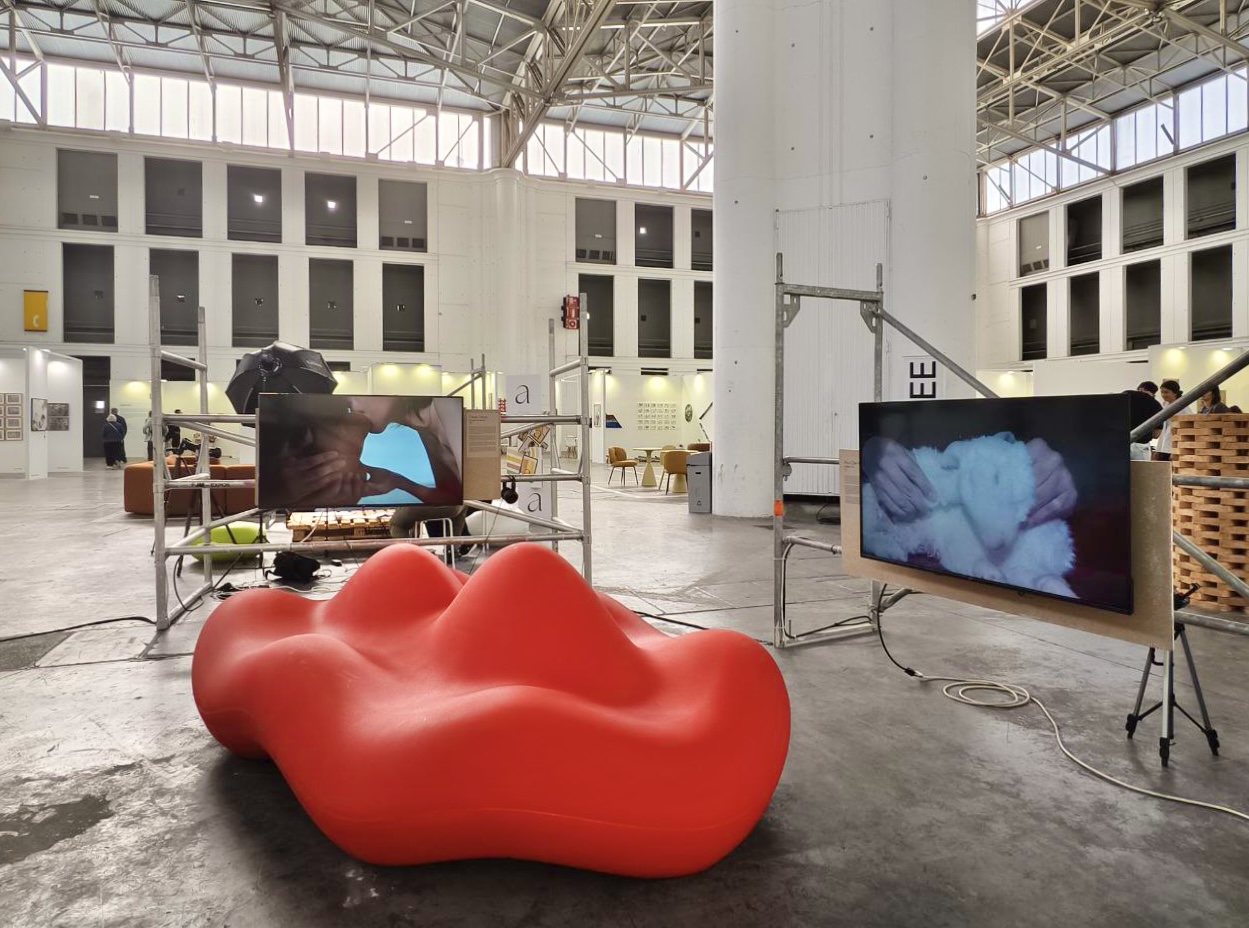
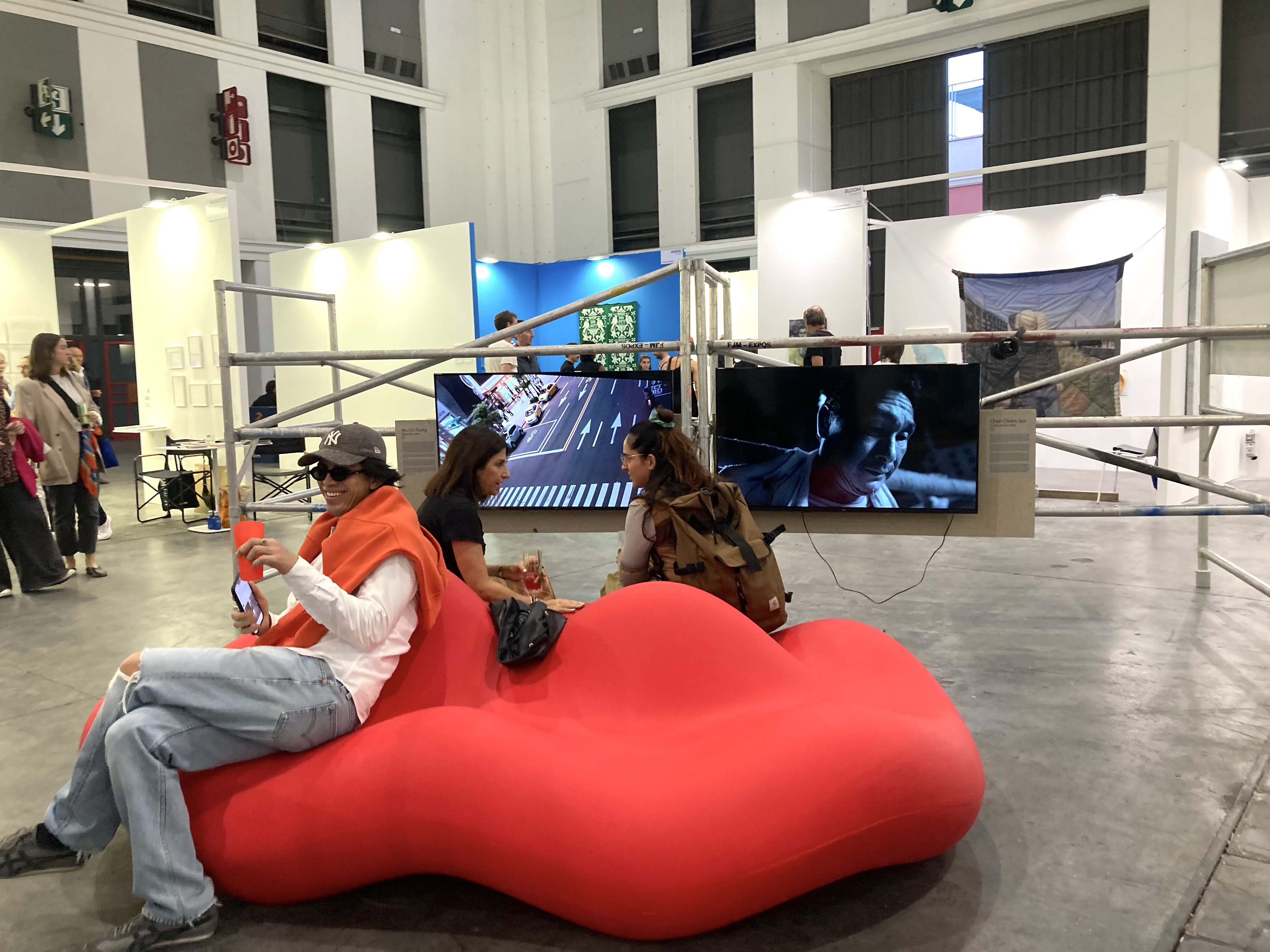
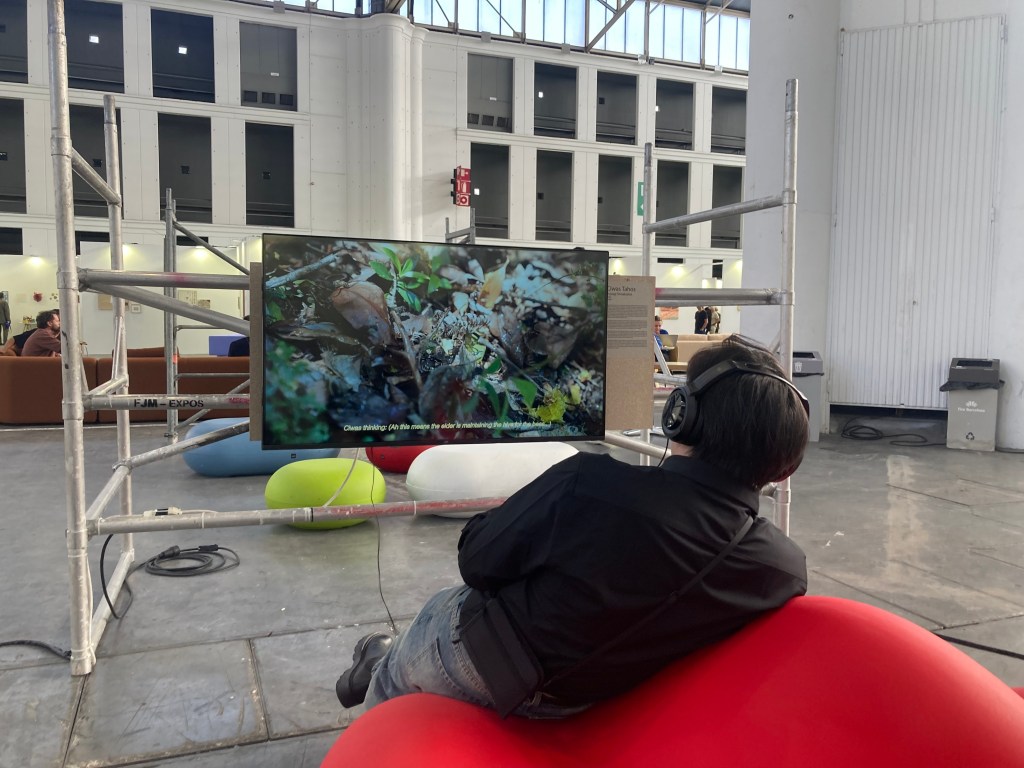
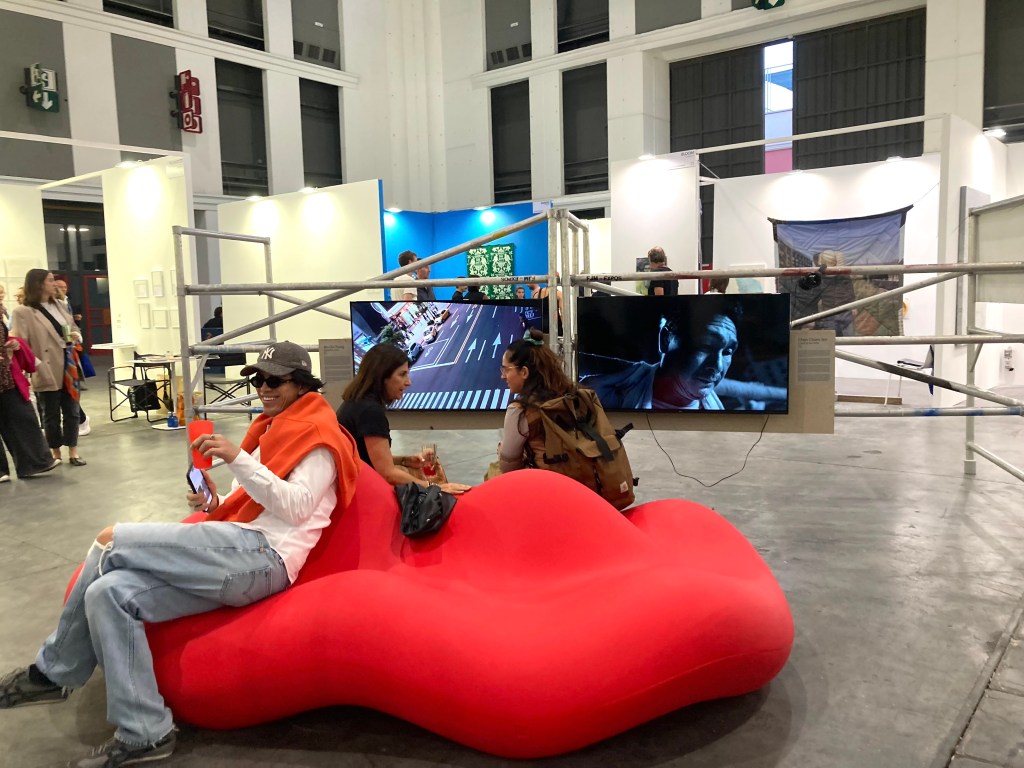
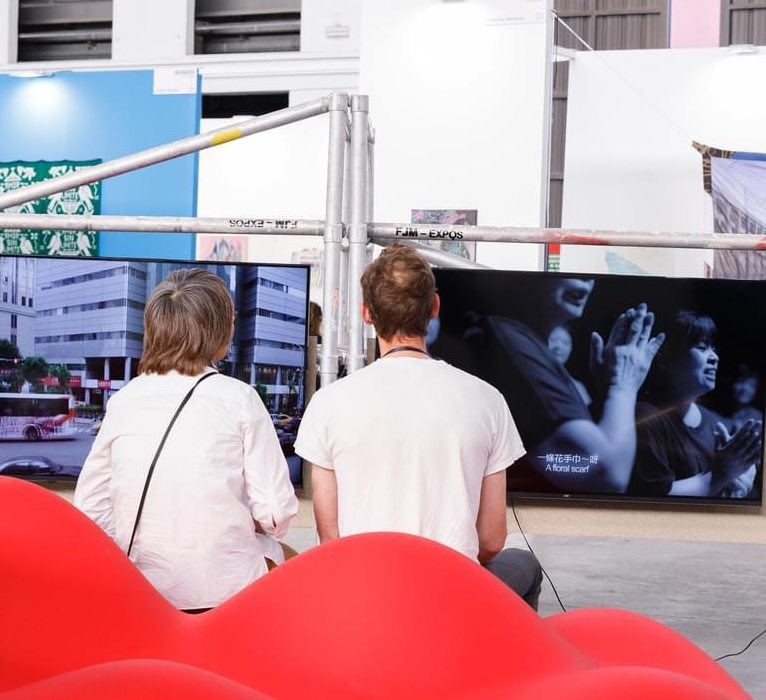
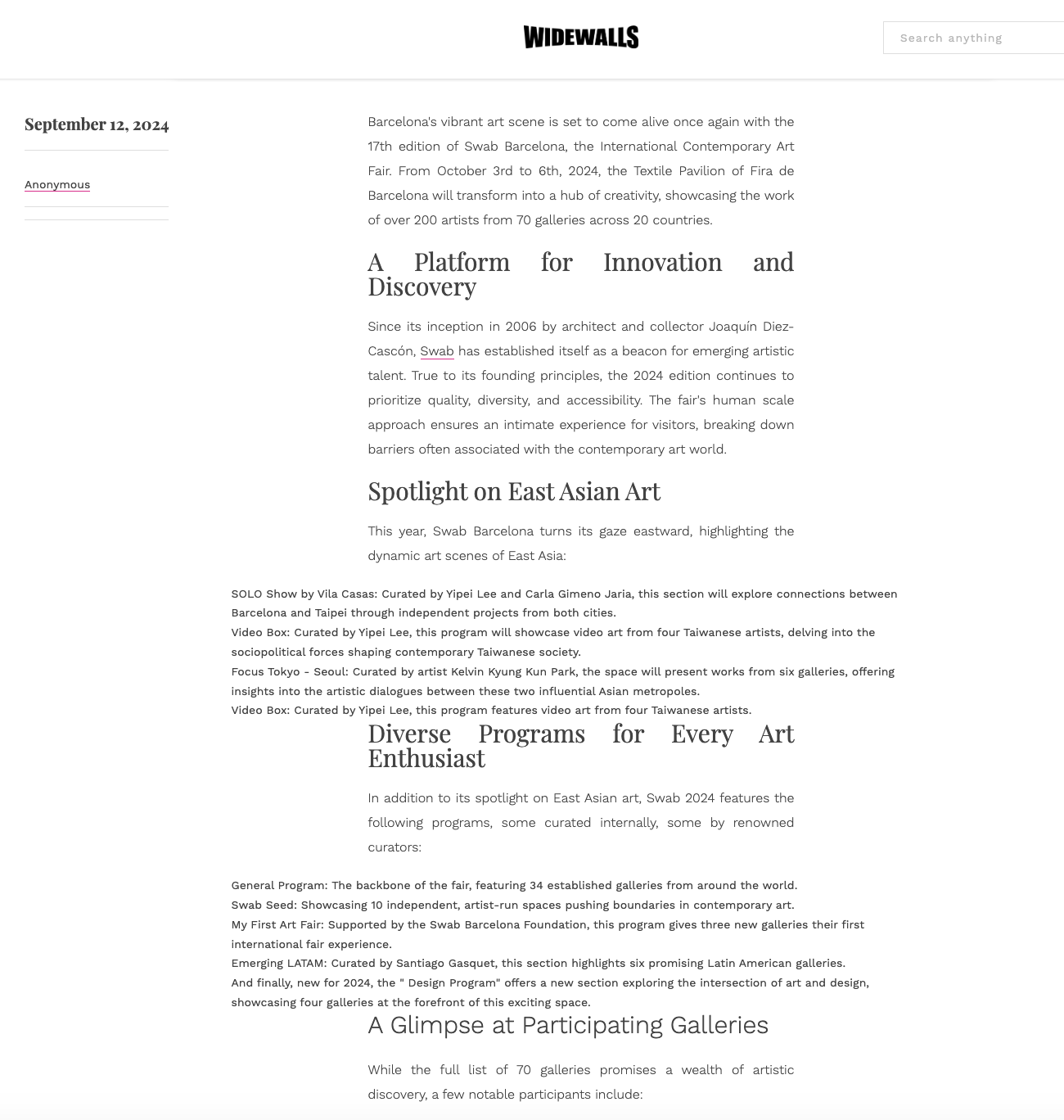
Video Box, a special non-profit program promoted by the Swab Foundation, gives visibility to video art projects originating in territories with a cultural fabric marked by experimentation with this medium and a growing emerging art community.
For this past edition, our focus shifted dynamically to the vibrant cultural landscape of Taipei. At that time, Taipei stood as a paramount hub for a burgeoning community of emerging digital media artists. In collaboration, these artists embarked on a transformative project that not only mirrored the avant-garde spirit of the new digital artistic generation but also underscored the influential and emergent role that Taipei’s artistic scene was playing.
This endeavor aimed to encapsulate the dynamism and groundbreaking creativity that emanated from the Taipei region, spotlighting its profound impact on the global art stage. As we delved into the project, we unraveled the rich tapestry of ideas and expressions that defined the powerful and compelling narrative of Taipei’s flourishing artistic movement.
Through the theme ‘Intimacy: the Moments of Social Skin,’ the exhibition explored the intangible forces of geopolitics, gender, power, and culture that shaped Taiwanese contemporary social development since the 1990s. It dismantled the social structures and historical imprints of human existence through the narrative of images depicting the nation, the city, the tribe, and the family.
The body was interpreted as a text that could be read, with human beings akin to the skin and texture attached to the surface of society. Whether traditional or contemporary, the existence and transformation of the body carried subjective and objective meanings, directly and indirectly expressing cultural ideologies (and anxieties), racial prejudices, social statuses, and the identities of groups.
Anthropologist Terence Turner coined the term ‘social skin.’ It encompassed ornaments, hairstyles, make-up, cover-ups, clothing, tattoos, piercings, and scratches, as well as bodybuilding or slimming, muscle development, and cosmetic surgery. Whether natural or artificial, extreme or seemingly whimsical, social skin was meaningful to the times people lived through and was always influenced and represented by the socialization of human behavior.
In conclusion, as demonstrated by the exhibition titled ‘Intimacy: The Moments of Social Skin,’ society was depicted as a rich tapestry woven from the diverse threads of different generations, each reflecting unique dimensions of social interaction and identity. Despite coexisting within a vast and interconnected environment, individuals often found themselves unable to fully grasp its entirety. Yet, this very incompleteness remained an integral aspect of the beauty of society, as it embodied the intricate rhythm of human existence and interaction.
Within this intricate web, images served as invaluable artifacts of what could be termed ‘futuring typology’—capturing not only moments frozen in time but also hinting at the potential trajectories of our collective future. Through the narrative use of video imagery, Taiwanese artists who participated in this exhibition offered poignant insights into the nuances of regional and global development, particularly in the realms of pluralism and social status.
As viewers drew closer to these depictions, they found themselves increasingly immersed in the authenticity they conveyed, forging deeper connections with the realities portrayed. Thus, by bearing witness to, portraying, and memorializing these pivotal moments, the exhibition contributed to a richer understanding of the complex interplay between individuals, societies, and the evolving landscapes of our shared world.
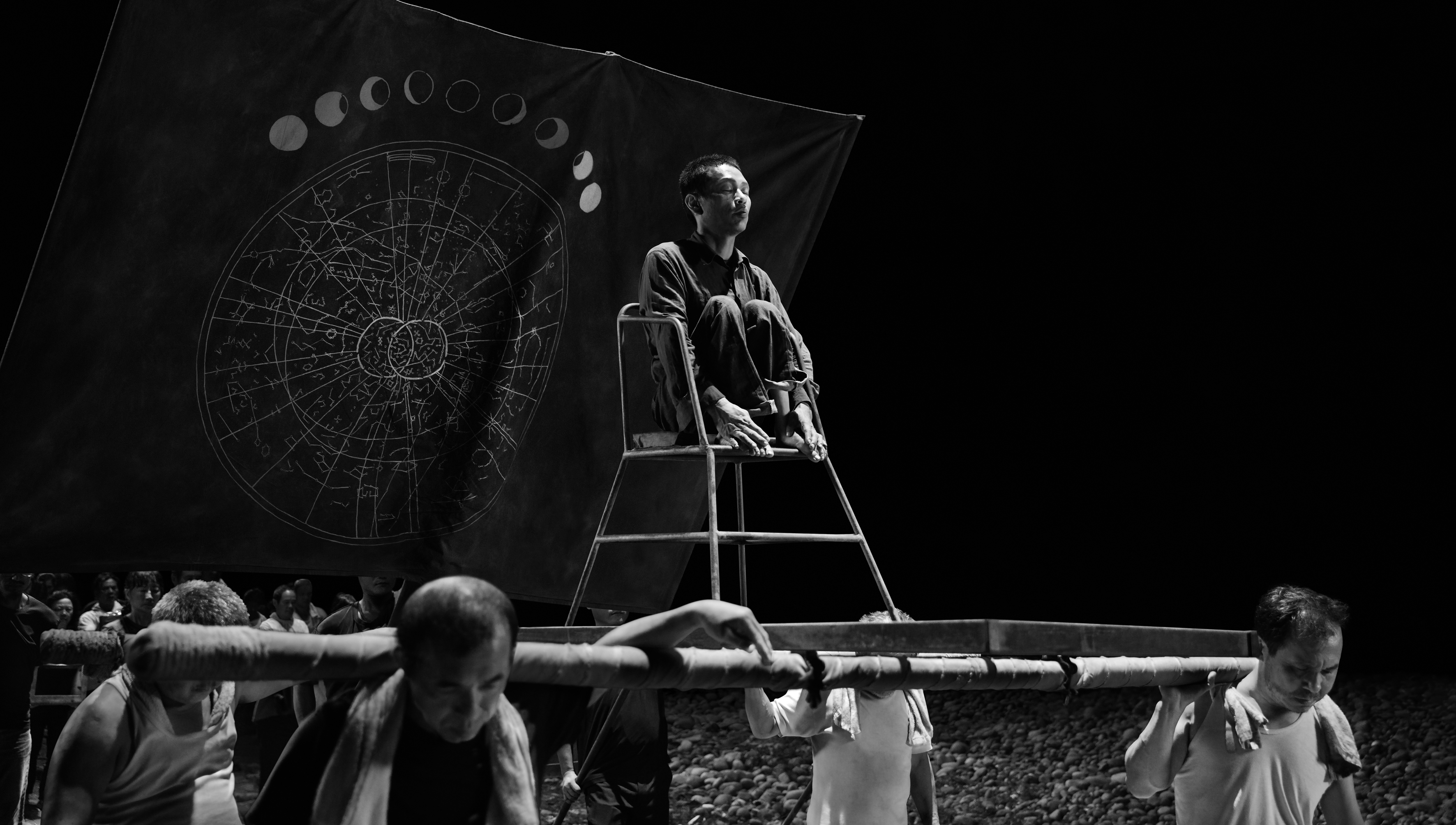
Born in 1960 in Taoyuan, Taiwan, Chen Chieh-jen currently lives and works in Taipei, Taiwan. Since 1996, he has collaborated with unemployed laborers, day workers, migrant workers, foreign spouses, unemployed youth and social activists. In order to visualize contemporary reality and a people’s history obscured by neoliberalism, Chen embarked on a series of video projects in which he used strategies he calls “re-imagining, re-narrating, re-writing and re-connecting” to further his goal of generating dissent and starting a second wave movement.
Starting in 2010, Chen began actively focusing on the fact that many people around the world have been reduced to working temporary jobs and lost sense of existence due to the corporatocracy’s pervasive control technology. Chen refers to this near universal plight caused by automation as “global imprisonment” or “at-home exile.” Employing the Buddhist methods of transforming desire with desire and detoxifying illusion with māyā, he considers how this pervasive control technology can be qualitatively changed.
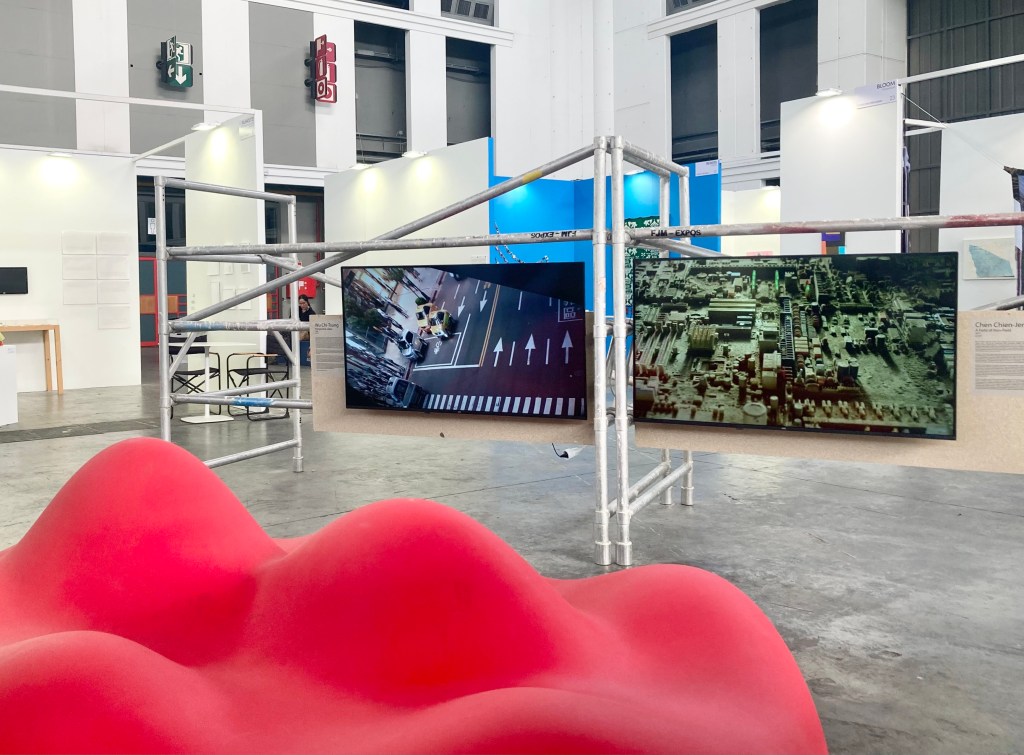
A Field of Non-Field, 2017|Chen Chieh-jen (TW)
Under the development of financial competition and technological capitalism, which has developed a global manipulation that is more penetrating than previous forms of governance, not only are more people being reduced to the status of pan-dispatched workers under “global imprisonment and local exile”, but it is also more difficult to open up the desire structure, sensory structure, and way of thinking of contemporary societies which have been encompassed and penetrated by the post-internet era’s global manipulation technology. This puts the survival of contemporary societies into the battlefield for each other.
“Is there any other way out for human beings? In response to this difficult question, to which no simple answer is possible, the artist rethinks the topic of “emptiness” in “Zhongguang Xue” created by Avalokiteshvara, and puts into practice the “Middle Way” method with its spirit of multi-dialecticism. In order to embody and practice how to establish other epistemologies, modes of thinking and values of life in a world that is encompassed and penetrated by the technology to qualitatively change the way of life. This is one of the ways to qualitatively change the global manipulation technology.
Wu, Chi-Tsung was born in 1981 in Taipei. Wu received his Bachelor of Fine Arts from the Taipei National University of the Arts in 2004. He currently lives and works in Taipei, Taiwan and Berlin, Germany. His work, in which he devotes great attention to the methods used in producing and interpreting images, spans across different media, including photography, video, installation art, painting and set design. He combines traditions and contemporary art forms from the East and the West. Daily objects and phenomena are great inspiration for his work, what he transforms into poetic imagery. He received the top prize of the “Taipei Arts Award” (2003), the “WRO Media Art Biannual” (2013) – Award of Critics and Editors of Art Magazines”, the “Liu Kuo Sung Ink Art Award” (2019), short-listed for the “Artes Mundi” (2006), and the “Prudential Eye Awards” (2015).
His recent artworks exhibited at Asian Art Museum in San Francisco, U.S.A; The 9th Hong Kong & Shenzhen Bi-City Biennale of Urbanism\Architecture (Shenzhen). His Cyano-Collage Series was featured in Shangxia’s FW23 couture collection which debuted at Paris Fashion Week.
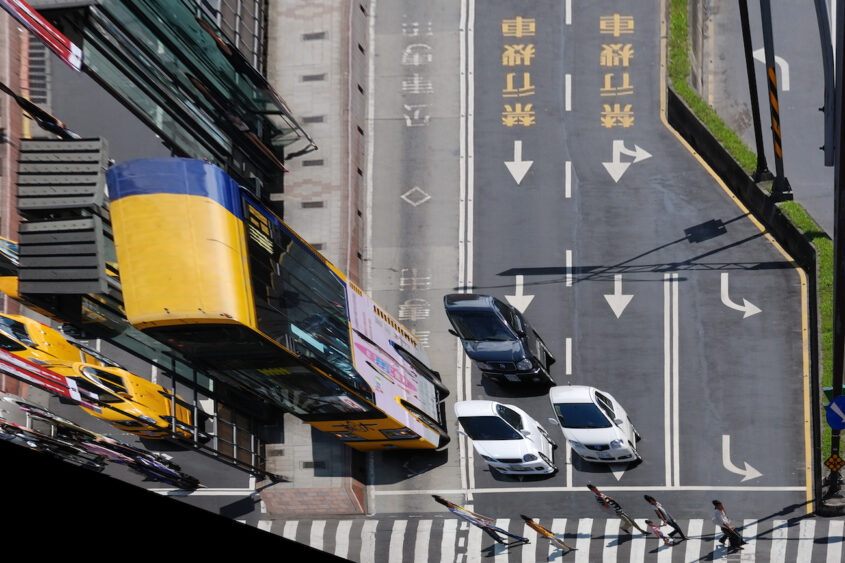
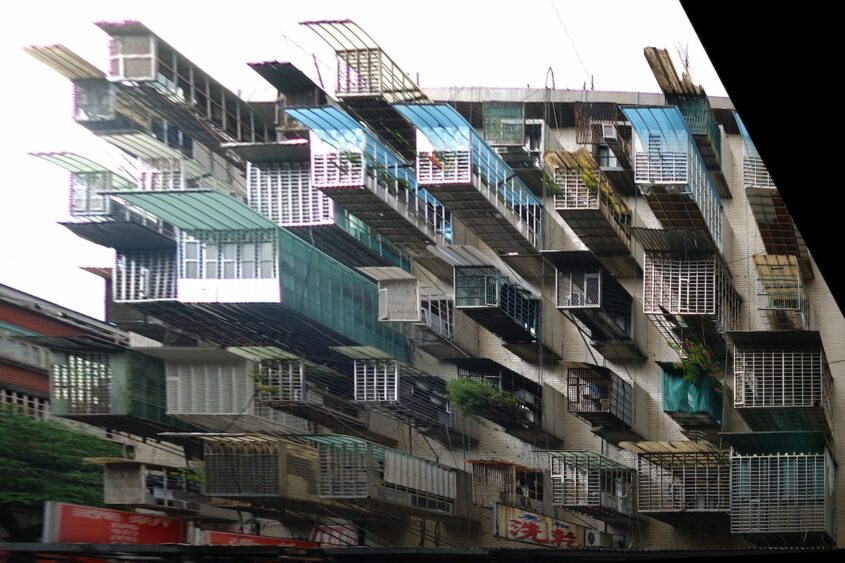
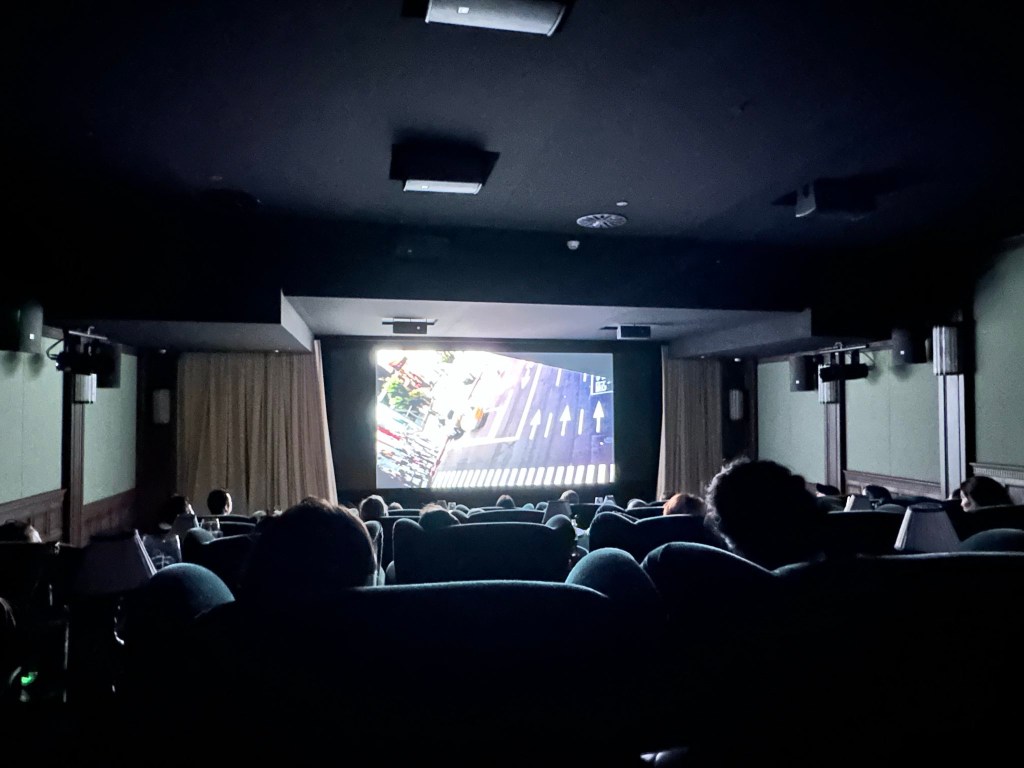
Perspective, 2008|Wu Chi-Tsung (TW)
The central locus of his creative work has always been a discussion as to the real nature of images; how they are produced, perceived by viewers and the impact they have. However, the way in which this is executed has never been particularly disciplined or scientific, resembling something more akin to a game. Sometimes he experiments with just one part, or exchange some of the elements to see what changes that causes in the creation of images and whether there is anything of interest hidden inside.
A great deal of the depth of illusion created by pictures or images comes from the single point of perspective. In other words, all straight lines not parallel to the picture disappear into some point in the distance, almost as though space is being sucked into a bottomless hole. It was this view point that made him wonder what the viewable world would be like if there was no point of disappearance.
‘’I guess it would be really flat.’’
Hsu Che-Yu (b. 1985) is an artist based in Taipei and Amsterdam. Previously, Hsu obtained a master’s degree from the Graduate Institute of Plastic Arts, Tainan National University of the Arts (Taiwan). Since 2019, he has participated in different residency programs Hsu Che-Yu works as an artist who primarily creates animations, videos, and installations that feature the relations between media and memories. What matters to the artist is not simply the history of events traceable through media, but also the construction and HSU Che-Yu visualization of memories, be they private or collective.
Hsu has solo exhibitions at Fundació Joan Miró (Barcelona, 2023), Centre d’Art Contemporain Genève (2023), Vernacular Institute (Mexico City, 2023), Kuandu Museum of Fine Arts (Taipei, 2023,2012), Liang Gallery (Taipei, 2022), Vanguard Gallery (Shanghai, 2020), Taipei Fine Arts Museum (2015), SAT Society for Arts and Technology (Montreal, 2012). He has participated in the Theater der Welt (Frankfurt, 2023), Bienal de São Paulo (2021), Seoul Mediacity Biennale (2021), Sonsbeek20→24 Quadrennial public program (2021), Techniques of Becoming (Württembergischer Kunstverein, Stuttgart, 2021), VIDEONALE.18 (2021).
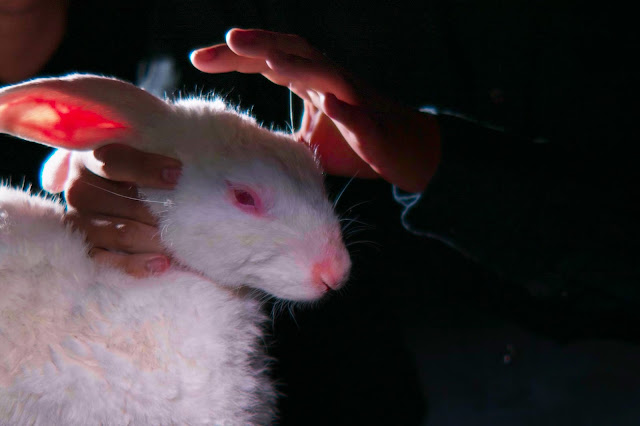
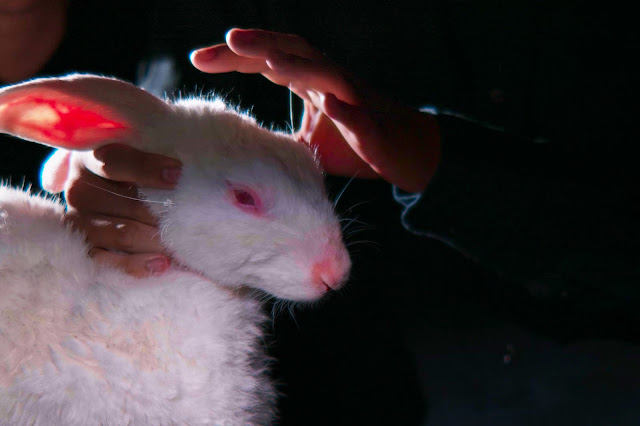
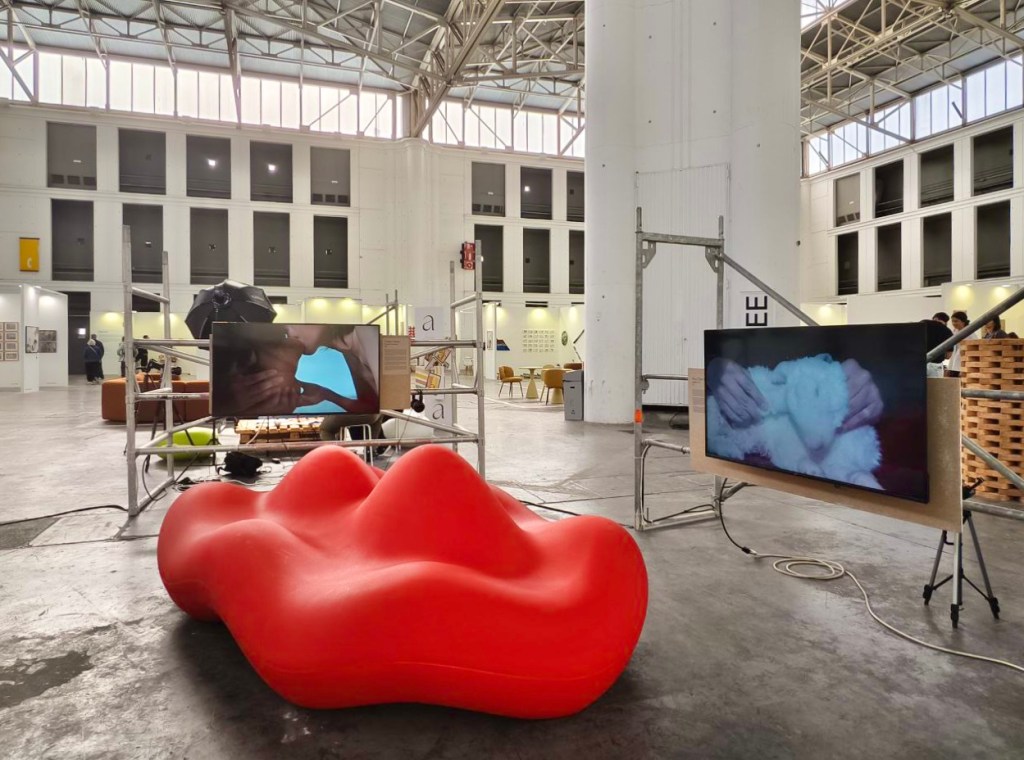
RABBIT 314, 2020|Hsu Che-Yu (TW)
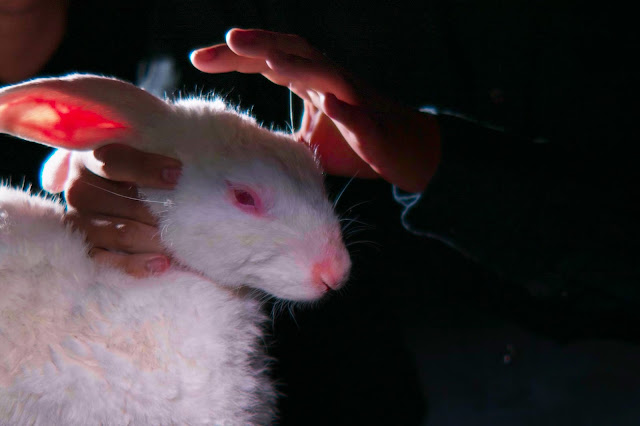
A glove puppetry performer reinvents and reenacts the movements of a dead rabbit, which ended its life in a laboratory. Rabbit 314 questions the manipulation and appropriation of animals by humans. The project was initiated by the death of a laboratory rabbit, and was inspired by the artist’s family memories. The artist’s grandma served in an animal laboratory for thirty years, during which, due to the particularity of her job, she had to dissect living animals for observation and experiments.
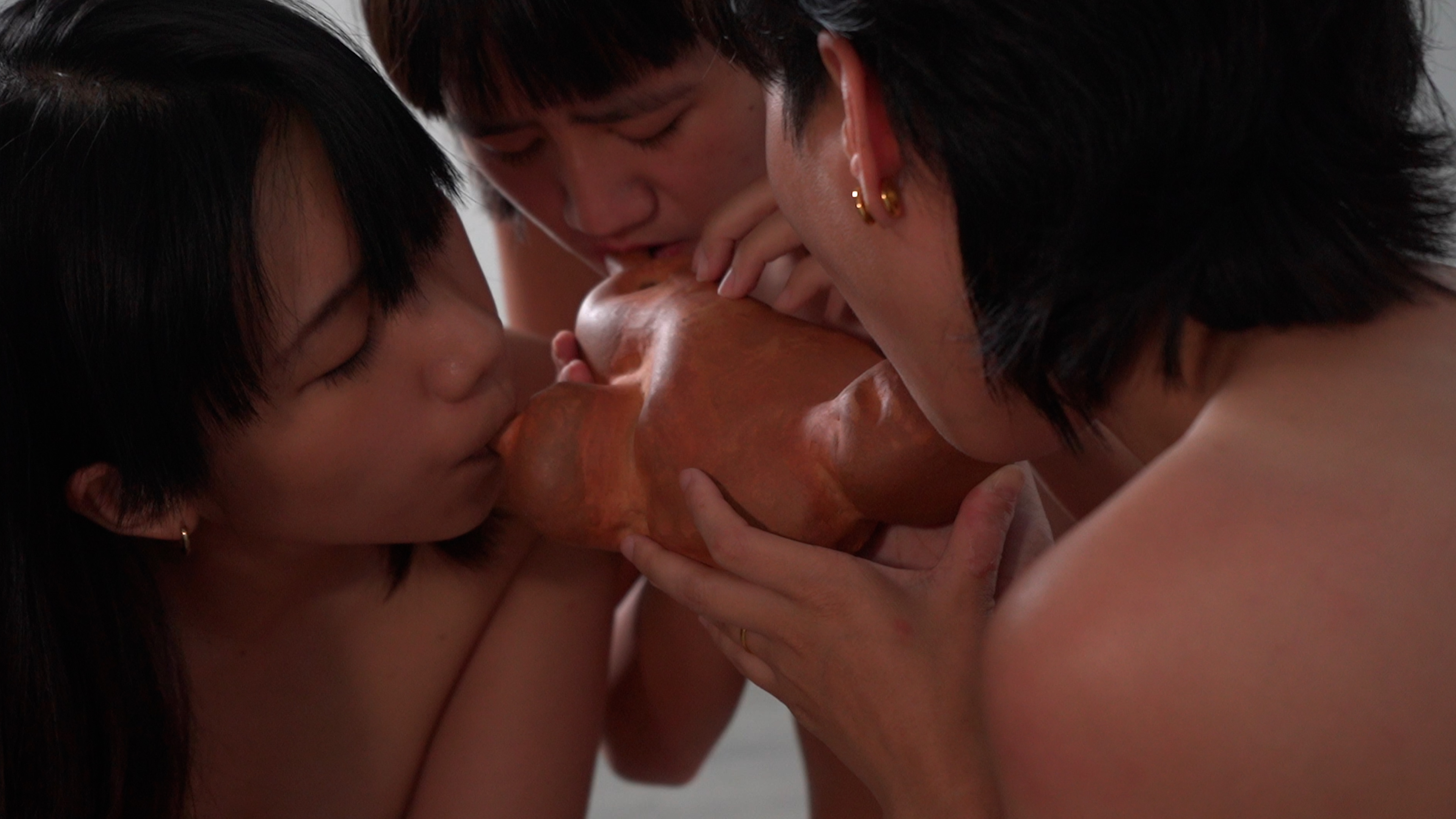
Ciwas Tahos (Anchi Lin) is a visual artist of Atayal/ Itaṟal and Taiwanese Hō-ló descent. Ciwas’s body-centered practice weaves the Indigenous Atayal worldview through performance, moving images, cyberspace, ceramics, and kinetic installation to claim a self-determined queer space, her work is an exploration of cultural and gender identity, using her body as a medium to trace linguistic and cultural experiences of displacement to seek out new forms of understanding. Ciwas’s most notable art project is mgluw tuqiy na Temahahoi (Finding Pathways to Temahahoi), she completed an MFA in New Media Art at Taipei National University of the Arts (Taiwan) in 2024 and BFA in Visual Art at Simon Fraser University (Canada) in 2015.
Most recently, Ciwas presented her work at Arts House in Naarm (Melbourne), and the International Symposium on Electronic Art (ISEA) in Brisbane, Australia. She was awarded the Biannual Prize of Pulima Art Award and was selected as the inaugural Artist for the Australia-Taiwan Friendship Year Arts Exchange Partnership for 2023. In 2023, their work was exhibited at the 2023 Arts Electronica Festival in Austria, the Taiwan Austronesian Art Triennial in Taiwan, and Proto-zone13 at Shedhalle in Switzerland.
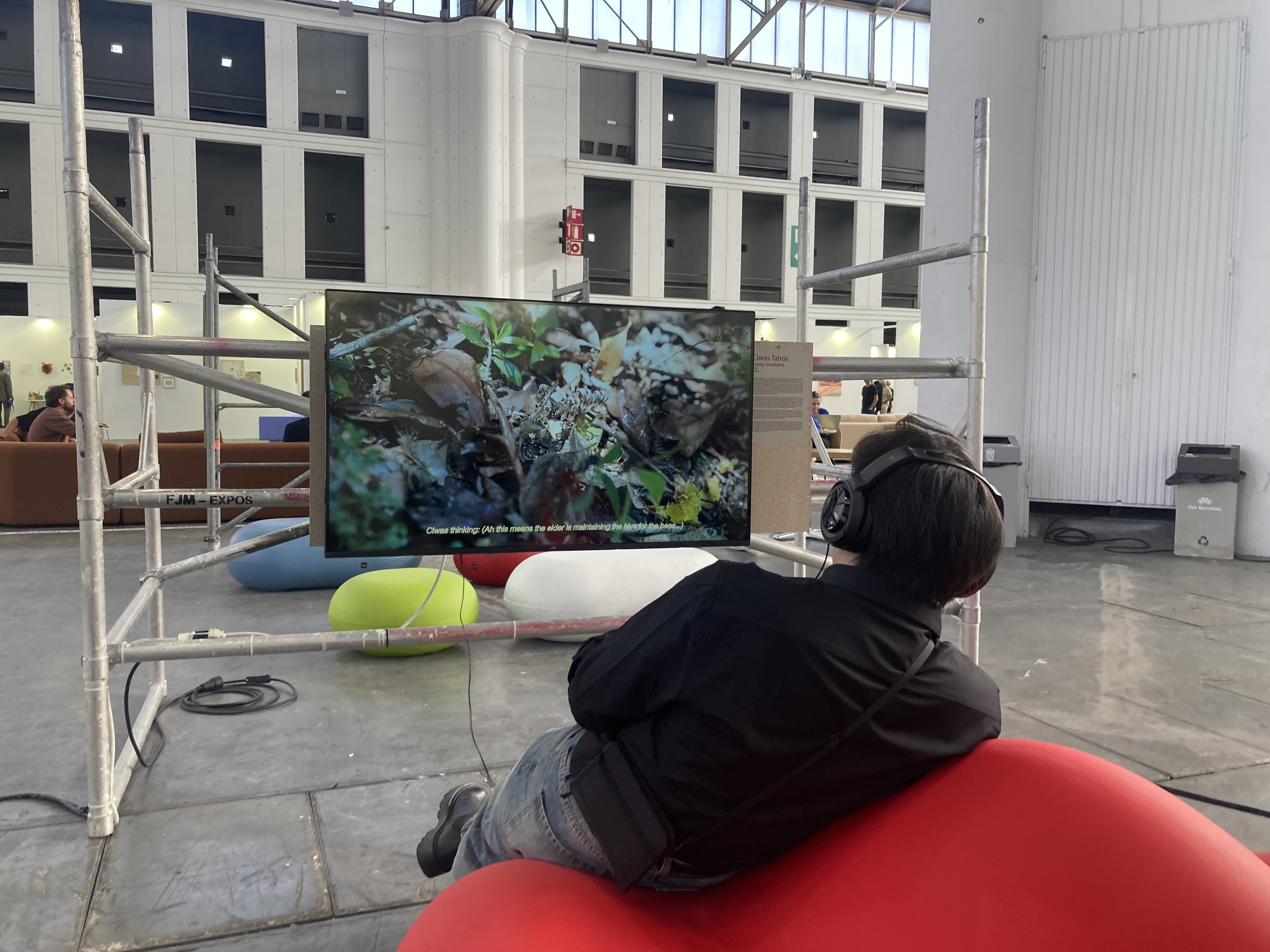
Pswagi Temahahoi, 2022|Ciwas Tahos (Anchi Lin) (TW)
Pswagi Temahahoi connects different methods of artistic imagination to explore the space of Temahahoi; it’s oral storytelling among Atayal people of a place where only women and gender non-conforming people live who can communicate with bees and become impregnated by wind. This video work combines documentary and audio-visual performance to weave a hybrid video installation piece.
The documentary follows the path taken by Atayal Elder Yumin, who uses a technique named pswagi, utilizing sunlight as an embodied tool to trace the locations of wild bee hives and also as a way to find Temahahoi, alongside a staged performance piece with a self-invented and assembled ceramic instrument, the wind (breath) blowing from the queer bodies goes into the genderless ceramic instrument to relocate the fluid space of Temahahoi through sound.
Video Box 是 Swab 基金會推動的一項非營利計劃,它呈現了來自具跨文化多媒體實驗和不斷發展為標誌的文化地區的錄像藝術項目。
在這一屆,我們的焦點轉移到台北充滿活力的文化景觀。台北是新媒體藝術家社群的重要匯集地。這些藝術家開展了變革性的概念創作,不僅反映了數位藝術的前衛精神,也傳遞了台北藝術社群正在發揮的影響力和新興作用。
概括地表現這個地區的活力和突破性創造,凸顯其對國際當代藝術舞台的深遠影響。當我們深入了解這個計畫時,豐富的思想和表達方式定義和揭露了台北蓬勃發展的藝術敘事。
身體是一種可解讀的文本,而人類就像是依附在社會表層上的皮毛肌理紋路。表層之下的血管運作、一圈又一圈的指紋,象徵著某種意識形態、生活方式、教育水平、性別權力等層層相疊的獨特關係網絡。錄像主題《親密的社會皮膚 Intimacy: the moments of social skin》藉由錄像探討台灣90年代後當代社會發展中所面對的地緣政治、性別、權力、文化等無形力量,通過國家、都市、部落、家庭作為單元的影像書寫,層層拆解我們自身所處的社會架構和歷史痕跡。
無論是傳統還是現代社會,關乎身體的存在與改造皆具有相對應的主觀和客觀視角與多元立場。人類在自然中的角色是侵略者、共存者還是倖存者,人群在國族框架裡的意識形態是主動創造、被動勞動或是隱性紀錄,在都市空間裡是如何創造、甚至妥協到人與空間的關係對話,族群在部落或家庭中的權力是支配、共生抑或共同生長。
身體作為載體,往返在這些場域之間,承載著特定群體身份,直接和間接的表達文化理想 (和焦慮) 、種族偏見與社經地位。當我們採用某種態度面對自己的身體時,也會反射出社會狀態,無論是哪一個角度,其背後充滿著複雜的社會符號。
人類學家特倫斯・特納 (Terence Turner) 將身體的維度稱之為「社會皮膚」。從身上的裝飾品、髮型、化妝品、服裝、刺青、穿孔和刮痕,到身體增肥或瘦身、肌肉發育和整容手術,無論是天生或人為因素,極端或看似異想天開的表現,對我們所經歷的時代而言,社會皮膚是有意義而且親密。同時,在高度流動的狀態中,多元文化的衝擊洗禮之下,與我們息息相關的社會表象總是受到社會化影響和再呈現。
不同世代反射出不同維度的社會角落觀察,縱使我們共存於大環境中,雖然無法全面體驗,但也無法忽略我們都是其中一員。台灣藝術家藉由影像畫面代替文字刻畫氛圍、書寫身體記憶和集體經驗,在過渡到全球發展「多元、民主」的臨摹與再書寫,是否靠得越近越親近真實呢?
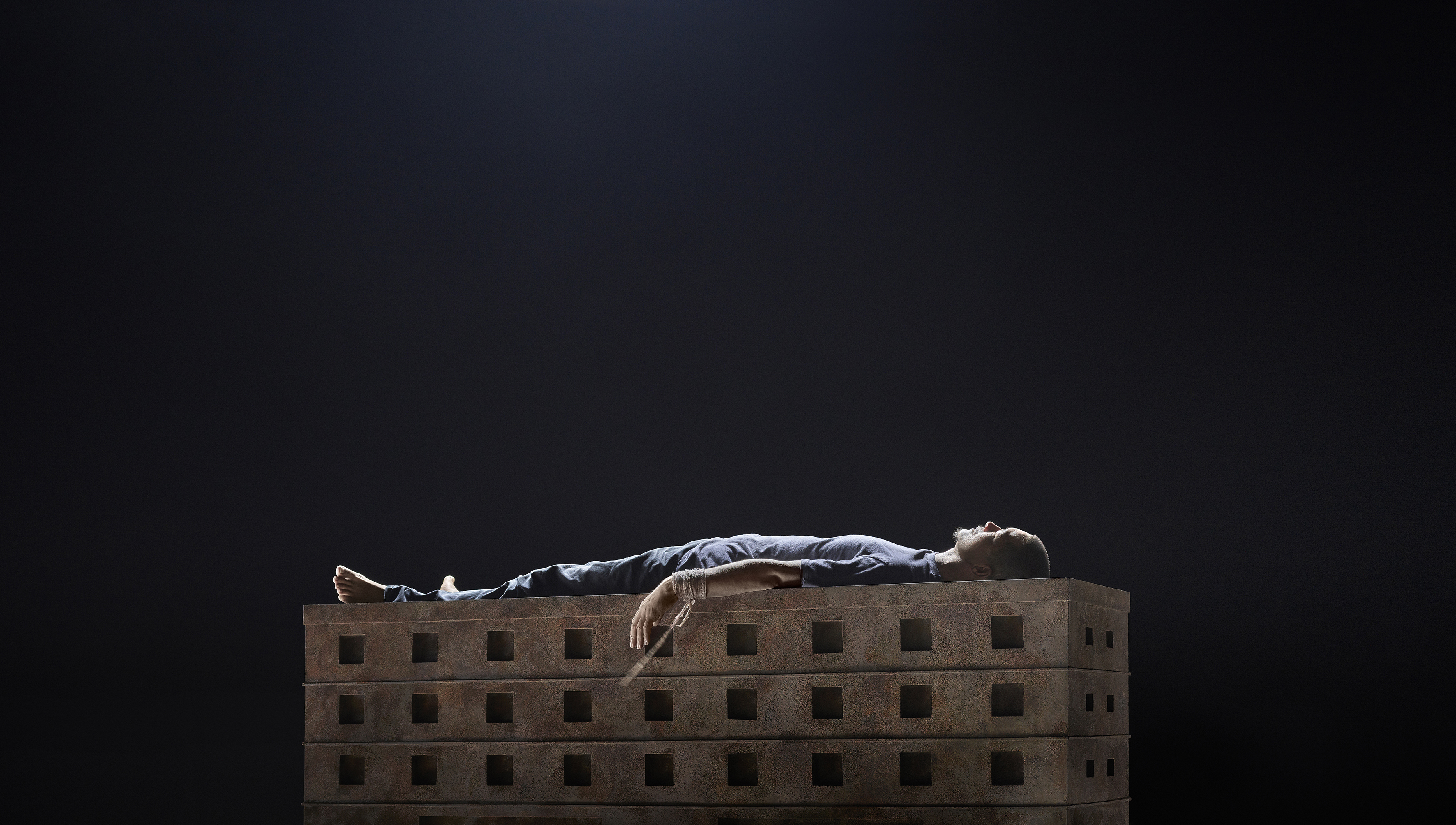
1960年生於台灣桃園,目前生活和工作於台灣台北。陳界仁長期和失業勞工、臨時工、移工、外籍配偶、無業青年、社會運動者等進行合作,對已被新自由主義層層遮蔽的「人民」歷史與當代現實,提出另一種「再-想像」、「再-敘事」、「再-書寫」與「再-連結」的拍攝計劃,他將相關拍攝計劃,稱為「創噪」與「生產第二層運動」。
2010年開始,陳界仁更積極關注在公司王國的全域式操控技術下,全球越來越多人淪為泛臨時工與喪失自身存在感的現實,他將這個全球普遍現象,簡稱為「全球監禁、在地流放」,並試圖通過重思源於佛法的「以欲化欲」和「以幻解幻」的路徑,實踐質變全域式操控技術的可能方法。
中空之地, 2017|陳界仁 (TW)
在金融/科技資本主義發展出比過往治理形式更具穿透力的 全域式操控技術下,不但使得越來越多人淪為「全球監禁、在 地流放」下的泛派遣工,更使得欲打開被後網路時代的全域式 操控技術,所包覆、穿透的當代社會與個體的欲望構造、感覺 構造、思維方式等更加困難,使得當代社會的生存空間成為一個相互爭戰的戰場。「人是否還有其他出路?」
對於這個不可 能有簡單答案的艱難課題,藝術家藉由重思如龍樹菩薩所創 的《中觀學》中的「空性」課題,以及實踐《中觀學》中具有多重 辯證精神的「中道」方法,藉此實驗與實踐如何於被全域式操 控技術所包覆、穿透的世界內,建立其他的認識論、思辯方式 與生命價值觀,並以此作為質變全域式操控技術的方法之一。
SWAB 巴塞隆納藝博會專區策展計畫書
吳季璁,1981年出生於台北,2004年 畢業於國立台北藝術大學美術系,目前居住、創作於台北及柏林。致力於 攝影、錄像、裝置、繪畫與舞台設計,其創作媒體媒材多元,發想自日常生活中平凡的材料與現象,轉換出充滿詩意的想像空間。關注影像及觀看本質的探討,並融合東西方傳統與現當代藝術形式。 曾獲台北美術獎首獎 (2003)、波蘭媒體藝術雙年展 (WRO, 2013) 藝評與藝術雜誌編輯獎、劉國松 水墨藝術大獎 (2019),並入選英國世界藝術獎 (Artes Mundi,2006)、英國保誠當代藝術獎 (Prudential Eye Awards,2015)。
透視, 2008|吳季璁 (TW)
藝術家創作主軸,一直以來環繞著影像的本質探討,影像如何 被生產、如何被觀者感知及產生作用等;不過它的進行方式 不太嚴謹、科學,比較像是個靈機一動的遊戲,有時只挑出某 個部份來實驗,或置換某個元素、環節,看看影像的生產運作 ,會產生怎麼樣的變化,有沒有什麼好玩的東西躲藏其中。
圖像、影像的深度幻覺,有一大部分來自於單點透視的效果, 也就是所有不與畫面平行的直線都交會在無限遠的消失點, 像是空間被吸進一個無止境的深洞。於是我有個想法,如果沒 有消失點,我們所見的世界會變成什麼樣子。
藝術家猜測應該會很扁。
1985年出生於台北的許哲瑜,畢業於台南藝術大學造形藝術研究所。曾駐村於比利時 HISK 高等藝術學院及法國 Le Fresnoy 國立當代藝術工作室。自2022年開始,參與荷蘭阿姆斯特丹 Rijksakademie 皇家視覺藝術學院兩年期的進駐計畫。作品形式多以動畫、 錄像、裝置為主。作品關注媒介與記憶之間的關係,對創作者而言,無論是個人私密的或群體記憶,重要的並不只是透過媒介所能回溯的事件歷史,更是記憶如何被建構與被觀看的過程。
參與展覽包括 Sesc_Videobrasil 巴西影像雙年展、德國世界劇場藝術節、聖保羅雙年展、首爾媒體城市雙年展、Videonale 波昂錄像藝術雙年展、上海雙年展、亞洲藝術雙年展。
兔子314, 2020|許哲瑜 (TW)
一名手套木偶表演者重新演繹了一隻在實驗室結束生命的死兔子的動作。兔子314質疑人類對動物的操縱與侵占。這個計畫是由一隻實驗室兔子的死亡引發的,靈感來自藝術家的家庭記憶。藝術家的奶奶在動物實驗室工作了三十年,期間由於工作的特殊性,她必須解剖活體動物進行觀察和實驗。
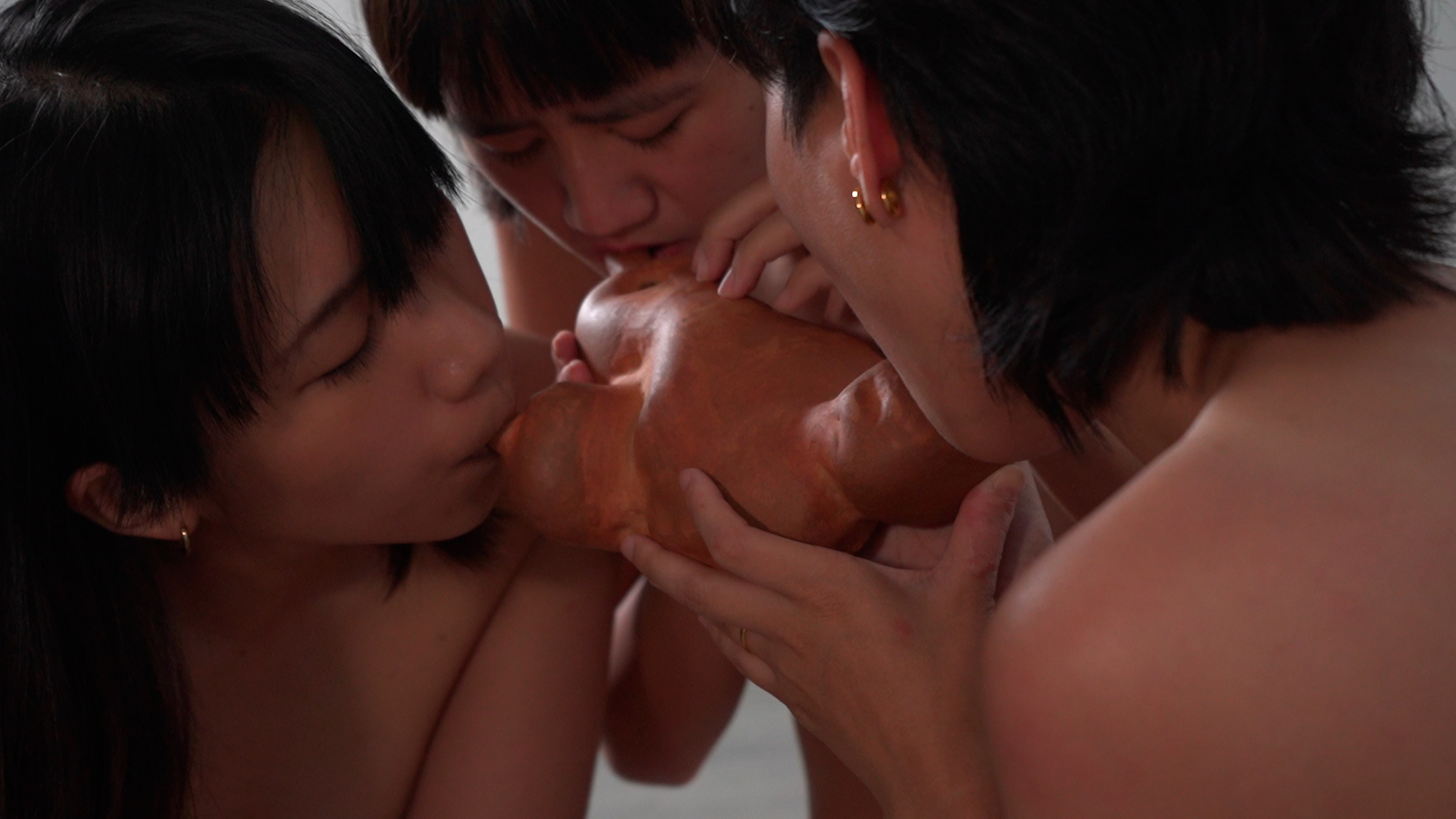
林安琪,泰雅族名是 Ciwas Tahos,她是一位視覺藝術創作者。 Ciwas 以身體為中心的創作方式實踐一個自我決定的酷兒空間,同時透過行為、動態圖像、網絡空間、陶製樂器和動力裝置融合編織泰雅族世界觀在作品裡面,Ciwas的作品針對文化和性別認同的探索,利用她的身體作為媒介來追尋語言和文化上的位移經歷,並試圖尋找超越異性戀父權現狀的新型去中心化(酷兒)理解形式。2024年Ciwas畢業於國立台北藝術大學(台灣)新媒體藝術碩士學位,2015年畢業於西門菲莎大學當代藝術學院(加拿大)獲得視覺藝術學士學位。
Ciwas 曾在多個國家舉辦展覽和行為表演,近期包括駐村計畫:澳洲墨爾本 Arts House、ISEA 國際電子藝術研討會 (澳洲布里斯本),2023年 Ciwas 獲得原住民當代藝術 Pulima 藝術獎之雙年獎, 同年受邀於澳大利亞-台灣友誼年藝術交流夥伴關係的首屆藝術家。Ciwas 參與2023年奧地利林茲電子藝術節、以及台灣國際南島藝術三年展。
Pswagi Temahahoi, 2022|林安琪 (TW)
影片中串連不同藝術實踐的方式尋找 Temahahoi (迭瑪哈霍伊、女人社) ,一個具有酷兒特質的泰雅族口述故事,「pswagi」隱含著透過「太陽光」作為工具尋找 Temahahoi。此次創作透過田野紀實紀錄影像與行為藝術表演,混合交織形成一件錄像裝置作品,口述故事提起 Temahahoi 酷兒女性可以跟蜜蜂溝通和「風」吹進 Temahahoi 酷兒女性的私密處即可受孕的意象,因此影像裡包含自製陶笛的行為表演和隨著泰雅族耆老 Yumin 的 pswagi 知識技術去尋找野生蜂蜜的位置的紀實影像,作為轉換成尋找 Temahahoi 的兩種可能路徑,身體的「風 (氣)」吹進無性別陶製樂器裡,運用身體產出的聲譜再次集合一個流動性質且沒有具體座標 Temahahoi 的位置。
Selected Media Exposure:

Curator:
Yipei Lee
Artist:
CHEN CHIEH-JEN
Wu Chi-Tsung
Hsu Che-Yu
Ciwas Tahos (Anchi Lin)
Context: Yipei Lee
Photo Credit: Artists and SUAVEART
Organization: SWAB Barcelona, SUAVEART
Sponsor: Ministry of Culture, JVC, BDU Espacios de valor, Soho house Barcelona
策展人:
李依佩
藝術家:
陳界仁
吳季璁
許哲瑜
林安琪
文字:李依佩
攝影:藝術家、細着藝術
辦理單位:SWAB Barcelona、細着藝術
贊助單位:文化部、JVC、BDU Espacios de valor、Soho house Barcelona
 細着藝術 SUAVEART