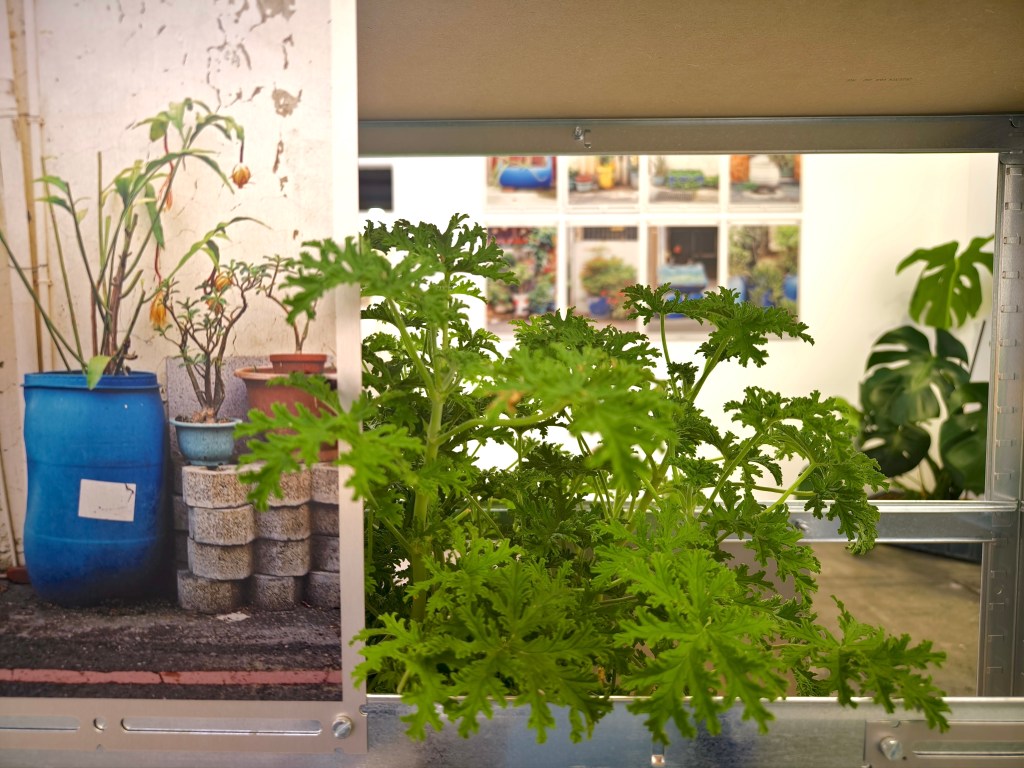
3 – 6 Oct, 2024
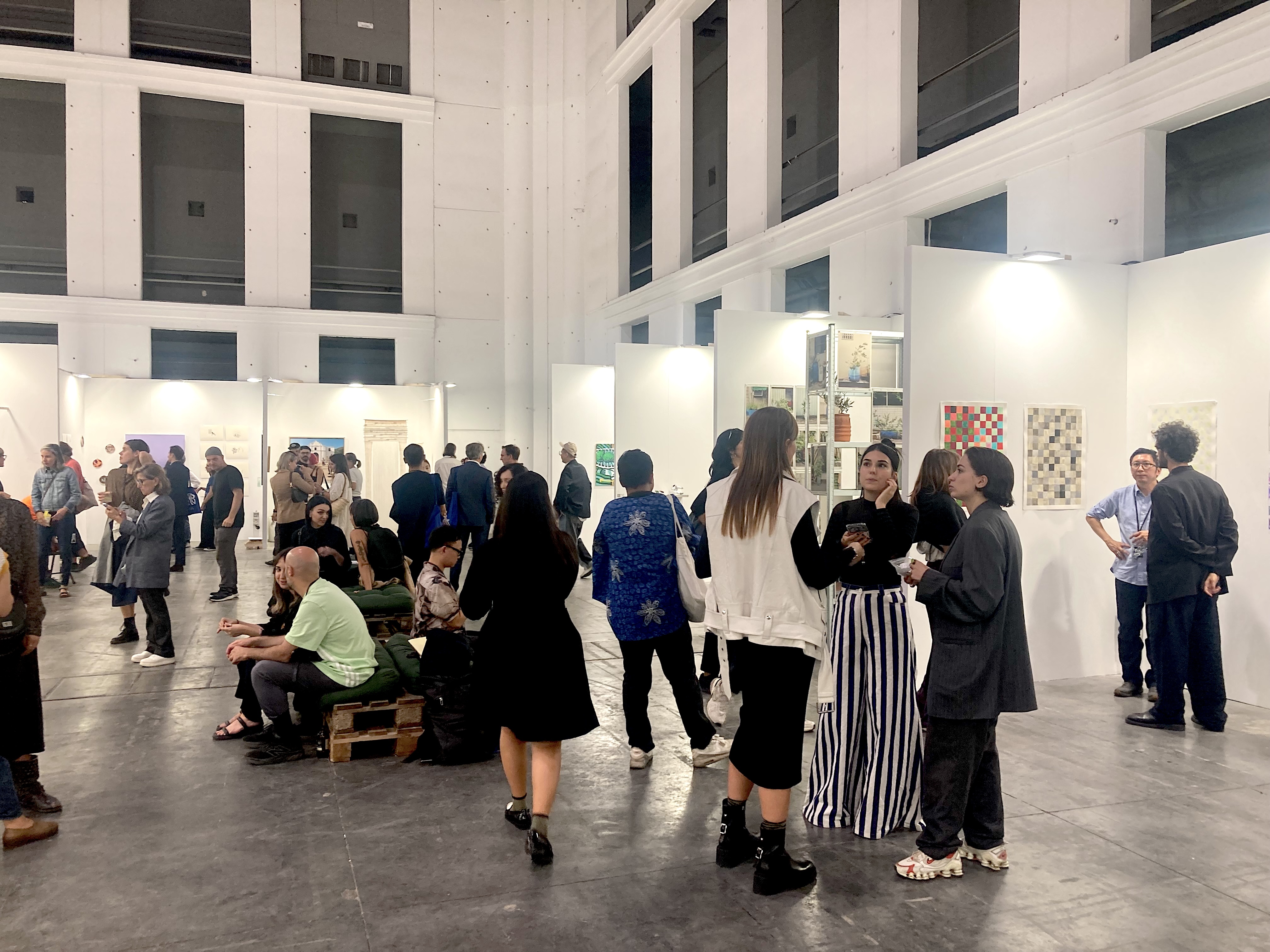
Pabellón textil de la Fira de Montjuic, Barcelona
Context
展覽概述
“The blue color of my sky”, co-curated by Yipei Lee and Carla Gimeno Jaria
We are excited to present the theme “The Color Blue from My Sky,” which delves into the exploration of media and social texts through the lens of “Redistribution.” As we understand it, materials are initially defined by humans as usable components or objects. However, within our social context, these materials take on new identities and meanings in different settings, revealing the diversity and resilience of society.
In our lives and work, which are often viewed as the integration of economic, social, and political factors, there is a direct and indirect interaction with our native culture. Certain technologies or techniques transform the inherent properties of materials, turning them into media. The emergence of media has made materials conducive to the “Practicality Redefinition” of art. Media convey spirit and aesthetics, encompassing our value judgments, understanding of knowledge, viewing angles, and the intimacy of interaction.
Fluidity arises from differences in air pressure and variations in the thickness of clouds, leading to changes in the spectrum of refracted light. However, despite being located in different parts of the world and observing the same sky, the perception of “blue” is not uniform.
When starting with the concept of “color,” Catalan and Taiwanese artists encounter different experiences of the “sky blue” they perceive. They bring forth unique phenomena, perspectives, and lifeworld1. Through their works, they convey specific viewpoints and reflect their selection and definition of media, colors, and attitudes, representing the spirit of their time.
In the process of modernization, Eastern and Western artists often explore “how to transform knowledge and media images,” breaking away from conventional narrative modes and integrating perceptual experiences. Through learning, we gradually establish subjectivity, practicing the redefinition of our worldview through media and narrative. In essence, the lifeworld of artists from Catalonia, Spain, and Taiwan not only prompt audiences to reflect on the underlying structures of their works but also allow us to discern the independent value and the potential future collisions of artistic language itself.
1 German philosopher Björn Kraus developed epistemological constructivism and defined the lifeworld as the subjective construction of reality that a person forms under the conditions of his or her living environment. Reference: https://en.wikipedia.org/wiki/Lifeworld. Furthermore, Husserl conceptualized the lifeworld as pre-reflective, Reference: https://www.bps.org.uk/psychologist/learning-lifeworld.
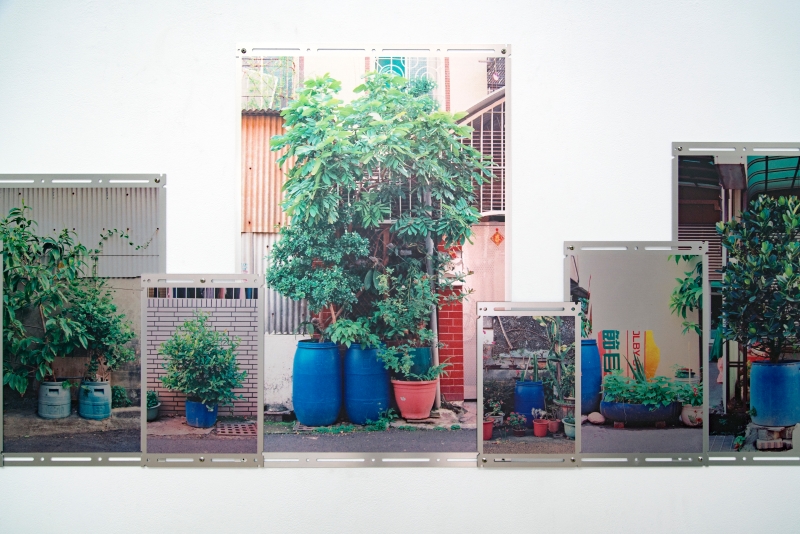
Title: JTC
Year: 2012-2023
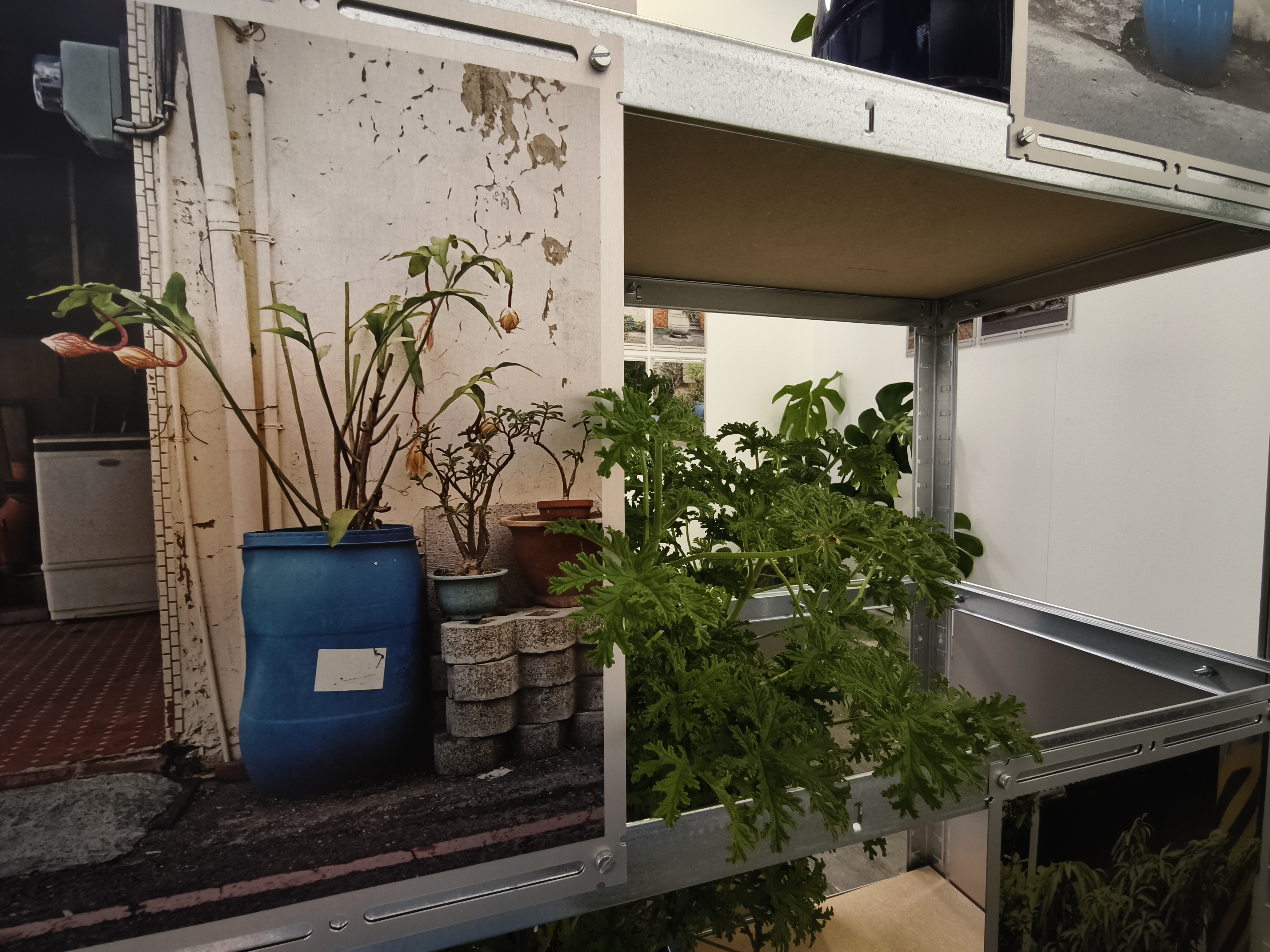
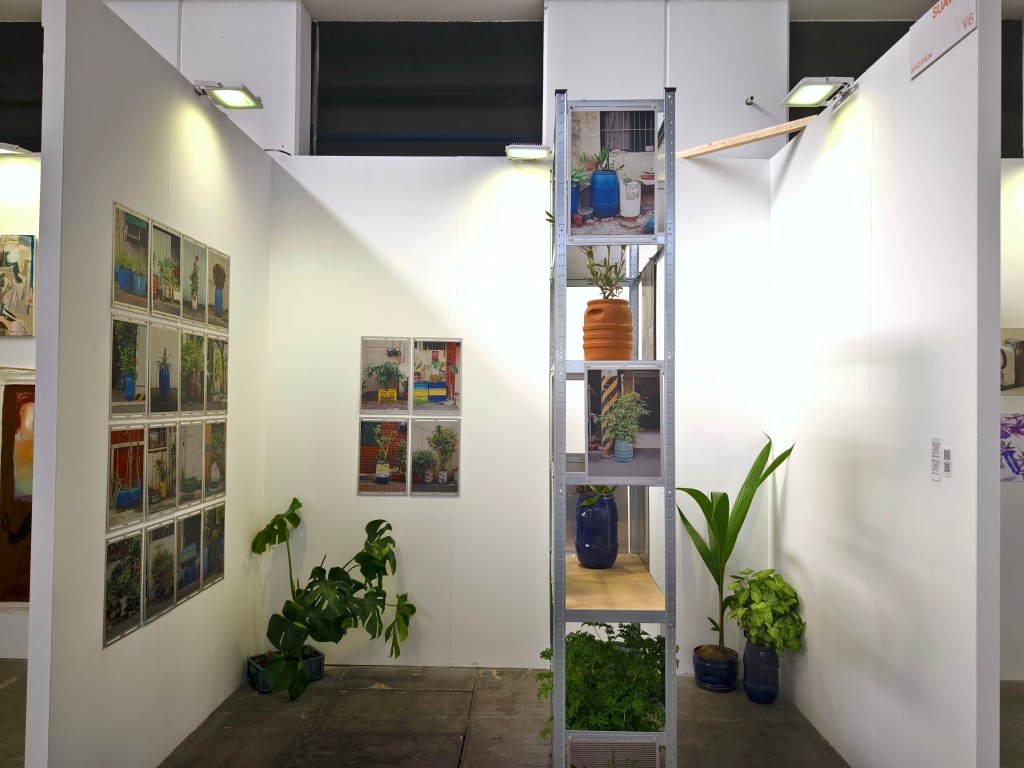
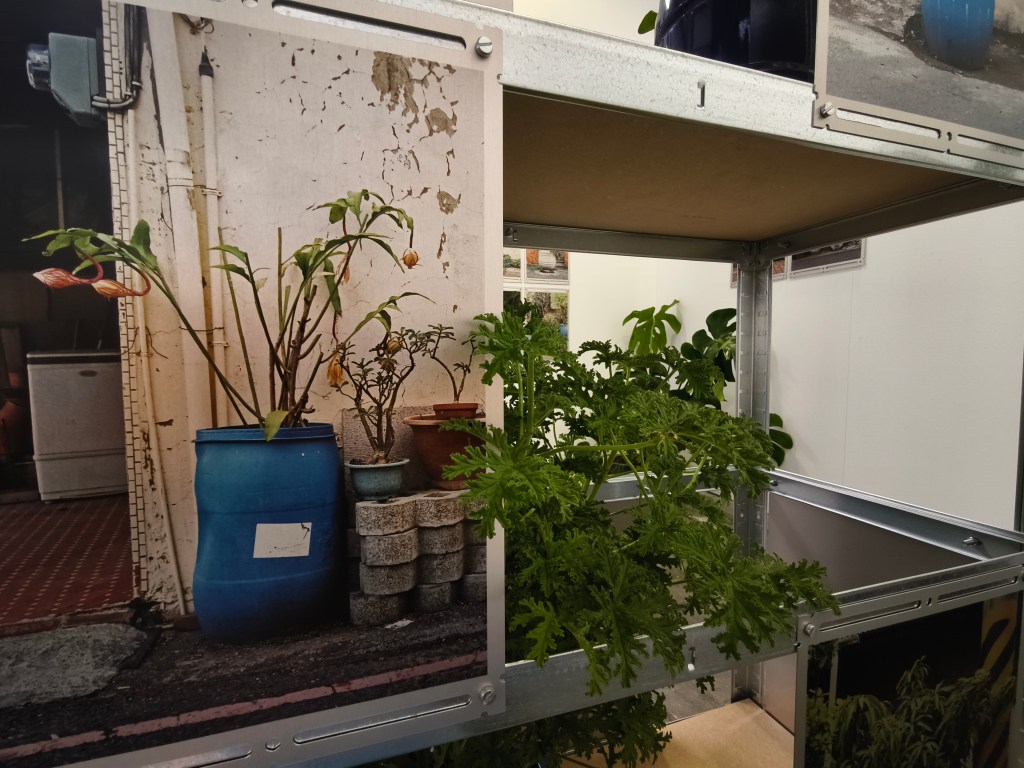
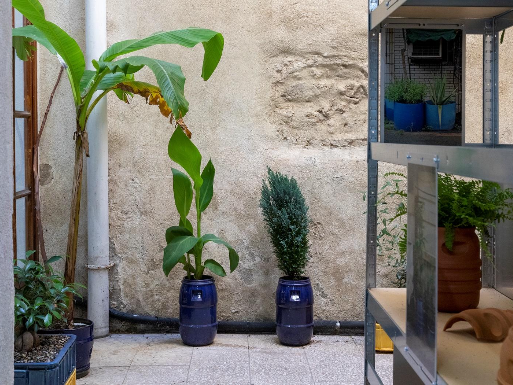
Medium: ChromaLuxe prints on aluminum plate, ceramics, plants, shelves.
Size: Installation size
A type of plant pot made with modified polydrum can frequently be found in my local neighborhood in Taiwan. The offending industrial blue and the dull texture of plastic are a bit abrupt among the usual fine ceramic and plastic mimicking brick-red. These diverse forms of plastic containers were originally used in factories to contain raw materials, wastes, lube oil, or half-finished products.
In Taiwan, the boundary between industrial and agricultural, and the dividing of communities and factories, are commonly blurred; in other words, they all grow together. In addition to the past policy of “House as a factory”, those factory containers were not unfamiliar to the neighbors. By the folk wisdom of discovering the other uses for things, some ousted containers were taken and turned into plant pots. This is a virtue of no waste, as well as the aesthetic of alternatives. The decommissioned plasticware becomes a negligible favour offer to the neighbors, and the plebeians gain a small compensation from the irregular industrial next door. The plants in the polydrum pot are really rooted in compromise. Although the community surroundings are not sophisticated or exactly appropriated, the opulence of the natural conditions of Taiwan allows them to thrive.
I took pictures of these plant pots and examined them as a typology. For the installation, the pictures will print on aluminum plates; having the material gleam under the image reminds us of its industrial origin. The size of the pictures changed relative to the size of plants, while the ratio of the pots is the same. Finally, the style of these polydrum pots will become refined and render them the same as authentic ceramic, and they will become a dedicated home to the plants.
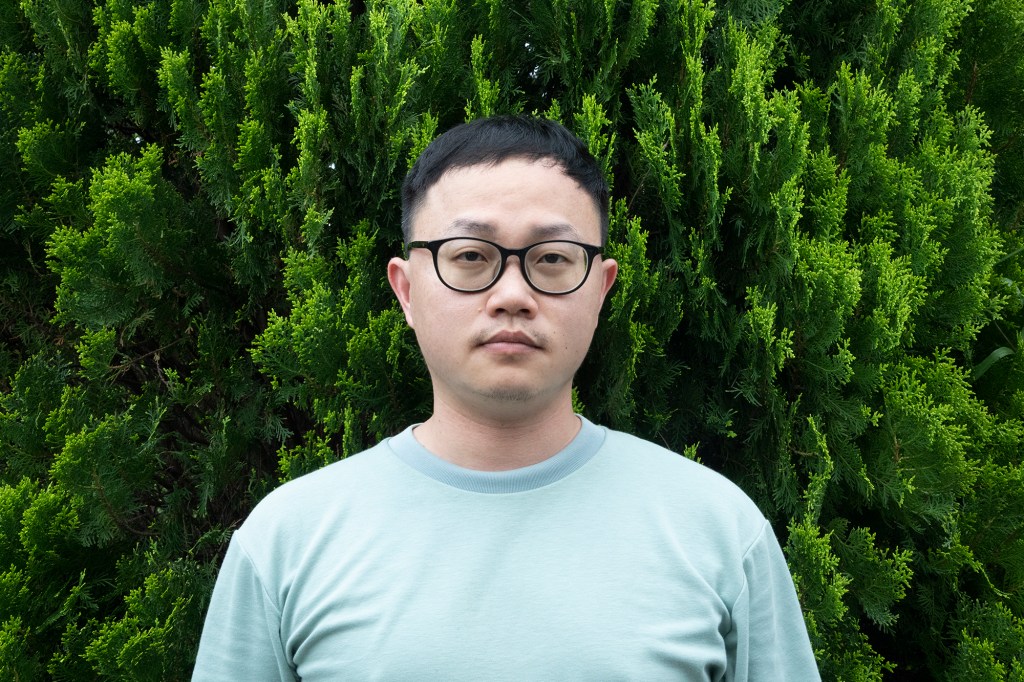
Wu Chuan-Lun born in Tainan, Taiwan. The ever-changing dynamics, compromises and contradictions informing the relations between nature and civilization, ecology and politics as well as materials and the digital realm, have formed the backdrop for Wu’s artistic practice. He employs a diverse range of media and technics, including computer-generated imagery, photography, drawing, 3D printing, found objects, and porcelain, to create conceptual and research-based installations. His recent work often uses the process of collecting/gathering as a point of departure to explore the identity and meaning of the collected/gathered objects, from which he gradually unravels the underlying, entangled historical and social context.
Wu has won the selected prize of Taipei Arts Award (2007), selected prize of Kaohsiung Arts Award (2011) , special prize of Arte Laguna Prize (2021), and nominated for the finalist of Taishin Arts Award (2020) for his solo exhibition “No Country for Canine”. His works have been exhibited at institutions and biennials such as Taipei Fine Arts Museum (2007, 2019), National Taiwan Museum of Fine Arts (2015), Gwangju Museum of Art (2016), Künstlerhaus Bethanien (2017), Rockbund Art Museum (2019), Manuel Rivera-Ortiz Foundation (2023); Taipei Biennial (2014), Formosa Sculpture Biennial (2015), Animatrix Biennial (2016), Taiwan Biennial (2020) and Daegu Photo Biennial (2023). His works collected by National Taiwan Museum of Fine Arts, Taipei Fine Arts Museum, OCI Museum of Art and Art Bank Taiwan.
In recent years, Wu has conducted artist residencies in OCI Museum of Art, Seoul (2016); Künstlerhaus Bethanien, Berlin (2017); Delfina Foundation, London (2021); Labverde, Brazil (2022); MRO Foundation, Arles (2023) and Off-site project in Peru (2018). Wu currently lives and works between Berlin, Germany and Tainan, Taiwan.
主題定為「來自我天空的藍 The color blue of my sky」,概念將從「再分配性」(Redistribution) 的角度進行媒材性與社會文本的延伸討論;材料本身是被人類定義爲可利用的一個構件、物件的物質,社會文本賦予了材料在不同場景有新的身份和意義。在這樣的情況下,材料展現了社會的多樣性和韌性。
當經濟、社會和政治因素的融入我們的生活和工作時,也和原生文化產生了直接和間接的關聯性互動。材料的特殊性質經過了某種技術或技法的轉換,成為了媒材。媒材的出現使得材料轉向了利於藝術「實踐性的再定義」(Practicality redefinition)。媒材傳達了精神、美學,這當中包含我們的價值判斷、知識理解、觀看角度、以及互動的親密程度。
因為氣壓的差異而產生了流動性,因為雲層厚度不同,使得光線折射出來的光譜也有所變化。但因為我們處在世界不同角落的地理位置,觀看著同一片天空,正在感知的「藍色」不全然相同。
當「顏色」作為出發點,加泰隆尼亞與台灣藝術家面對當下感知的「天空藍」經驗有所不同。獨特的現象、觀點與生活世界 (Lifeworld)[1],在作品傳達特定的觀點之上,他們對於媒材與顏色的選用定義、所採用的特定態度,毫不猶豫的看法,代表著時代的樣貌。
在現代化過程中,東西方藝術家經常探究「如何轉化媒材的知識與意象」,打破習以為常的敘述模式,融入感知經驗,在學習過程中,我們逐步建立主觀性,透過媒材和敘事性,實踐一種世界觀的再定義。換句話說,西班牙加泰隆尼亞與台灣藝術家的生活世界不僅讓觀眾反思作品背後的架構同時,也讓我們看見藝術語言自身的獨立價值與碰撞性未來。
[1] 德國哲學家比約恩・克勞斯 (Björn Kraus) 發展認識論建構主義,他將生活世界定義為:生活世界是指一個人在其生活環境條件下形成的對現實的主觀建構,參考:https://en.wikipedia.org/wiki/Lifeworld。此外,胡塞爾將生活世界概念化為前反思,參考:https://www.bps.org.uk/psychologist/learning-lifeworld。
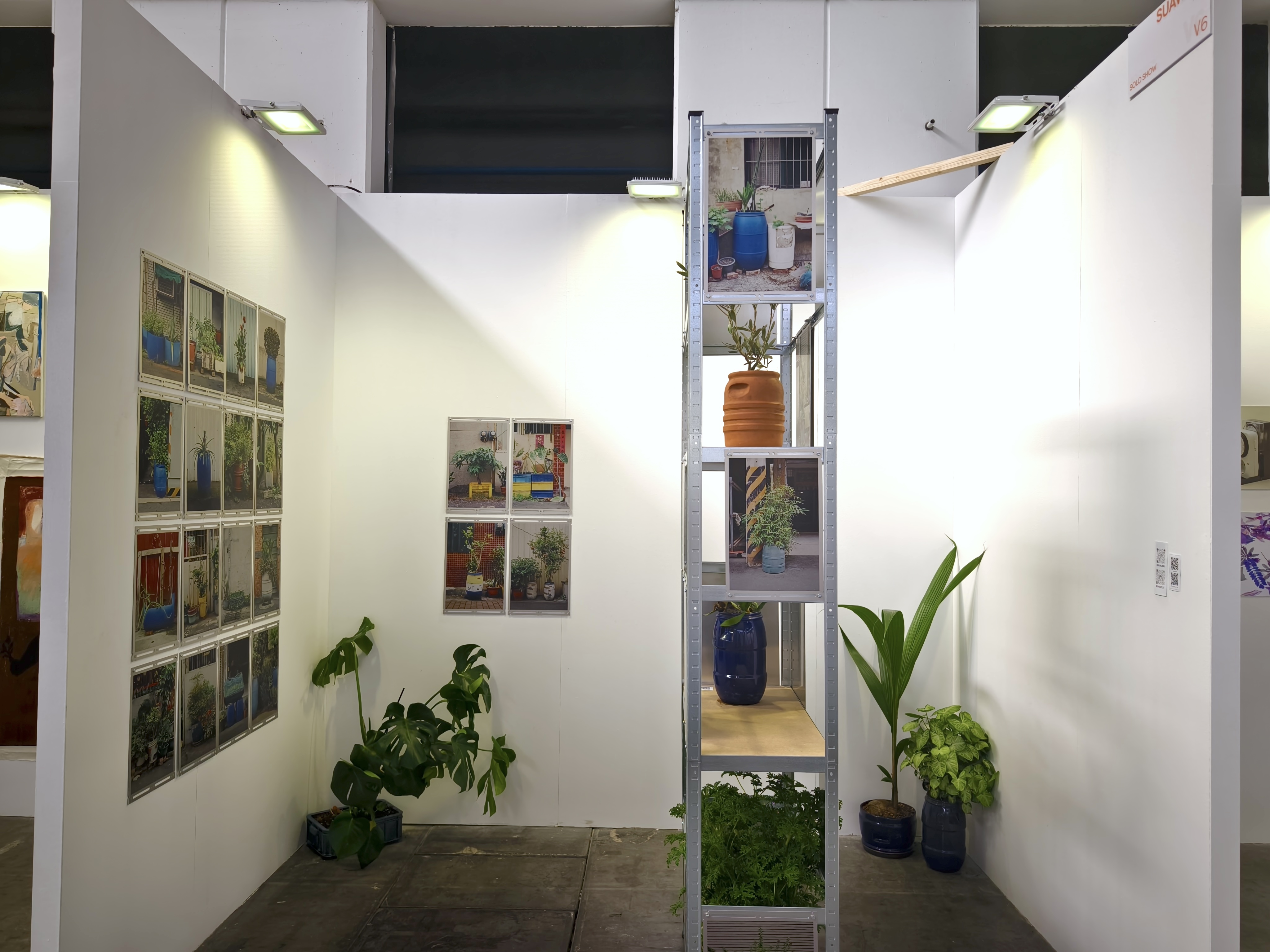
名稱:JTC
媒材:UV印刷於鋁板、陶器、鍍鉻層架、植物
尺寸:裝置尺寸
年份:2012-2023
在我老家的鄰里門前常見一種用藍色塑膠桶改造而成的盆栽,鮮明的工業藍和乏味的塑膠質感在傳統的陶盆和磚紅塑膠盆中稍顯突兀。這一系列樣式多變的塑膠容器,原本是在工廠中作為盛裝原料、廢料、機油或是收納半成品所用。
在台灣住工農界線模糊,社區與工廠接壤發展,家庭代工模式遺留背景之下 ,有些工廠淘汰的塑膠容器會被附近鄰居討去,藉由庶民再開發物件價值的異常天份成為了妝點門面的一叢叢花木──這是一種惜物的美德也是錯用的美學。當人情的妥協與有待完善的社會環境透過這些替代盆器得到微不足道的補償;扎根在生活種種將就之中的植物,即便植地不算精美,依舊得益於優勢風土在巷弄中生的盎然。
我拍攝了這些盆栽,以類型學的方式歸納為圖鑑。裝置時,將他們印刷在鋁板上,讓材質本身光澤給出這些盆栽起源的暗示。照片的大小隨著植物而改變,但裡面的盆器維持一貫比例。最後,將這些塑膠容器的樣式精緻化後,以正規的陶瓷量產,成為植物的家。
吳權倫出生於台灣台南。自然與文明,生態與政治,媒材與數位之間的不斷改寫、折衷與矛盾,一直是吳權倫創作的普遍背景。其運用電腦生成影像、攝影、素描、3D列印、現成物與陶瓷等多元媒材,發展成以觀念與研究為基礎的裝置作品。近期作品多從一段收藏/收集的過程起步,關注這些「收藏物/收集物」自有的身分與啟示,再逐漸納入歷史與社會的脈絡。
吳權倫曾獲得2007台北獎優選及2011高雄獎優選,2021年獲得義大利拉古納獎特別獎,2019年以個展「馴國」獲得台新藝術獎年度提名。作品曾先後於數個海內外機構及雙年展展出,如臺北市立美術館 (2007、2019)、國立臺灣美術館 (2015)、光州美術館 (2016)、柏林貝塔寧藝術村 (2017)、上海外灘美術館 (2019)、亞爾 MRO 基金會 (2023);台北雙年展 (2014)、FORMOSA 雕塑雙年展 (2015)、動漫美學雙年展 (2016)、台灣美術雙年展 (2020) 與大邱攝影雙年展 (2023)。作品受國立台灣美術館、臺北市立美術館、OCI 美術館、台灣藝術銀行典藏。
近年曾前往首爾 OCI 美術館 (2016)、柏林貝塔寧藝術村 (2017)、倫敦戴芬娜基金會 (2021)、巴西綠色實驗室 (2022)、亞爾 MRO 基金會 (2023),以及場外藝術計畫-祕魯 (2018) 等地駐村及發表。現居與工作於柏林與台南兩地。
filter: 0; fileterIntensity: 0.0; filterMask: 0; captureOrientation: 0; algolist: 0; multi-frame: 1; brp_mask:0; brp_del_th:0.0000,0.0000; brp_del_sen:0.0000,0.0000; motionR: 0; delta:null; module: photo;hw-remosaic: false;touch: (-1.0, -1.0);sceneMode: 8;cct_value: 0;AI_Scene: (-1, -1);aec_lux: 196.0;aec_lux_index: 0;albedo: ;confidence: ;motionLevel: 0;weatherinfo: weather???, icon:5, weatherInfo:104;temperature: 32; 
Selected Media Exposure:
Curator:
Yipei Lee & Carla Gimeno Jaria
Artist:
Wu Chuan-Lun
Context: Yipei Lee, Carla Gimeno Jaria
Photo Credit: Artists and SUAVEART
Organization: SWAB Barcelona, SUAVEART
Sponsor: Ministry of Culture, Fundació Vila Casas, GARF
策展人:
李依佩 & Carla Gimeno Jaria
藝術家:
吳權倫
文字:李依佩、Carla Gimeno Jaria
攝影:藝術家、細着藝術
辦理單位:SWAB Barcelona、細着藝術
贊助單位:文化部、Fundació Vila Casas、GARF
 細着藝術 SUAVEART