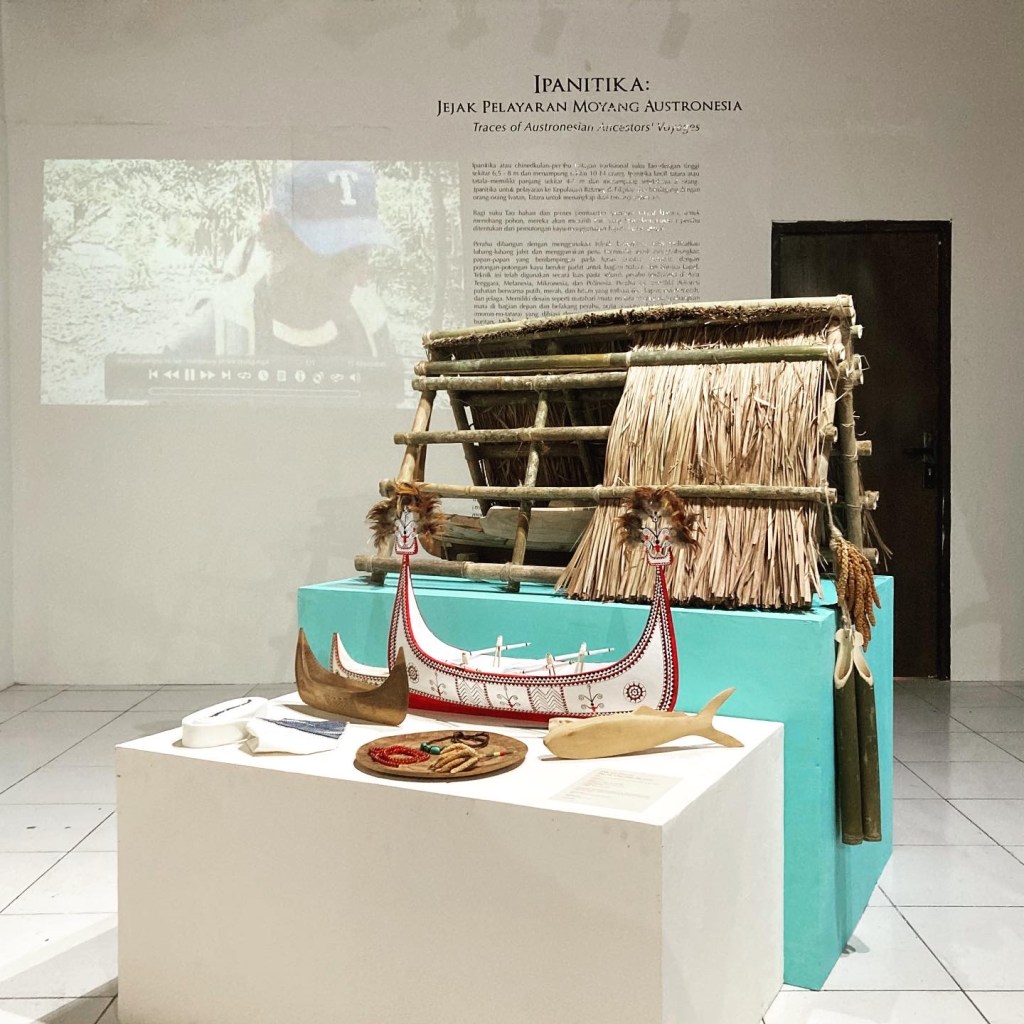
7 July – 7 Dec, 2023
Museum Bahari, Jakarta
Context
展覽概述
The group exhibition ”art the fact 2.0: The Stories that Connecting Us“ presents that reflect the long journey across the vast ocean. Austronesian people has the continuous act of existing in many forms. It begins with a word – Austronesian language, Macassan marege connection, Ipanitika – the traces of Austronesian ancestors’ voyages, the tale about animals and plants on the boat, and the multiple interpretation of creativity.
If there is one thing (of many) to take away from the Austronesian-speaking people, it’s: kembara, kelana, or in international terms “diaspora”. Regardless of the origin theory, without the wanderings of our ancestors (who may not have been just one we would only live in one spot. However, we know that Austronesian people eventually migrated. They racked their brains to travel the seas with rafts, canoes, boats and outriggers. To be able to withstand the waves. These wandering people sorted and separated useful animals and plants that they could travel with in their simple boats. By traveling, they became adept at reading the waves and constellations as a guide to direct them. In other words, it was this wandering that led Austronesian people to innovation and creativity!
BACKGROUND
“Art.The.Fact!” is a series of temporary exhibition programs initiated by Museum Bahari Jakarta since 2022 that connects the museum’s way of speaking through narratives transferred to art media installation. In 2022, Art.The.Fact collaborated with various Indonesian artists to present a temporary exhibition entitled Nusantara Maritime People. This previous exhibition attempts to present issues regarding the Maritime People of Nusantara not only from their definition, history, and geographical location. Yet to explain current and relevant issues related to the Maritime People of Nusantara, such as how modernization and globalization affect their lifestyle and how maritime people respond to it. These matters are manifested through cultural materials (like boats), art installations, and an interactive audio-visual space to enhance visitors experiences.
A nation treasures history. A story that cannot be separated from the long journey with all the twists and turns of its people will be an exciting, timeless story. The specialty of thrilling historical stories is often inscribed in a melodious poem that can bring a time machine to be enjoyed. What a loss for a nation that forgets history with all things that can be used as a variety of knowledge and essential information in the future. The Museum Bahari Jakarta is one of the critical proofs that history is not just ancient. Various methods can wrap ancient history into something informative and interesting.
Typical European in style and located close to Sunda Kelapa Harbour, Museum Bahari Jakarta is one of the silent witnesses to the rich maritime history of Indonesia. They are composed of thousands of beautiful islands with all the marine products that are so abundant, making Indonesia like a fairyland with the beauty and strength of its maritime. The greatness of the legendary spices cannot be separated from the greatness of the sea lanes, which are a bridge of connection between nations regardless of distance and time limitations. The connection provided by the sea has made the Indonesian nation bound and connected with various other nations, one of which is the Aborigines from Australia and Makassar fishermen who sail using Padewakang Boats. To learn about the history of boats, we must learn from their owners, namely the Austronesian Speakers. They were the first sailors to explore the Indonesian seas.
Austronesian is a language family that is most widely spread in the world, especially in prehistoric times before the arrival of Europeans and Western Colonialism. It is proven that there are around 1,200 languages that are now spoken by approximately 300 million people who are members of this language family. In addition, the distribution area of this language family includes Madagascar in the west, Easter Island in the east, Taiwan and Micronesia in the north, and New Zealand in the south, or almost covers half of the world (Bellwood, 1985: 1-2; Tanudirjo & Simanjuntak, 2004: 11; Bellwood, 2002: 142-143).
In recent decades, experts have generally provided hypotheses that explain the origins of the Austronesian-speaking peoples and their distribution. The most famous hypothesis is the out-of-Taiwan model. In the 1960s, this model was first developed by K.C. Chang stated that Formosa (Taiwan) is the location of origin of the Austronesian speakers. He believes that there are similarities in artifactual findings, both in southern China, Formosa, and also islands in the archipelago (Tanudirjo & Simanjuntak, 2004: 15). Austronesian (AN) speakers left for the Indo-Malaysian region bringing with them the Neolithic economy and culture as well as the domestication of animals such as dogs, pigs and chickens, growing rice, sugarcane, and sweet potatoes, making pottery and bark cloth, using various stone and bones tools. Also able to sail in a canoe.
The Padewakang boat is a traditional boat for the people of South Sulawesi, the forerunner of the Phinisi boat, which is also a typical Sulawesi boat. This Padewakang-type boat managed to carry several Makassar fishermen across the ocean to arrive on Australian soil. On this trip, not only sailing, but the Makassar fishermen group came to Australia to get some marine catches such as sea cucumbers, pearls, and flying fish eggs which can be found in Australia.
The relationship that started from the sea cucumber transaction had occurred even before the Europeans discovered the island with the characteristics of the kangaroo. Indonesia’s maritime prowess, which has existed since ancient times, is stored in the memory implied by the solidity of the building at the end of the city of Jakarta until it became the Museum Bahari Jakarta, which provides information and educational functions for the nation’s children to get closer to the values contained in the maritime history of the Emerald of the Equator.
With the mandate given as a field of information and education regarding Indonesia’s marine and maritime wealth, the Museum Bahari Jakarta always tries to present various exciting things in explaining the benefits of history. To its vision, namely “Exploring the maritime values of the Indonesian Nation and fostering a sense of love and pride as a maritime nation”, it has become its main task to present a variety of knowledge to be introduced to all the nation’s children. One of the efforts made in realizing the intended vision is by offering a temporary exhibition.
The temporary exhibition that will be presented in 2023 is “Art.The.Fact” Exhibition with the theme “The Stories That Connecting Us”. This temporary exhibition will open on July 7, 2023, which coincides with the 46th anniversary of the Museum Bahari Jakarta. It will be held at the Museum Bahari Jakarta, which is located on Jl. Pasar Ikan, Penjaringan, North Jakarta. This exhibition not only presents information about Indonesia’s marine resources, which relate to several other nations but is also equipped with several installations to represent the information to be conveyed so that the educational presentation and information displayed will feel more enjoyable.
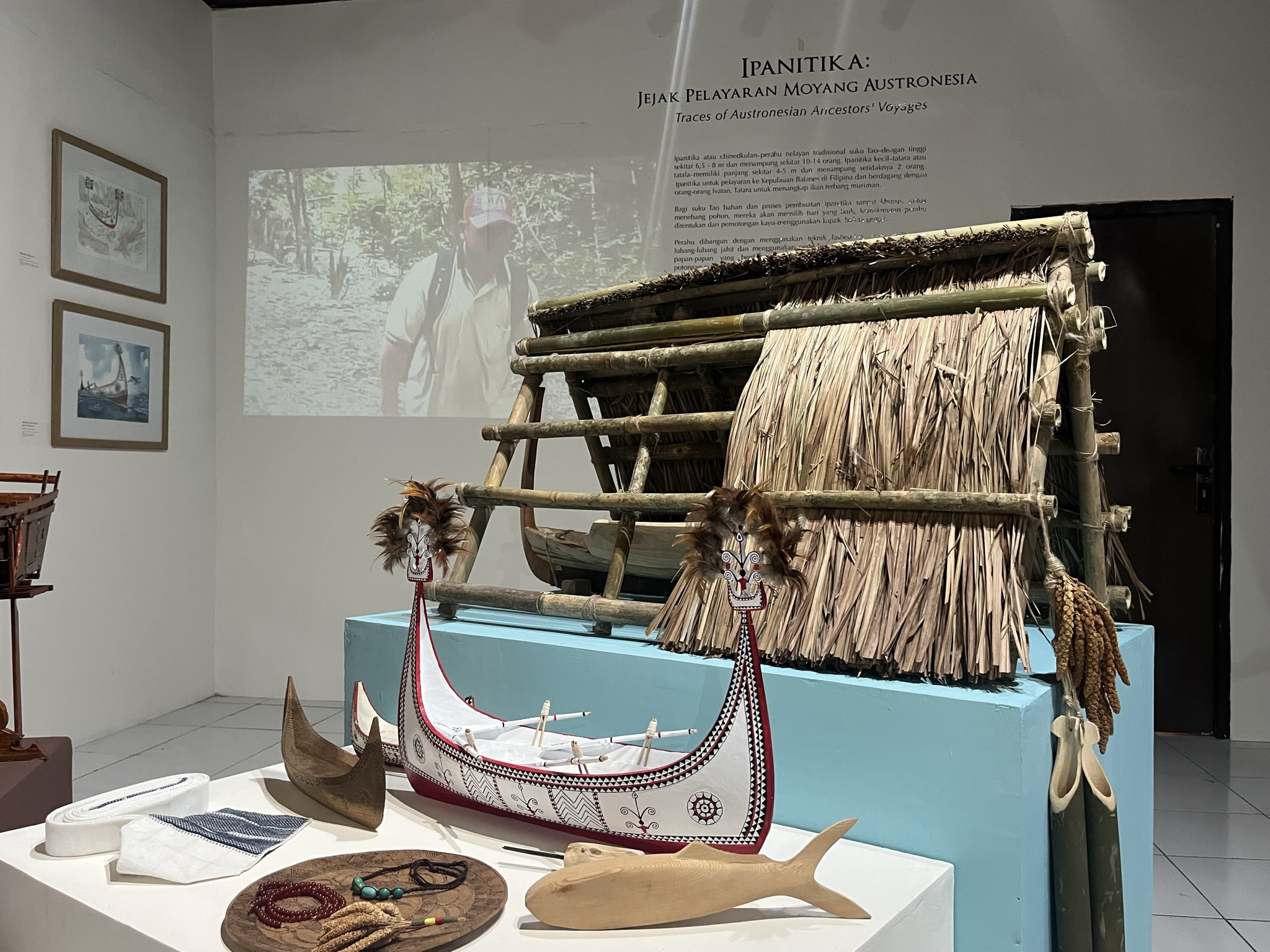
Ipanitika or chinedkuran–a traditional Taoist fishing boat–is about 6.5 – 8 m long and holds about 10-14 people. The small ipanitika–tataa or tatala–is about 4-5 m long and holds at least 2 people. Ipanitika for voyages to the Batanes Islands in the Philippines and trade with the Ivatan people, tatara for catching seasonal flying fish.
For the Tao tribe are very particular materials and the process of ipanitika making, to cut down trees, they will choose an auspicious day, prosperity of the boat is determined from wood cutting-using an ax instead of a saw.
They were built using the lashed-lug technique, it involves sewing holes and using dowels (treenails) to connect planks side by side on a dugout keel, along with solid carved wood pieces for the prow and stern caps, this technique have been vastly used in all the traditional boats of Maritime Southeast Asia, Melanesia, Micronesia, and Polynesia. It has sculptural decorations in white, red, and black made from lime, red earth, and soot. It has a sun-like design (mata-no-tatara) which symbolizes the eyes on the front and back of the boat, as well as a human-shaped ornament (moron-no-tatara) decorated with black feathers on the bow and stern posts. The moron-no-tatara represents Magomaog, a legendary character in Taoist folklore, who taught the art of boatbuilding and is only affixed during certain rituals.
The Taoists or Yami-an is Austronesian ethnic group live in the Island Lanyu, Taiwan. Torii Ryuzo, a Japanese anthropologist, was the first to name the land’s natives as Yami. Meanwhile, the local natives call themselves Tao or Tao no pongso, which means “human” or “people of the island”.
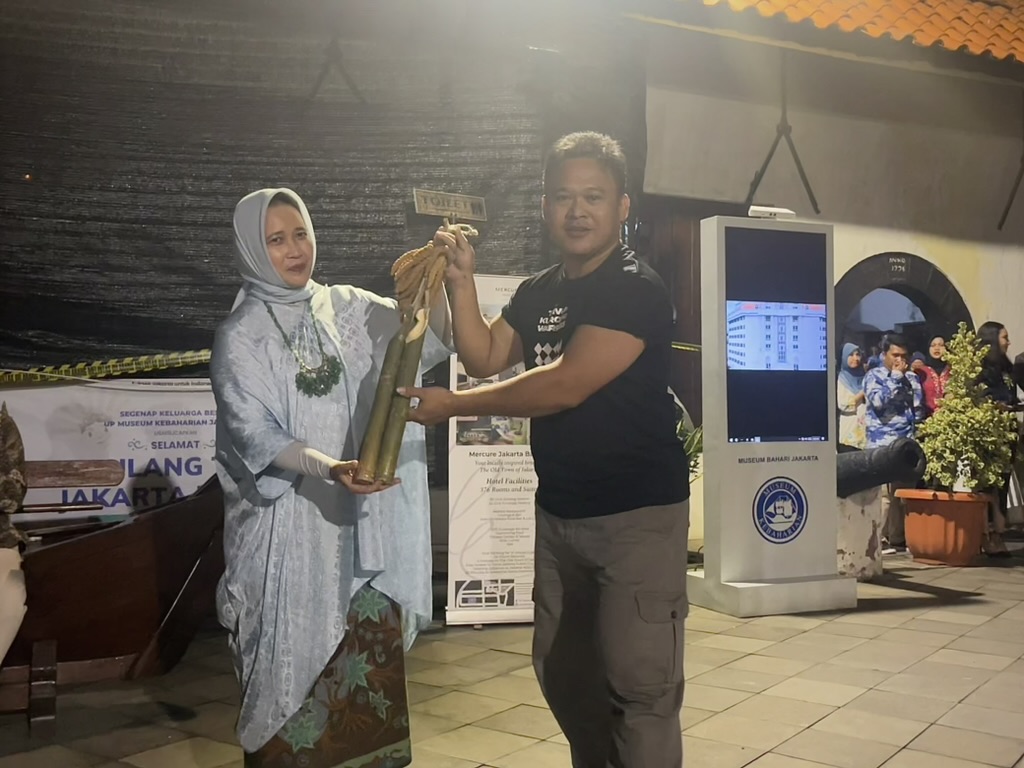
Shih-Kai CHANG (Sya man misargu) is from the Tao Tribe of Orchid Island. Feeling his father’s concern about cultural inheritance, he resolutely began to assist his father’s art creation work, and learned the almost lost technology bit by bit – makingboats, as the basis of creation, for creation and cultural and artistic inheritance. Special emphasis is placed on the research of works and materials, as well as field investigations and cultural data collection and compilation, and then the creation and acquisition of materials. Shih-Kai’s persistence and seriousness are reflected in the strict requirements for the quality of materials, so that the creation of works will not affect the materials due to the size of the objects – large boats, small boats and decorative boats will not use different materials due to proportions. It is a kind of persistence, and hopes that through such persistence, it will convey the serious and persistent self-demanding character in the Tao culture. Finally, as the descendants of the leader of the boat group, inheritance is still the mission of the family.
His experience includes the participation of Austronesian Forum in Guam, “Distance between us and future” at Indigenous Cultural Park, group show at Kaohsiung Museum of Fine Arts, and the works are permanently collected by National Museum of Prehistory, Taitung, Belau National Museum, President House of Taiwan.
群展《藝術事實 2.0:連結我們的故事》反映了跨越浩瀚海洋的漫長旅程。南島民族有多種形式的持續存在行為。它從一個單詞開頭-南島語、望加錫連結、拼板舟—南島人祖先航海的痕跡、船上動植物的故事、創意的多重詮釋。
如果要從南島語族身上萃取一件事 (在許多事情中),那就是:kembara、kelana,或用國際術語來說是「僑民」。不管起源論如何,如果沒有我們祖先的漂泊 (他們可能不只是一個人,我們就只能生活在一個地方)。然而,我們知道,南島民族最終是移動的。他們絞盡腦汁製作、使用木筏/獨木舟在海上航行、抵禦海浪。這些漂泊的部落島民會帶著有用的動物和植物出行。通過旅行,他們變得善於解讀海浪和星座,以此作為指引方向的指南。
換句話說,正是這種漂泊,引領了南島民族的創新與創造力!
背景
從2022年開始,「Art. The. Fact!」是雅加達海事博物館透過轉化為媒體藝術裝置的敘述方式的系列特展計畫,「Art. The. Fact!」與多位印尼藝術家合作,共同籌備「努山塔拉海洋民族 (Nusantara Maritime People)」特展。此展覽試圖從定義和重現努山塔拉人依海為生的生活模式、爬梳此民族的歷史地理脈絡,來解釋他們面臨現代化和全球化所帶來的問題。從文化材料 (如船隻)、藝術裝置和視聽互動空間讓觀眾以不同的方式接觸及體驗努山塔拉人所面臨的現代化議題。
雅加達海事博物館是一座擁有悠久的歷史的資料庫,以連結一個國家的過去與現在來更進一步地改變未來。作為見證雅加達歷史變革的機構,此博物館結合現代詮釋將歷史文獻轉化成趣味十足、耐人尋味的故事並融入當地日常生活當中,並透過典藏和研究發展將過去的知識昇華成多元豐富的文化。
作為印尼豐富的海上歷史的沉默見證之一,受荷蘭統治時期影響,雅加達海事博物館在建築上擁有典型的歐式風格,座落於蘇丹卡拉帕港附近。被數千個島嶼環繞,印尼是受到富饒海洋庇護的國家。水路是連接國家的橋樑,運送傳說中的香料,是維繫鄰國的重要途徑。其中包含來自澳洲的原住民-望加錫漁民 (Makassar fisherman),他們駕駛帕德瓦康船 (Padewakang boat) 以海為家,乘風破浪、航行千里。要了解印尼海洋史,我們必須探詢第一批探索印尼群島海域的大航海家,即南島語族人學習。
南島語族 (Austronesian) 是世界上分布最廣泛的語系之一,尤其是史前時期,在歐洲人和西方殖民主義到來之前。目前全球有約 1,200 種語言源自自南島語系,並有30億人口使用。南島語系幾乎遍佈半個地球,它的分布區域包括西部的馬達加斯加島、東部的復活節島、北部的台灣和密克羅尼西亞、以及南部的紐西蘭 (Bellwood,1985年:1-2;Tanudirjo 和 Simanjuntak,2004年:11;Bellwood,2002年:142-143)。
近幾十年來,學者嘗試解釋南島語系的起源和分布的假說。最著名的假說是 “離開台灣模型”。在1960年代,K.C. Chang 首次提出這個模型,認為台灣是南島語系的起源地。他觀察到在南中國、台灣以及位於其周遭的群島中有相似文物出土。據說過去南島民族本身具有駕駛獨木舟航行的技術,他們離開台灣前往印度-馬來西亞地區,並為當地帶來了新石器時代的經濟和文化,其中包含飼養家畜如狗、豬和雞;耕植稻米、甘蔗和甘薯;制作陶器和樹皮布;使用各種石頭和骨頭作為工具。
帕德瓦康船 (Padewakang boat) 是由南蘇拉威西人民建造的一種傳統船型,是菲尼西船 (Phinisi boat) 的前身,也是一種典型的蘇拉威西船。帕德瓦康船成功地載著幾位望加錫漁民漂洋過海,抵達澳洲本土。據研究顯示,在澳洲出土不少史前漁獲物,如海參、珍珠和飛魚卵,作為望加錫漁民在此捕撈、交易的證據,而這段貿易關係早在歐洲人發現澳洲之前就存在。
印尼自古以來的海洋記憶被禁錮在雅加達城市邊陲的堡壘中,直到它成為雅加達巴哈里博物館 (又名海事博物館,Museum Bahari Jakarta) 才得以向世人揭示其海洋歷史的豐富性以及價值。雅加達巴哈里博物館 以作為一個有關印尼海和海洋知識的教育機構為目標,試圖以多元的手法來詮釋海洋史。為了實現其理念,即 “探索印尼的海洋價值,培養作為一個海洋國家的熱情與驕傲”,它的主要任務是將各種有趣的海洋知識介紹給全國兒童,並以特展形式實現其願景。
將在2023年展出 「Art. The. Fact! 」,以 “連接我們的故事”作為主題,預計於2023年7月7日開幕,屆時正值雅加達巴哈里博物館成立46周年,於此博物館舉行。該博物館位於雅加達北部的彭加林甘區 (Penjaringan) 的巴剎伊坎路 (Pasar Ikan st.) 上。「Art. The. Fact! 」不僅展示了有關印尼海洋系統的知識脈絡,更聯繫周邊地區,為此規劃藝術裝置作為展演的一環,期望能夠兼具深度教育以及趣味設計,使此展覽能夠向各年齡層的觀眾展現其知識的豐富性。
拼板舟 (Ipanitika or chinedkulan) —是傳統達悟族捕魚的船,長約7.6米能承載10至14人。小型拼板舟 (tatara 或 tatala) 長約 2.3m,可容納 2 人。拼板舟適用於遠航,過去曾記載到達悟族人划行至菲律賓巴丹群島 (Batanes Islands) 並與伊萬特人 (Ivatan) 進行貿易;小型拼板舟則用於捕捉季節性飛魚。
在製作拼板舟的用材以及製作過程上十分講究,砍樹時,達悟族人選擇吉日-木頭決定船的興旺-用斧頭代替鋸子。 它們是使用拖尾技術製造,此特殊技術使用縫合孔和後來的銷釘 (“樹釘”) 將木板邊對邊縫合到獨木船的防空洞龍骨和實心木雕件上,形成船頭和船尾的蓋子,在東南亞、大洋洲、密克羅尼西亞和波利尼西亞的所有傳統造船上廣泛使用。
用色上,以石灰、紅土和煙灰製成的白色、紅色和黑色的雕塑裝飾。在船頭和船尾類似太陽狀的圖案像徵船的眼睛 (mata-no-tatara),以及船首和船尾裝飾有黑色羽毛的人形裝飾 (moron-no-tatara) 。Moron-no-tatara 代表 Magomaog,是達悟族傳說中的傳奇人物,教授他們造船藝術,僅在某些儀式上貼上。
達悟族,舊稱雅美族 (Yamian),屬於南島族群居住在台灣蘭嶼。 日本人類學家鳥居龍藏 (Torii Ryuzo) 是第一個將這片土地上的原住民命名為雅美的人。同時,當地土著稱自己為達悟 (Tao) 或 Tao no pongso,可以被翻譯成 “人類” 或 “島上之人”。
張世凱 (Sya man misargu) 蘭嶼東清部落達悟族人。感受到父親對文化傳承的憂心,故毅然決然展開協助父親藝術創作的工作,並一點一滴地學習近乎失傳的技術-製作拼板舟,以作為創作的基礎,為了創作與文化藝術傳承,而特別強調作品及素材的考究,和田野調查與文化資料蒐集、彙整,再來進行創作與素材的取得。張世凱將執著與認真,反映在對素材品質的嚴謹要求,使得創作作品不因物件大小而影響素材-大舟、小舟與裝飾舟不因比例而使用不同的材質,這是我對自有文化層面的一種堅持,且期望透過這樣的堅持,傳遞出達悟族文化中認真、執著的自我要求性格,最後身為船團領袖後代,傳承接續仍是家族使命。
展演經驗包含《南島船隻特展-Rapan島嶼踏浪》、《南島民族論壇》、高雄美術館《我們與未來的距離─臺灣原住民當代藝術展》、《故宮南院分享會》、紀錄片《橫渡黑潮拜訪臺灣》。

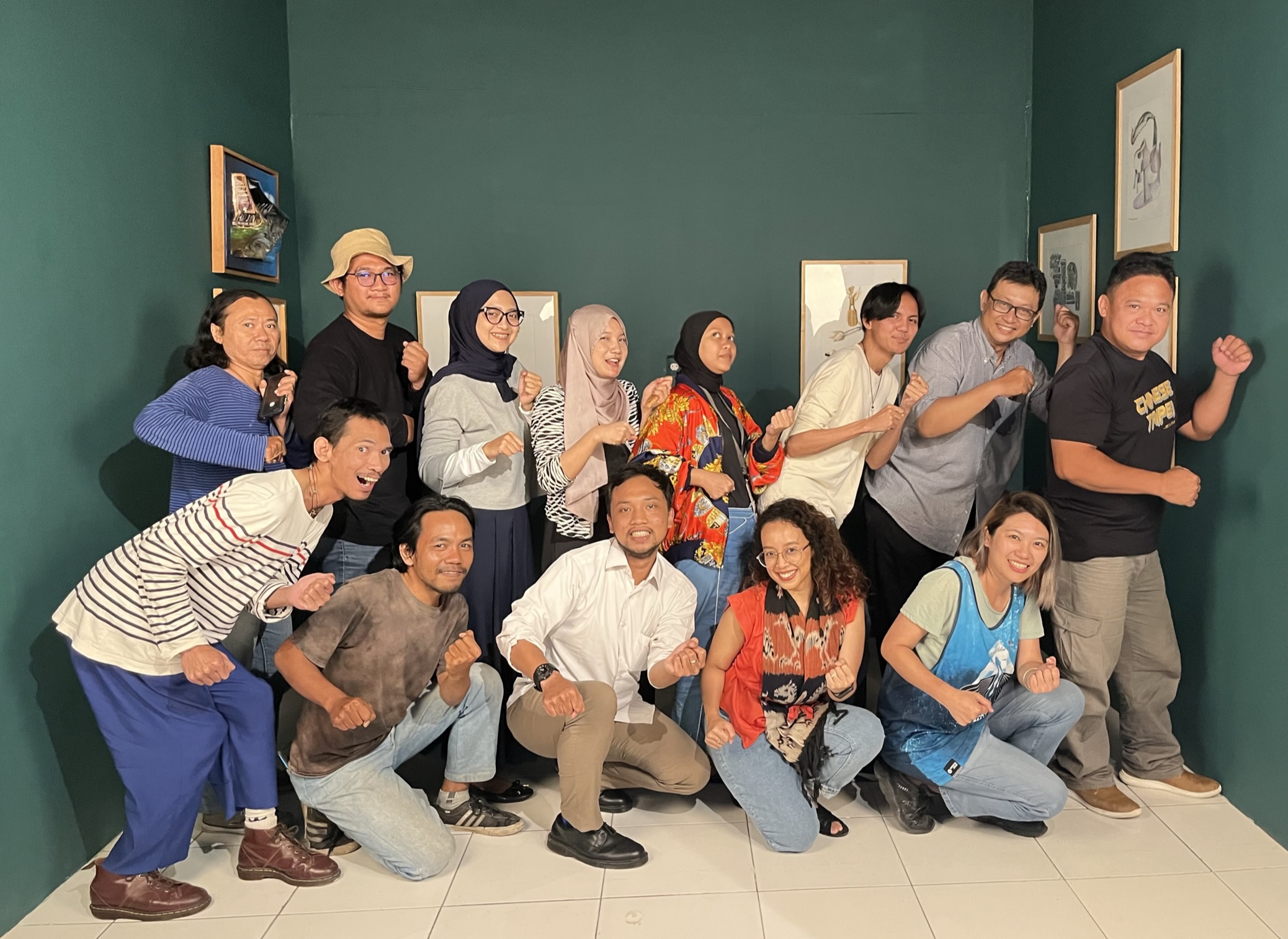
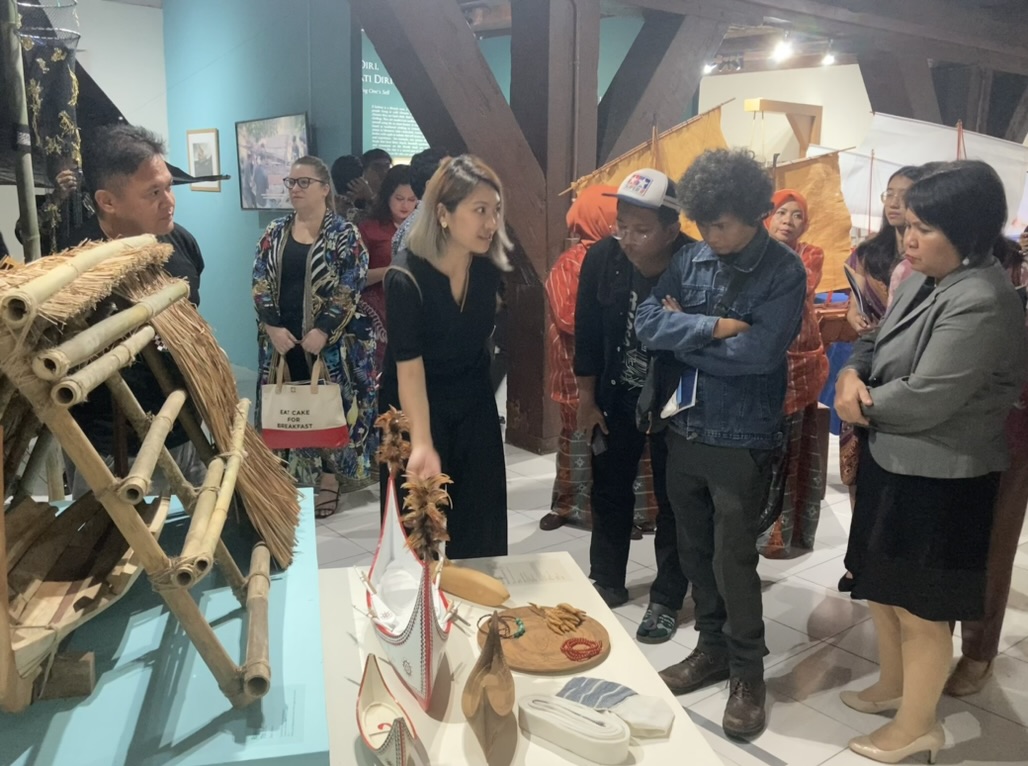
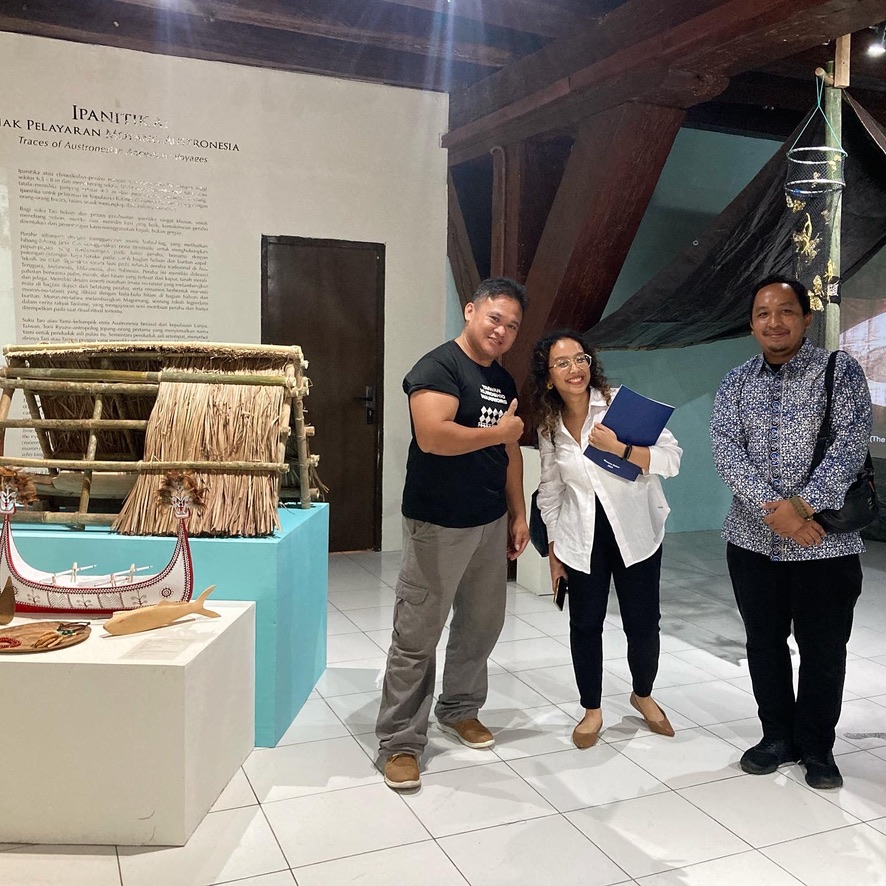

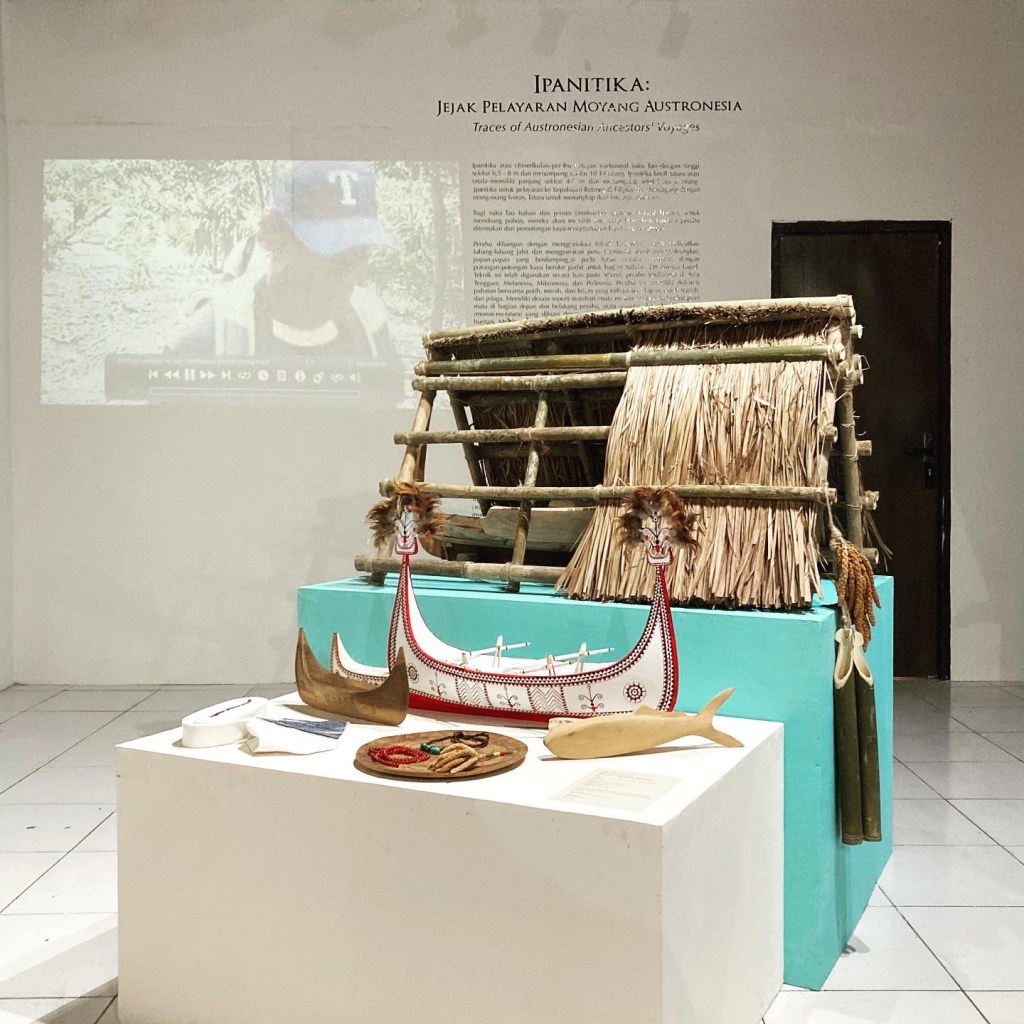
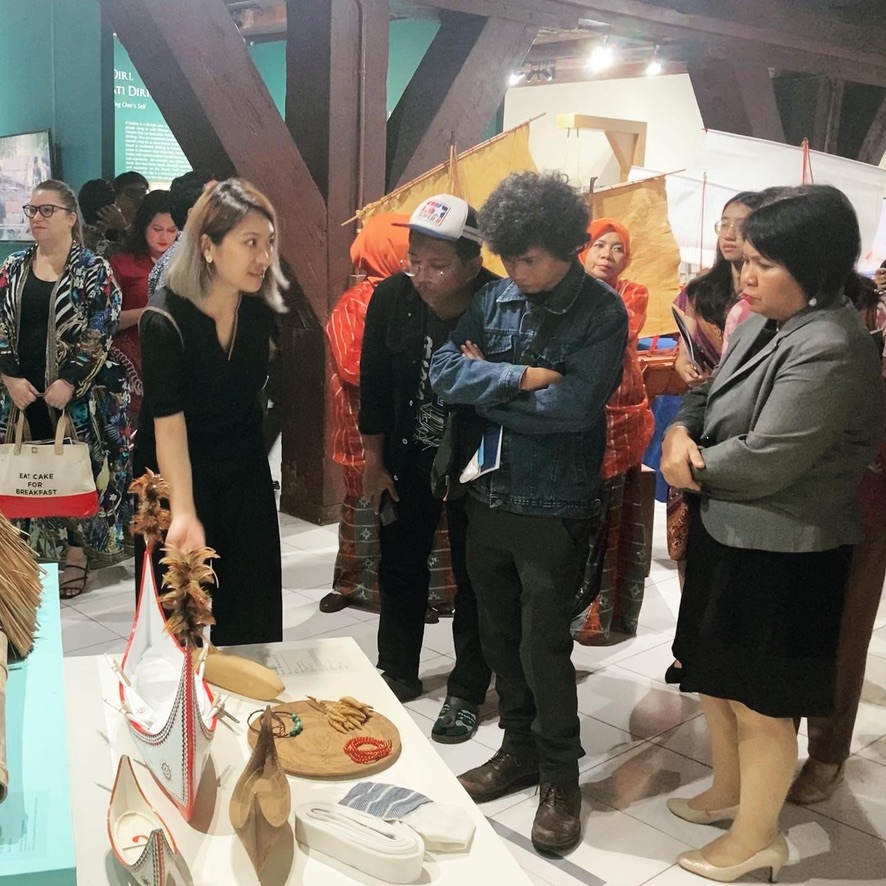
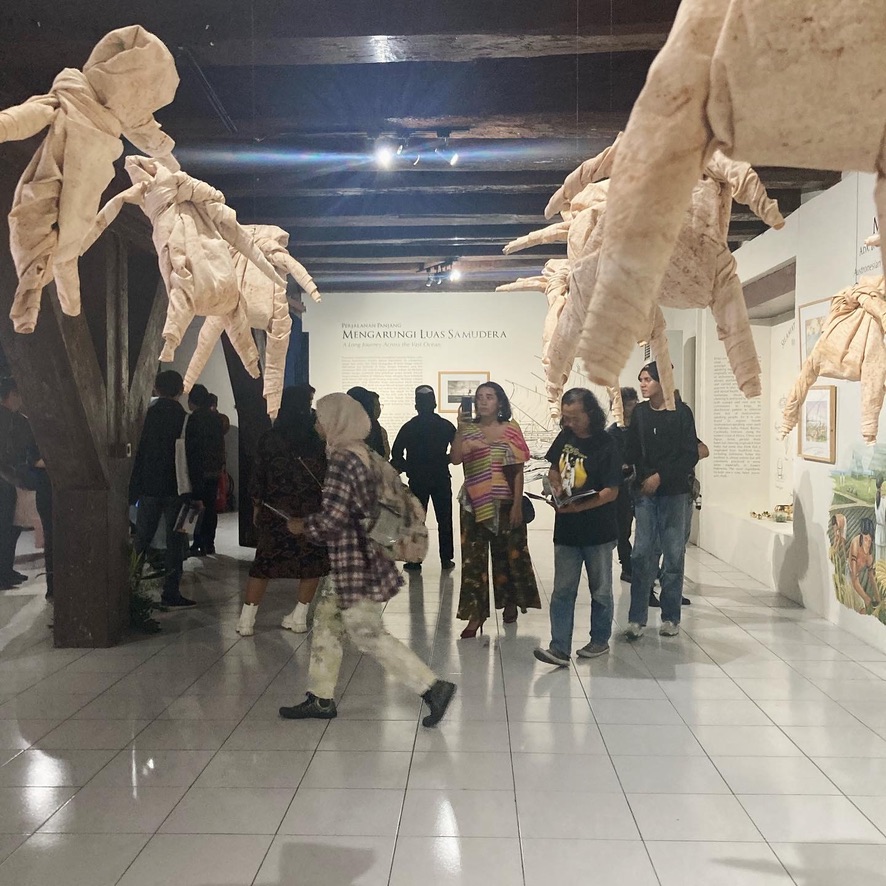
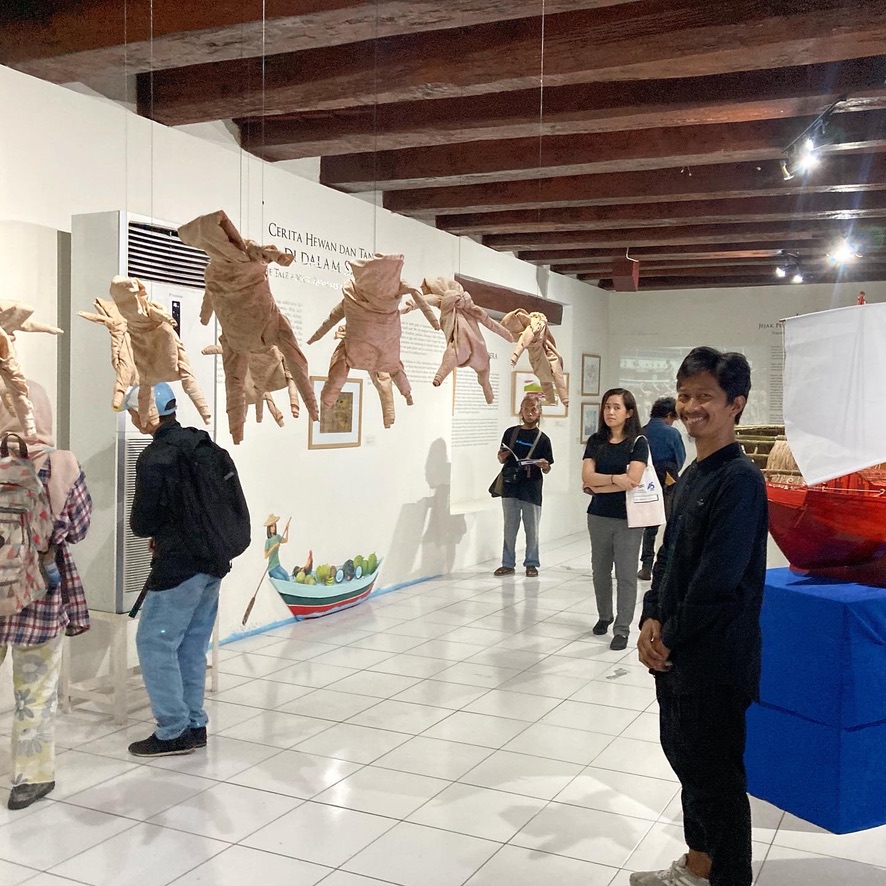
In collaboration with DIGIKARA, Makassar City Museum, Art Museum Management Unit, KamiSketches National Gallery, SUAVEART and Indonesia Hidden Heritage, Museum Bahari presents a temporary exhibition that broadly discusses the Austronesian Nation presented in a combination of educational information and beautiful art installations. Through this exhibition, it is hoped that the public, especially the younger generation, will recognize the richness of Indonesia’s maritime history and nurture a sense of pride and love for our dear home.
Artist:
Shih-Kai CHANG (Sya man misargu)
Context: Museum Bahari Jakarta
Coordinator/Proofreading: Yipei Lee & Sharo Liang
Photo Credit: SUAVEART
Organization: Museum Bahari Jakarta
Artistic Director: KamiSketches National Gallery, SUAVEART, Indonesia Hidden Heritage
Special thanks: Lanyu Postman
雅加達海事博物館與 DIGIKARA、望加錫市博物館、藝術博物館管理單位、KamiSketches 國家美術館、細着藝術和印尼無形文化資產合作,舉辦了一場特別展覽,廣泛討論了南島民族,以知識性資訊和美麗的藝術裝置相結合。透過這次展覽,希望大眾,特別是年輕一代,認識到印尼相關的豐富航海歷史,培養對我們對家園的自豪和熱愛之情。
藝術家:
張世凱 (Sya man misargu)
文字:海事博物館
協作者/校稿:李依佩、梁棨筑
攝影:細着藝術
辦理單位:雅加達海事博物館
藝術指導:KamiSketches 國家美術館、細着藝術和印尼無形文化資產合作
特別感謝:蘭嶼郵差
 細着藝術 SUAVEART