
Heather is an urban researcher specialising in the nexus of urban space and collective memory. Her cross-disciplinary practice spans academic research, participatory design, social and spatial justice, and artistic installations. She is a director of 65 SQM, a dynamic design collective blending art, architecture, human-centred design and material research. Heather leads urban interventions that explore the role of collaboration, emotional geographies and material experimentation in shaping public space. Her work focuses on themes such as wellbeing, civic pride, and belonging in the urban environment, using evidence-based approaches to generate public benefit. Bridging theory and practice, Heather is committed to creating more inclusive, resilient cities through art, research and practice that resonates across communities, disciplines, and institutions.
Introduction
“The state of our city’s water reflects the state of civil society.” (Taylor, 2015.) [Fig. 1] Rivers are brilliantly complex, shaping urban life both as backdrops to the metropolis and as invisible infrastructure connecting the city. Among iconic city rivers the Thames stands out. It is integral to London’s landscape, history, and collective identity.
The Thames is a common: a publicly accessible space for riverside walks, boat rides, and scenic views central to the experience of the city. Londoners orient themselves by it: are you North or South of the river? and allow it to shape their identity and cultural belonging (Taylor, 2015). It is also an urban palimpsest: a surface that has been written on multiple times, with earlier layers partially erased but still visible beneath newer inscriptions. Through the Thames we can see a time capsule of London’s history, from Roman embankments to post-war reconstruction.
As pollution, rising river temperatures, and sea-level rise intensify, reexamining our relationship with the Thames becomes critical: what does the treatment of urban water reveal about Londoners past, present, and future? The river foregrounds the consequences of human exceptionalism: the belief that humans are fundamentally separate from and superior to the natural world (Isaacs and Otruba, 2019).
This essay frames the Thames as a living archive. Each historical ebb provides a prompt for urban reimagining, an invitation for researchers, curators, and artists to listen to the river and respond. The essay follows a temporal structure:
● Part I: The Past – What the River Remembers
● Part II: The Present – Ecological Breaking Point
● Part III: The Future – Resurrection and Urban Reimaginings
Each section aims to be a creative prompt: exemplifying how might creative practices reimagine our relationship with the river? And invites future creatives to continue the conversation with the river in their own way.

[Fig. 1] Aerial view of a city near a river. Laskowski, P. (2019). Aerial photo of city near river. Pexels. Available at: https://www.pexels.com/photo/areal-photo-of-city-near-river-3458997/ (Accessed: 28 May 2025).
Part I: The Past – What the River Remembers
Origin Story
Upon embarking on this research, the Roman occupation felt like a natural starting point. The Romans recognised the Thames for its strategic and commercial value, and subsequently grew the city. But a conversation with archaeologist Jane Sidell shifted the direction of my research by several hundred thousand years. She believed that “understanding that origin story of the Thames, I think will spark a real buzz of imagination in people” (Sidell, 2025). So we begin around half a million years ago, Ice Age in marine stage 12, where a glacier in North London shaped the Thames to its current course, providing fresh water and, subsequently, attracting people, elephants, rhinos, hippos and lions (Sidell, 2025).
Since then, over 440,000 years of human life have flowed alongside and into the river. The Thames has become a living repository, layered with histories and legacies, many of which are still being uncovered. It holds one of the best collections of Bronze Age and Iron Age metalwork found from it in Northern Europe (Sidell, 2025). One object that encapsulates this archival quality is the Battersea Shield [Fig. 2].
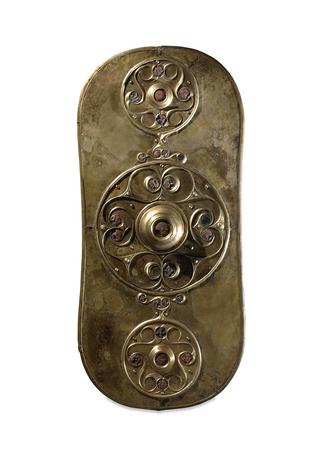
[Fig. 2] The Battersea Shield, an example of Iron Age River deposition. The British Museum (n.d.).
The Battersea Shield. Asset no. 32240001. © The Trustees of the British Museum.
Available at: https://www.britishmuseum.org/collection/object/H_1899-0712-1 (Accessed: 13 June 2025).
This intricately crafted Iron Age shield, an example of Celtic Art, was deliberately placed in the river. Archaeologists believe that these found objects, such as these, suggest the beginning of hierarchies within societies. Entrusting a valuable object to the river was a physical act of social standing and wealth. Due to its intricate detail and value, Battersea shield is believed to be an important personal possession, perhaps even linked to a burial (Sidell, 2025).
It’s easy to walk past the river every day without considering the depth of its memories. However, these found objects, often discovered by mudlarks, those who search the Thames foreshore at low tide for historical artifacts, continue the conversation. When exploring the temporal realities of the Thames as a living archive, as Thomas Ardill observes, “the kind of story continues with almost like there’s been a 500-year gap where the objects been in the river or under the mud, and then suddenly it picks up again and it has this whole other life and and a lot of these objects have really led one thing to another” (2025). The Thames, as a living archive, stores not only physical objects, but also the gestures, values, and worldviews of those who once lived beside it. Understanding this ancient entanglement helps to reframe the river as a storyteller in its own right.
The Olfactory Experience
To live in 1800’s London was to be connected with your neighbours by a universal sensory experience: the smell of the Thames. Water quality is part of public consciousness, evidenced by newspaper cartoons like ‘Dirty Father Thames’ [Fig. 3].
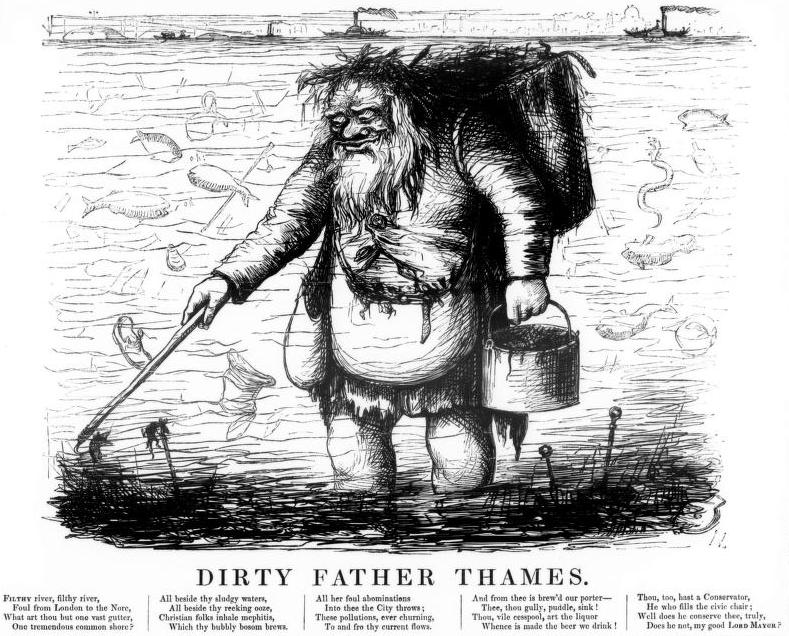
[Fig. 3] ‘Dirty Father Thames’ cartoon satirising pollution. (1848). ‘Dirty Father Thames’. Punch, 7 October.
Courtesy of Wellesley College Library, Wellesley.
However, “The sensory issues about living beside the Thames and abusing the Thames with foul, foul rubbish go back much earlier than the great stink “(Sidell, 2025). As early as 1357, King Edward III made a royal proclamation that the “dung, filth, or rubbish” was accumulating on streets and floating into the Thames (Perrigo, 1971). The stench was reportedly so “abominable” that public dumping was explicitly discouraged (Perrigo, 1971).
The role of the Thames as a site of disposal intensified during Britain’s imperial expansion. By the 18th century, the Thames was one of the world’s busiest waterways, integral to colonial trade. Hofmeyr describes the process as hydrocolonialism, citing rivers as spaces of extraction, sorting, and control (Hofmeyr, 2022). The Thames functioned as a transitional space, passing through it underwent what Hofmeyr calls an “ecological rite of passage,” shifting from water to land, where they were evaluated, sorted, and ‘landed’ or discarded into the water (Hofmeyr, 2022).
This legacy of pollution reached a symbolic climax in 1858 during The Great Stink, when the smell of the river became so overwhelming that it forced Parliament to suspend proceedings (Ghosh, 2022). In response, civil engineer Sir Joseph Bazalgette was commissioned to design a sewer network, running along both banks of the river (Halliday, S. 2001). This infrastructure remains vital today but did not prevent continued pollution.
In 1878, the Princess Alice passenger steamer sank near a point where sewers discharged into the river. At the time The British Medical Journal expressed that: “the condition of many of the bodies recovered from the Thames after the Princess Alice collision drew attention in a most forcible manner to the present state of the river”, citing further evidence: “that the present system still keeps the sewage in the Thames; that it still continues to be conveyed up and down as the tide ebbs and flows and that the heavier and grosser particles are deposited upon the banks and in the bed of the river.” (1878). The tragedy led to the use of “Bovril boats”, nicknamed for the cargo they carried, to carry sewage sludge downriver to be dumped into the Thames Estuary and North Sea (Cheatle, 2018). This practice continued until it was banned by EU legislation in 1998.
In 2018, the Thames Festival Trust revisited this history through a sensory lens by recreating the industrial smells that once defined London life as part of an interactive exhibition (Ardill, 2025). Their work captured the intimate, often uncomfortable, way people have experienced the river, anchoring the Thames not just as a physical space, but as a felt archive, furthering our conversation with the past (thamesfestivaltrust.org, 2019).
Imagined Oasis
Before industrialisation London’s topography was markedly different. The Thames once connected with 20 – 25 rivers that once meandered through the city[Fig. 4]. Among these the River Fleet stood out as a vibrant waterway running from Hampstead Heath through central London to Blackfriars. In the early modern period, it was even imagined as London’s answer to Venice, inviting swimmers and pleasure seekers (Stockton, n.d.).
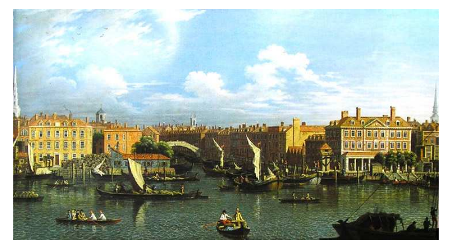
[Fig 4] Samuel Scott’s depiction of the Fleet’s mouth before culverting. Scott, S. (c. 1740). The Mouth of the River Fleet. Guildhall Library.
However, industrialisation and population growth led to its degradation. Flowing through the densely populated East End and near the Spitalfields slaughterhouses, it became heavily polluted with human and animal waste. In 1850, a public health investigation concluded that the water distributed from the area posed a serious risk to health (UCL River Fleet Restoration Team, 2009). As a result, the Fleet, like many other rivers across the city, was culverted and integrated into the city’s sewer overflow system.
Despite being buried, the Fleet persists in urban memory. It is inscribed on street names (for instance, Fleet Street in central London), sounded in drains underneath Holborn, its mouth visible at Blackfriars Bridge. Its fate is emblematic of a wider modernist logic, seen across the Global North, of enclosing, burying, or erasing urban rivers. However, these lost rivers hold imaginative potential. They raise the question: what would London look and feel like if these waterways had never been buried? The speculative answer is sensory, “there’s something very wonderful about seeing moving water, hearing moving water” an element of birdsong, and the sight of moving streams across the city (Sidell, 2025).
Part II: The Present – Ecological Breaking Point
The Second World War marked a turning point: bombers used the river’s reflection to navigate during the Blitz, damaging London’s sewers and severing the river from the city (Milne, 2020). Post-war redevelopment, historically, ignored these damaged spaces and developed around the Thames rather than with it. Moreover, the damaged infrastructure pushed water quality beyond recovery. In 1957, the Thames was declared “biologically dead” as it had become so polluted it was no longer able to sustain the ecosystems it was previously home to (Richardson & Soloviev, 2021).
From the 1980s onward, the Thames underwent a second transformation being reimagined through neoliberal redevelopment as an essential tool for the rebranding of urban space.[Fig.5] The 2011 census underlines the highest increase in population in the UK has been inner London riverside boroughs most at risk for flooding, like Newham and Tower Hamlets (Gandy, 2014). In London, waterside developments command premium prices, pricing out local residents and commodifying the river.

[Fig. 5] Waterside real estate advert from Greenwich. ‘LANDLORDS NEEDED’ – Real estate advertisement at 1st Avenue Real Estate Services, Greenwich Office. 2021. Personal photo by Heather Noble.
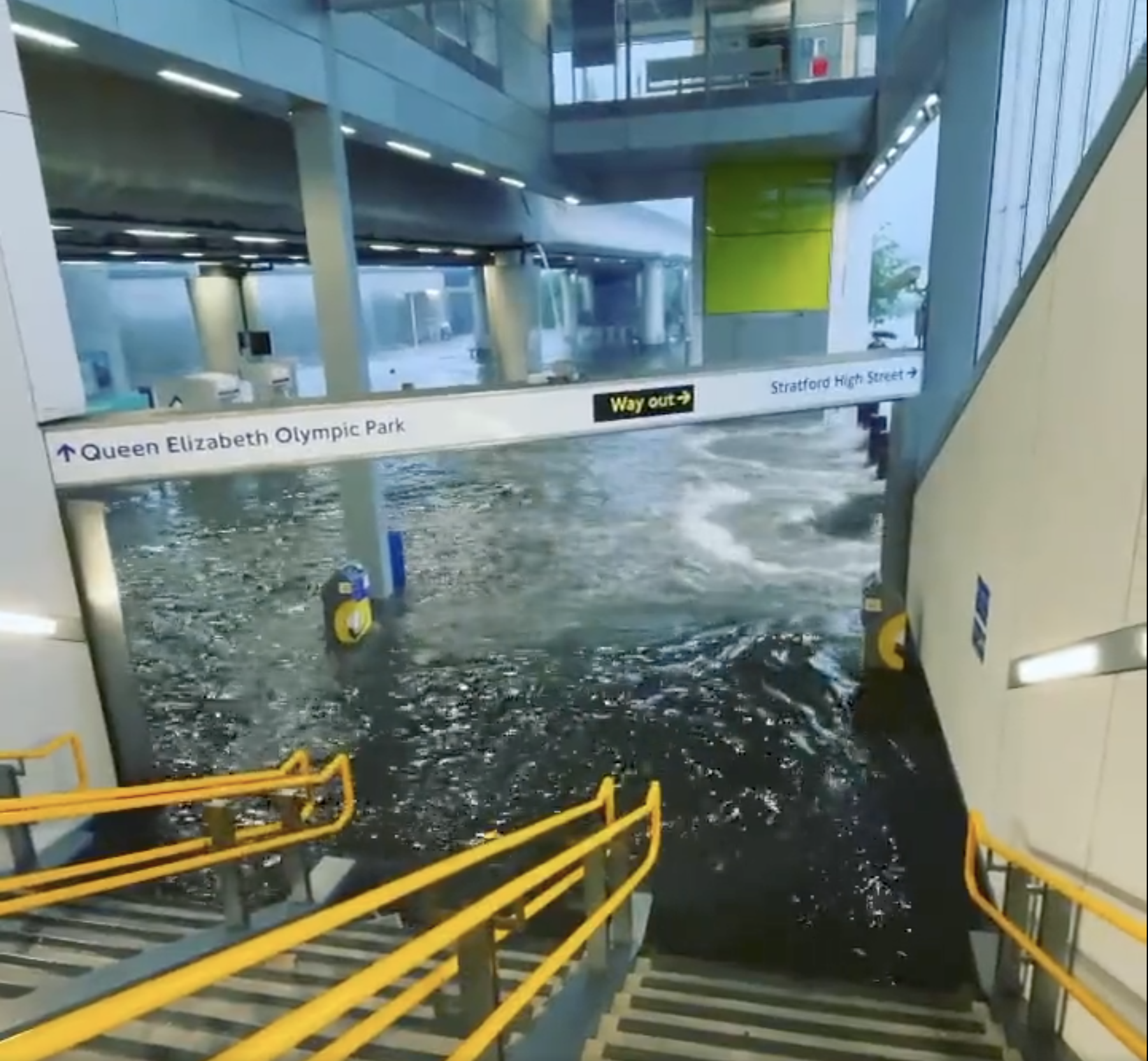
[Fig. 6] Flooded DLR station after heavy rainfall. R0bday (@R0bday) (2021). Pudding Mill Lane DLR station submerged in floodwater. X (formerly Twitter), 25 July. Available at: https://x.com/R0bday/status/1419339808372142083.
Concurrently, climate breakdown is intensifying. Flash floods are becoming more prevalent, in part due to the concretization of London (green spaces, particularly front gardens, being paved over to become parking spaces) making the city’s topography increasingly impervious to water (Gandy, 2014). Notably, in 2021 flooding overwhelmed London’s transport infrastructure, with tube stations, like Pudding Mill Lane, submerged as a result of the storms [see Figure 6].
The privatisation of water has also had grave consequences. Earlier this year, the Guardian reported that Thames Water Company, established in 1989 during the privatization of the water industry in England and Wales, discharged 50% more raw sewage in 2024 than the previous year (Laville, 2025). The level of sewage equates to 300,000 hours of waste running into waterways (Laville, 2025). The finding prompted a criminal investigation of Thames Water.
Part III: The Future – Resurrection and Urban Reimaginings
“The question is long term, where will we be in 100 years?” (Sidell, 2025).
To view the Thames as an archive is also to ask what futures it might contain. In response to the devastating 1953 flood, the Thames Barrier was completed in the 1980s as a pioneering flood control device. However, the barrier now faces limits as extreme weather worsens. This ecological challenge. Climate projections indicate that more frequent, intense storms will render the current system insufficient. This has prompted a range of responses. Some such as Foster + Partner’s have leaned into techno-futurism, proposing for a floating airport on the Thames Estuary as part of the solution. [Fig. 7]
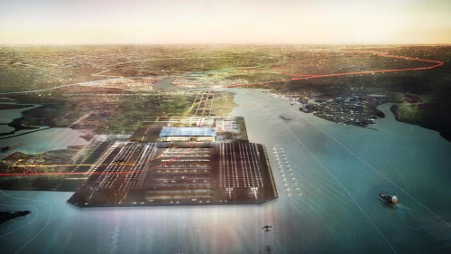
[Fig. 7] Thames Hub airport proposal visualisation.
Foster + Partners, Halcrow, and Volterra (2012). Thames Hub vision statement: Estuary Airport proposal.
However, a growing movement of urbanists urge resisting high-carbon, high-cost solutions. Watson’s concept of Lo-TEK offers an alternative: resilient infrastructures developed through Traditional Ecological Knowledge (that are sustainable, low-impact, and contextually appropriate (Watson et al., 2019). In London, nature-based solutions are gaining traction. The Natural Flood Management through the Land of the Fanns project, the organisation Thames21 aims to expand river catchments through storage ponds, planting trees, reducing soil compaction, restoring meandering rivers, creating wetlands, or building leaky dams to act as a natural flood defence and slow the flow of water downstream (Thames21, no date). Another hopeful development is the reintroduction of beavers to English river systems. Their dam-building creates complex wetland habitats and buffers flood risk, reshaping ecosystems over time (Environment Agency, 2025). [Fig.8]
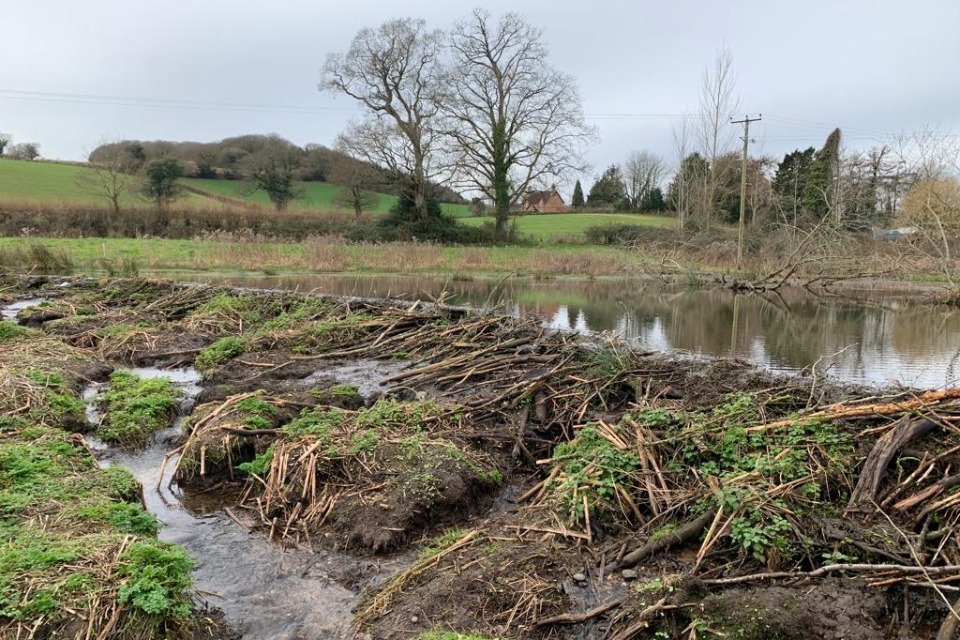
[Fig. 8] Beaver dam on the River Otter, symbol of ecological restoration.
Andison, E., Environment Agency (n.d.). Beaver dam on the River Otter. Environment Agency.
As the Thames archive confronts climate breakdown, two visions emerge for its future chapters. While some propose high-tech solutions a growing movement advocates for nature-based alternatives. These approaches suggest a shift away from human exceptionalism toward partnership with the Thames as a living system, exploring new possibilities for the future of the river.
Conclusion
The Thames holds over half a million years of memory, from Iron Age shields, from the Great Stink to the current climate crisis. As a living archive, the river reveals the layered consequences of how we have imagined ourselves in relation to the natural world.
“The state of our city’s water reflects the state of civil society” resonates differently across each historical moment (Taylor, 2015). The Battersea Shield speaks to ancient rituals of reverence and hierarchy. The olfactory assault of industrial London reveals a society that treated the river as essential urban infrastructure and dumping ground. Today’s sewage discharges and flash floods expose the failures of privatisation and the urgent reality of climate breakdown.
The Thames archive also contains imagined futures. In the sound of water flowing through London’s buried rivers, in the wetlands that might soon be restored, in the natural flood management expanding across the Thames, these traces suggest possibilities beyond human exceptionalism. The creative prompt elucidated from an archival reading of the Thames is clear: how might we learn to coexist with the Thames?
Bibliography:
- Castonguay, S. & Evenden, M. (Eds.) (2012) Urban Rivers: Remaking Rivers, Cities, and Space in Europe and North America. Pittsburgh: University of Pittsburgh Press.
- Cheatle, A. J. (Ed.) (2018) W. E. Sangster: Sermons in America: A Critical Edition with Introduction and Notes. Eugene, OR: Wipf & Stock Publishers.
- Environment Agency (2025) River and Floodplain Management. Available at: https://www.gov.uk/government/publications/natural-flood-management-evidence/river-and-floodplain-management (Accessed: 28 May 2025).
- Gandy, M. (2014) The Fabric of Space: Water, Modernity, and the Urban Imagination. Cambridge, MA: MIT Press.
- Ghosh, P. (2022, April 23) ‘How the Thames went from being biologically dead to one of the world’s cleanest rivers in 60 years’. Scroll.in. Available at: https://scroll.in/article/1022414/how-the-thames-went-from-being-biologically-dead-to-one-of-the-worlds-cleanest-rivers-in-60-years
- Halliday, S. (2001) The Great Stink of London: Sir Joseph Bazalgette and the Cleansing of the Victorian Metropolis. Stroud: Sutton Publishing.
- Hofmeyr, I. (2022) Dockside Reading: Hydrocolonialism and the Custom House. Durham: Duke University Press.
- Isaacs, J. R. & Otruba, A. (2019) ‘Guest Introduction: More-than-human contact zones’, Environment and Planning E: Nature and Space, 2(4), pp. 697–711. https://doi.org/10.1177/2514848619855369
- Laville, S. (2025, March 18) ‘Thames Water data reveals raw sewage discharges in rivers rose 50% in 2024’, The Guardian. Available at: https://www.theguardian.com/business/2025/mar/18/thames-water-data-reveals-raw-sewage-discharges-rivers-2024
- Milne, G. (2020) The Thames at War: Saving London from the Blitz. Barnsley: Pen & Sword History.
- Pattacini, L. (2021) ‘Urban design and rivers: A critical review of theories devising planning and design concepts to define riverside urbanity’, Sustainability, 13(13), p. 7039. https://doi.org/10.3390/su13137039
- Perrigo, L. I. (1971) ‘Plagues and Pollution in Medieval England’, Social Science, 46(3), pp. 133–138. Available at: http://www.jstor.org/stable/41959519
- Ramsden, J. (1959, November 27) Clean Rivers (Estuaries and Tidal Waters) Bill, House of Commons Hansard. Available at: https://api.parliament.uk/historic-hansard/commons/1959/nov/27/clean-rivers-estuaries-and-tidal-waters
- Richardson, M. & Soloviev, M. (2021) ‘The Thames: Arresting ecosystem decline and building back better’, Sustainability, 13(11), p. 6045. https://doi.org/10.3390/su13116045
- Stockton, H. (n.d.) ‘Pollution of the River Thames: A history’, Royal Museums Greenwich. Available at: https://www.rmg.co.uk/stories/ocean/pollution-river-thames-history
- Taylor, V. (2015) ‘London’s River? The Thames as Contested Environmental Space’, The London Journal, 40(3), pp. 183–195. https://doi.org/10.1179/1749632215Y.0000000010
- Thames Festival Trust (2019). The Barking Stink: A scented history of Barking Creek. Available at: https://thamesfestivaltrust.org/programme-archive/the-barking-stink/ (Accessed: 28 May 2025).
- Thames21 (n.d.) ‘Natural Flood Management’. Available at: https://www.thames21.org.uk/natural-flood-management/ (Accessed: 28 May 2025).
- The British Medical Journal (1878, December 28) ‘Public Health and Poor-Law Medical Services’, The British Medical Journal, 2(939), pp. 971–972. https://www.jstor.org/stable/25248992
- UCL River Fleet Restoration Team (2009, March 27) The History of the River Fleet. Camden Council. Available at: https://www.camden.gov.uk/documents/20142/1458280/River+Fleet.pdf
- Watson, J., Abukhodair, H., Ali, N., Robertson, A., Issaoui, H., & Sun, C. (2021) ‘Design by Radical Indigenism: Equitable Underwater & Intertidal Technologies of the Global South’, SPOOL, 8(3), pp. 57–74. https://doi.org/10.7480/spool.2021.3.6217
Interviews:
Ardill, T. (2025).
Interviewed by Heather Noble|London, 10 June.
Dr Thomas Ardill is curator of paintings, prints and drawings at the Museum of London.
Sidell, J. (2025).
Interviewed by Heather Noble|London, 11 June.
Dr Jane Sidell is Inspector of Ancient Monuments at Historic England.

