[ Story sharing _ from Hsin-Chieh Hung / 洪信介 ]
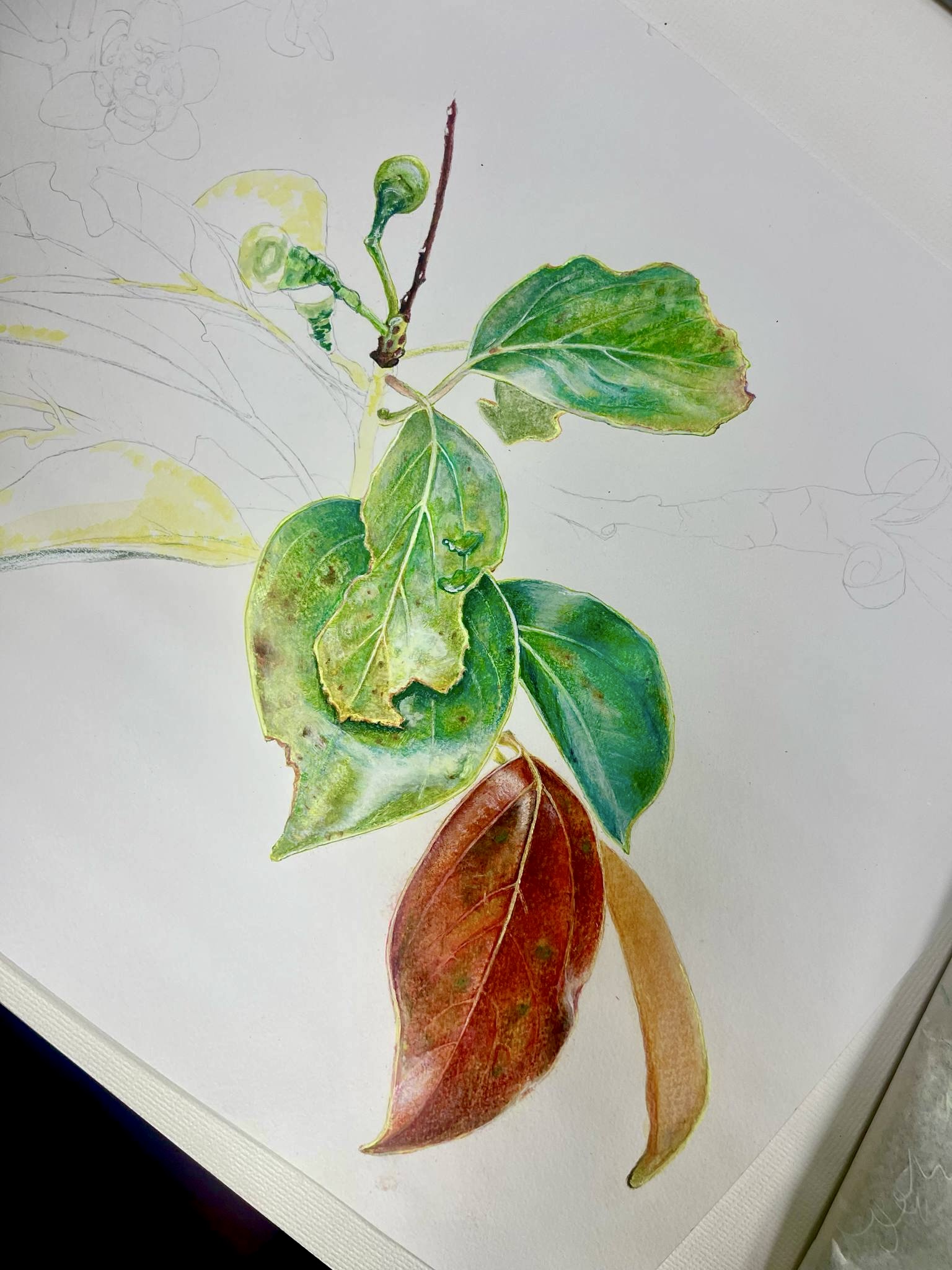
Today, my connection with stout camphor continues in a new form: I paint it. Using the tree as a subject of art feels like continuing an unfinished conversation with an old companion.
Hello everyone, I’m A-Gai, a plant hunter.
Although I knew about camphor trees since childhood, my early impressions were vague due to limited encounters. After completing military service at age 23, I began working in landscape design, and two projects involving camphor trees left me with vivid memories.
The first was in Bagua Mountain, Nantou. This low-elevation range had long been cultivated for pineapples, tea, lychees, and other fruits. At its center stood a sacred 300-year-old camphor tree, towering 25 meters high with a trunk diameter of 2.1 meters, rising above the hillside. Locals say that during the Japanese colonial era, the area was once called “Zhangpu Liao (樟普寮)” because of the abundance of camphor trees. Extensive logging for camphor oil nearly wiped them out, yet this giant was spared—out of reverence for the spirits—and was later listed as a protected heritage tree. At that time, I was still an apprentice, building a raised wooden platform beneath the tree for visitors to rest in the shade and watch hawks soar across the sky.
My second impression comes from the Jiji Green Tunnel, also in Nantou, where rows of old camphor trees form a shaded passageway. As part of a landscaping project, I trimmed several of these ancient trees myself, climbing with a chainsaw. The moment the blade cut into the wood, a surge of fragrance filled the air, and the flying sawdust was so aromatic that I often collected it in plastic bags to savor later.
Because some gaps in the tree line required replanting, we planted young camphor saplings—about 1.5 meters tall, with trunks 6 cm in diameter. I even brought one home and planted it in my field. Today, that little sapling has grown into a giant with a trunk nearly 80 cm across. Once it thickens by another 5 cm, I plan to build a small wooden hut in its branches, a place to rest, read, and dream in the breeze.
This time, however, my main focus is on Cinnamomum kanehirae (niuzhang, stout camphor), a species unique to Taiwan. Every part of this tree is precious, but what makes it most renowned is the medicinal fungus Antrodia cinnamomea (niu-zhang zhi) that grows only on it—hailed as an anti-cancer miracle in modern medicine, more valuable than gold. Its rarity, however, has led to illegal logging; poachers treat the tree as an “ATM” in the mountains. My bond with stout camphor runs deep, tied to both forest surveys and horticultural nurseries.
In forest resource surveys, my plant knowledge earned me recognition, and I often worked with the Nantou Forest Bureau on deep-mountain explorations. I once encountered a living stout camphor with a trunk over two meters wide—still standing strong—though I also saw fallen ones, cut into pieces by poachers. The logs, broken into smaller chunks, were left scattered on the forest floor to cultivate Antrodia. In this way, the wood could be carried out piece by piece to be sold in towns and villages, a task manageable by a single person, maximizing profit while minimizing risk.
Later, in my nursery of over 100 sqm, I propagated thousands of plant varieties, nearly a thousand species in total. I even experimented with stout camphor cuttings, which were highly sought and popular after. At my peak, I rooted about 30,000 cuttings, developing my own rooting formula, greenhouse, and watering system that applied to most of plants. Around 10,000 seedlings successfully took root, bringing me a modest profit.
Today, my connection with stout camphor continues in a new form: I paint it. Using the tree as a subject of art feels like continuing an unfinished conversation with an old companion.
Thank you.
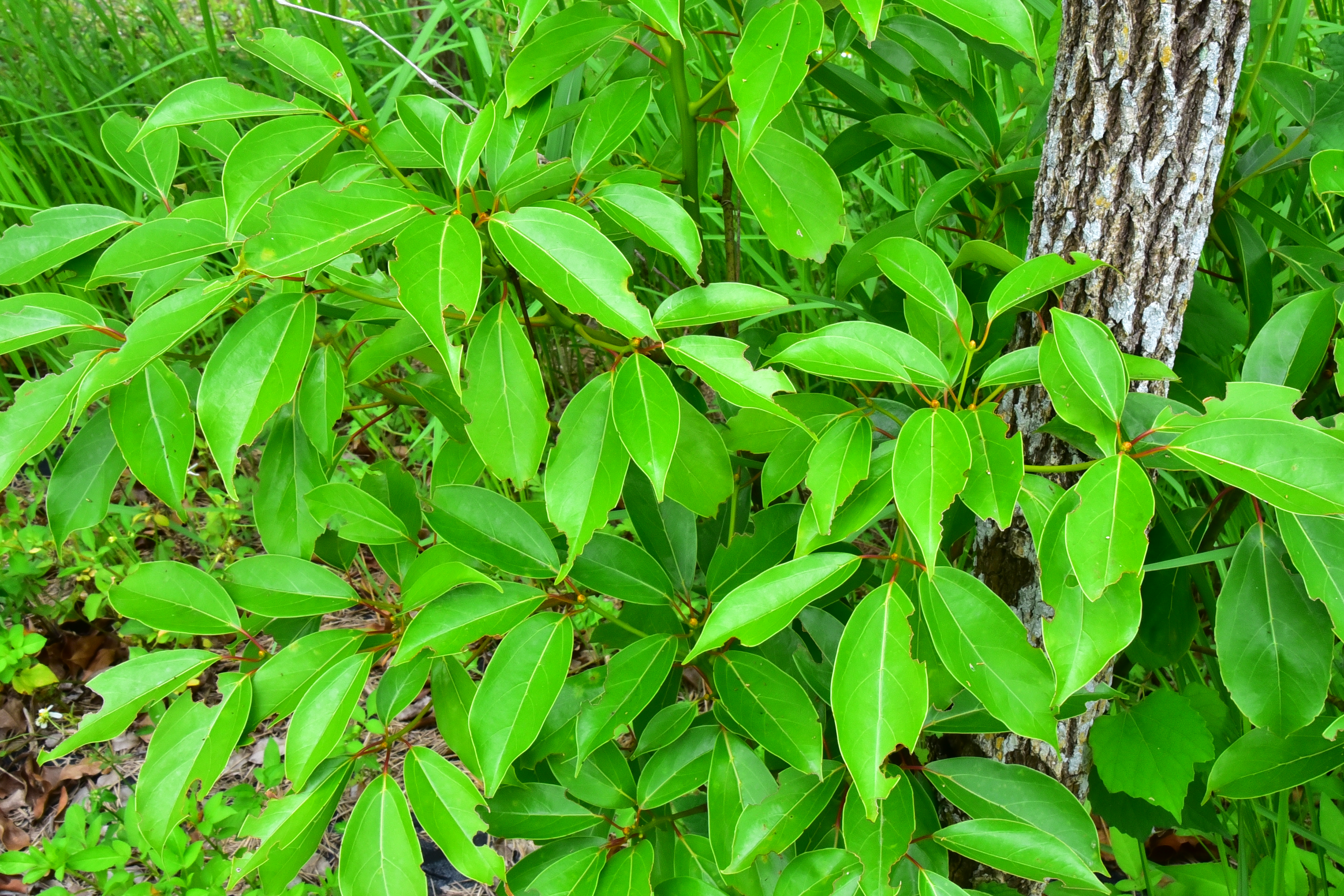
Photo by Hsin-Chieh Hung
[Chinese version / 中文]
大家好,我是植物獵人阿改。
雖然說我小時候就認識樟樹,但是,由於接觸不多,所以印象較模糊。退伍後,我23歲,開始從事景觀造園的工作,做過兩件和樟樹有關景觀工程案,我印象特別的深刻。
第一個是位於南投市的八卦山,山脈中央,八卦山脈是低海拔,很久以前就已經開發為農業區,主要做是鳳梨、茶葉、荔枝、等水果。有一棵300年樟樹神木,非常巨大,高25米,胸徑2.1米,鶴立雞群於山坡上,非常顯眼,據說,那個區域在日治時期,因有很多棵樟樹,舊稱「樟普寮」。後來大量開發土地,導致樟樹幾乎被砍伐殆盡,日本政府時代,大量砍伐樟樹提煉樟腦油,但此樹當時為恐觸犯神明,不敢砍伐,倖得留存至今,列管成為縣政府珍貴老樹。我當時還是學徒,在那裡做一個墊高的木製平台,那是個賞鷹平台,可以讓遊客可以坐在大樹下乘涼,及眺望遠景。
第二個樟樹印象,也是南投,是集集綠色隧道,綠色隧道是道路兩旁幾十棵老樟樹所形成的風景,也因為做景觀工程的原因,其中有好幾棵老樹的修剪工作是我帶著鏈鋸,爬上樹去執行任務,去修剪處裡完成的,當鏈鋸接觸木質部位時,一股芳香氣味立即湧出,飛濺起來的木屑,如果當時條件允許的話,我都收起來,裝塑膠袋裡聞香。也因為,綠色隧道是行道樹,樹與樹之間的間距,有些較遠,需要補植栽,種植新的樟樹苗,買來的樹苗是1米5高、6公分胸徑的規格,種剩下的,我帶一棵回家,將她種在田裡,如今這一棵樹苗已經長成大樹,胸徑接近80幾公分,我想,等到它在多長胖5公分,我就要在樹上蓋小小的木屋,閒暇之餘,爬上樹上去睡覺,吹風,寫作看書,放鬆身心,逍遙又快活。
這次,我的主要作品是牛樟,牛樟是台灣特有種,牛樟樹全身上下,都是寶,關於牛樟的報導很多,主要是附屬在牛樟木身上的牛樟芝,在醫學上認證抗癌神藥,具備多種療效,可治癒人體多種疾病,堪比黃金還要珍貴的藥材。因此牛樟木也隨之變得珍貴,物以稀為貴,牛樟樹的稀有和盜伐有直接關係,牛樟木是山老鼠山上的ATM提款機,我和牛樟的淵源頗深,也有兩個。一個是森林資源調查,另一個是園藝苗圃。
先說森林資源調查,早在20年前,我爬山找植物,就在業界小有名氣,南投林務局有很多深山資源調查工作,常常找我,主要我的強項是很會認植物和好相處不計較。當時參與到牛樟樹母樹林資源調查工作,南投縣內的深山裡,還有1棵胸徑2米以上的牛樟巨木,是活著的,是站著的,當然,也有死掉的,躺著的,被肢解的。山老鼠將牛樟樹,切成小塊,散落森林底層,一來,可以就地取材,以天然的環境養牛樟芝。二來,小塊方便運送下山,可以分很多次,慢慢的將木頭背下山去賣,一個人就可以作業了,提高利潤又減少風險。
接著說,苗圃,我以前有一個苗圃,大概400多坪,蒐藏繁殖,各種植物,大概近一千種吧。沒仔細算過。我也扦插過牛樟樹苗,因為牛樟苗,在市場上很熱門,我最多繁殖三十萬芽,芽,指的是扦插穗,我還為此精心調配出最佳的開根素配方,和扦插溫室,灑水系統,適用各種木本植物扦插繁殖,最後,我的牛樟小苗移植成功的,大約一萬棵小苗左右。我小賺一筆。
最後,我和牛樟的緣分還沒結束,現在我畫牛樟,以牛樟為創作題材。也算是再續前緣吧。
謝謝大家。
 細着藝術 SUAVEART