Short Intro of CURATOR
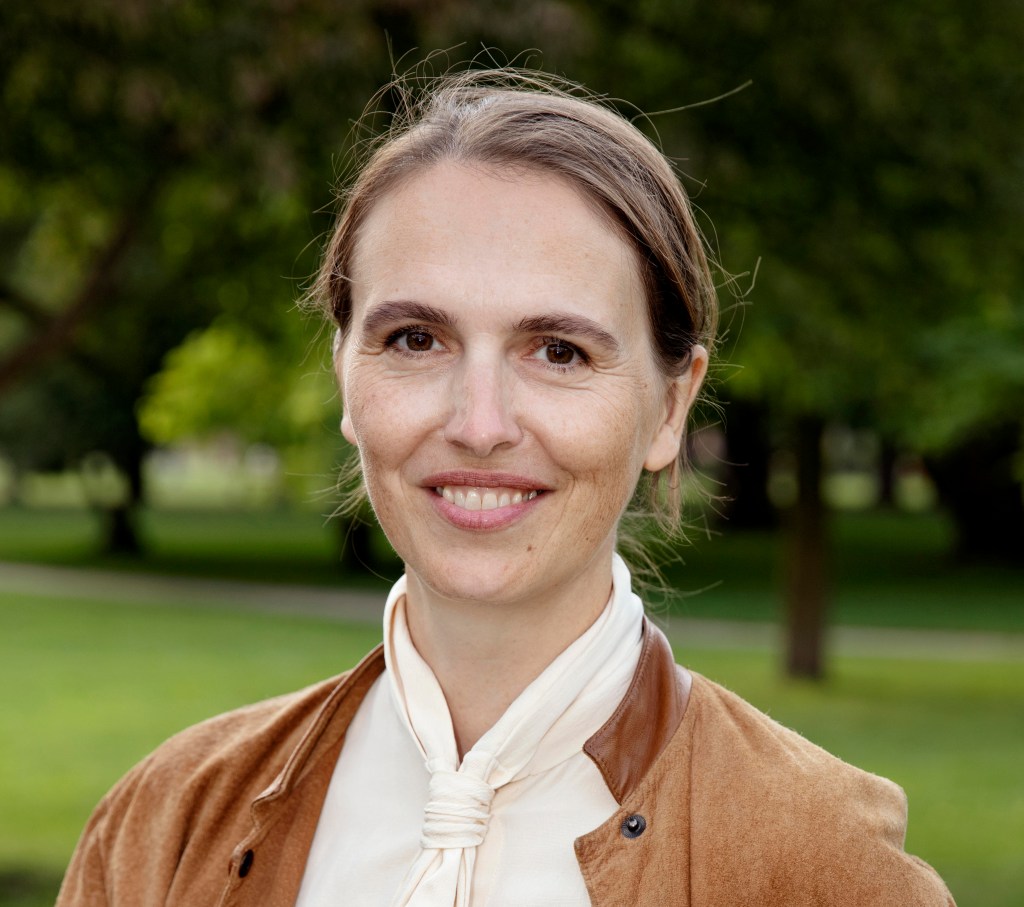
Josephine Michau is the founder and director of the Copenhagen Architecture Forum. She has an Master of Business Administration and Philosophy from the Copenhagen Business School since 2002 with parallel studies at the University of Copenhagen (Philosophy) and the Sorbonne in Paris (Dauphine / Business). She is curator of the Danish Pavilion at the Biennale di Venezia 2023.
Curatorial Expertise & Interests
Interested in the ethical dimensions of spatial practices – socially and ecologically.
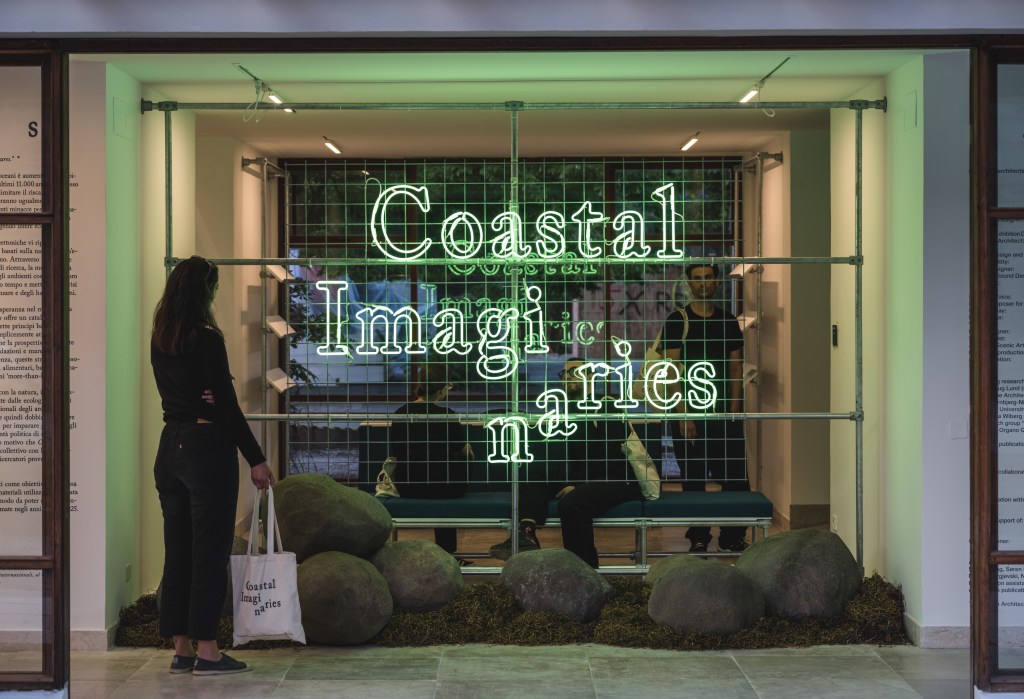
The Danish Pavilion_Photo by Rasmus Hjortshoj|Courtesy of Danish Pavilion, Venice Biennale 2023 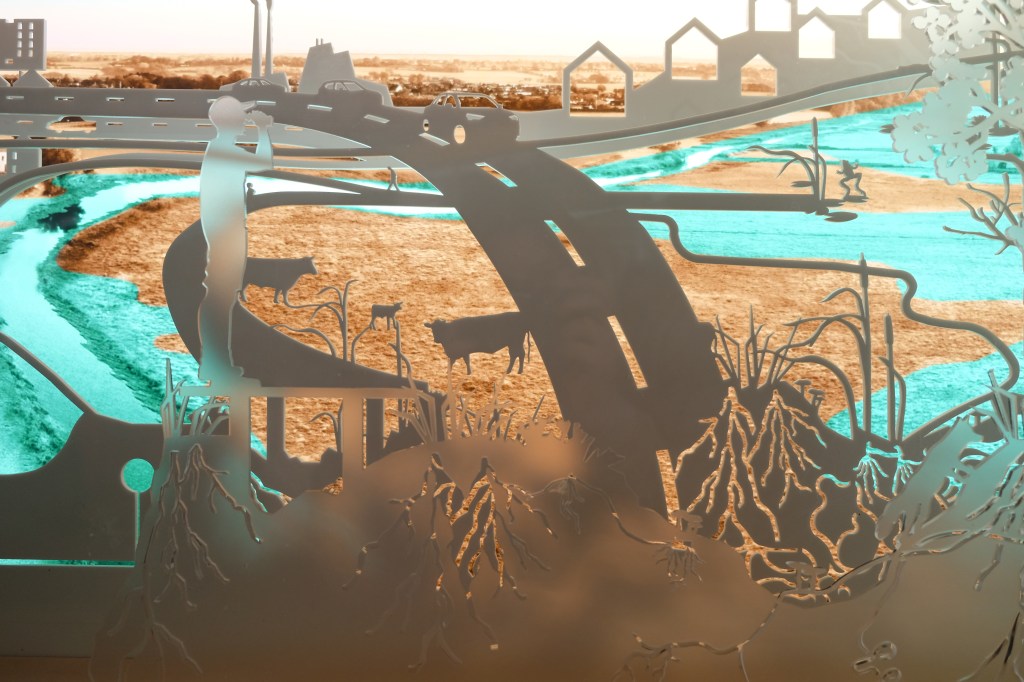
Schonherr_Wonderbox|Courtesy of Danish Pavilion, Venice Biennale 2023 
Schonherr_Wonderbox|Courtesy of Danish Pavilion, Venice Biennale 2023 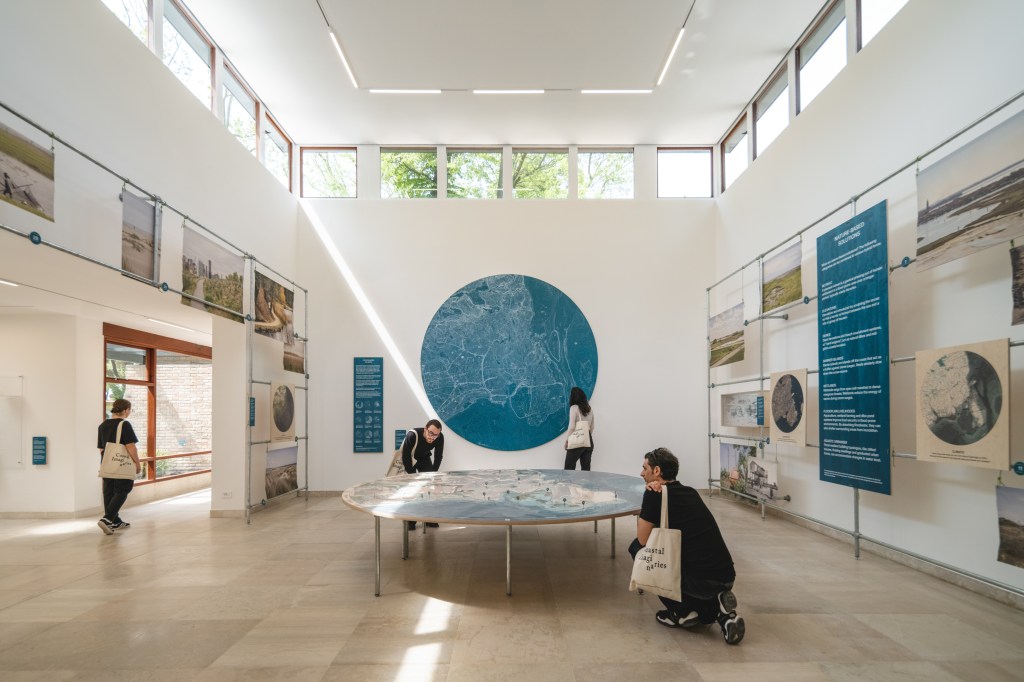
The Danish Pavilion_Photo by Rasmus Hjortshoj|Courtesy of Danish Pavilion, Venice Biennale 2023 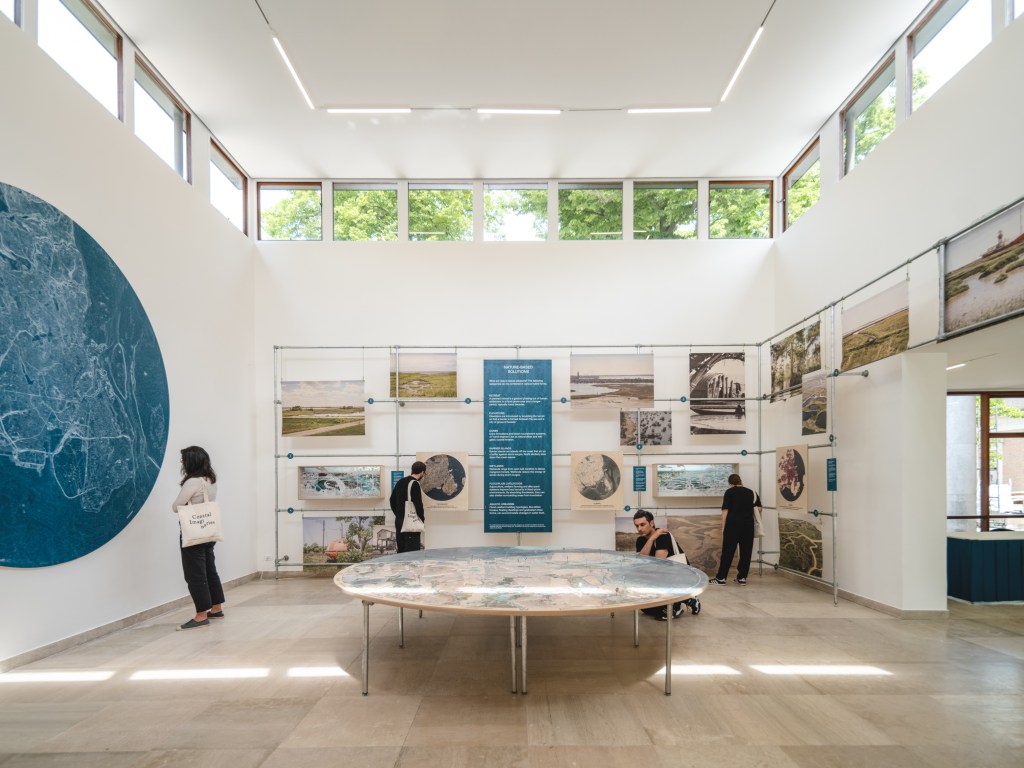
The Danish Pavilion_Photo by Rasmus Hjortshoj|Courtesy of Danish Pavilion, Venice Biennale 2023 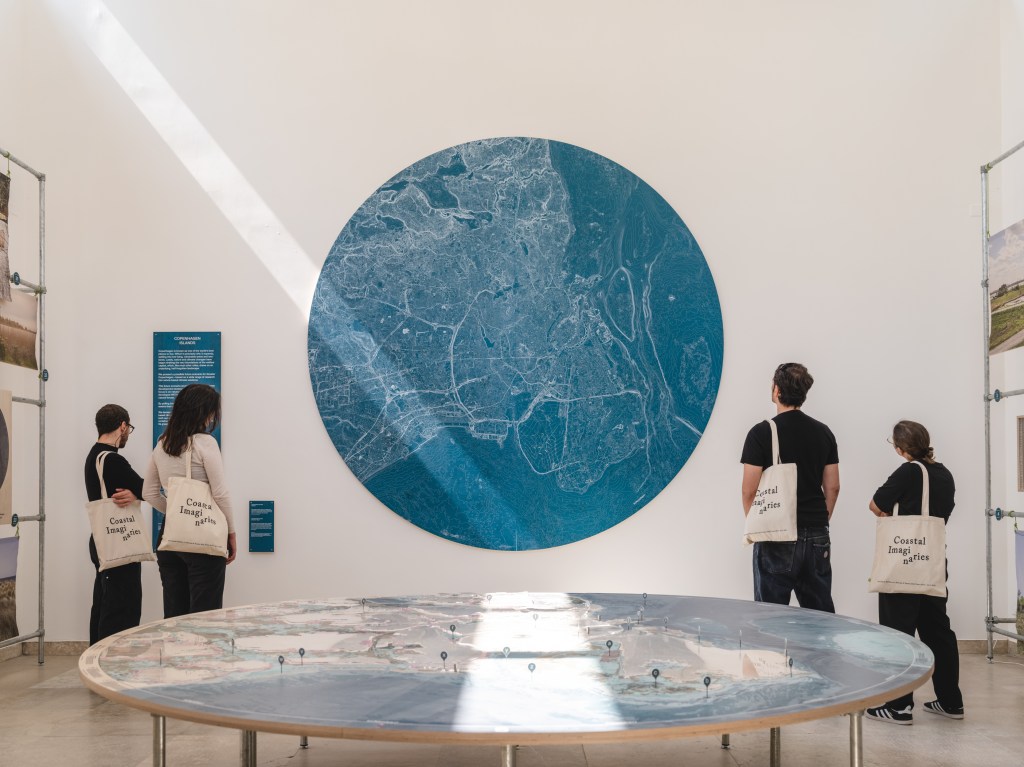
The Danish Pavilion_Photo by Rasmus Hjortshoj|Courtesy of Danish Pavilion, Venice Biennale 2023 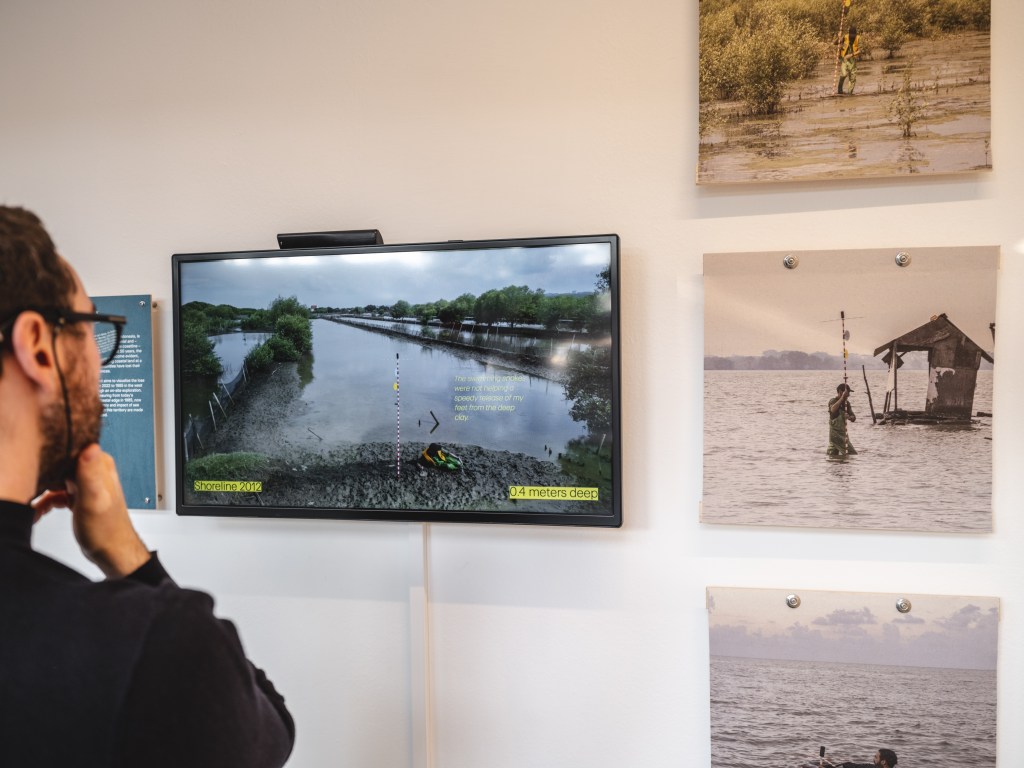
The Danish Pavilion_Photo by Rasmus Hjortshoj|Courtesy of Danish Pavilion, Venice Biennale 2023 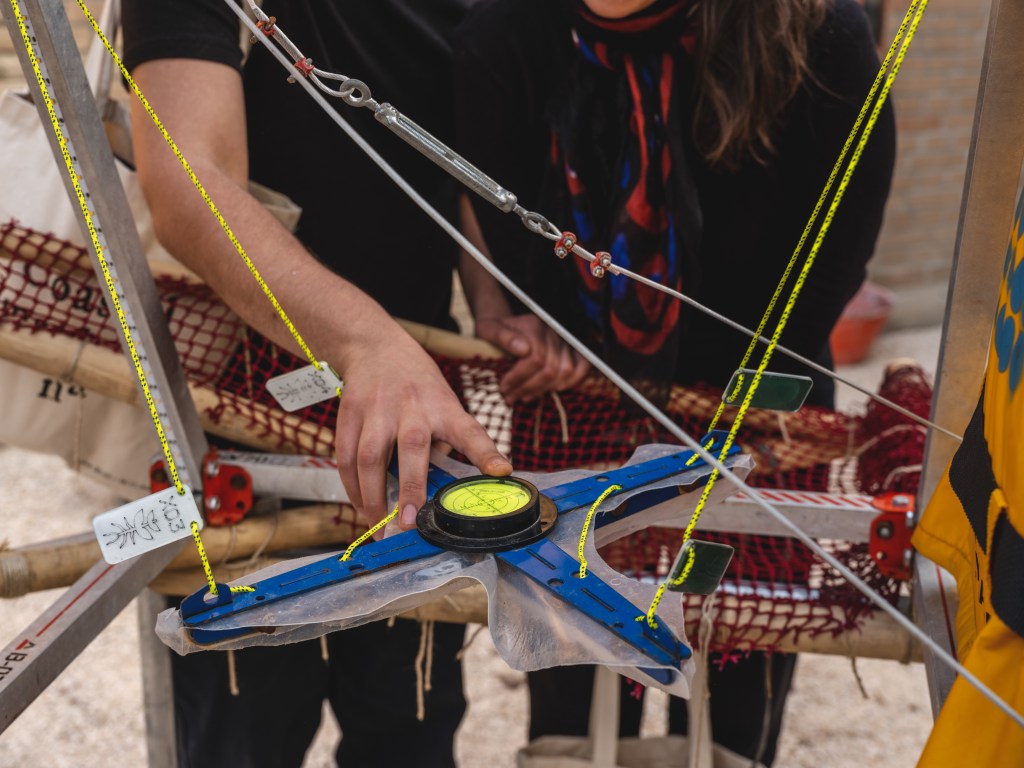
The Danish Pavilion_Photo by Rasmus Hjortshoj|Courtesy of Danish Pavilion, Venice Biennale 2023 
The Danish Pavilion_Photo by Rasmus Hjortshoj|Courtesy of Danish Pavilion, Venice Biennale 2023 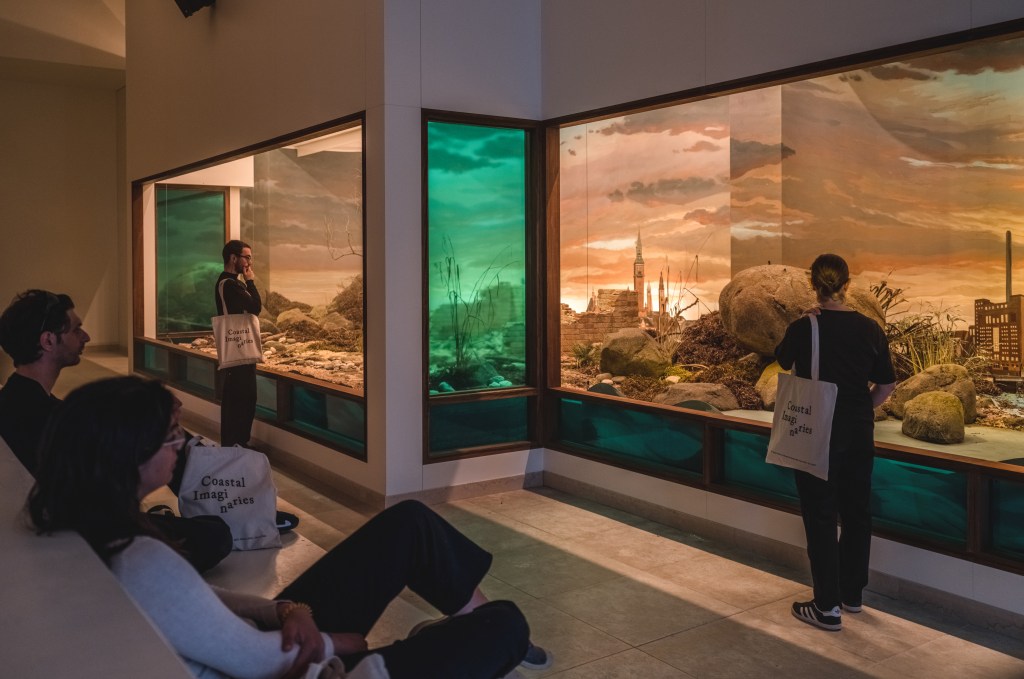
The Danish Pavilion_Photo by Rasmus Hjortshoj|Courtesy of Danish Pavilion, Venice Biennale 2023 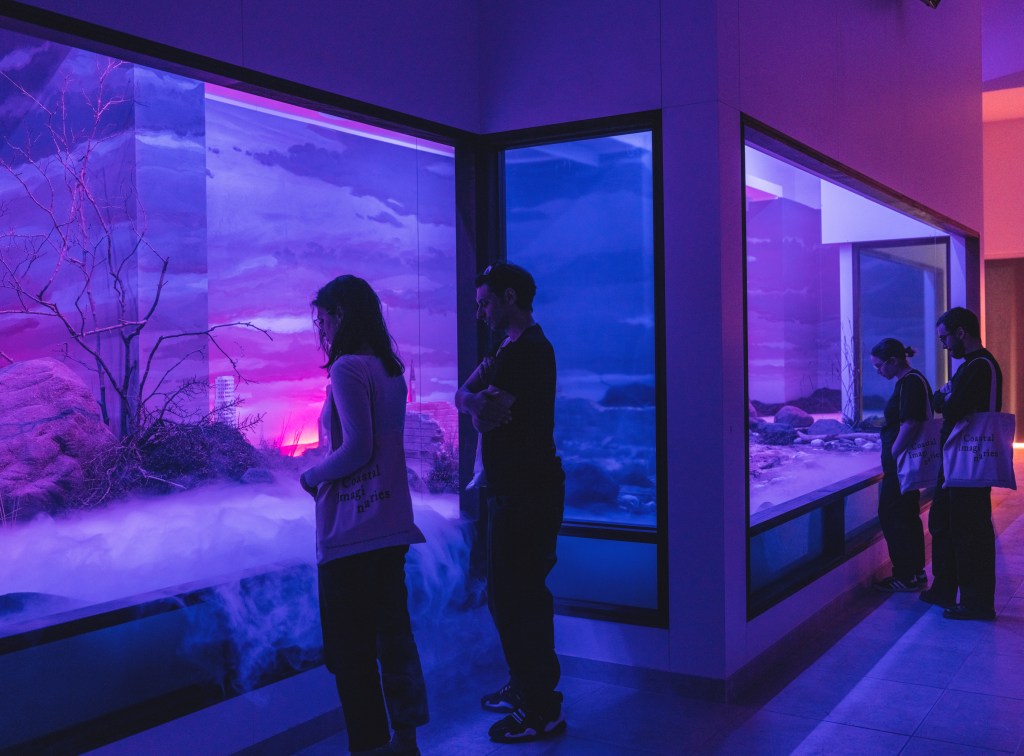
The Danish Pavilion_Photo by Rasmus Hjortshoj|Courtesy of Danish Pavilion, Venice Biennale 2023
【From Coffee to Curating: A Day with a Curator】
I always thought architecture was the perfect field to inspect and discuss societal issues from – whether they would be social, ecological or structural. The programming made at the Copenhagen Architecture Forum (former known as Copenhagen Architecture Festival) has since its inauguration in 2014 been concerned with these dimensions of architecture addressing questions such as: How does architecture affect the quality of life whether we talk about humans, more-than-humans or our planetary wellbeing?
Coastal Imaginaries in Venice in 2023 was a response to the urgency of the climate- and biodiversity crisis as illustrated in the issue of rising sea levels and increasingly intense storm surges. This is a faith Denmark shares with the host country Italy – as with so many other places in the World – and thus it seemed appropriate to bring this focus to Venice and a global event such as the biennial and use the occasion to showcase ideas of how to work with this existential threat within the field of architecture.
Nature based principles can, beyond being mechanisms of resilience, serve as carbon sinks, foodscapes, material banks, and spaces for human recreation and more-than-human habitation. Based on those principles, the exhibition invited into an imaginary of a possible future-Copenhagen planned around those principles. An imaginary that would turn Copenhagen much more resilient towards the threats of the water that is potentially drowning Copenhagen from below, above, from behind and from the sea.
Offering a way to (re)synchronize with nature, the presented principles would hint toward a re-enchantment with natural ecologies through changing practices within the architectural profession and ultimately inspire visitors to take climate action.
I don’t have an explicit methodology for this. It is a fine balance of being informed enough to be able to ask the right questions and invite the right people in and at the same time be operational and then engage an audience with very different prerequisites to the presented topics in an intriguing, meaningful and inclusive manner. With “Coastal Imaginaries” I invited a large group of different fields and disciplines to engage in the exploration of how to address questions about our climate and biodiversity crisis creating new imaginaries about our relationship with the environment and about the future together. This was based on the conviction that we must cross disciplinary and institutional boundaries to learn from each other and, most importantly, cultivate the political will to instigate radical change. This is why Coastal Imaginaries was structured as a collective and collaborative effort of artists, craftspeople, practitioners and researchers coming from a wide and varied array of disciplines.
I don’t have any tools to measure the impact of what I am doing but believe that by insisting on communicating and presenting different ideas in different ways with different perspectives from a wide range of disciplines, experiences and methodologies, it can open up the field of architecture and thus widen the potential to inspire and instigate change.
It has been an interesting experience with Coastal Imaginaries that it has resonated with so many researchers and decision makers around the globe. And in Denmark it has recently been decided to pursue a new planning structure around Greater Copenhagen which is based on many of the same ideas and principles presented in Venice in 2023.
I believe the exploration of the field of architecture can be used as a great catalyst for building communities and address questions about wellbeing on all levels – from the personal to the planetary – as well as social and ecological justice. I believe in the importance of being aware of and communicating the ways architecture relates to the issues people care about, and that these connections are many and far-reaching.
Time, in the architectural sense, is not linear, progressive, or streamlined, but palimpsestic, labyrinthine, and often circular; materials are embedded in deep geological time cycles, futures are written into stone before reaching a blind end, and spaces are thus layered with sedimented histories, spectral presences, and unrealized futures. Curation, then, is an act of excavation and reassembly: unearthing the traces embedded in form and reframing them as testimony in a conversation about the future. Our task is, in other words, to materialize memory not as nostalgia, but as a working infrastructure for change—or a rehearsal space for possible worlds. In this way, curation extends beyond the artifact: it becomes a call to reconfigure our spatial ethics in light of what the past has taught us and what the future demands of us.
This long view of time is also what shaped the theme of the inaugural Copenhagen Architecture Biennale, which I’m currently curating (together with my brilliant team) for its launch in September 2025. The biennale unfolds from the idea that we must slow down—culturally, ecologically, materially. Rather than acceleration, we’re interested in architecture’s capacity to stretch and hold time differently: to cool overheated systems, to prioritize repair over replacement, and to explore what new spatial practices might emerge when we resist the imperative of speed. What if we could reinvent architecture as an interface—or a time machine—that allows us to reconnect to the slower temporalities of cultural histories, ecological balances, and the dizzying depth of geological processes, all of which the production of architecture heavily relies on?
Developing something from scratch that requires and involves both a conceptual and bodily level and which includes an understanding of budget, costs, logistics and of audience and engagement, requires more resources than many people might think. I am lucky to be surrounded by talented and dedicated people who can help me in that endeavor.
I am full of awe with curators who have both a deep and a wide knowledge at the same time and who can make surprising and convincing connections with that knowledge. With the pace of deliveries we have at CAFx and our relatively small budgets, we are not able to really go deep with anything as museum curators often do, and the act of curating in that context is to gather the right people and have a modus operandi where we can continue to stay relevant. What that brings, on the contrary, is an alertness towards what and who is happening at the moment and an agility to act upon it.
【Progress video and images from Danish Pavilion】
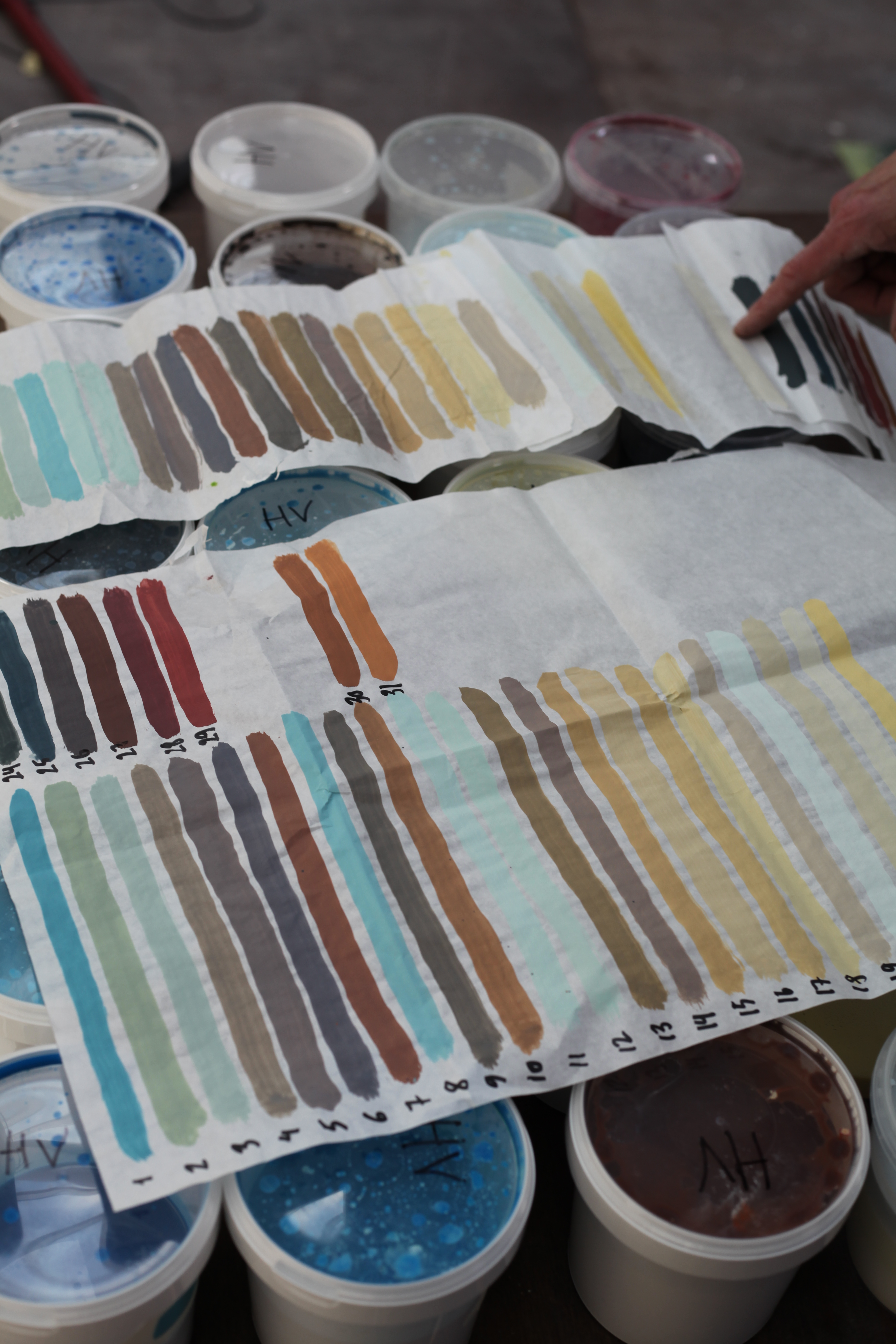
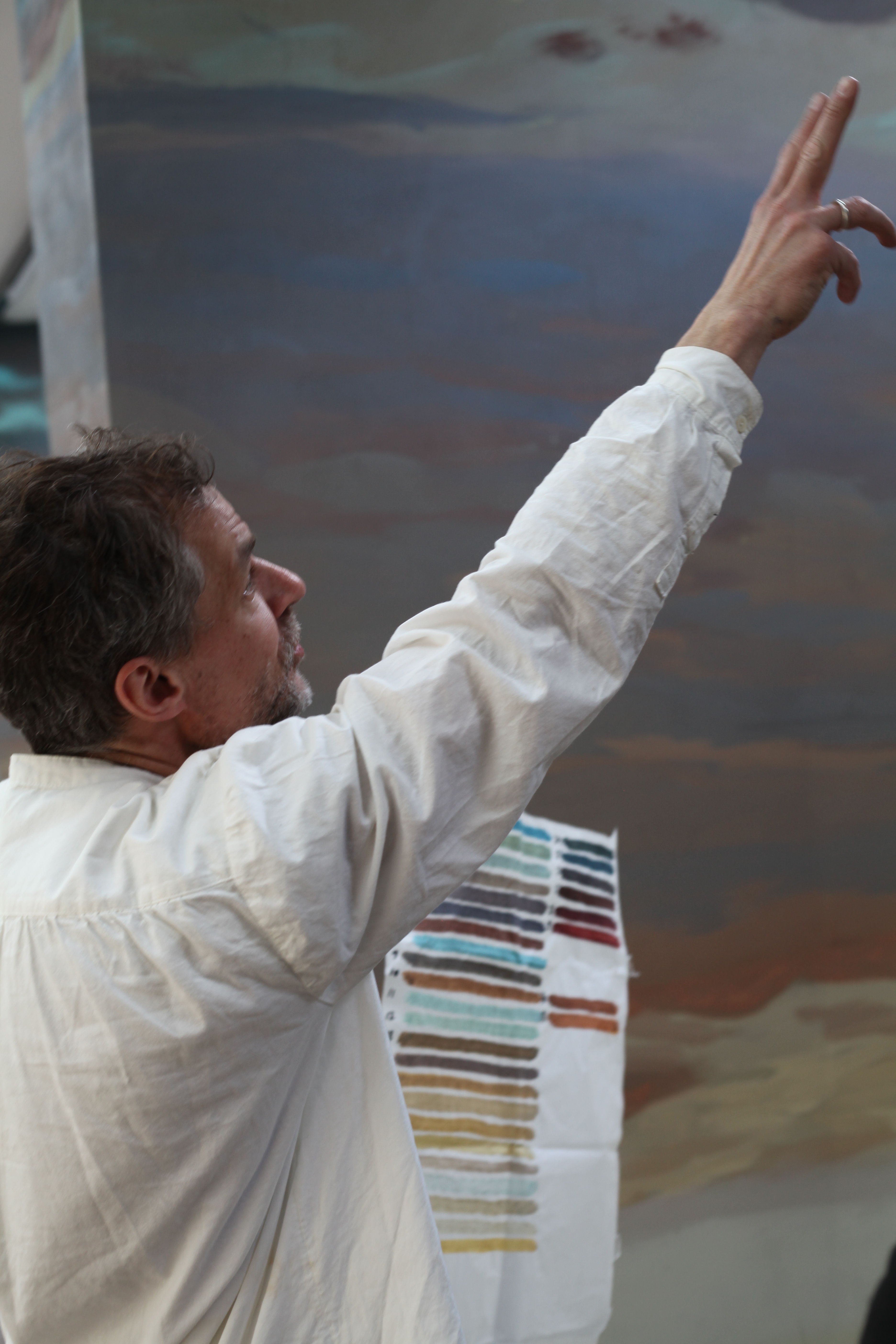
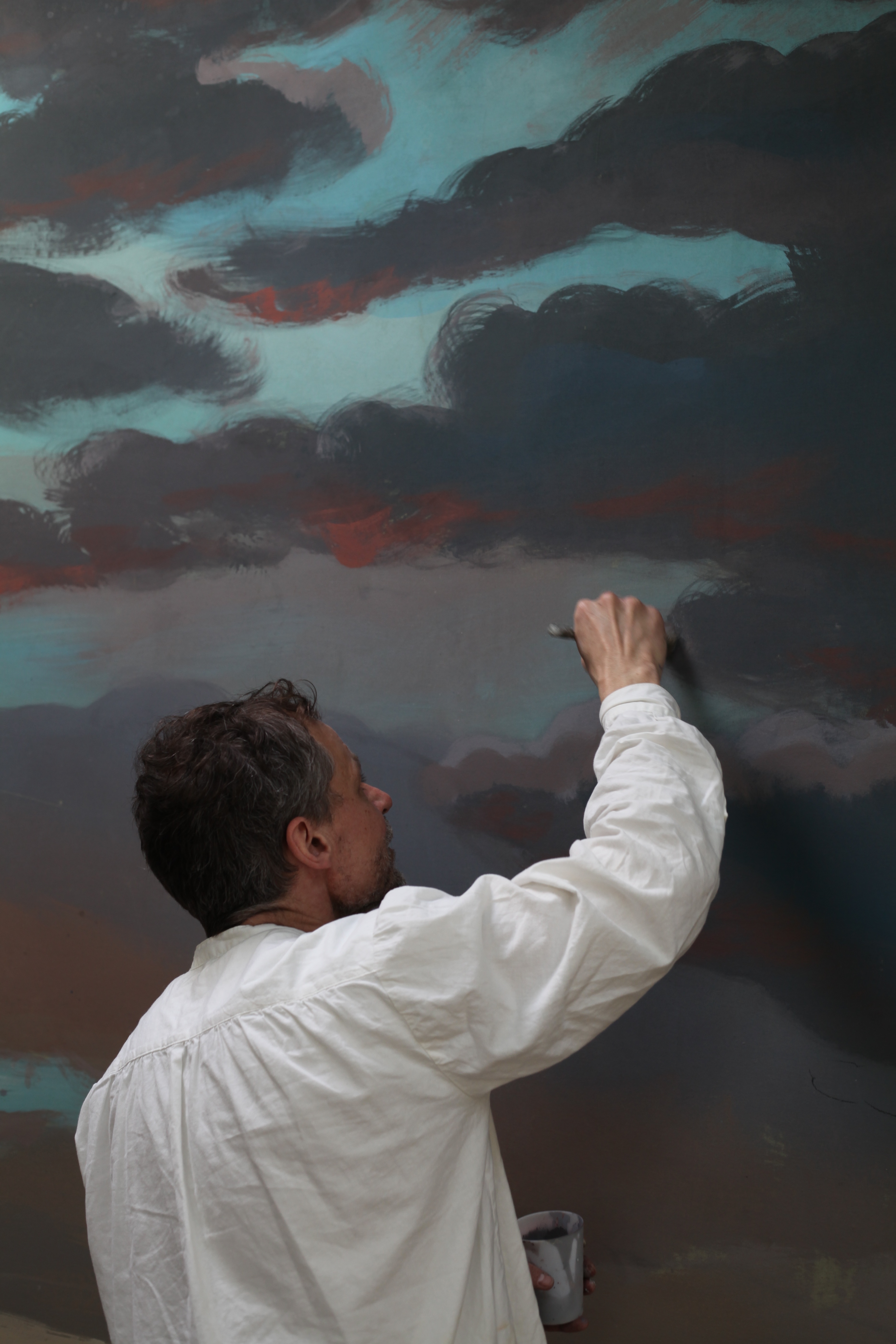
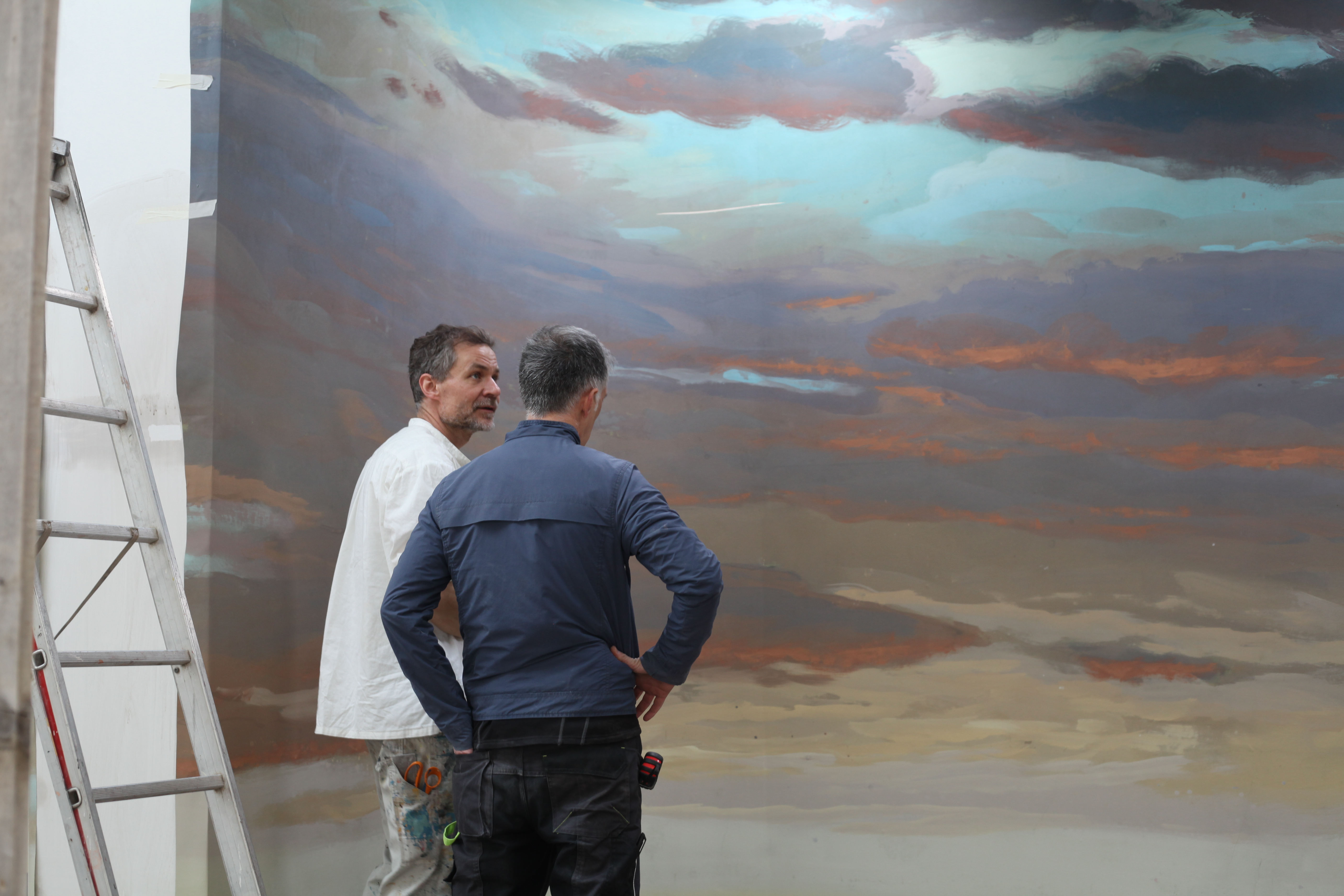
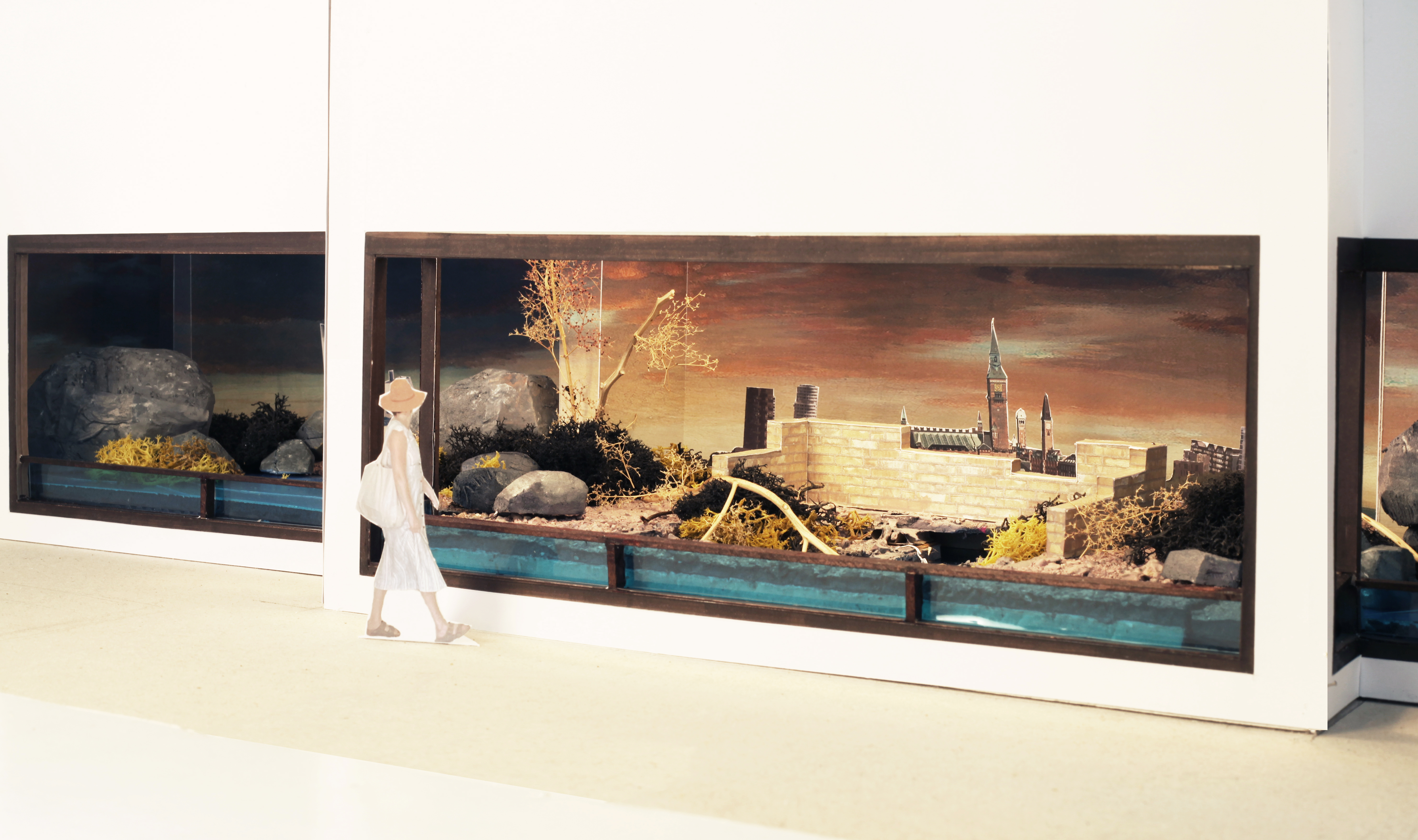
Danish Pavilion in progress – color scheme, photo by Christian Friedländer
The documentations from the pavilion are by COAST/Rasmus Hjortshøy
【Additional progress during the research】
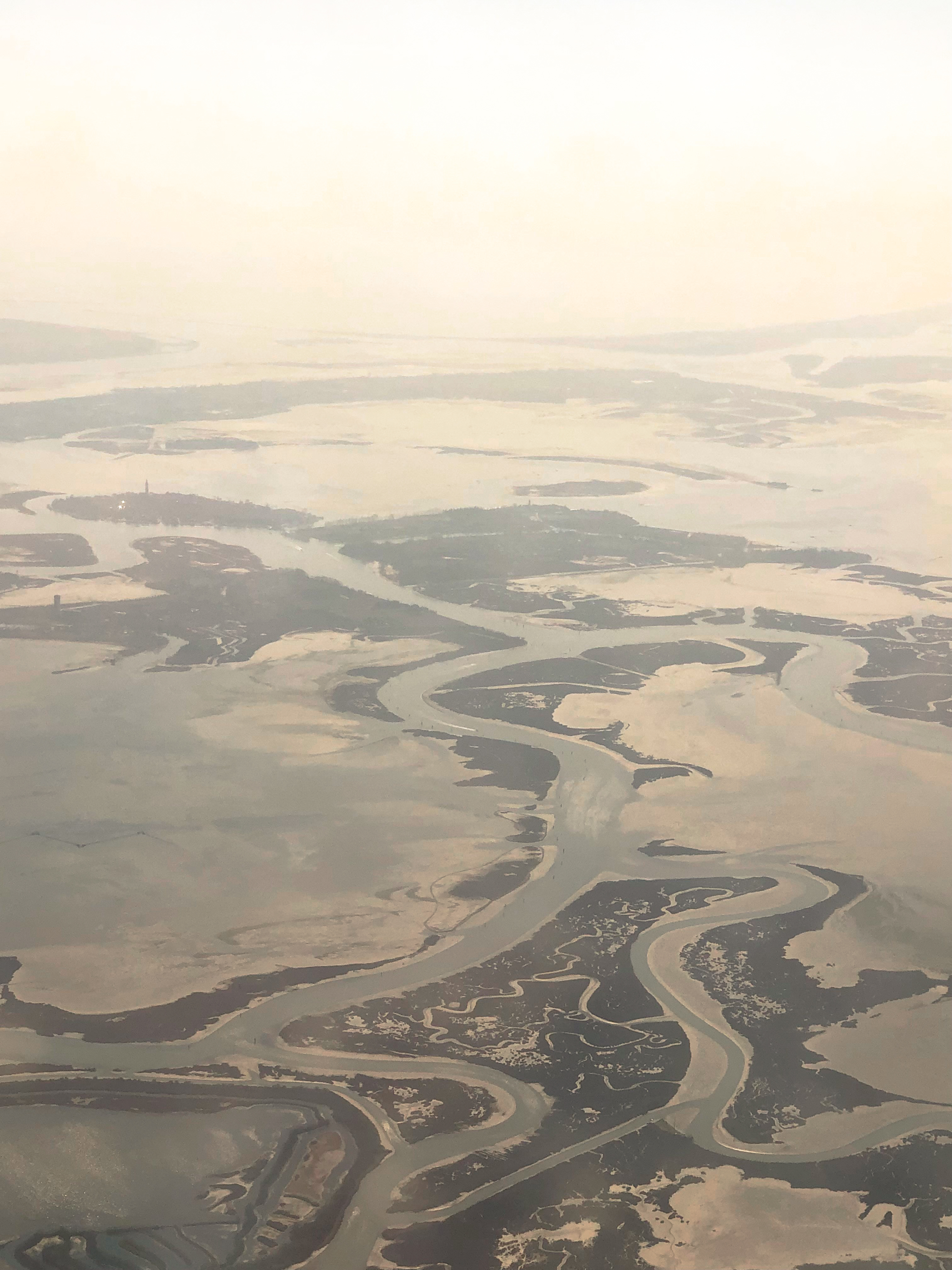
DROWNING WALK
David A. Garcia
Semarang, Indonesia
2023
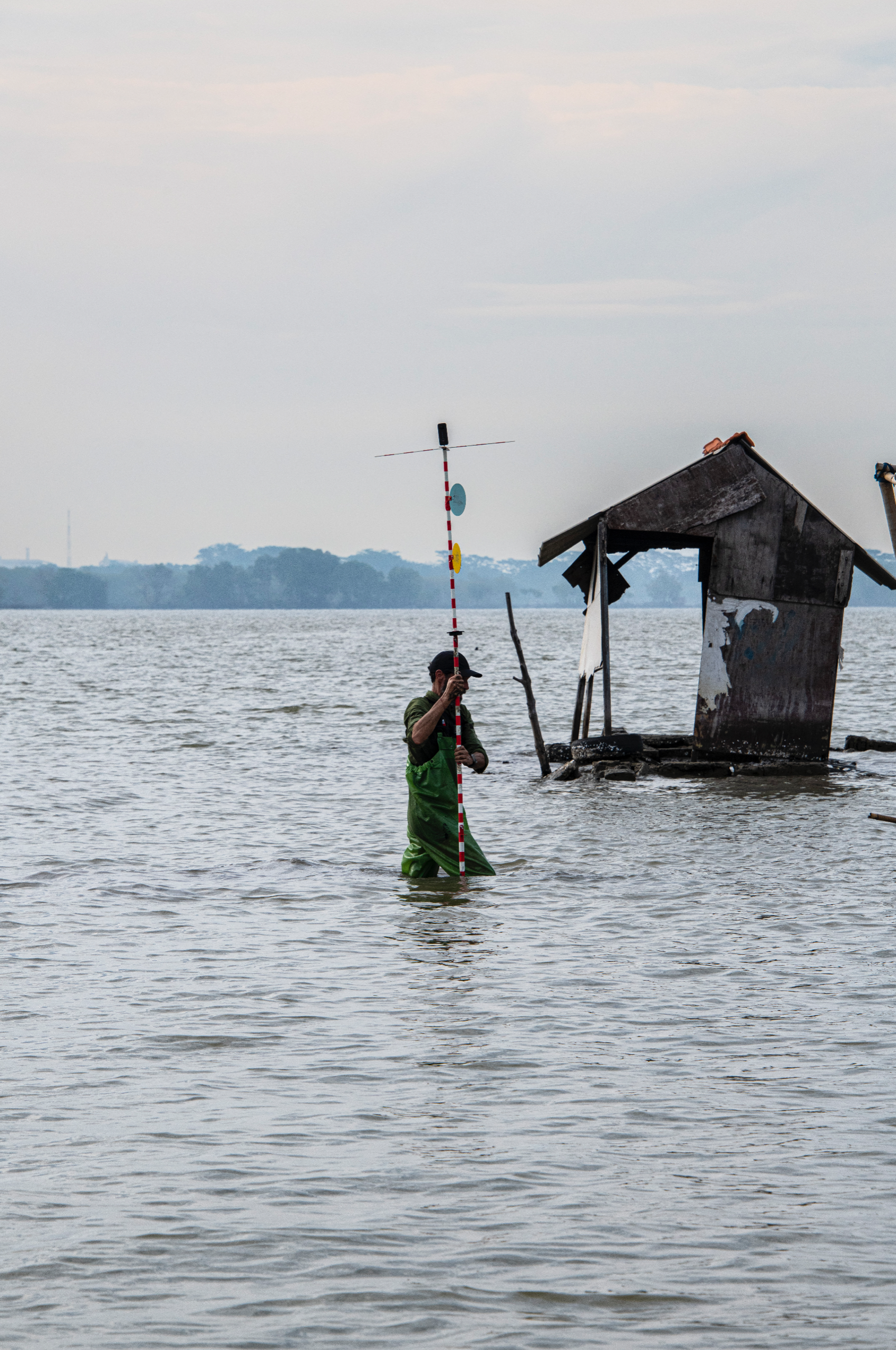
The northwest coast of Java, in Indonesia, is prone to flooding from fluvial, pluvial and given the very low elevation of its coastline, to sea storm surges. In the past 50 years, the threat of sea level rise has become evident and some regions are losing coastal land at a rapid rate while communities have lost their livelihood and residences.
The following project aims to visualize the loss of coastal land from 2022 to 1985 in the west of Semarang, through an on-site exploration. By walking and measuring from today’s water edge to the coastal edge in 1985, now underwater, the urgency and impact of sea-level rise and floods in this territory is made evident and formalized.
DROWNING WALK by David Garcia|Credit to David Garcia
THE PLUIT PURIFICATION PROJECT
Laurits Genz and Dejle Zaradechet
2022-2023
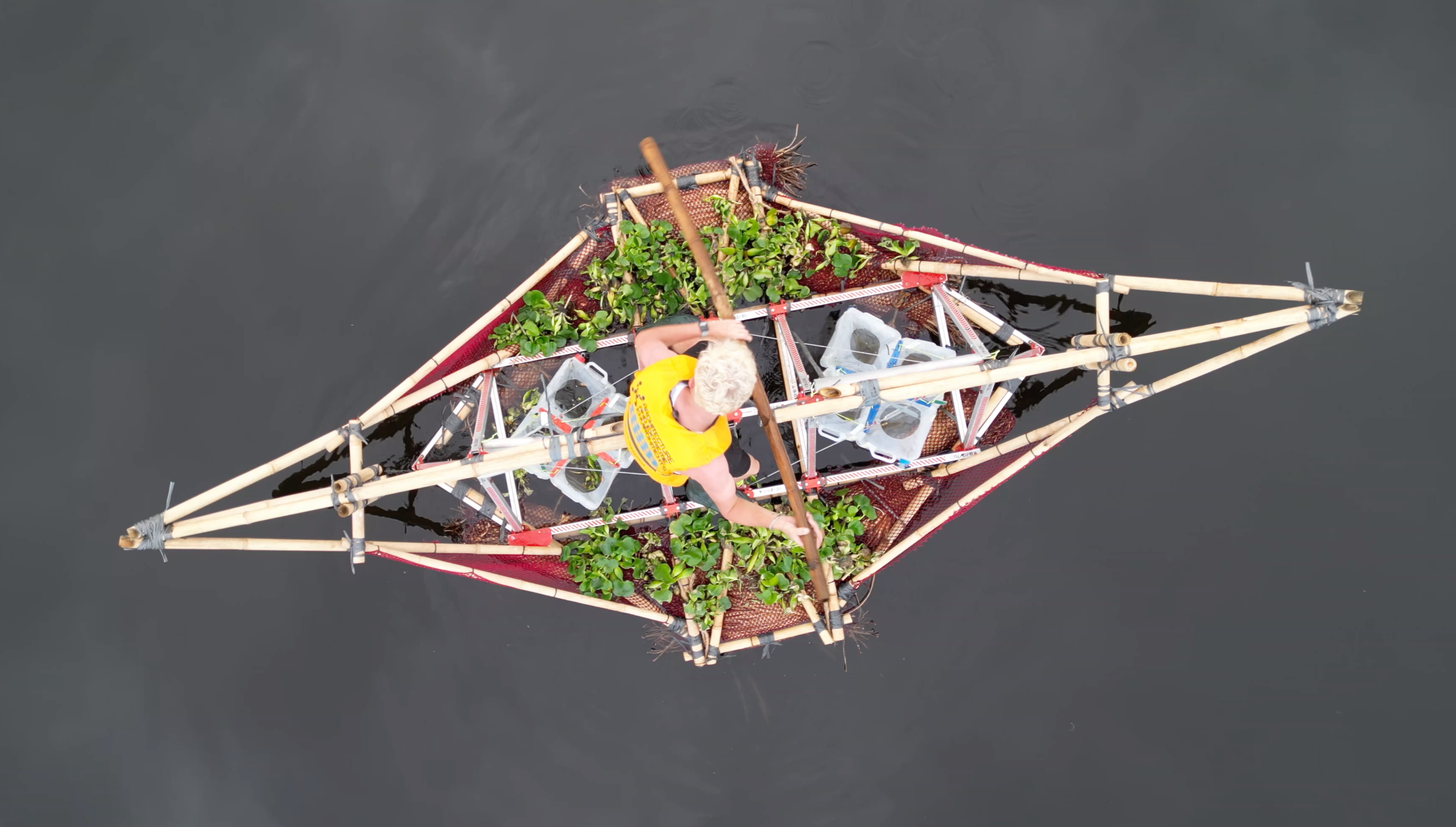
“The Pluit Purification Project” explores the potentials of the water hyacinth as a grown, nature-based response to polluted waterways as well as a sustainable, flood-responsive building material.
The Waduk Pluit reservoir is situated two meters below sea level just behind Jakarta’s massive seawall and is listed as one of the most polluted bodies of water on the planet. Every week, 36 tonnes of waste material is dredged from the reservoir – the majority being the common water hyacinth (Pontederia Crassipes). However, studies show that this water hyacinth has the ability to uptake and filter out pollutants from wastewater and potentially be of great benefit in a context such as the Waduk Pluit reservoir.

THE PLUIT PURIFICATION PROJECT by Laurits Genz and Dejle Zaradechet|Credit to Laurits Genz
Interviewer: Jin-man Pei
Editor: Yipei Lee
Special thanks: Josephine Michau and Copenhagen Architecture Forum
Photo credit: The portrait of Josephine Michau is by Agnete Schlichtkrull and the documentations from the pavilion are by COAST/Rasmus Hjortshøy.
From Coffee to Curating: A Day with a Curator is a series of dialogues with curators who are deeply engaged in the art of curation, knowledge exchange, and cultural storytelling. Through this column, we’re pulling curators out from behind the scenes and into the spotlight. In these fun, candid interviews, we invite you into their world—from early morning coffee rituals to late-night brainstorming sessions. Discover the sparks of inspiration, unexpected creative turns, and everyday hustle that shape the exhibitions we see and feel. It’s about the people behind the practice, and the passions that keep them going.
 細着藝術 SUAVEART