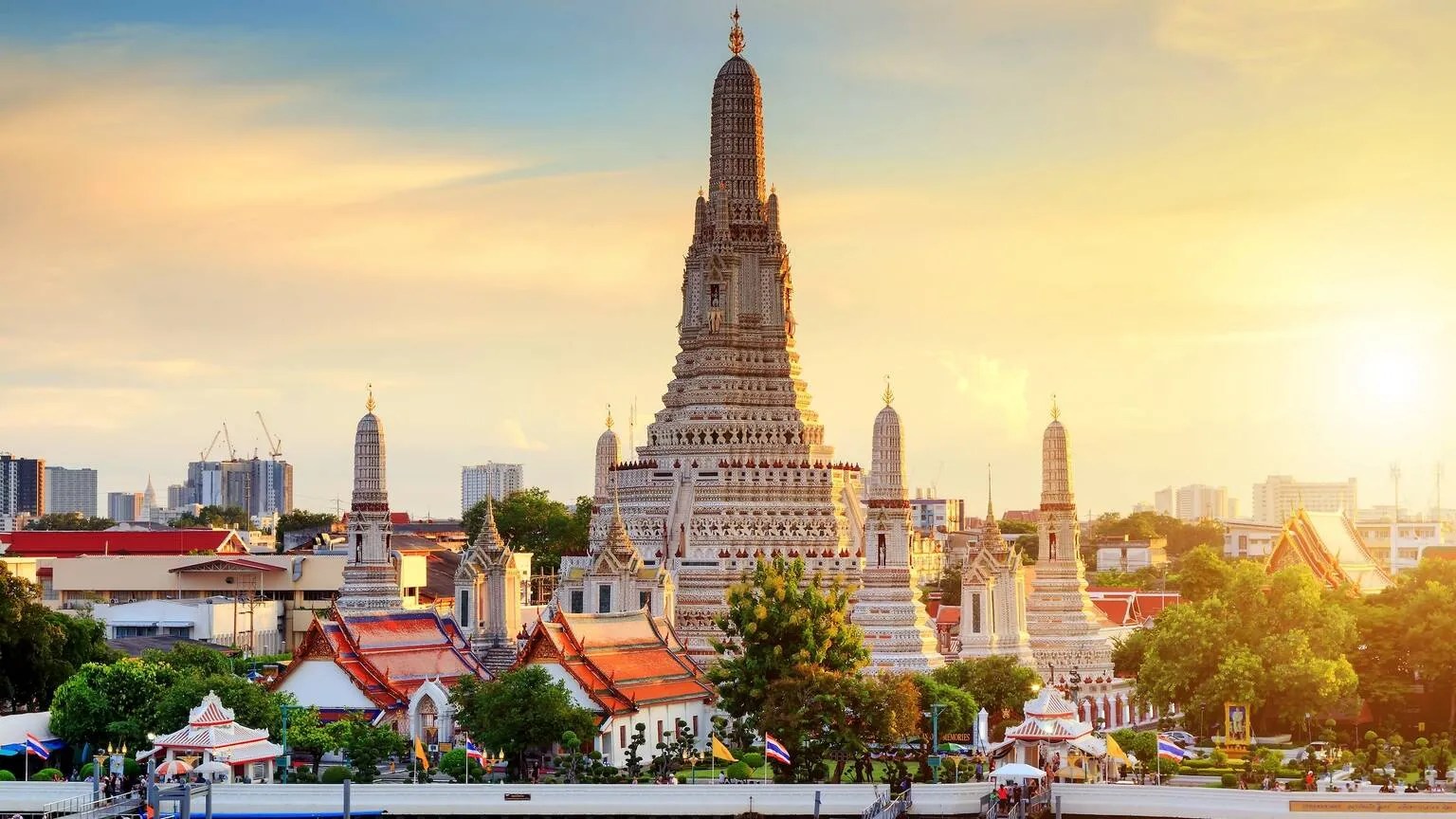
If you’re looking for a destination in Asia that offers fun, culture, and lifestyle, Bangkok should be at the top of your list. As a cultural worker and traveler, I love exploring its rich food scene, vibrant culture, affordability, warm hospitality, and innovative creativity while learning from locals.
According to Time Out, Bangkok has been ranked the second-best city in the world (and the best in Asia) for 2025, an impressive leap of 22 spots from its 2024 ranking.
Currently, Bangkok is buzzing with fascinating exhibitions, including the 2024 Bangkok Art Biennale (BAB). Opening on October 24 and running until February 25, BAB features over 240 works by 76 artists across 11 venues throughout the Thai capital. This is a must-visit for art enthusiasts and cultural explorers alike!
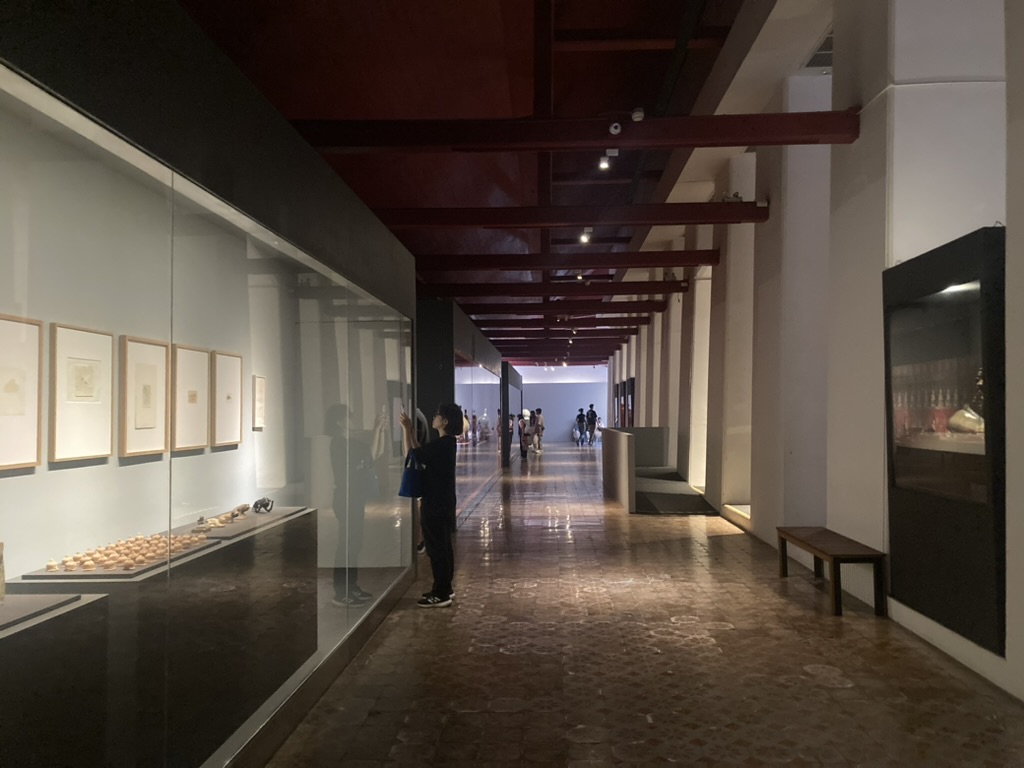
Due to limited time in Bangkok, I managed to visit two main venues: BACC and the National Museum Bangkok – a new venue – where contemporary works are displayed alongside ancient artifacts. It’s an intriguing arrangement to see artworks spanning from ancient times to contemporary society. For some, it may feel unconventional, but for me, but for me, it was a unique opportunity to explore the intersection of Thailand’s past and present.
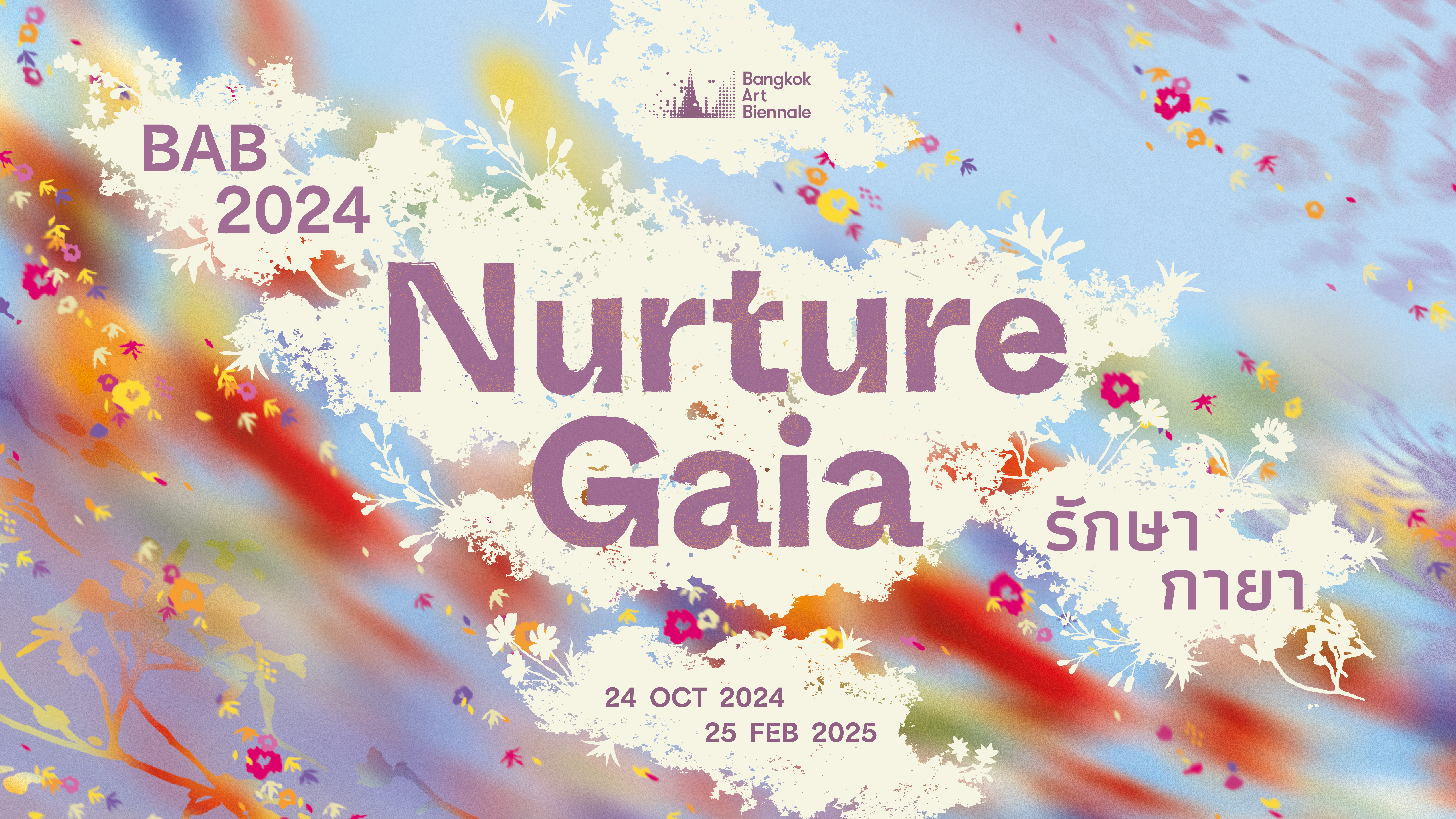
The biennale’s theme, Nurture Gaia, draws inspiration from the maternal figure of Mother Earth, a universal symbol of life and sustenance. Across cultures, she embodies the nurturing force that sustains life: in ancient mythologies, she was tied to fertility and agriculture; in Hinduism, she is personified as Prithvi, the living Earth; and in Southeast Asia, she takes form as Phra Mae Thorani in Buddhist traditions, symbolizing the vital power of nature.
The Gaia hypothesis, which views Earth as a self-regulating, living organism, resonates deeply in today’s world. Human activities—deforestation, pollution, and overconsumption—have upset this delicate balance, driving climate change, pandemics, and ecological collapse. These crises starkly highlight the interconnectedness of all life, underscoring the urgent need to restore harmony between humanity and the natural world.
Bangkok Art Biennale features a constellation of artworks, many of them is on display for the first time, including drawings, paintings, sculptures, video works, and installations from established and emerging artists and collectives such as Adel Abdessemed (Algeria-France), Susan Collins (UK), Chiara Camoni (Italy), Priyageetha Dia (Singapore), Guerreiro do Divino Amor (Switzerland-Brazil), Louise Bourgeois (France), Camille Henrot (France-USA), Choi Jeong Hwa (South Korea), Chitra Ganesh (USA), Aki Inomata (Japan), Elmgreen & Dragset (Denmark and Norway), Isaac Chong Wai (Hong Kong-Berlin), and Lisa Reihana (New Zealand), among others.
Crossing the Past and Present
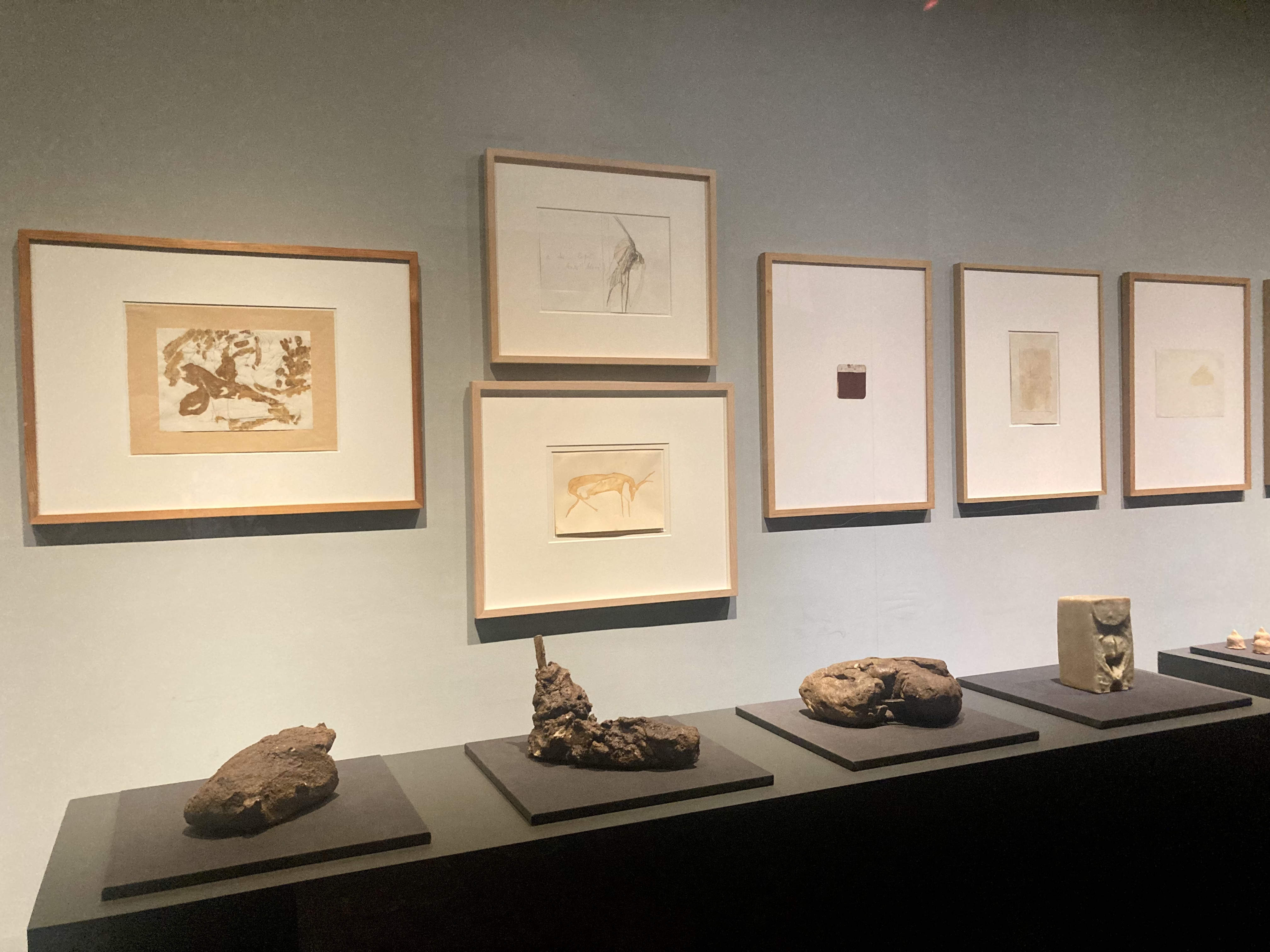
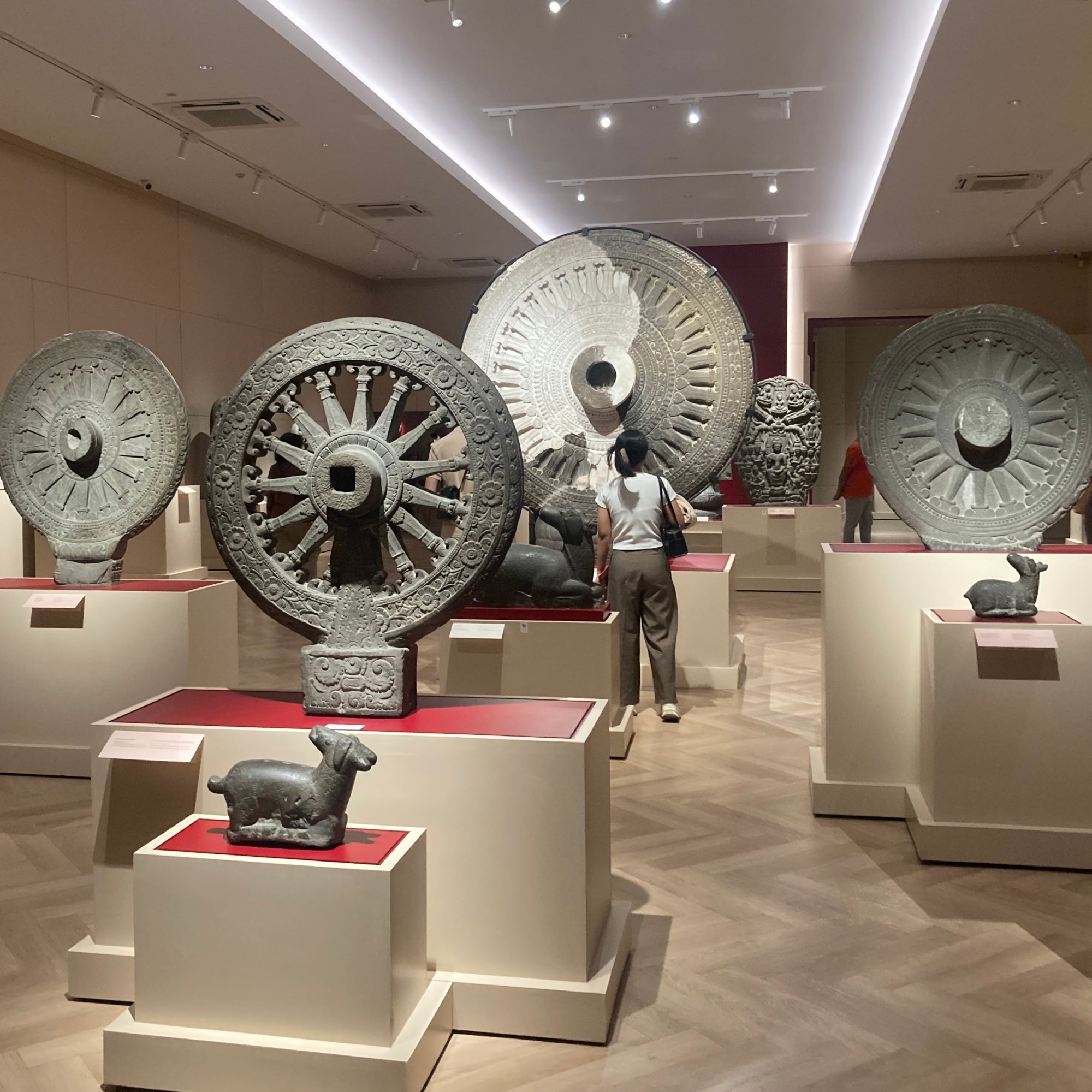
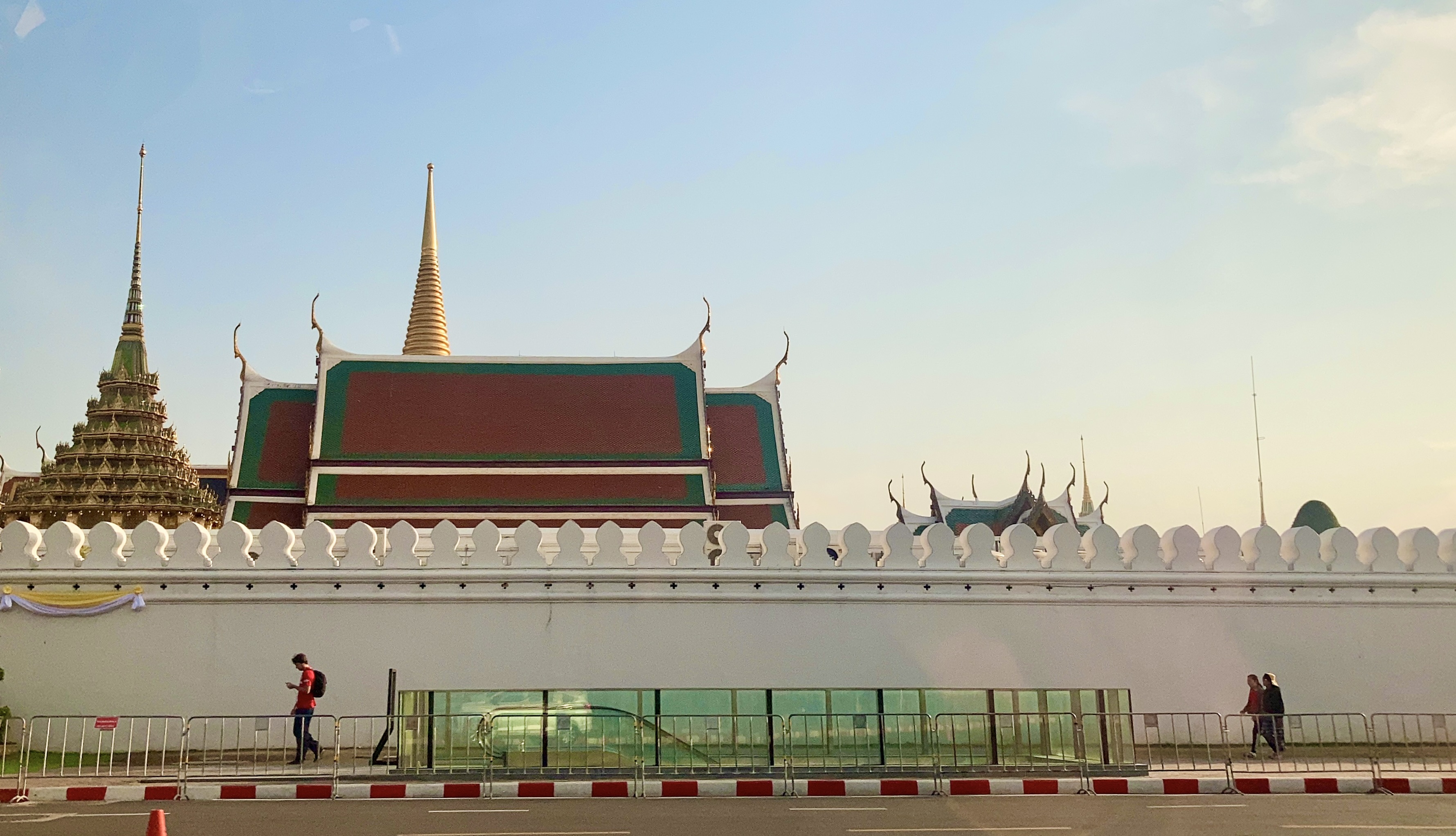
The National Museum Bangkok (Siwamokhaphiman Hall), located in the heart of the city’s historic old town, is Thailand’s premier museum dedicated to preserving and showcasing the nation’s rich cultural heritage. Curated by Apinan Poshyananda, many contemporary artworks are exhibiting here. Upon entering, visitors are immediately struck by the juxtaposition of classical and contemporary pieces, sparking new dialogues through unexpected pairings. Notable examples include Joseph Beuys’ drawings and sculptures displayed alongside Dvaravati earthenware, and Ravinder Reddy‘s sculptures paired with an accordion manuscript depicting the Tribhumi, or Three Worlds, of Theravada Buddhist cosmology.


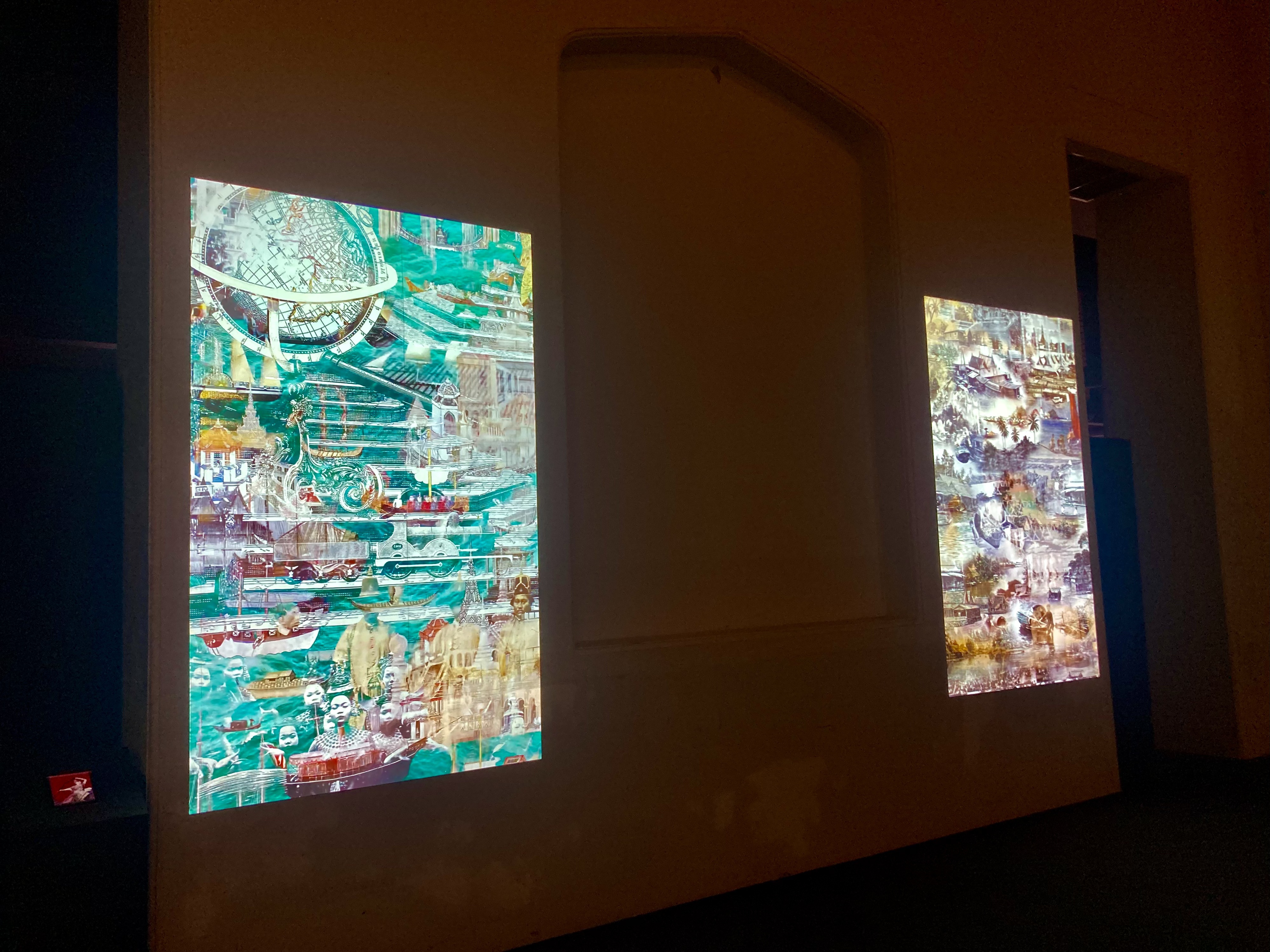

The video work Our Place in Their World by Chitti Kasemkitvatana and Nakrob Moonmanas, commissioned for The Spirits of Maritime Crossing, a collateral event of the 60th La Biennale di Venezia, delves into the legendary cultural ecosystem of the Chiang Saen Basin in Chiang Rai.
Focusing on pivotal moments at the turn of the 20th century, the work revisits the journey of Siamese monarchs and citizens to the West during the threshold of Siamese modernity. In 1897, King Chulalongkorn undertook Siam’s first diplomatic mission to Europe, aiming to assert Siam’s sovereignty and gain recognition as an independent power amidst the looming pressures of imperialism. This historic voyage marked a defining moment in Siam’s integration into the global political and cultural stage.
The piece reflects on themes of exoticism, duality, and the intertwined nature of transcultural narratives, while also examining the movement of people across boundaries and the intricate interplay of identity, diplomacy, and cultural exchange that continue to shape histories and perspectives today.
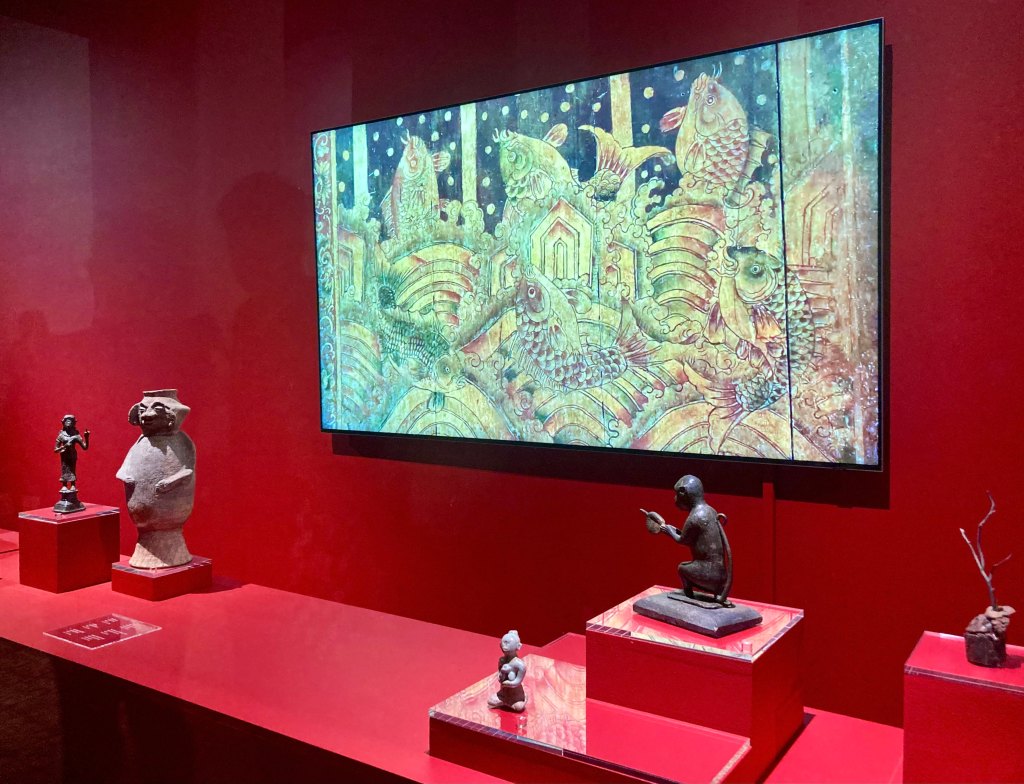

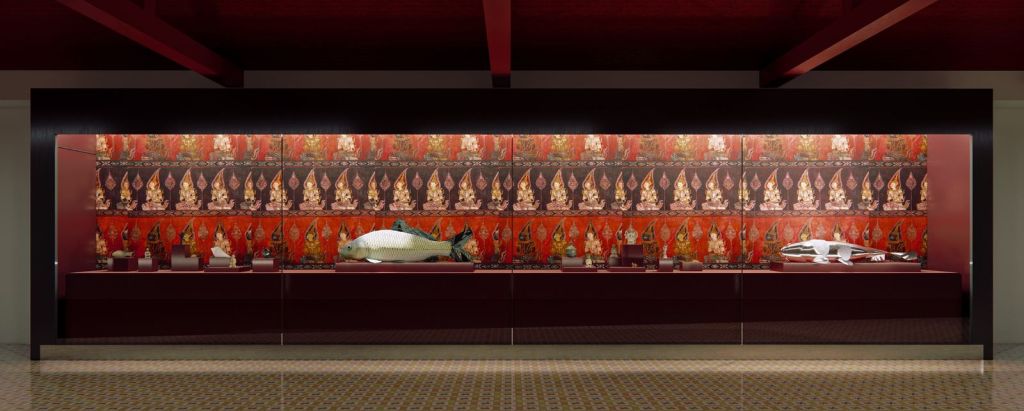
Another captivating section features the video and sculptures Fish fire, fallout by Nakrob Moonmanas. This work navigates and reimagines the memories of fish, intertwining the museum’s history with the concept of doomsday as described in the Traibhumikatha and addressing environmental crises of the Anthropocene.
Beyond its contemporary artworks, the museum itself holds immense historical significance. Established in 1887 by King Chulalongkorn (Rama V), it boasts an extensive collection of art and artifacts spanning Thai history from prehistoric times to the present. The exhibitions explore diverse topics, including Thai art, archaeology, religious artifacts, and royal regalia, with notable collections of Dvaravati sculptures and antiques from the Sukhothai and Ayutthaya periods.
Housed in a former royal palace, the museum offers a unique blend of architecture and history. Visitors can trace the evolution of Thai culture and gain profound insights into the country’s artistic, political, and social development, making it a compelling journey through time.
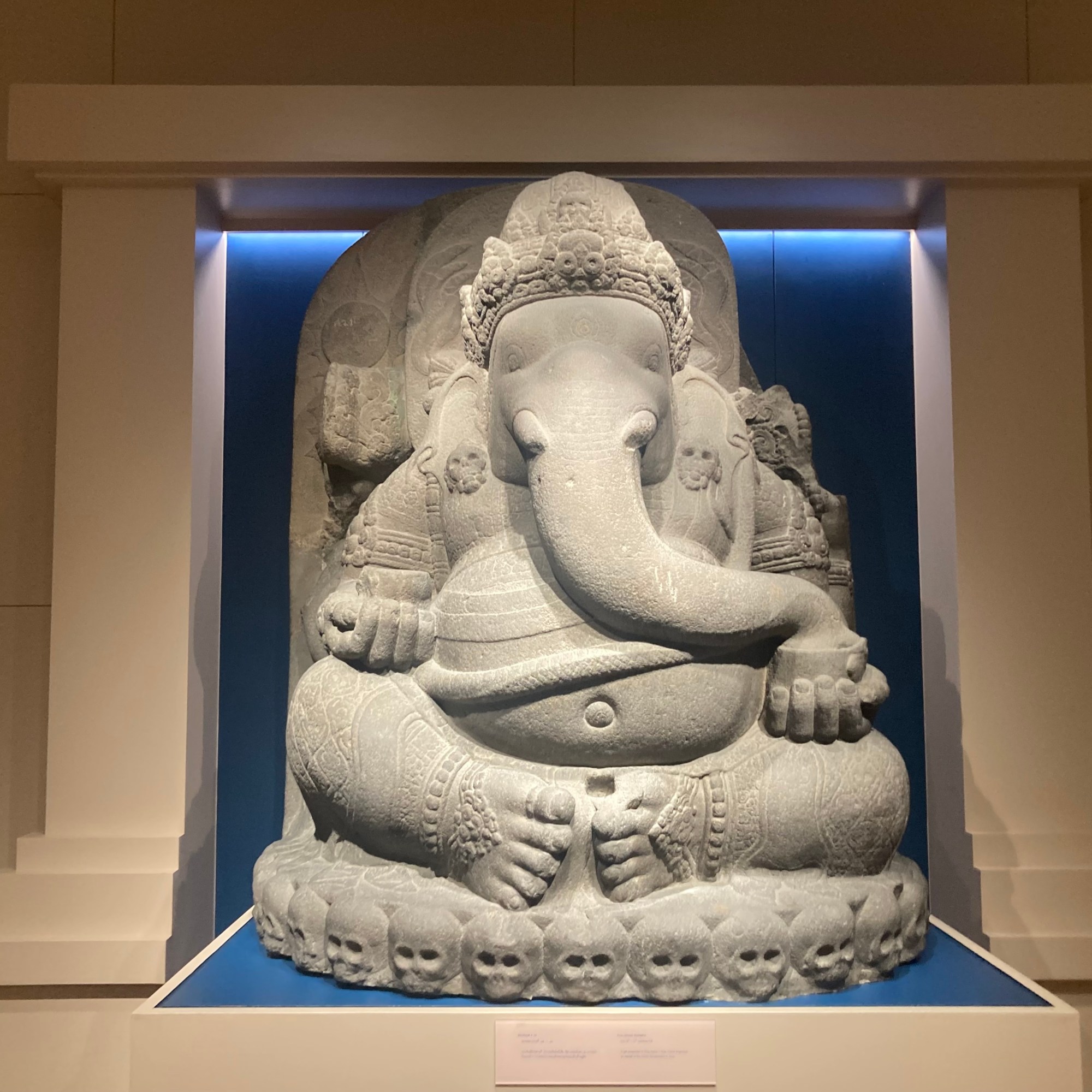
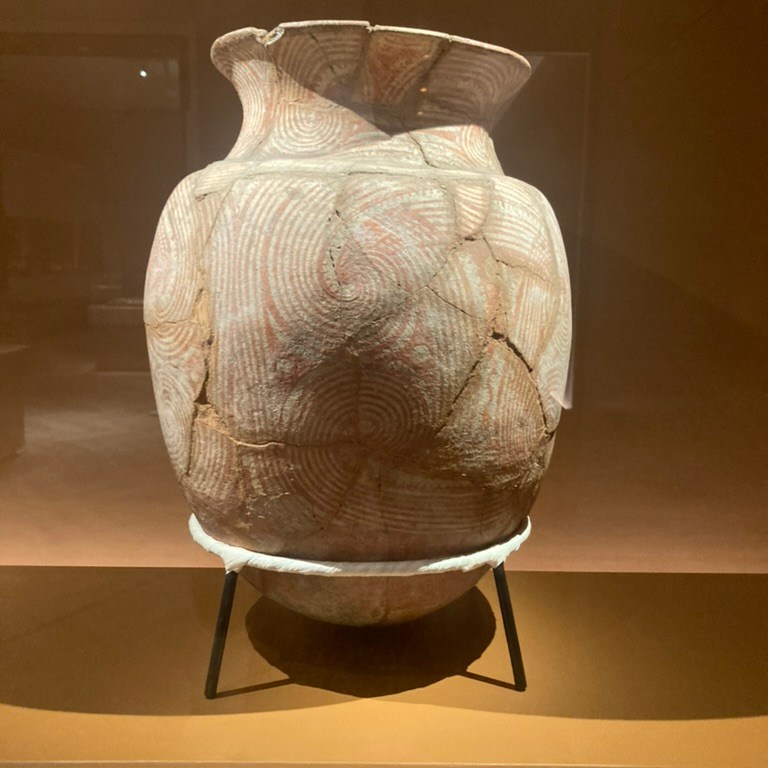
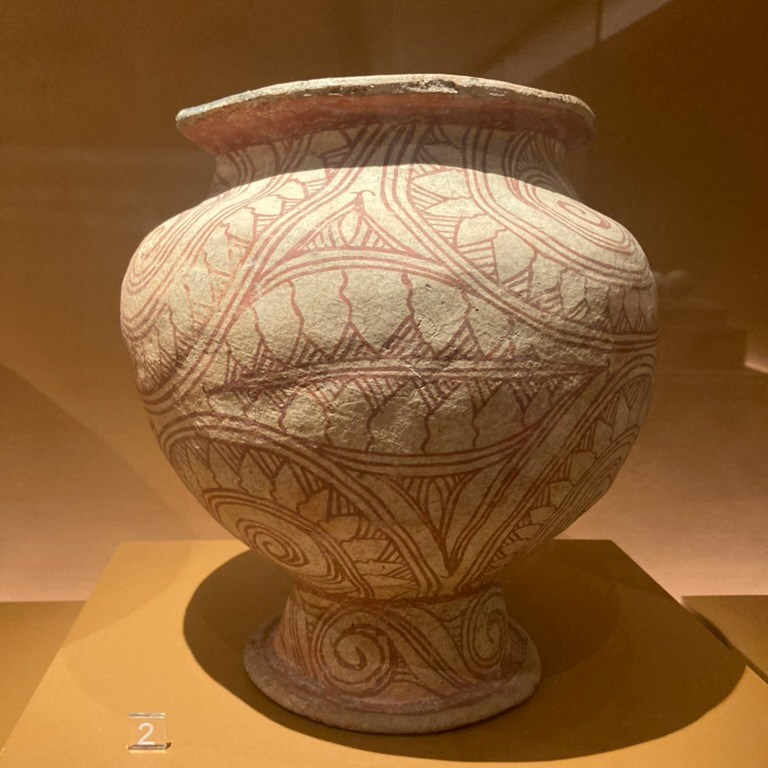
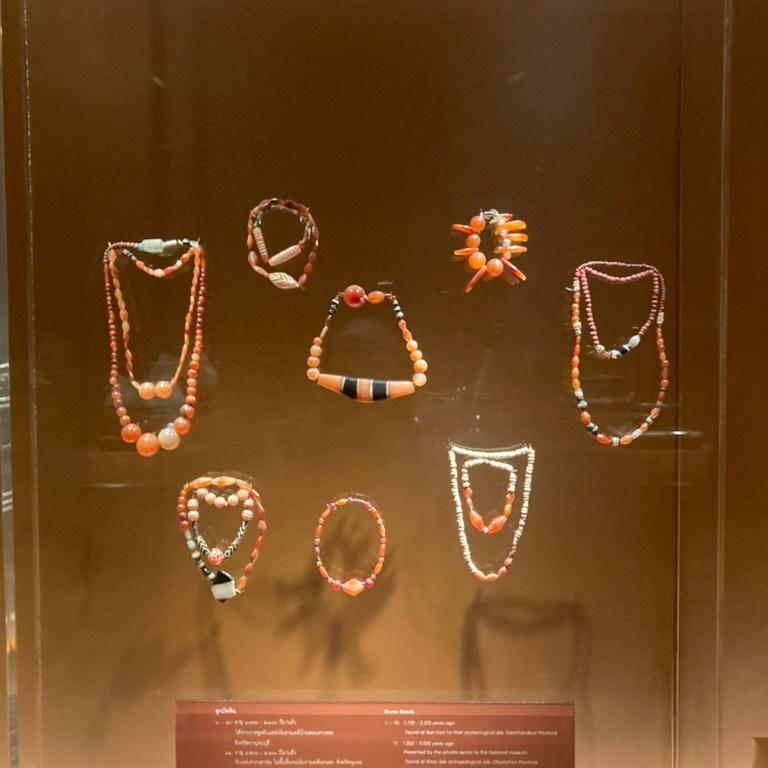
Exploring further within Human Activities
Culturally and geographically, soil, earth, and land form the foundation of life in many Southeast Asian countries. Oriental philosophy and mythology, deeply embedded in Southeast Asian and Thai culture, have significantly shaped the region’s civilizations. These beliefs, often intertwined with spiritual, religious, and societal practices, have laid the groundwork for much of Southeast Asia’s cultural identity.
Key elements include Buddhism, particularly Theravada Buddhism, which originates from the teachings of Siddhartha Gautama (the Buddha). It emphasizes the pursuit of enlightenment through meditation, ethical living, and wisdom. Hinduism, predating Buddhism, has also left a profound and lasting impact on Southeast Asian culture, influencing art, architecture, and rituals in empires such as the Khmer (Angkor Wat) and Srivijaya. Hindu deities like Vishnu, Shiva, and Brahma frequently appear in Southeast Asian art, while Hindu cosmology has shaped perspectives on the divine, the universe, and existence.
The resonance is captivating when exploring cosmological myths and the role of the cosmos in shaping worldviews. In many Southeast Asian cultures, cosmology plays a central role in understanding existence. For instance, Thai cosmology emphasizes the three worlds—the heavens (above), the earth (human realm), and the underworld (below). This concept, rooted in Theravada Buddhist thought, also draws from earlier animist and Hindu traditions.
The celestial realms, often governed by deities, influence art, architecture, and rituals, reflecting a deep connection between the spiritual and physical worlds. These cosmological ideas continue to shape cultural practices, offering profound insights into the region’s rich heritage.
As I moved from the old town to the East area, near Bangkok Art and Culture Centre (BACC), I came across many delicious seafood dishes and Hainanese chicken, along with Siu mei—flavors influenced by Chinese cuisine, particularly Chaozhou and Gangzhou. It reminded me of the comforting feeling I had the first time I tasted food that felt like home.
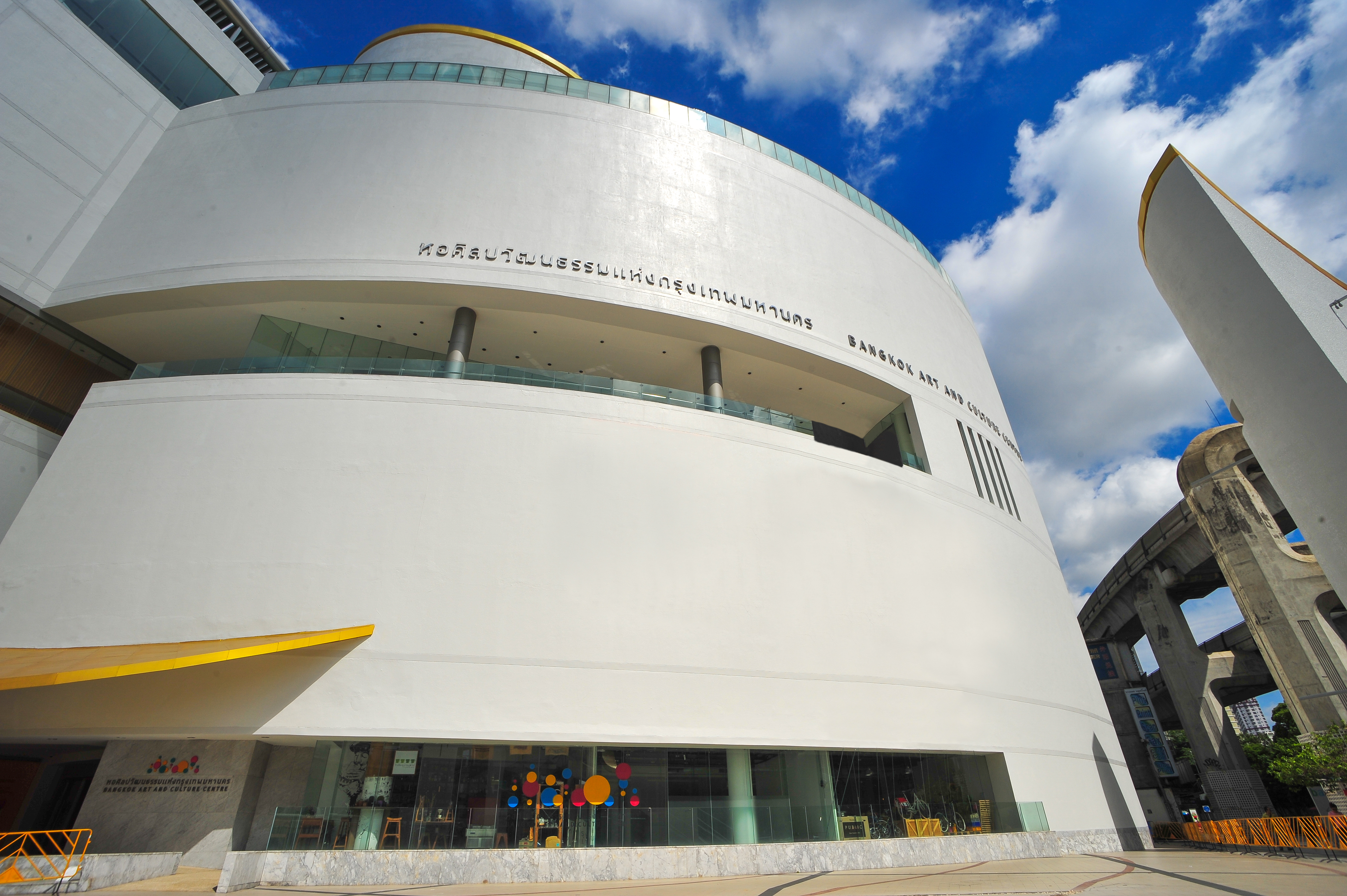
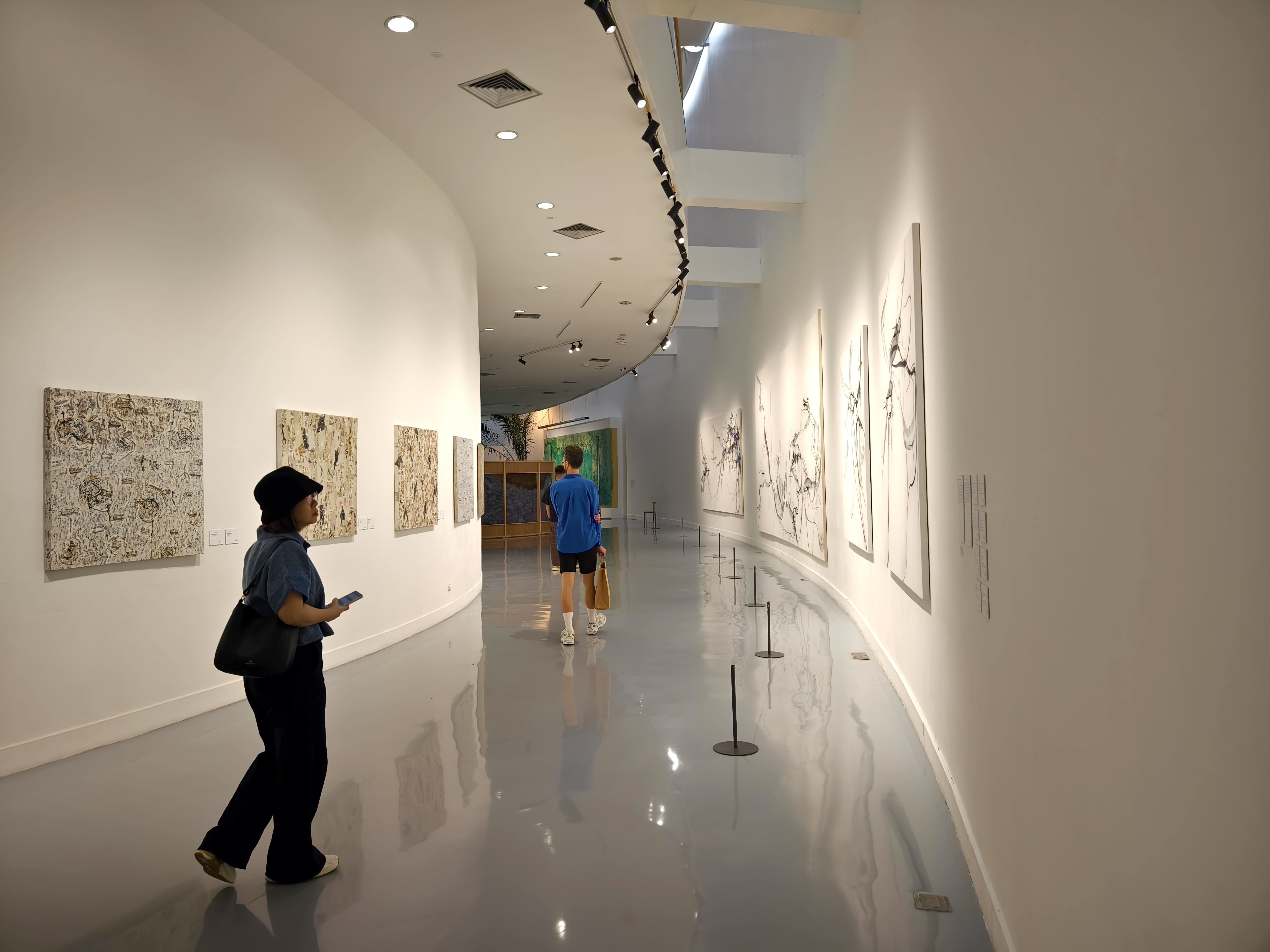
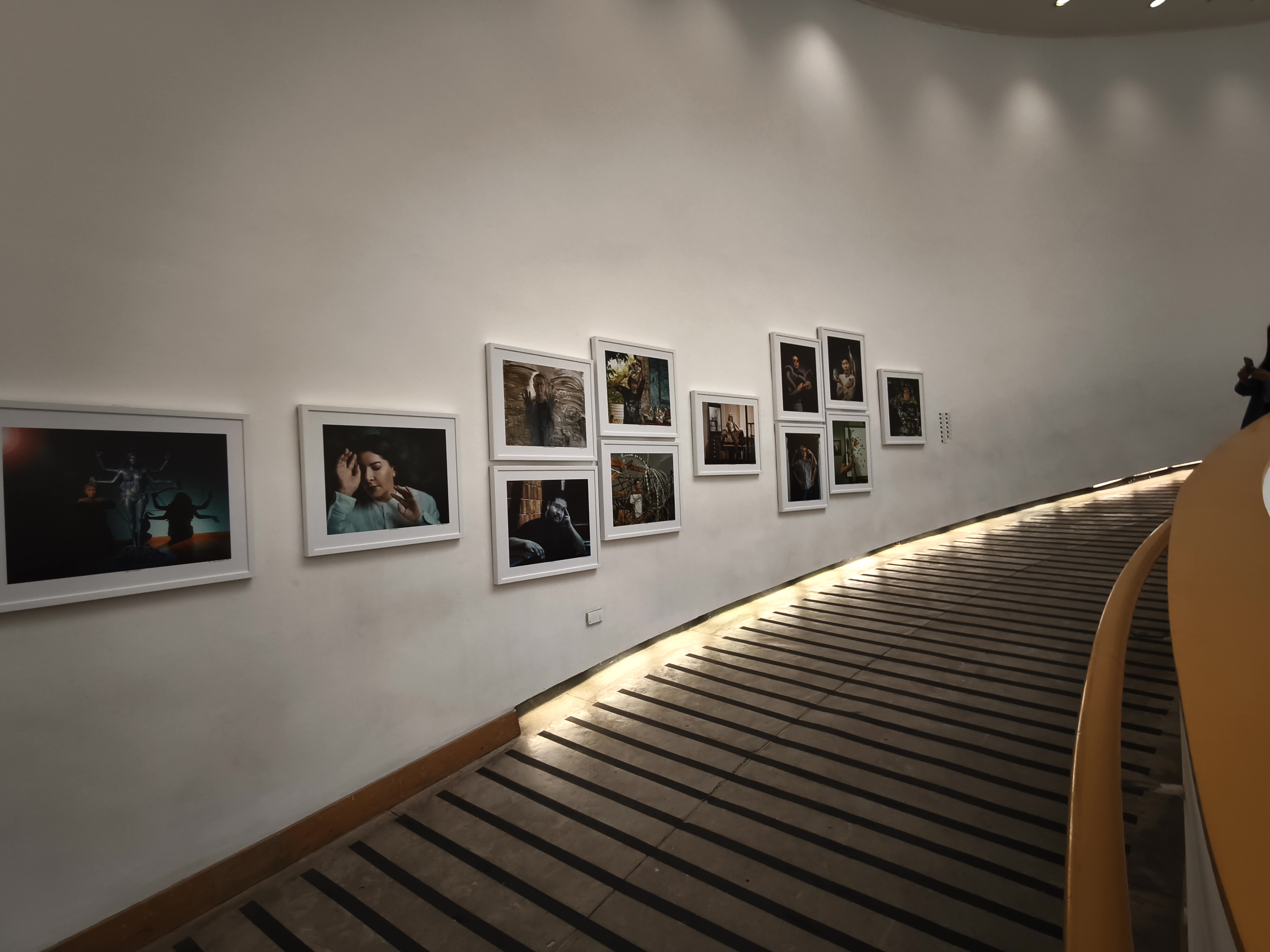
BACC is a vibrant space where creative designers and artists come together. The building features around six open floors, with a visitor’s path that spirals upwards, allowing them to explore the artworks as they ascend. This design evokes a feeling similar to the Guggenheim Museum in New York. When I arrived, two bazaars were taking place on the ground floor. Throughout the building, you’ll find craft shops, curated design stores, coffee shops, and a restaurant.
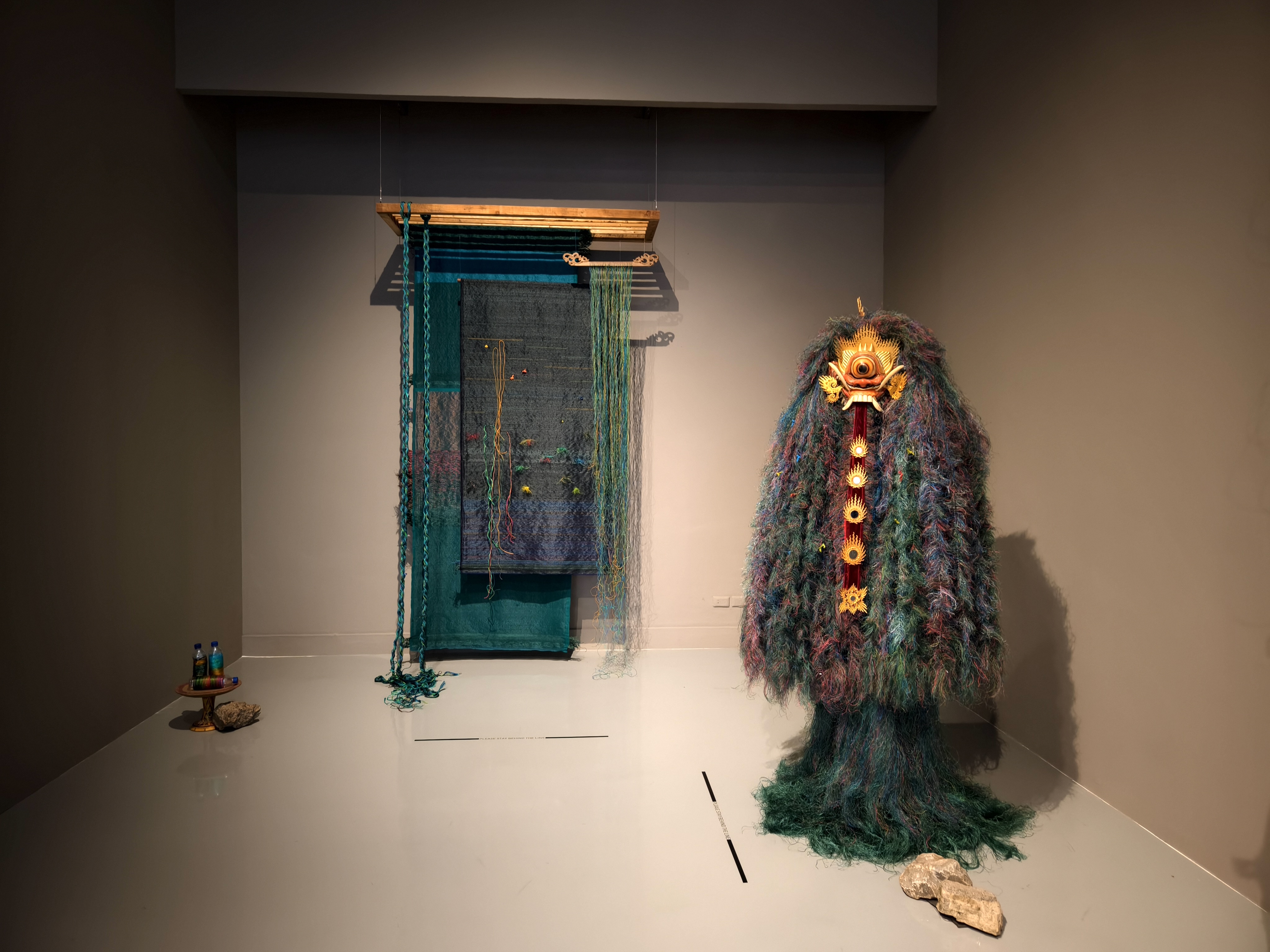
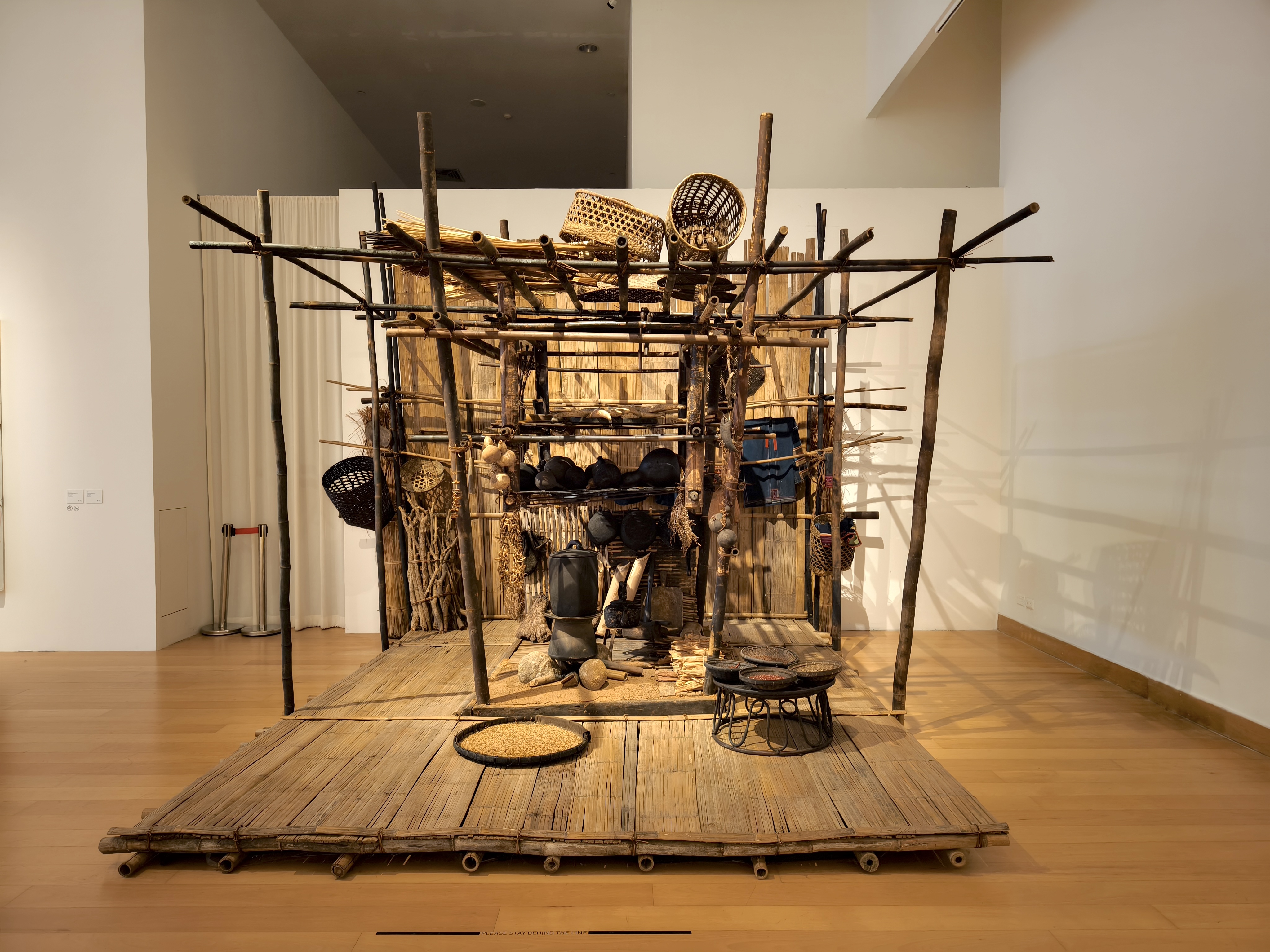
As part of the main venue, which features over 100 artworks, visitors can explore works by international contemporary artists that reflect on issues of the Anthropocene. Ari Bayuaji, (One Eyed Rangda, using Balinese mask and fabrics), expertly conveys the daily life and cultural aspects of his heritage. One such piece delves into the story of Rangda, the queen of the Leyak, and the incarnation of Calon Arang, a legendary witch who terrorized ancient Java during the reign of King Airlangga in the late 10th century. Calon Arang, a widow skilled in black magic, was notorious for destroying crops and spreading disease. She had a daughter, Ratna Manggali, who, though beautiful, could not find a husband due to the fear surrounding her mother. In her anger over her daughter’s situation, Calon Arang kidnapped a young girl, sacrificing her at a temple dedicated to the goddess Durga. The next day, a devastating flood ravaged the village, causing numerous deaths and spreading disease.

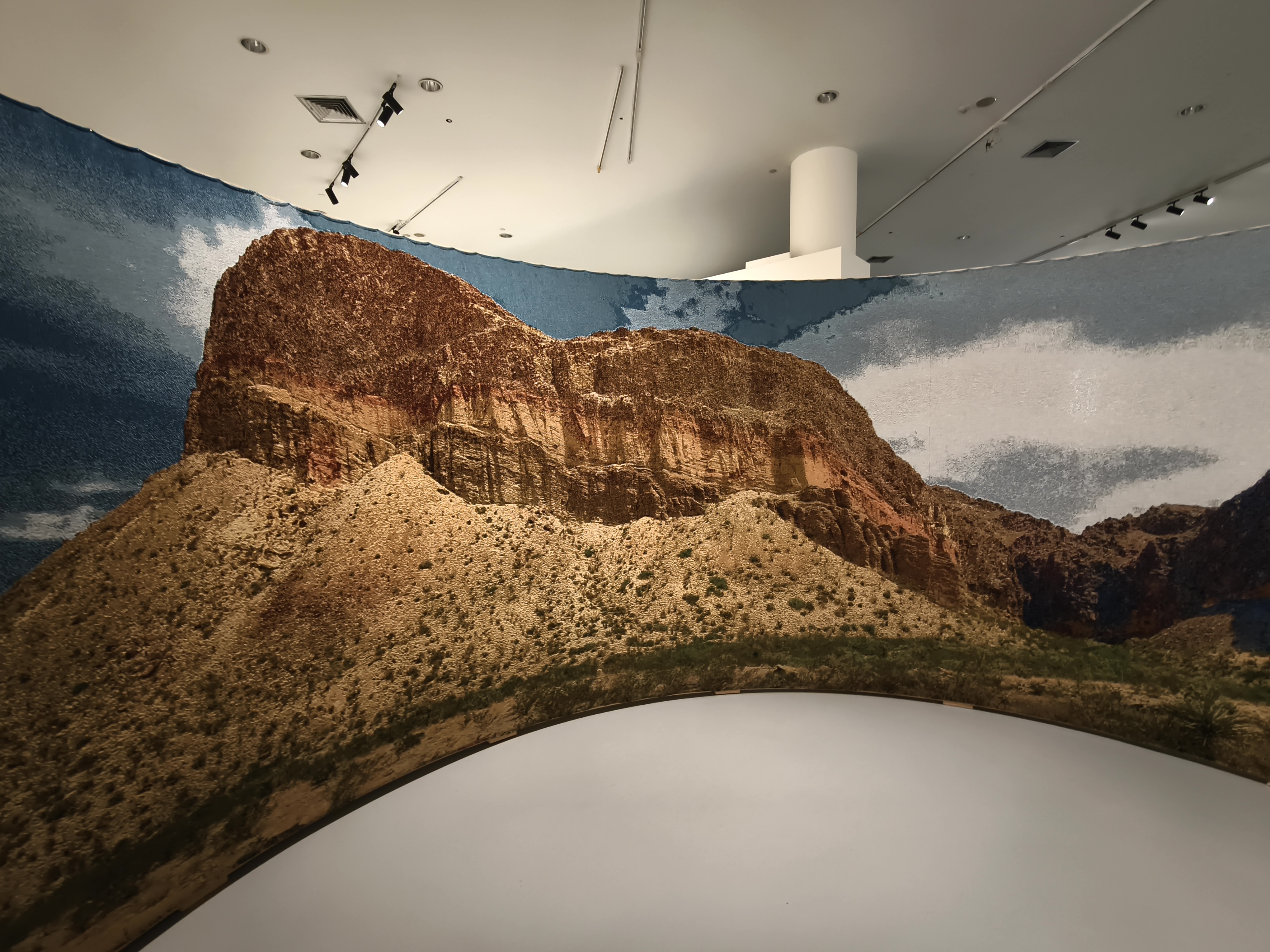
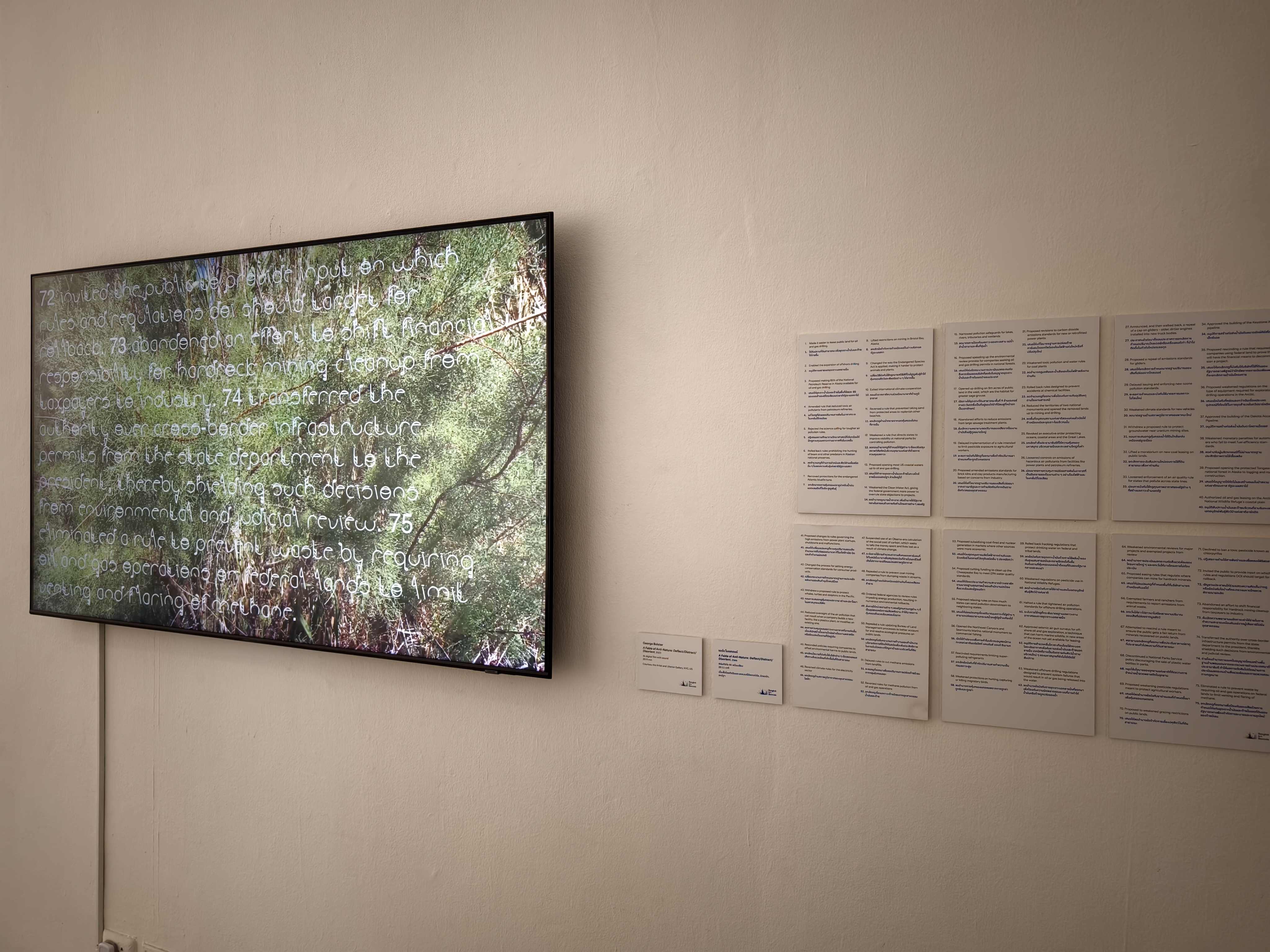

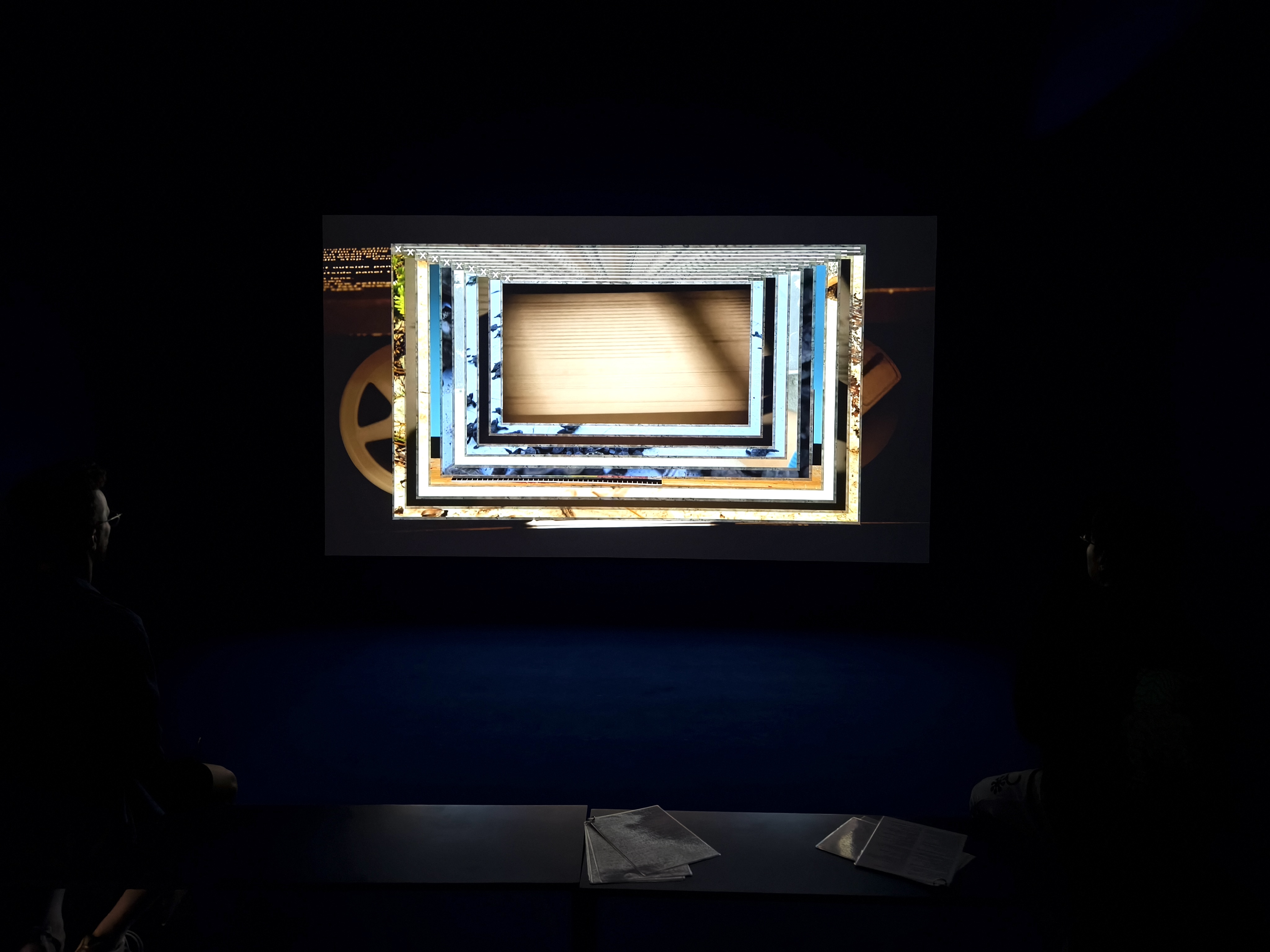



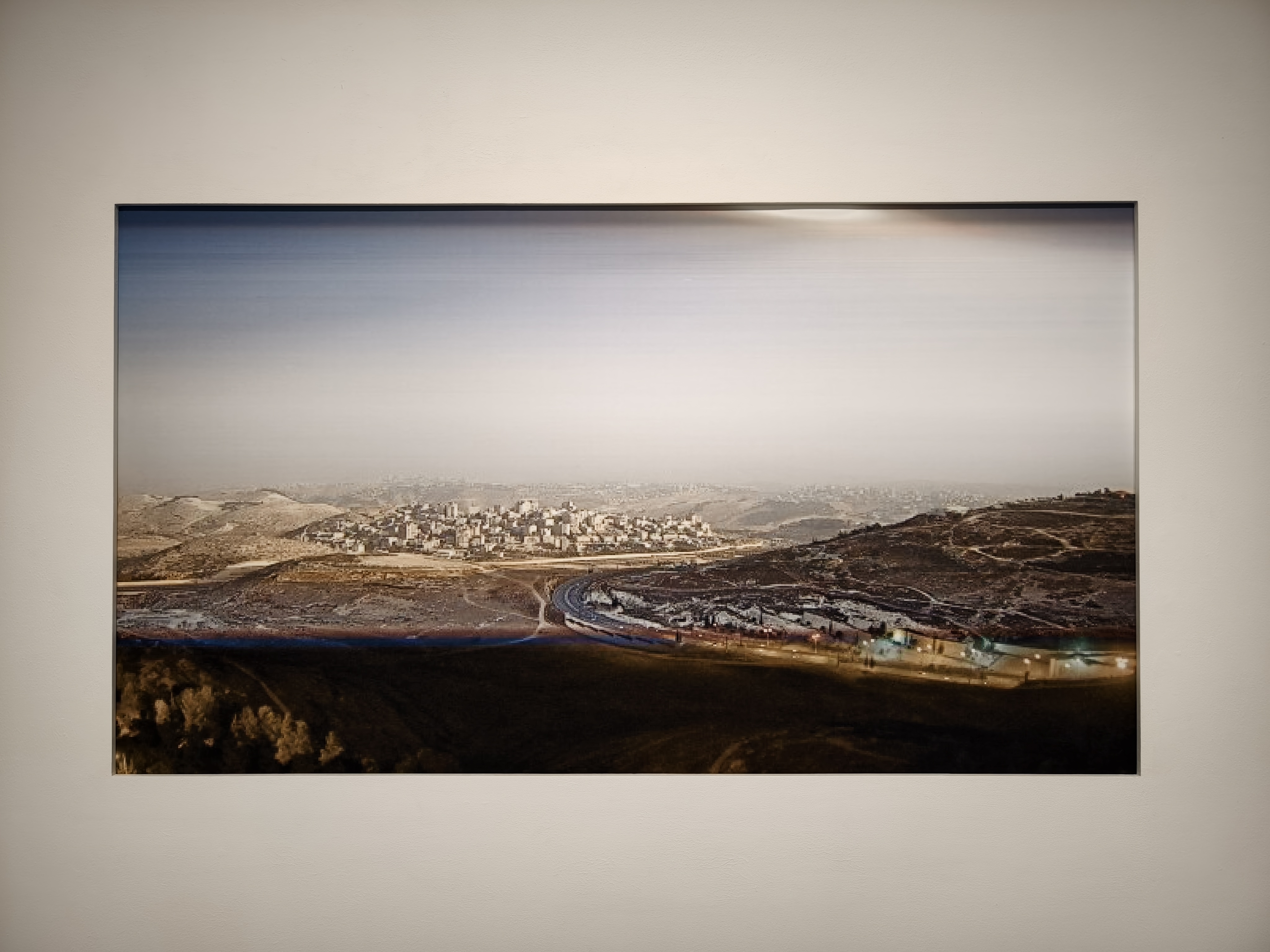
I was impressed by photography artwork Land by Susan Collins. Exhibiting widely internationally, she is recognized as a pioneer in the field of new media art working with transmission, networks and time as her primary materials.
She has produced a series of year-long pixel by pixel internet transmissions from remote locations including Seascape (2009) a solo show for the De La Warr Pavilion, Bexhill-on-Sea; LAND (2017), a live transmission from Jerusalem looking across the West Bank towards the Jordanian mountains, Five Hours Later (2019) a simultaneous exchange between Sheffield, UK and Boston USA, And Current I and II (2020/2023) which placed a camera first above water and then below, from Aigio Old Port in the Greek Peloponnese.
Through SUAVEART’s recent project The Invisible Trajectory in Zurich, I had the opportunity to collaborate with a deaf individual. This experience made Amanda Coogan’s space installation Freude! Freude! particularly meaningful, evoking fond memories of working with Linda. As I approached the installation, I saw a video of a conductor leading a group of people to dance in sync with a symphony in a public square.
In 2023, Coogan collaborated with Dublin Theater of the Deaf and Cork Deaf Community Choir to perform Beethoven’s Ninth Symphony at Crawford Art Gallery, Cork. Coogan’s choice of Ode to Joy was that it was composed when Beethoven had gone completely deaf. As music played, Coogan gracefully conducted for deaf performers who created movements with energy.
For BAB 2024, Coogan revisits Ode to Joy in collaboration with Thai adults and youths with hearing disabilities. These participants form a silent choir for a concert led by Coogan at Wat Prayurawongsawat in Thonburi. At BACC, a canopy of second-hand clothes is used as a prop for the stage, and Coogan and volunteers perform live for the audience. The preparation for this performance is challenging, as Thai and Irish sign languages differ. As a result, communication through body language becomes essential. This extraordinary collaboration creates a synergy that transcends language and cultural barriers.


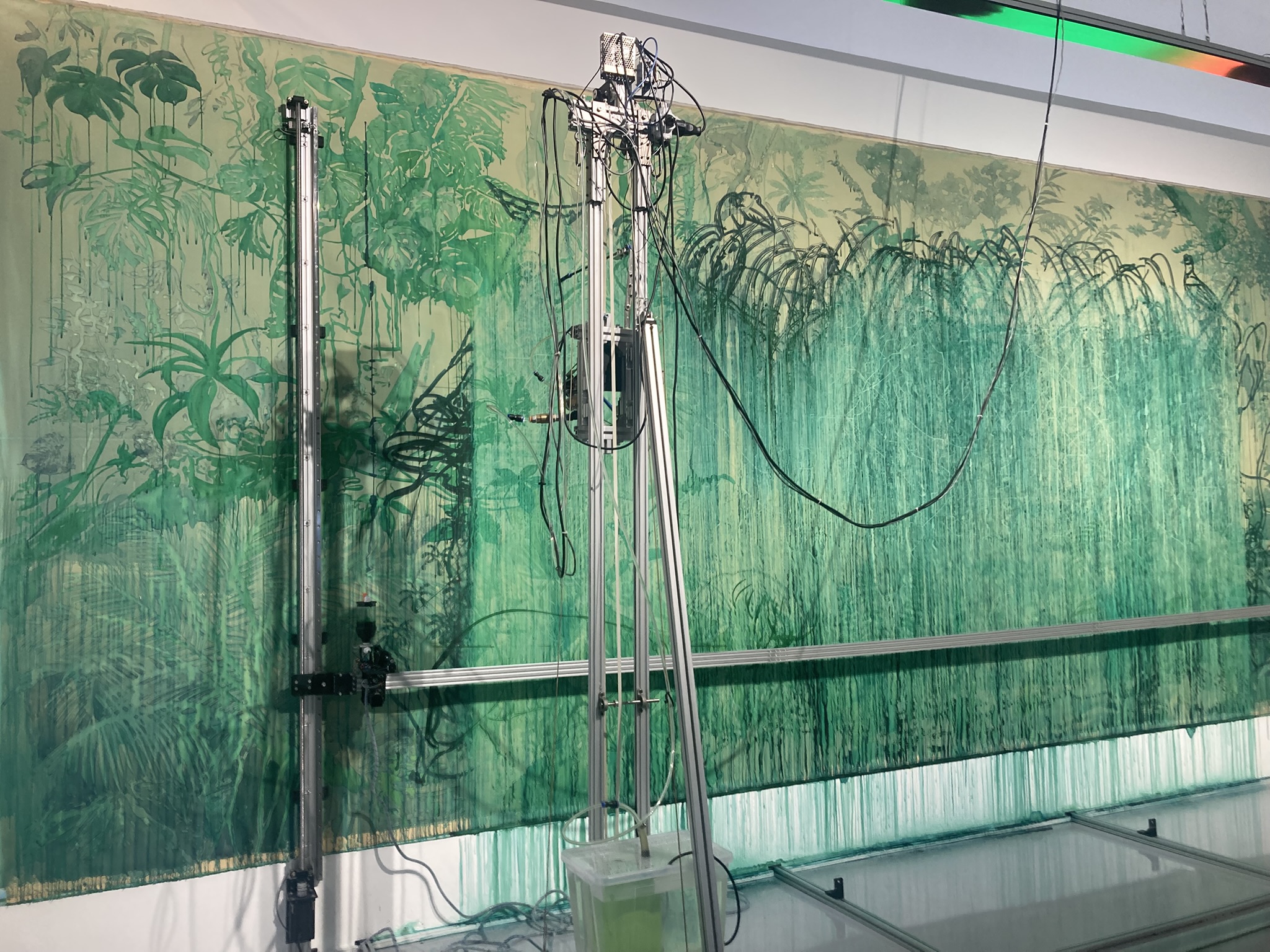
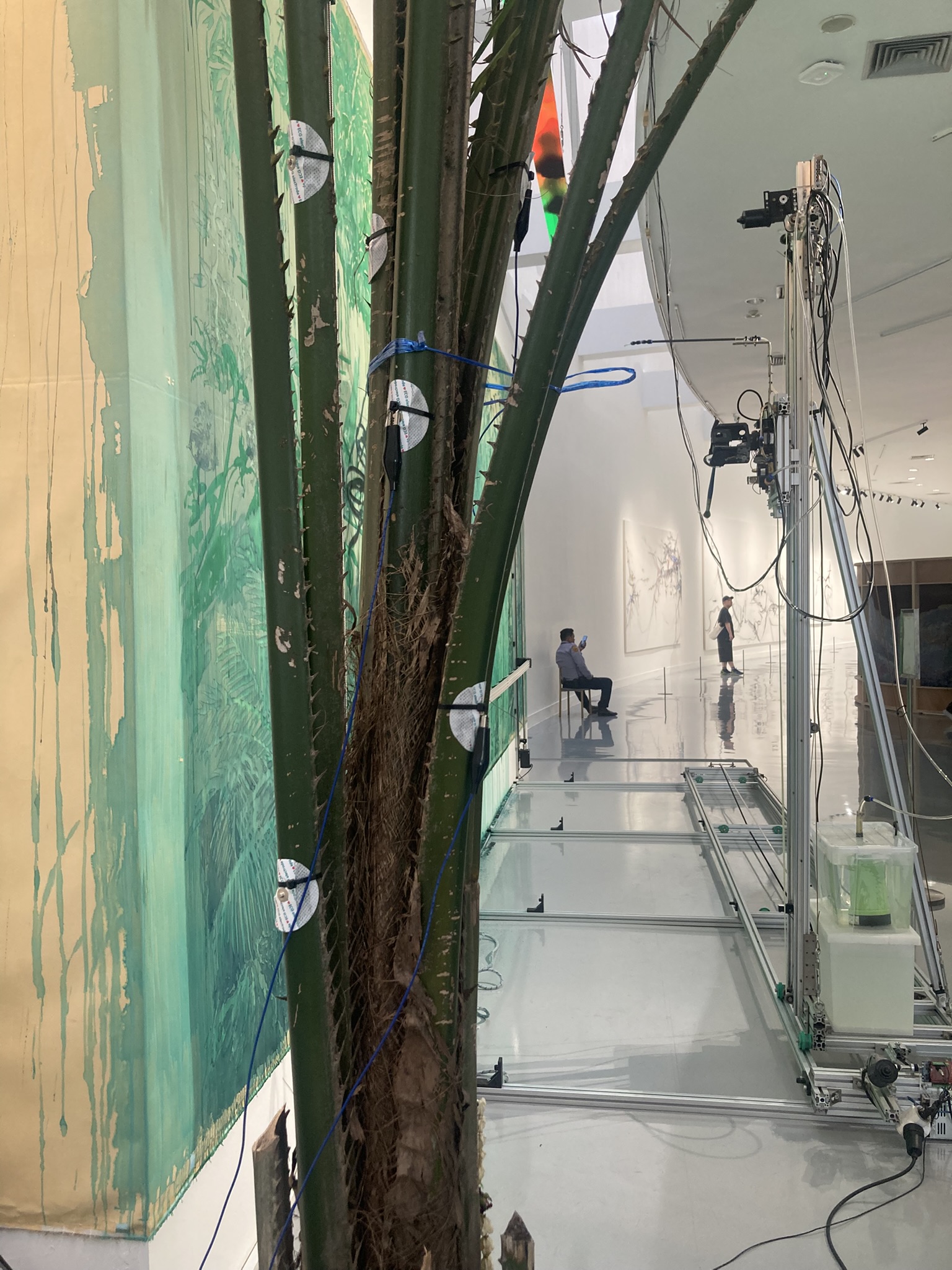
Another artwork I deeply appreciated is Mapping the Land Body Stories of its Past by Bagus Pandega and Kei Imazu. Artificial Green by Nature Green marks the first collaborative project between the two artists. By blending their distinct practices, they’ve created an experimental installation that incorporates paintings, drawings, kinetic elements, mechanics, and synthesizers.
In 2018, I first witnessed in the post-tsunami recovery efforts in Aceh. The profound impact of both human and natural forces shaped my growing concern for ecological and environmental issues. As an individual, I later visited the Leuser Ecosystem rainforest in North Aceh, Sumatra, in 2019, where again I witnessed the devastating deforestation of tropical regions—critical biodiversity hubs—due to palm oil plantations in Indonesia. This destruction is severely damaging to the region’s rich ecosystem.
The artwork draws from these personal experiences, utilizing drawings created by a brush controlled by bioelectrodes extracted from palm trees, and an installation where an image is gradually erased by the flow of water. Through these methods, the piece not only reflects the environmental concerns of our time but also serves as a poignant reminder of the fragility of our living planet.
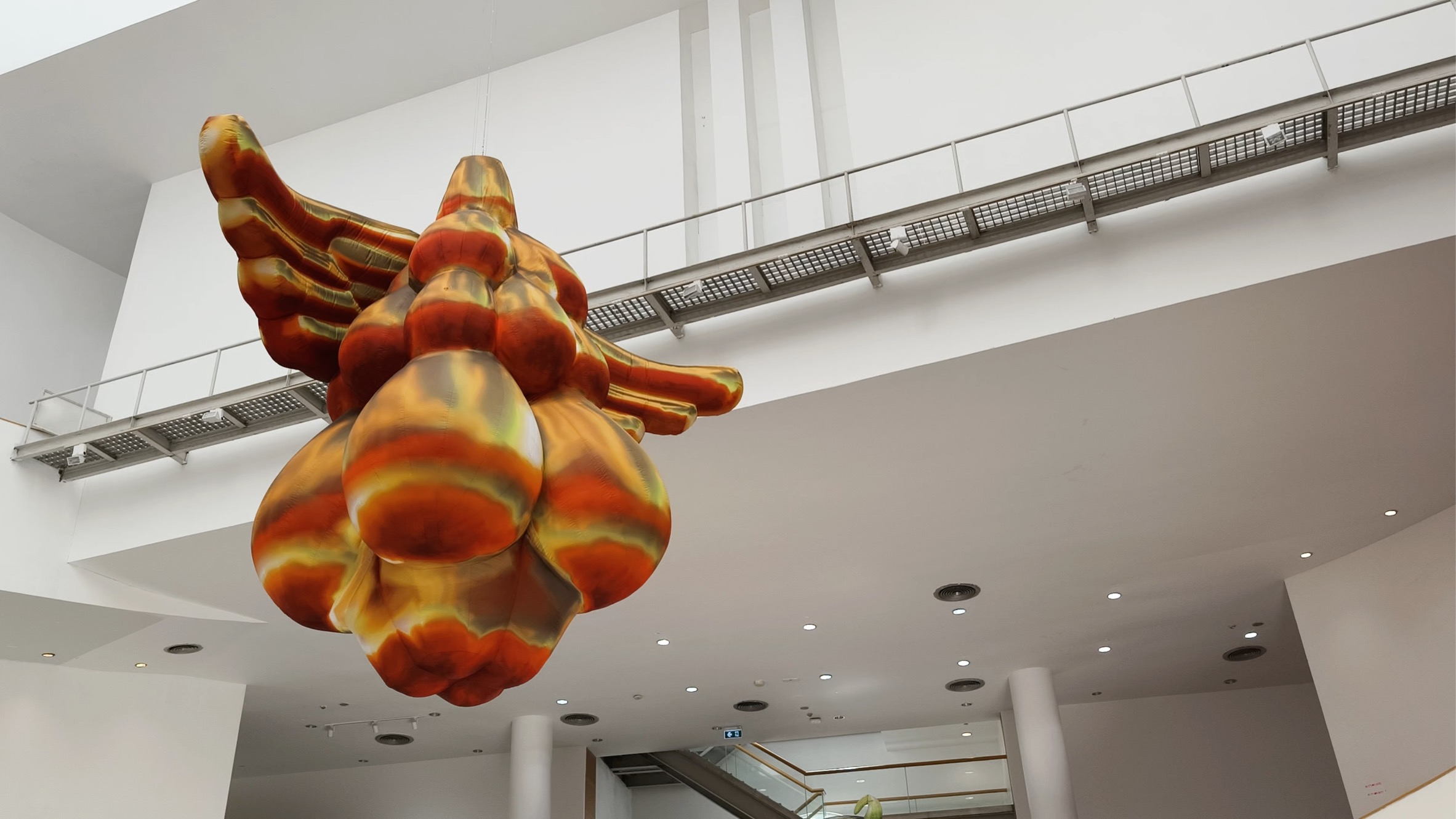
Often inspired by the harmony and chaos of the urban environment, which shapes his playful practice, artist Choi Jeong Hwa presents Golden Girl at the heart of BACC. This installation features a large maternal figure, inviting the audience to breathe in love alongside the Golden Girl. To complement the artwork, Choi will host a series of ‘softwares’—interactive programs where the artist and audience come together to converse, exchange ideas, and spread inspiration.

In November 2024, I visited my first Manifesta in Barcelona, where the curation and artworks were spread across the expansive city, embodying a dynamic engagement with its open spaces and heritage sites. As I moved between different communities, both spiritually and physically, I found myself deeply enriched by the vibrant energy of Bangkok and its Biennale.
 細着藝術 SUAVEART