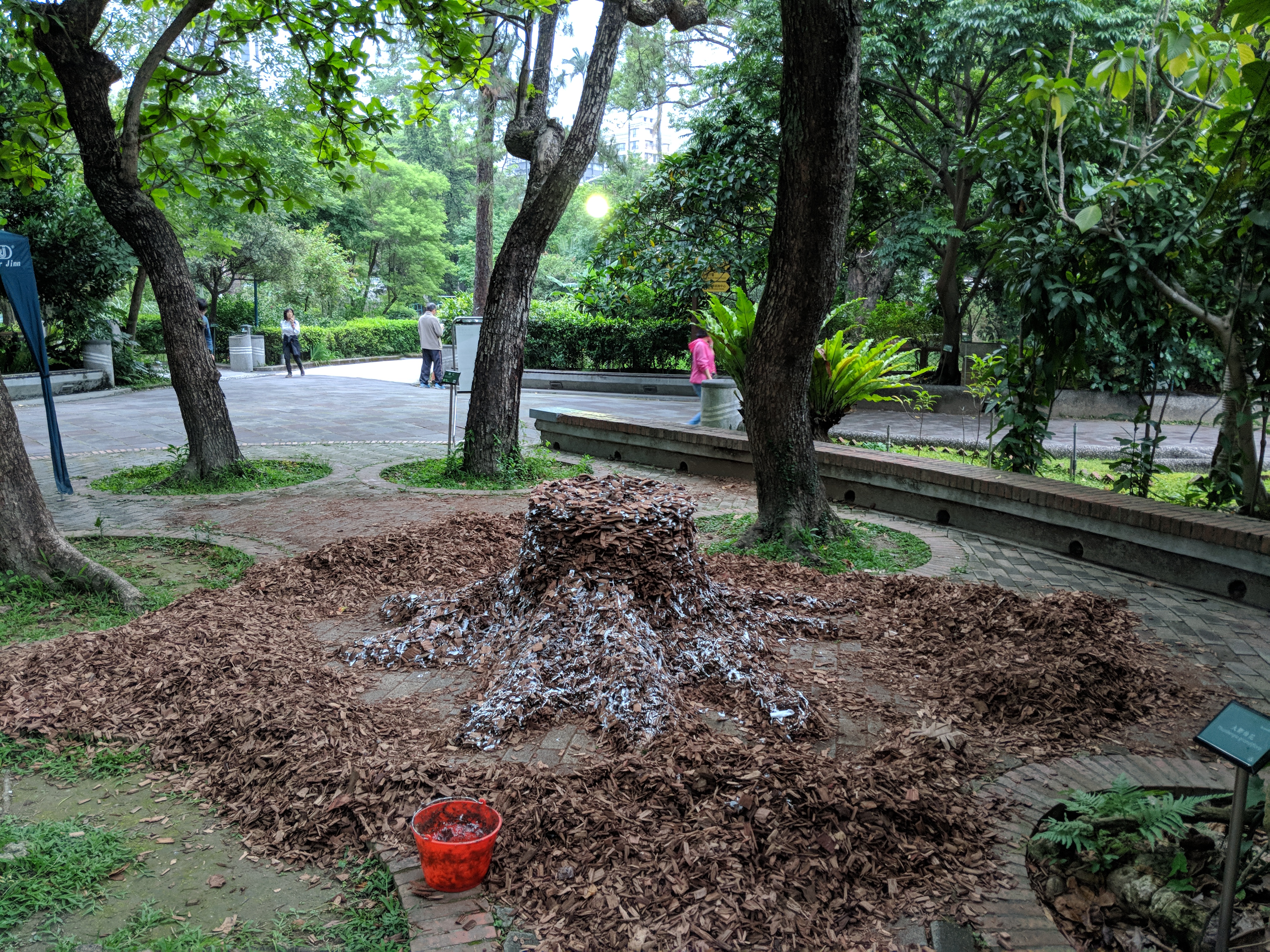
Tree Without Roots – Imagining Future Histories through Camphor Tree Memories and Trade
無根的樹 – 從樟樹記憶與歷史貿易共創未來歷史
【Beginning】
In the collaborative project between Yipei Lee and Aliansyah Caniago (Alin), building on Yipei Lee’s previous research on Southeast Asia as an independent curator, we traced our journey from the maritime Silk Road to Sumatra—an island rich in resources, located between the Sunda Strait, the Strait of Malacca, the Karimata Strait, and the Indian Ocean. Trade within the Islamic world connected the easternmost and westernmost reaches of the Indian Ocean. Alin hails from northern Sumatra, historically home to the important port town of Barus, whose most famous trade commodity was camphor.
One day, Yipei and Alin discussed the everyday memory of camphor balls. Alin mentioned that in his hometown of Barus, people often used mothballs to preserve items and repel insects, yet he had never actually seen a camphor tree. Yipei, on the other hand, remembered her grandmother hanging pink mesh bags of white mothballs in a wooden wardrobe since childhood. Every time she opened it, the first scent she noticed was a combination of wood and the slightly pungent artificial phytoncide aroma.
Historically, Sumatran camphor was traded across the Indian Ocean to Europe, while Taiwanese camphor was mostly exported to Japan. This led us to consider that the ancient camphor trade routes in Asia could serve as a framework for our collaborative project. Using ethnographic and anthropological methods, we combined historical documentation with performative actions, presenting the plant as a first-person actor and exploring the cultural connections between Taiwan and Southeast Asia.
Alin visited Miaoli in 2016 for an artist residency. Near the end of his residency, he visited a local elementary school and saw a camphor tree over 800 years old. For him, it was the first time he had ever seen a camphor tree in person. In that moment, he felt as if he had found a missing piece of his hometown’s historical puzzle. Although he initially came to Taiwan based on recommendations without fully understanding why, at that moment, he discovered the reason for his residency and the meaning of being there. That afternoon, he collected as many camphor leaves as possible to take back to his studio and quickly documented them in the style of a botanist collecting specimens, hoping to preserve something of the encounter.
Our preliminary research into historical sources reveals that the local people of Sumatra referred to camphor as kapur barus (abbreviated as Barus). Early Muslim documents mention Barus; one of the earliest references may be from Suleiman, who wrote in 851 about obtaining high-quality camphor from the plantations of Fansi.
In the 10th century, Arab historian Mas‘udi wrote: “…regarding Fansi, abundant camphor could be obtained there, though the area was prone to storms and earthquakes.” By the 13th century, Zhao Rushi of the Southern Song Dynasty recorded in Zhufan Zhi that “Binsu is one of the sources of camphor trees.” Italian traveler Marco Polo noted: “The camphor from Fansi is the best in the world, so valuable that it was measured in gold.”
Compared to Indonesia, Taiwan’s camphor history traces back to the 17th century during the Ming-Zheng period. Settlers from Fujian’s Zhang and Quanzhou regions arrived after Zheng Chenggong’s conquest of Taiwan. Zhangzhou, a major camphor production center at the time, brought its small-scale camphor-making techniques to Taiwan, laying the foundation for the local camphor industry. During the Qing dynasty’s official trade expansion, Taiwan’s camphor industry reached its golden age and gained international recognition during the Japanese colonial period.
Thus, the memory of the camphor tree became the central spirit of this project. Combining historical research with performative art, we developed a collaborative artistic plan between the two regions. We sought partnerships with camphor experts, conducted historical research, and visited factories to study camphor production, aiming to interact with the camphor tree. Ariansan Kaniago further explored the concepts of “camphor wood fragments” and “disappearance” to reflect on environmental issues and humanistic concerns arising from the camphor industry.
【緣起】
在李依佩和阿里安山‧卡尼阿哥 (Aliansyah Caniago) 的計畫合作中,延續過去獨立策展人李依佩的東南亞領域研究,我們特別從海上絲綢之路出發,來到物資豐饒,位於巽他海峽、馬六甲海峽、卡里馬達海峽與印度洋之間的蘇門答臘島。伊斯蘭世界的貿易連結了印度洋的最東端和最西端。由於阿里安山‧卡尼阿哥的家鄉在蘇門答臘北方,歷史上一個非常重要的港口城鎮巴魯斯 (Barus),最著名的貿易商品是樟腦。
某天,李依佩和阿里安山討論到樟腦丸這個日常用品的記憶。阿里安山提到,他的家鄉位於蘇門答臘的巴魯斯,他們經常使用樟腦丸防腐和趨蟲,但他卻從未看過真正的樟木,同時,李依佩對樟腦丸的記憶是,奶奶從小會在木頭衣櫃掛上一串粉紅色網狀的樟腦丸袋,每次打開衣櫥,先聞到的便是木頭與有點刺鼻的人造芬多精化學味道的結合。
大部分歷史記載,印尼樟木銷售範圍橫跨印度洋至歐洲,而台灣樟木則多銷往日本;因此我們就在思考,亞洲的樟腦貿易古路,似乎可以在我們兩個的計畫合作中,以民族誌和人類學的研究方法中,運用文獻史料加上行為表演方式,呈現由植物作為第一人稱角色,凝聚加強台灣與東南亞的關係討論。
阿里安山曾於 2016 年來到苗栗駐村,在駐村的尾聲期間曾拜訪當地的國小,看見一棵800多歲樟樹,當時對他來說,那是他第一次親眼見到樟樹的樣貌,瞬間將自己家鄉的歷史背景遺失的那塊拼圖找回,當時,他只是接受別人的推薦,並不是很清楚知道自己為什麼要來台灣駐村,但在當下,他便找到了回台灣的理由,以及自己為什麼會在這裡的意義。那天下午,他盡可能的採集樟樹葉子帶回工作室,在他最後的幾天快速描寫,像是植物學家採集標本的方式記載,希望可以留下些什麼。
我們初步尋找既有文獻,可知:蘇門答臘當地人稱樟腦為卡普爾巴魯斯 kapur barus (簡稱巴魯斯)。回溯到最早穆斯林文獻記載,最早提到巴魯斯的人之一可能是蘇萊曼,他在 851 年的征服之路寫道:「在凡瑟這片種植園可以獲得優質的樟腦。」
10世紀時,阿拉伯歷史學家馬蘇第寫道:「…… 關於凡瑟,那裡可以取得大量樟腦,只是那邊是個充滿風暴和地震的地方。」到了13世紀,南宋趙汝適在諸蕃志的筆下寫道:「賓蘇是產樟樹的來源之一」。據義大利威尼斯旅行家馬可‧波羅 (Marco Polo) 提到:「來自凡瑟的樟腦是世界上最好的,它的質量好到都是用黃金計價的。」
相較於印尼,台灣的樟腦淵源可追溯到17世紀明鄭時期,由福建、漳、泉一帶,鄭成功領台後,沿海一帶義民紛紛渡海來台,當時漳州本為樟腦製造業之一大中心,所以流傳於漳州的小灶法製腦術遂隨同入台,奠立台灣製樟腦事業之基礎。經過清朝的官營貿易發展,台灣樟腦黃金時代是於日據時期揚名國際。
因此,樟樹記憶成為本次創作的重要靈魂,從歷史脈絡研究與行為藝術共同發展出兩地的藝術合作計畫。我們尋找樟腦專業相關單位合作,進行樟腦史料考察、參觀工廠製作研究,希望與樟樹互動。阿里安山‧卡尼阿哥則進一步透過「樟樹碎木」與「消逝」概念,傳達樟樹產業下帶來的環境問題與人文精神思考。
【Process】
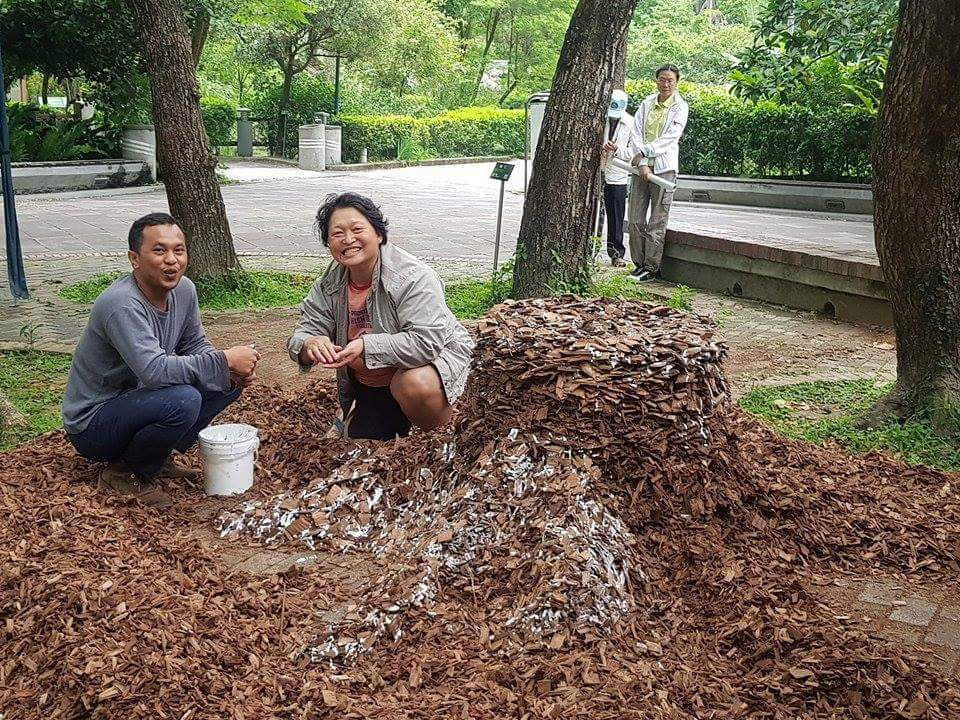
Concept: The memory of the camphor tree serves as the core spirit of Indonesian artist Aliansyah Caniago’s performative practice. Together with Yipei Lee’s research into the historical context of camphor trees in Taiwan, the two artists developed a collaborative project spanning both regions. Using the concepts of “camphor wood fragments” and “disappearance,” they create artificial trees that resonate with the surrounding natural growth, conveying reflections on the environmental impacts of the camphor industry as well as its cultural and humanistic significance.
【過程】
作品意象:樟樹記憶為印尼藝術家阿里安山・卡尼阿哥創作之行為藝術重要靈魂,與李依佩之台灣樟樹歷史脈絡研究,共同發展出兩地藝術合作計畫。透過「樟樹碎木片」與「消逝」概念創作假樹,與周邊自然生長的樹呼應,傳達樟樹產業下帶來的環境問題與人文精神思考。

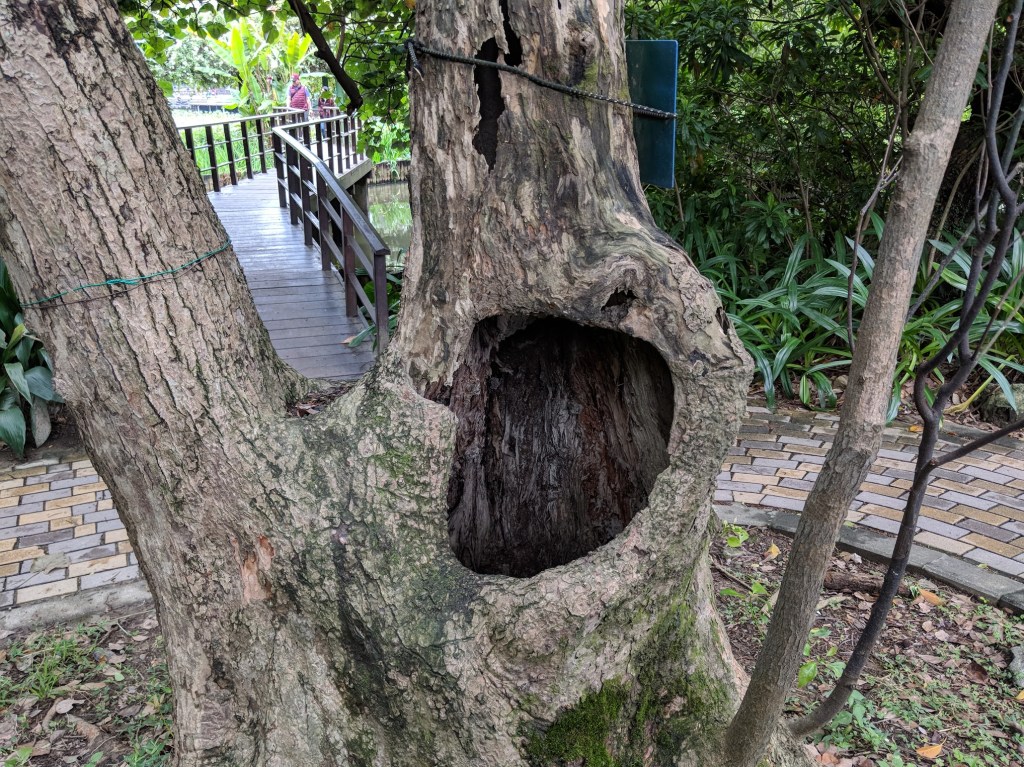
植物園區樟樹 – 從日據時期即被記載的一棵老樟樹


向策展人學習標本製作方法、參觀標本館

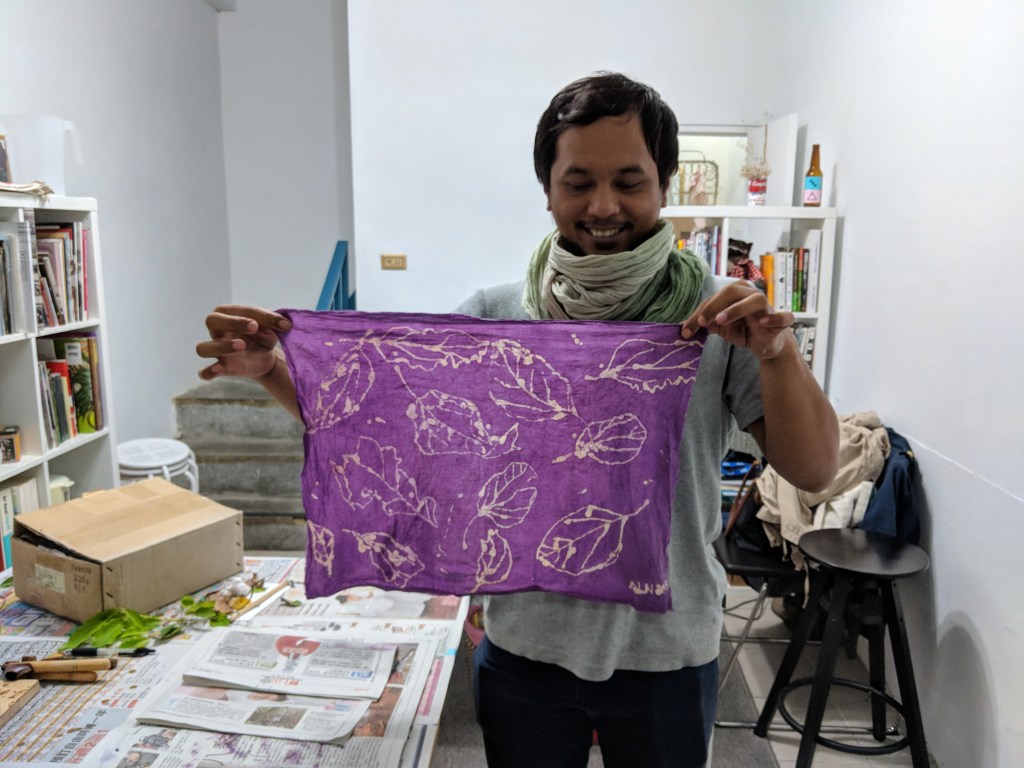
田野調查與材質實驗階段

作品創作草稿 – 行為藝術與裝置創作草稿
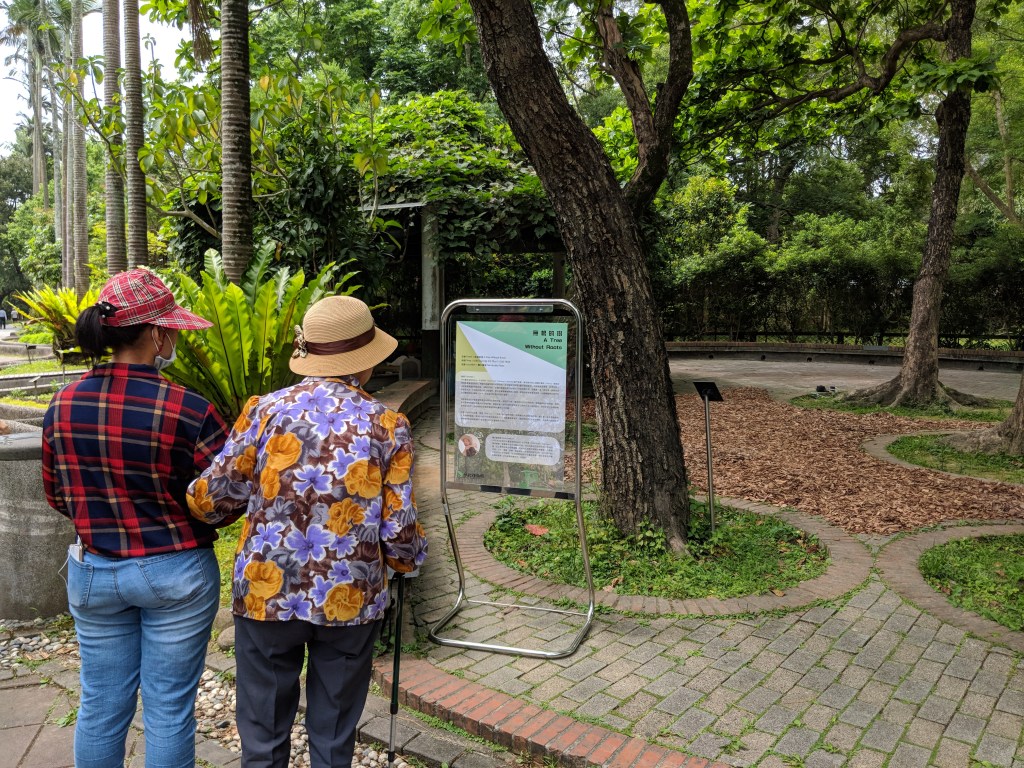
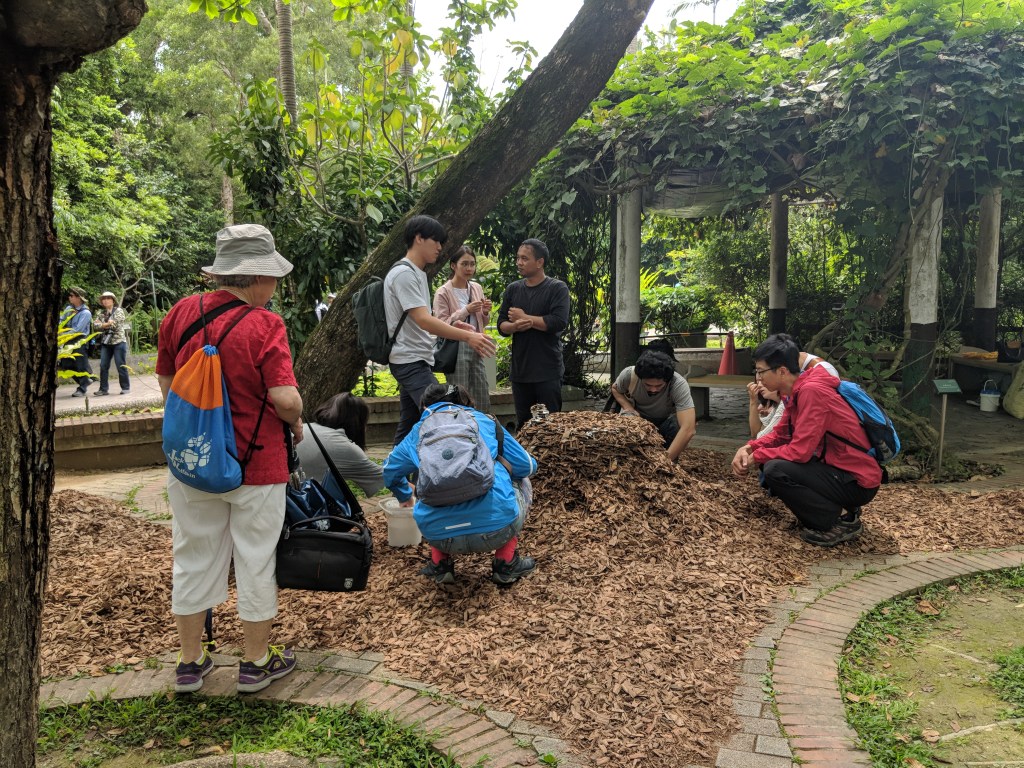
Storyboard – Assisting Botanical Garden Visitors in Understanding the Concept of the Work
現場活動說明 – 協助植物園民眾瞭解作品創作概念

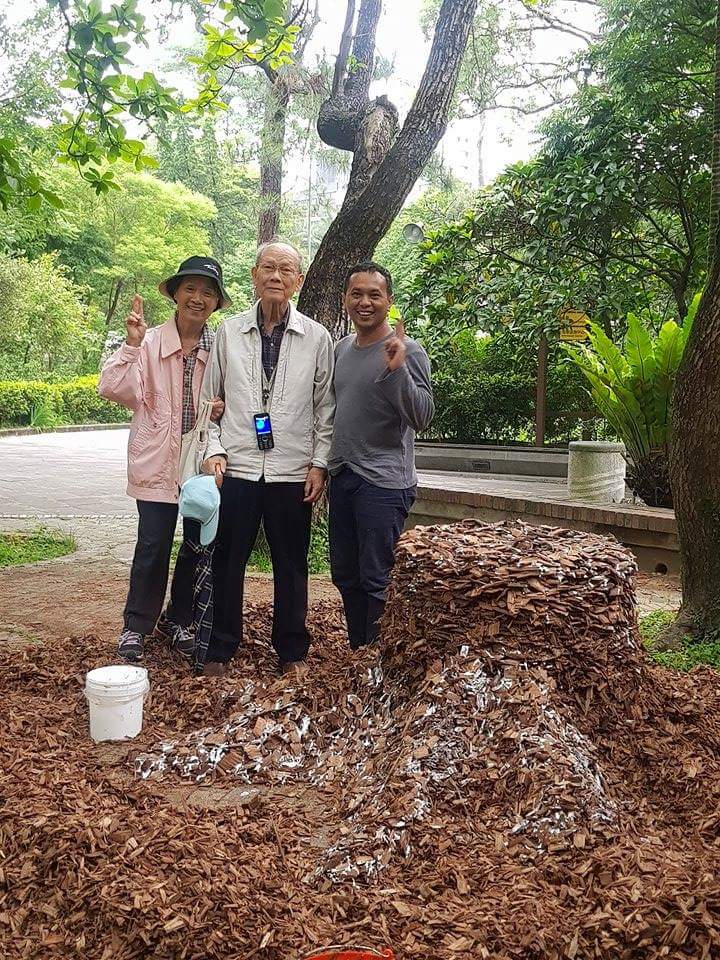
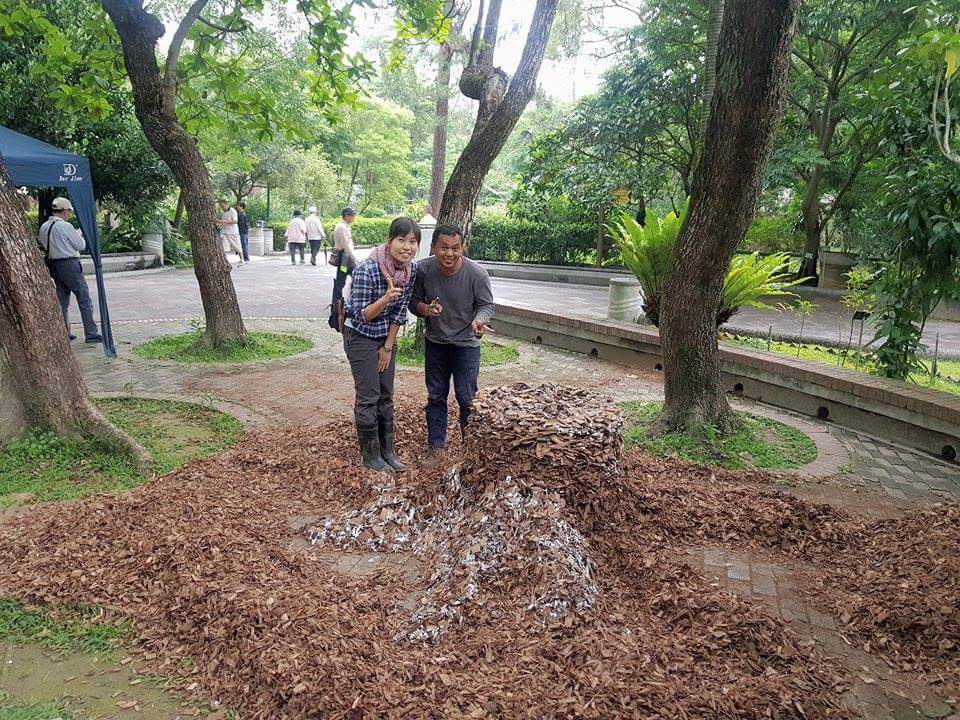
Performance & Installation – Interaction Between Space, Visitors, and Plants
現場行為裝置創作 – 空間、民眾、植物互動


Special thanks:
Click here to see the video
 細着藝術 SUAVEART